
Two Kinds of Knowledge: Raziel and Beelzebub
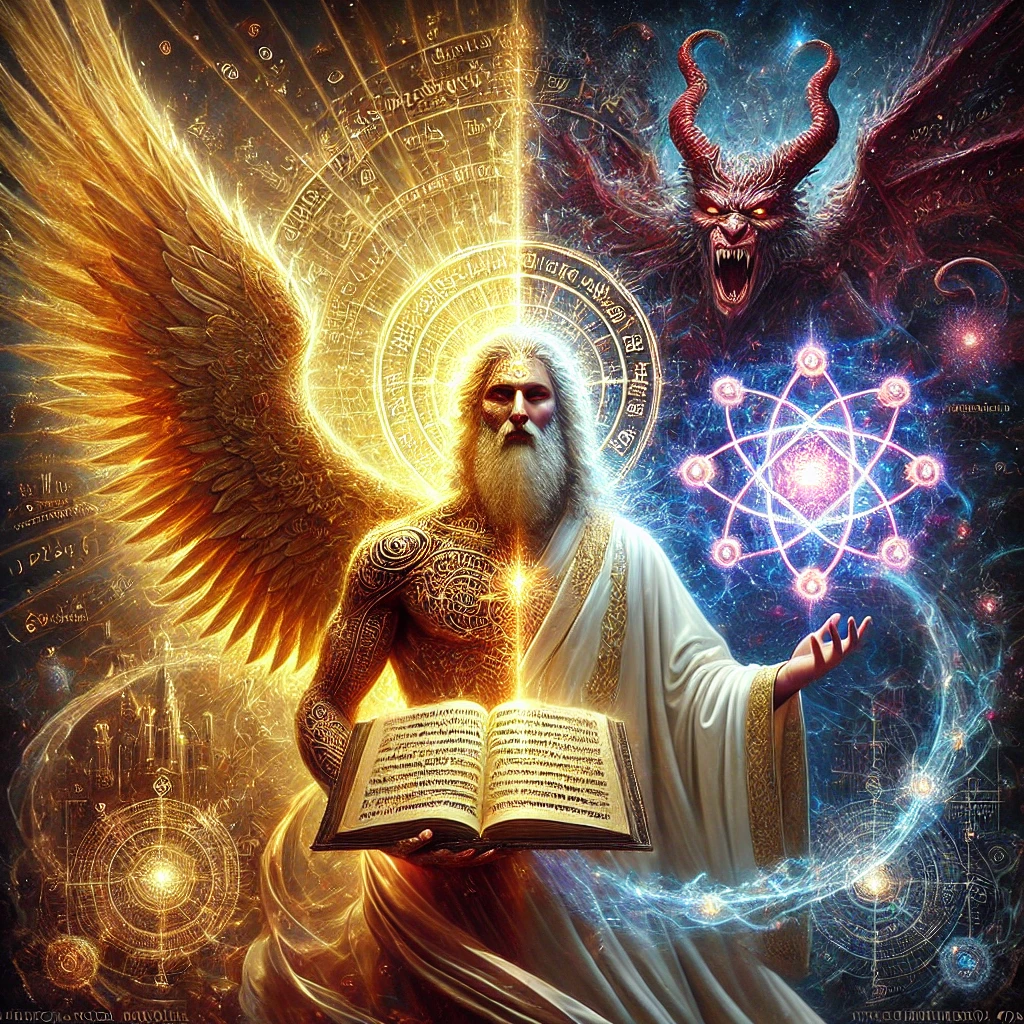
As we have already discussed, the universal principle of will, manifesting in the worlds, can give rise either to rebellion and the opposition of the One to the Many (the primary destructor is Lucifer), or to harmonious synarchic coexistence (Metatron); and in exactly the same way, the world activity of cognition can reveal itself as the higher intellect that channels divine wisdom into the worlds, embodied in the Archangel Raziel, or as the rejection and sabotage of cognition, expressed in the matrices of the “demons of ignorance” — Bael, Belial, and Beelzebub.
We have already discussed that Raziel (רַזִיאֵל, “Secret of God”) is the Archangel of the sefirah Chokhmah, the primordial division of the One divine essence into the cognizing and cognized aspects, who ensures the preservation and transmission of hidden divine knowledge. He is the supreme keeper of wisdom, revelations, mystical tradition, and esoteric understanding of the universe.

Raziel is a manifestation of the very principle of mystical revelation. He stands near the Throne of God, therefore hears the most intimate secrets of the universe, and opens to the lower worlds, to angels and humans, the laws of higher reality, helping them see beyond the limits of ordinary perception. His power is connected with profound wisdom, the hidden nature of the laws of the universe, and the secret aspects of creation.
His energy is a stream of pure knowledge descending from the Divine intellect. Thus he knows the secrets of letters, the Names of God, magical structures, the arrangement of the worlds, and the nature of the beings that inhabit them. He engenders the very ability to “read” the signs of the Universe, understand hidden causal relationships, and therefore is patron of prophets, Kabbalists, scholars, and all who seek depth beyond the visible world. His influence is especially clearly felt in illuminations, insights, inspired moments, and intuitive flashes.

The Archangel of Keter, Metatron is the structure and law of the universe, while the “intellect” of Chokhmah — Raziel — is the illumination that reveals this law and makes this structure understandable. One may say that Raziel is the embodiment of gnosis, mystical cognition that leads to a profound understanding of the very principles of the universe and to the manifestation of the Divine — in the created.
And this striving for cognition, this “spirit of gnosis,” casts a shadow in the form of the qlippah Gagiel (העאגיאל / גאגיאל, “those who cause obstacles”). This shadow is the dwelling place of three supreme demons at once, expressing different aspects of the refusal of cognition: Beelzebub, embodying emotional dullness; Belial, expressing the destructor of the “repulsion of knowledge”; and Bael, personifying the sluggishness of the cognizing will, laziness in cognition, readiness to accept false knowledge if obtaining the true requires effort.
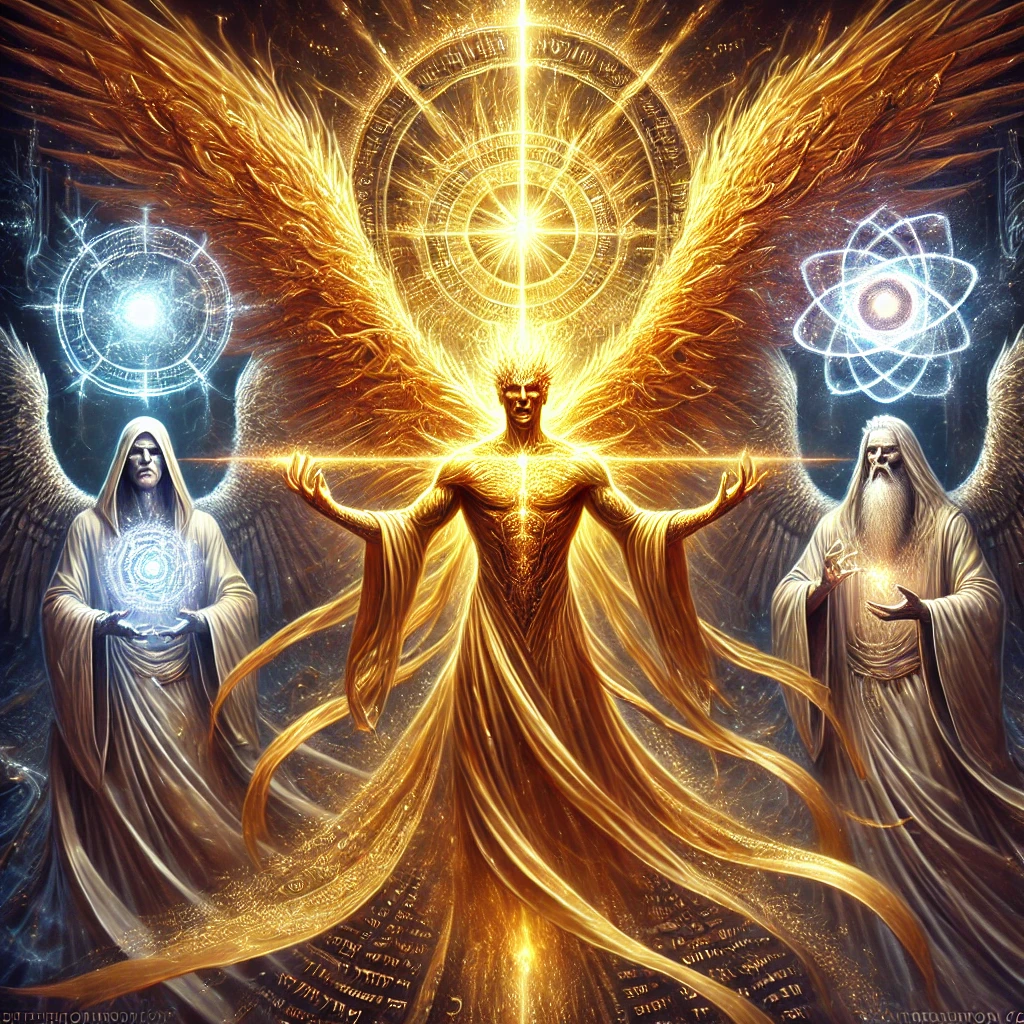
It is clear that the nature of Belial is repulsion, and although he formally belongs to those “who cause obstacles,” he embodies the Luciferian aspect — any refusal, any rejection — and therefore can be counted among the inhabitants of any shadow.
As for Beelzebub and Bael, they, as we have already discussed, express different aspects of the destroyer of ignorance: the first “extinguishes” the very fire of cognition, while the second breaks the “connection” between the cognizer and the cognized. Precisely for this reason Beelzebub is, properly speaking, the demon of the qlippah Gagiel, whereas Bael is the archdemon of the qlippah Oreb Zerek, the “shadow” of the sefirah Netzach; however, since in the “fall” of the Tree it “turns over,” it is into the position of Netzach that Chokhmah “falls,” and therefore the corresponding spheres turn out to be closely connected.
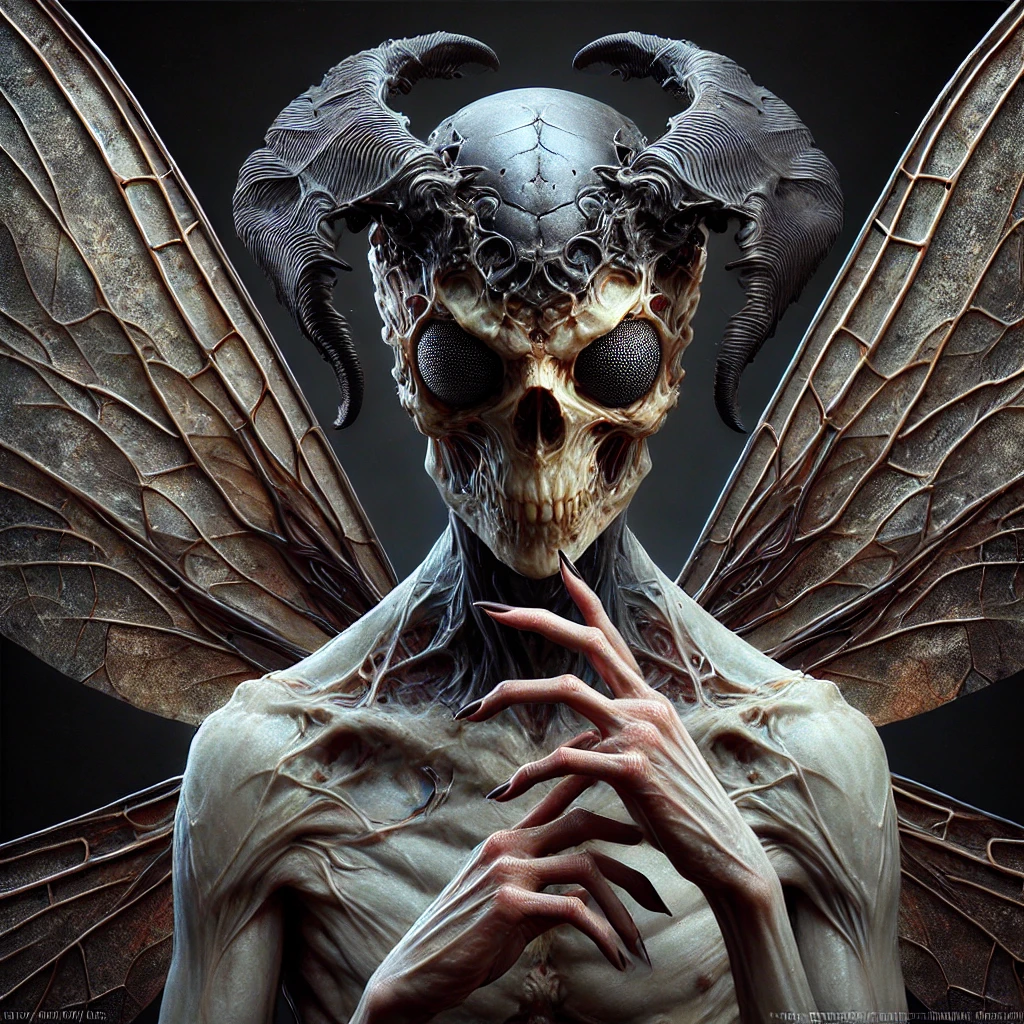
Accordingly, Beelzebub ( בַּעַל זְבוּב) simultaneously embodies the absence of interest in the search for knowledge (that is, denies the nature of Chokhmah), and personifies a state in which the mind does not feel a need for understanding: it is not concerned with the truths of the universe, it is satisfied with superficial perception, and suppresses the intuitive thirst for cognition (that is, the unifying energy of Netzach), denies inspiration and intellectual hunger, directing all activity of the mind toward satisfying emotionally colored drives.
In a similar way, Bael (בַּעַל) is the destructor of the sluggishness of the cognizing will (negation of Chokhmah) and readiness to accept lies, to unite with lies (the shadow of Netzach). Accordingly, Bael generates intellectual stagnation, dependence on false teachings, and the acceptance of superficial explanations.
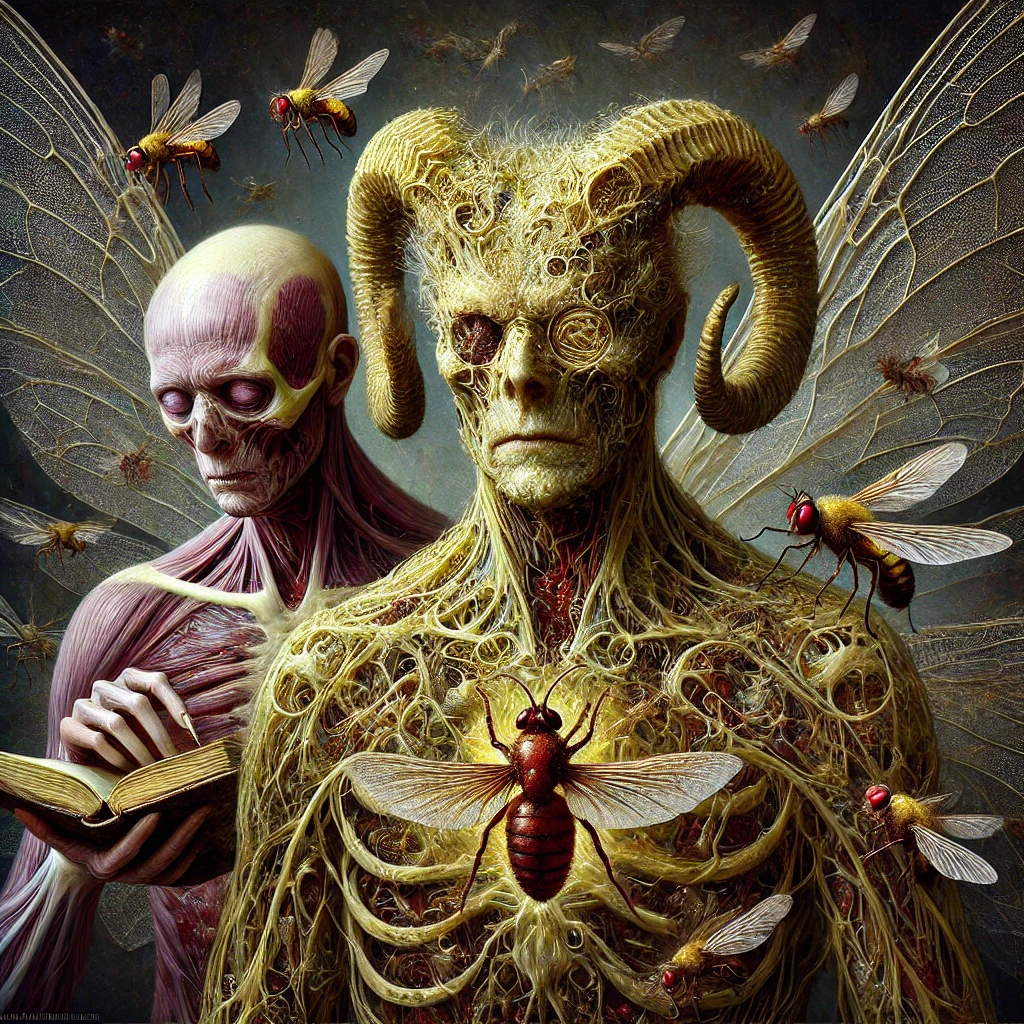
While Raziel is illumination and the path to higher knowledge, the demons of ignorance are the darkness that covers this path. They are destructive states of mind in which wisdom is either inaccessible, or rejected, or distorted. In other words, this is the force of opposition to cognition, which can manifest both passively (indifference, laziness) and actively (cynicism, rejection of truth). One may say that this destructor manifests as a state of mind in which a lie is accepted more easily than the truth, and genuine knowledge is replaced by its imitation.
Thus, it becomes clear that it is precisely Beelzebub who is the main “opponent” of Raziel. He is the embodiment of the disintegration of the structure of cognition, the loss of distinctions and intellectual chaos. His influence blurs the boundaries between truth and falsehood, between the important and the insignificant, between knowledge and whim. Beelzebub extinguishes striving, makes the mind indifferent, separates intellect from the living experience of comprehending truth. This is why his manifestations are powerful and often imperceptible: he does not fight wisdom openly, does not “blacken” or “forbid” cognition; he provokes such a state of mind in which wisdom simply ceases to matter to the being.
And in this sense Beelzebub is born as a distorted Dionysian force, as an emotional refusal of analysis, a “desire not-to-know.”
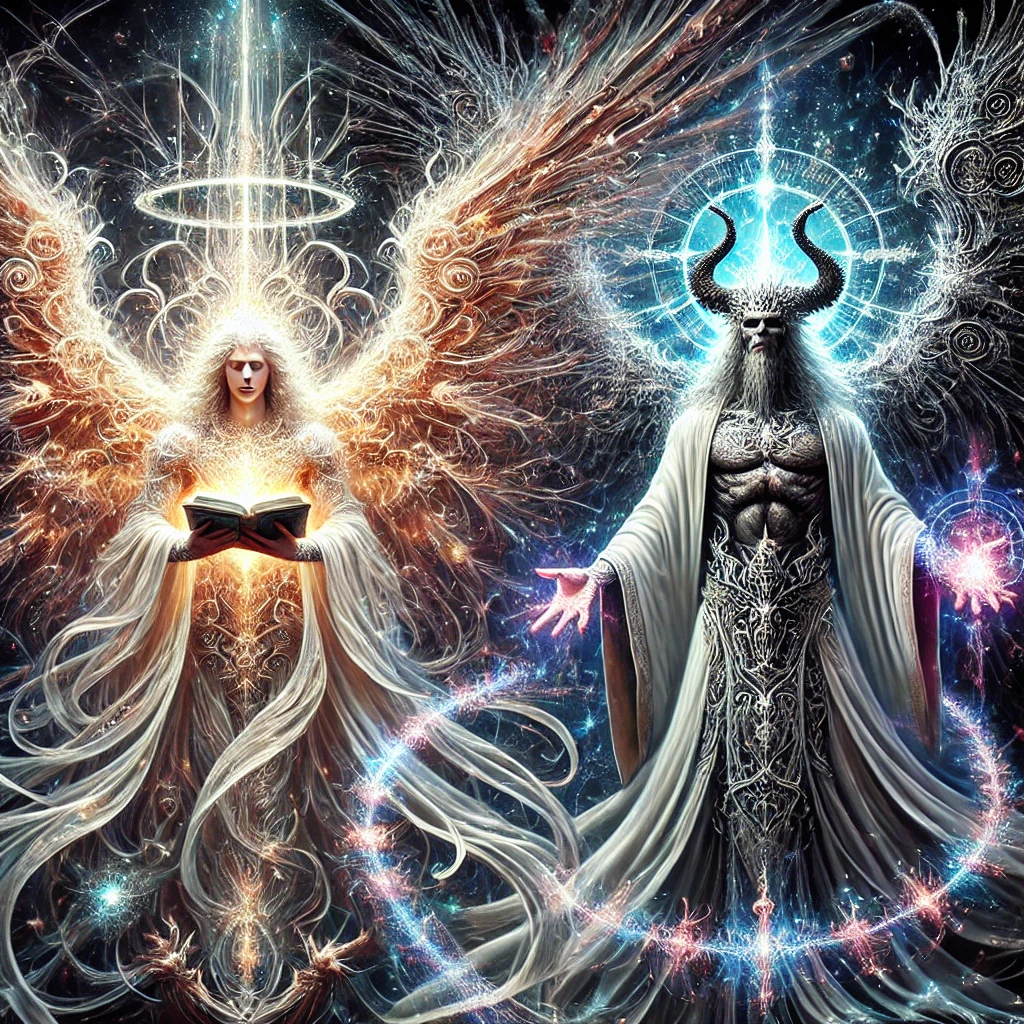
Whereas Raziel, as a force and matrix, organizes knowledge, finds and establishes causal relationships, builds ideas into systems, and makes understanding coherent, Beelzebub destroys this structure, turning the mind into a chaotic stream of thoughts, affects, and emotions in which it is impossible (and one does not even want) to build a logical sequence.
Raziel, as a force of aspiration, identifies logoi, sees through to the eidoi, and leads to higher knowledge; and Beelzebub mixes whims, desires, emotions, and ideas, destroying the distinction between the constructive and the destructive. He turns the mind into a whirlpool of caprices, where what is important is distorted, and what is insignificant becomes dominant.
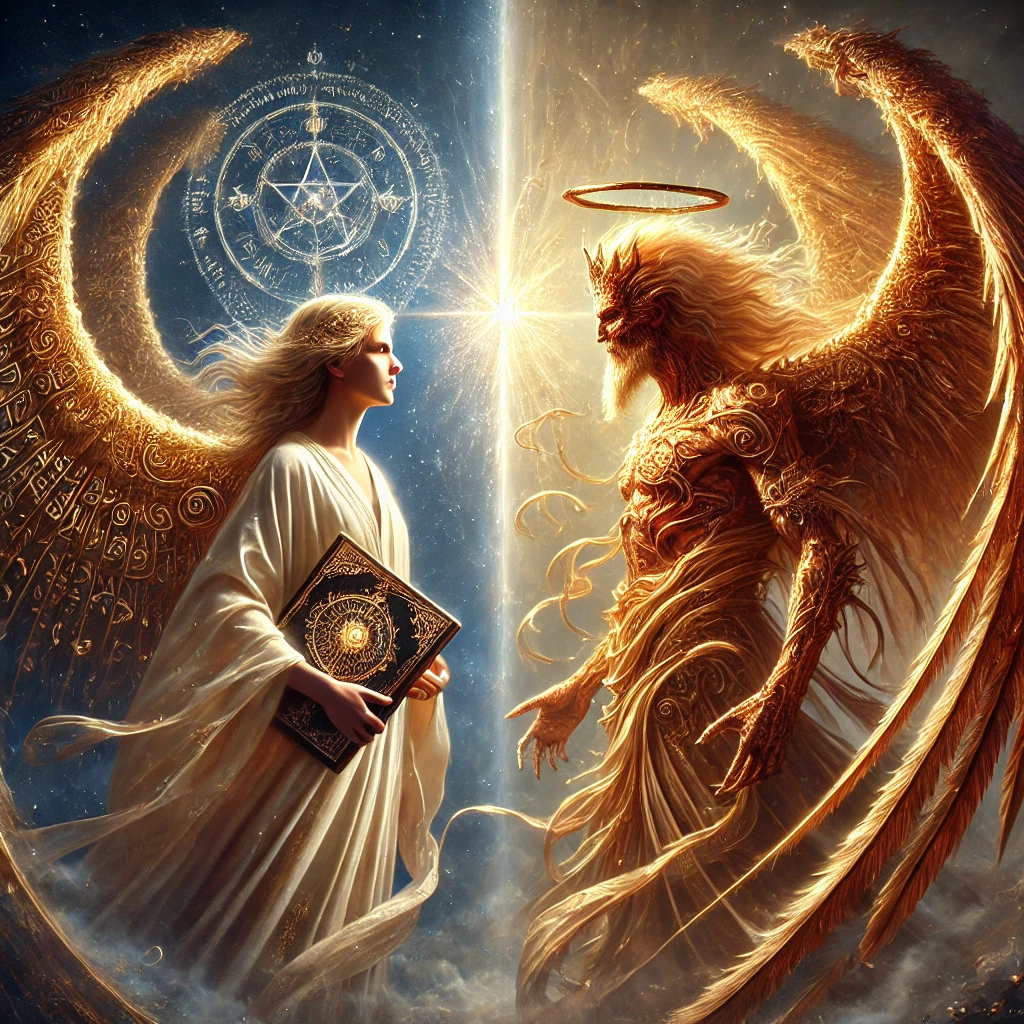
One may say that Raziel is the conduit of Gnosis, while Beelzebub is the destroyer of the search for truth; Raziel is the striving for cognition, for a deep understanding of the laws of the universe, whereas Beelzebub, on the contrary, extinguishes this striving, creating the illusion that there is no need to seek truth, that the unimportant can be taken for the important.
Raziel is connected with Netzach because cognition is not only logic (Chokhmah), but also inspiration, intuition, striving for higher understanding. Beelzebub, however, destroys intuition: the mind ceases to feel the difference between inspiration and an ordinary whim; he deprives thinking of depth, so that the search for truth seems unimportant, boring, or meaningless. This demon suppresses the very possibility of movement toward Gnosis, replacing it with a disorderly stream of emotions, desires, and impulses.
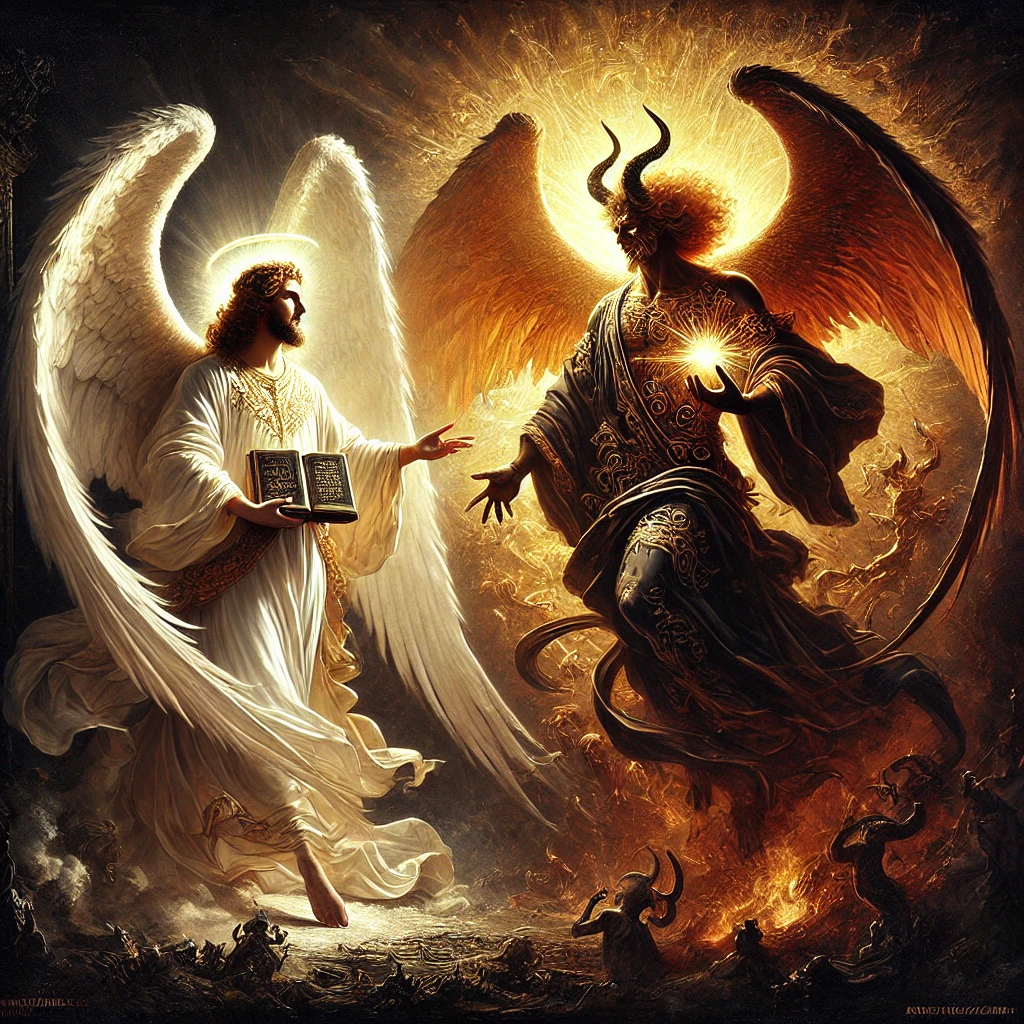
Indeed, the modern world ceases to value deep, multilevel knowledge and replaces it with emotional outbursts, and to such an extent that subjective feelings begin to be considered more important than objective reality, more important than facts. This is the manifestation of Beelzebub: whereas Raziel draws toward deep understanding through awareness of the structure of the world, Beelzebub destabilizes this very structure, turning cognition into a cocktail of emotions, whims, and caprices.
One can easily notice in our world the blurring of boundaries between logic and emotions, between objective knowledge and personal sensations, the substitution of rational search, critical reflection, and analytical thinking with subjective criteria like “it seems to me” or “I feel.”
This also manifests another force that has been active lately — the energy of the Archon Parapliks — suppression of cognitive activity, the replacement of the effort of cognition with an urge to quickly satisfy emotional needs. Whereas Beelzebub introduces chaos into thinking, blurring the distinction between emotions, desires, and cognition, Parapliks manifests on an even deeper level: it suppresses the very capacity for comprehension, stops the very act of cognition at the root level. Even the debilitating activity of Bael needs a primary desire that is satisfied in a distorted way — knowledge is replaced by the illusion of being informed. Parapliks, however, is an even deeper attraction to plunge the mind into fog, into sleep, to make it passive, incapable of apprehension and comprehension. It causes paralysis of the very mechanism of thinking. This is the force under whose influence the difference between knowledge and ignorance ceases to be felt: such a distortion of the perception of reality in which the world appears as an indistinguishable amorphous mass, where it is meaningless and useless to look for connections and meanings.
The influence of Parapliks is not a lie in the proper sense of the word, not simply distortion or “silencing”; it is the atrophy of the very ability to seek truth. It is under its influence that the modern world is flooded with streams of meaningless information, which are absorbed without comprehension or emotional living-through. It is its influence that provokes the loss of the ability to concentrate, to build logical chains, the transition to “clip mind,” where the mind loses the ability to perceive complex concepts. The result of such activity is the illusion of knowledge — when there is a lot of information, but there is no understanding, structure, or synthesis in it. If for the activity of Bael the possession of information (even if false, unprocessed) still represents a certain value, then the influence of Parapliks reduces the flow of information to a simple set of stimuli causing neurochemical surges in the brain, without any sense of their value at all.
At the same time, the matrix of Parapliks is a profound ignorance, closely connected with the activity of Beelzebub as well: Parapliks makes the intellect weak, incapable of apprehension, and Beelzebub fills this weakened intellect with chaotic emotions and whims. And conversely, if Beelzebub has generated chaos in the psychocosmos, Parapliks “extinguishes” the waves of this chaos, preventing its transition into the cosmos, and causing stagnation and asthenia of mind.
Thus, when the matrix of Raziel strives to return the light of awareness, it encounters a double barrier: first — paralysis of thinking, then — chaos of ideas. This is the main danger of Parapliks: it does not allow one even to begin the Way to Gnosis.
And it is clear that resistance to its influences is the restoration of clarity of mind, the return of the Apollonian light of intellect. Victory over it is the restoration of the very ability to think creatively; it is the restoration of the activity of the matrix of Raziel within oneself.
Thus, the liberating Way of Gnosis is both the revelation of wisdom and the overcoming of internal and external obstacles that hinder it. And this struggle is the confrontation of the forces of awareness and chaos, wisdom and intellectual death.
Good day. Allow me to ask:
If Wisdom has existed for a long time and we seek it, then why is there constant birth and death leading to the search for new experiences?
Does this mean that for the Forces, every new experience and new facet of knowledge are still important?
The reason for the cycle of births and deaths is not the desire for experience or the striving for wisdom, but precisely the lack of experiencing experiences, the incomplete extraction of lessons, the unrealizations – in general, the incompleteness of life and experiences. Nonetheless, another scenario: birth, gaining all possible experiences in this life, capturing them, and transitioning to the next stage of development – is only possible theoretically; in practice, this ideal is unattainable, and therefore the cycle of births and deaths has neither beginning nor end.
I do not agree with this; whatever the soul has achieved in this world, those abilities will pass into the next. Some just do not achieve much, seeking in the wrong place or not seeking at all.
2. The surges of Origins, a result of the Big Bang – is this directly related to the Most High as parts of his consciousness or a by-product, forced to somehow transform, due to the nature in the pursuit of wisdom?
That is, the Most High possesses full Wisdom, yet it appears that, by Nature, He is compelled to grow. The expansion (of consciousness) occurs according to certain laws.
Is gaining experience a forced measure or a necessary property?
You know, Enmerkar, not everyone is born with deviations in energy, and not everyone can be magicians, feeling this world differently)
As one D..s said, magicians are the cause of the Inferno’s emergence, which the latter fight heroically against, as the meaning and value of magicians (and humans as a whole) lie in their ability to shift space, creating breakthroughs in layers, allowing Other types of energies and beings to come through.
And perhaps we shouldn’t attribute all problems to demons, with whom one can indeed struggle, educating oneself and overcoming their influences; rather, one should begin to manifest will and start doing something aiming for awareness?
As has been discussed many times, demons are not only or primarily an ‘external’ force, but also (equally) the tendencies of one’s own consciousness: https://enmerkar.com/en/way/not-to-be-a-demon https://enmerkar.com/en/way/being-beset-by-demons https://enmerkar.com/en/magic/goetica-and-development https://enmerkar.com/en/way/imprints-and-the-origin-of-matrices So, the description of processes in the macro- and psychocosmos as a confrontation of various forces and influences does not ‘shift responsibility’; on the contrary, it teaches one to be an active agent, harmonizing the field of one’s responsibility – the psychocosmos and the areas of its ‘intersections’ with the macrocosm.
As always, there is a lack of cubic thinking, that is, two opposing points are considered. But what if there are four points combined into a cube: Azazel, the demon of the knowledge of the cosmos; Set, the demon of the knowledge of deserts, sociometrics, and social and otherworldly games. Raziel, the angel of gnosticism of our tree of the universe; and Ammachiel, if I remember correctly, the angel of the knowledge of the sephira Da’at, essentially connecting with other sephirotic trees through the abyss (gnosis of other universes). Here is the cube of interaction as the simplest unit of cubic logic.
Thank you for the Light of Knowledge!