Beings and Matrices
One of the key differences between the traditionally magical worldview and the newer, psychologically oriented one is the perspective on the nature of manifestations of consciousness.
Magic is a worldview that recognizes the will of particular beings as the cause of manifestations. In other words, from the traditional point of view the process of choosing reality — the transition from a pluripotent, probabilistic mode of existence to a concrete, determinate form of manifestation — occurs under the influence of volitional action. Modern quantum physics acknowledges that the presence of an observer is a necessary condition for the “collapse of indeterminacy”, the beginning of determinate existence for any phenomenon or process, while the traditionally magical worldview insists that such an observer must be some volitional being. Thus the Magus seeks to “find the culprit“, — that is, to identify this volitional source of manifestation not out of simplemindedness or from a fear of accepting the world’s uncertainty, but in order to understand the very nature of manifestation, since the creator of any reality leaves their imprint on that reality.
We have repeatedly said at the heart of the Myth lies the idea that the ultimate limit beyond which one can speak of existence is the primary mind/environment duality, since the original Unity, the Great Spirit, is equally transcendent of both being and non-being.
At the same time, mind and environment, as metaphysical abstractions, are unmanifest and indeterminate, and the world of existence is the result of their mutual interpenetration, mutual reflection.
The mind as an absolute category, “in itself”, is as unmanifest and undifferentiated as the environment, and in order to realize its nature — to know — it “contracts“, isolating distinct “flows” within itself, subjects of varying scale.
Each such flow, to manifest, “relies” on a corresponding “vessel”, a “conductor” of a given nature — a body or a succession of bodies. Thus a volitional agent who creates and transforms reality is always some flow of mind that rests upon some body.
Typically such flows of mind are dynamic, fluid, and mutable; in the course of their interaction with the environment — of knowing the world and themselves — various states alternate within them, which may be more or less stable.
The states in which a flow of mind is predictable, its behavior more or less regular and determinate, are called “matrices” of mind or its “measures” (Heb. midot, מידות). Clearly, these matrices can be more or less structured and stable, and can exert different effects on a flow of mind, promoting either its development or its decline.
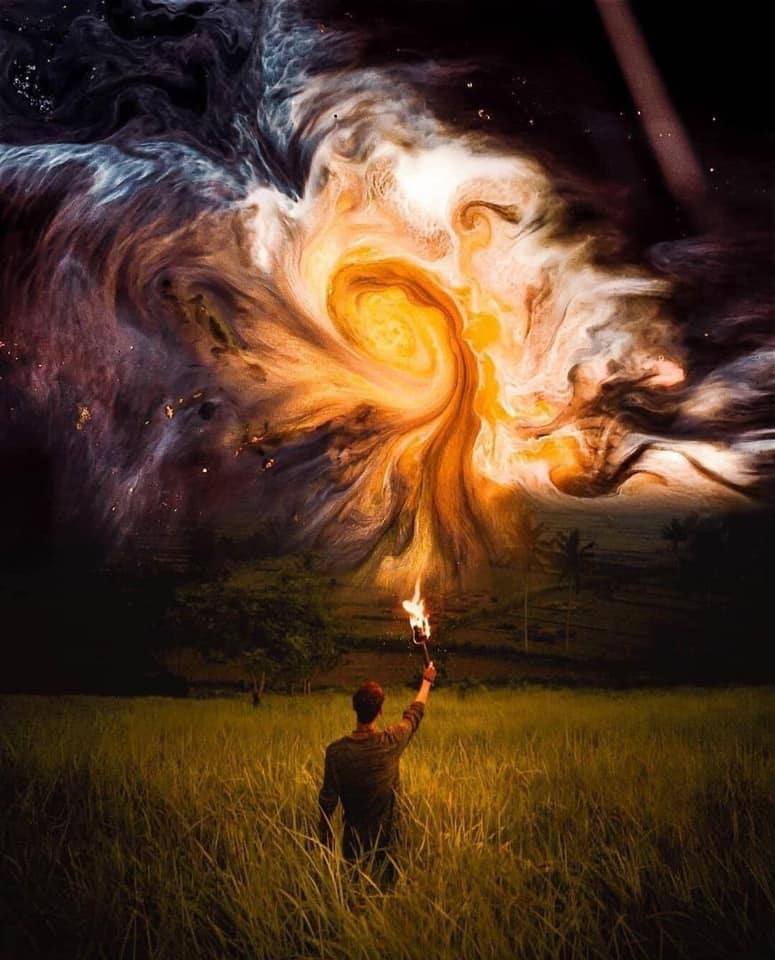
Most mythological images encountered in traditional worldviews are precisely such matrices, more or less stable patterns of manifestation of mind. However, whereas a psychologically oriented description tends to assign them only an intra-mental psychological reality, in magically oriented systems they are also considered as relatively independent, particular, volitional agents.
In other words, the traditional viewpoint points out that any stable matrix of mind is not only an “archetype”, a psychological structure, but also a particular agent of a physical or metaphysical level.
It is believed that any stable matrix appears in the common mind when some being for the first time discovers and actualizes within itself such a stable state that becomes its dominant nature.
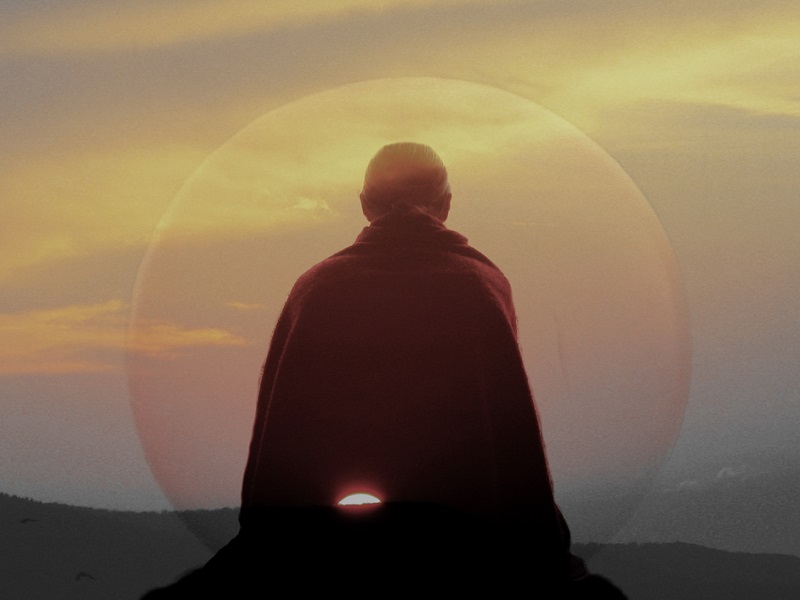
For example, when one of Buddha Shakyamuni’s disciples fully realized within himself the matrix of absolute compassion, the image of Avalokiteshvara appeared in mind as such. After that, a great number of people who found and realized this matrix effectively became embodiments of Avalokiteshvara — that is, they used the possibilities of that state of mind to transform and liberate their flows.
It is clear that for many matrices it is impossible to trace their origin at our level; however, the essential tenet of the magical worldview is the notion that each matrix has its “ideal bearer” — a being in whom it is manifest most fully.
Although any Magus practicing theurgy can, by activating the corresponding matrices, “take divine forms“, this does not deny the existence of “prime matrices” — “living gods”.
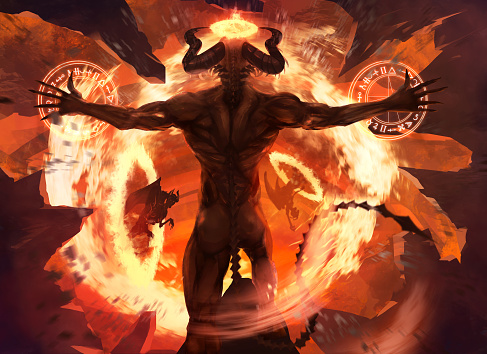
The same story applies to angels and demons.
Any human flow of mind can manifest all the 72 Gates in both their “positive” and destructive forms, and any person, for example one captive to “rationality”, carries within them a more or less active matrix of Astaroth; however, this does not reduce the image of the Archdemon to merely a set of glitches of the mind. For the Magus, behind these glitches there is a real figure, an agent who is the “pure embodiment” of that principle.
For each traveler, of course, it is their own choice whether to accept the ultimate reality of mythological personages or to assign them the role of archetypes, patterns of mind. In any case, the measure of success is practice — how and to what degree the given worldview helps achieve harmony both within the mind itself and in its interaction with the “surrounding world”, and also how much activity in accordance with the adopted worldview contributes to the expansion and liberation of the flow of an individual’s mind.
Thank you for the article!