
Probabilities and Their Flows
The idea that the manifested world is a field of self-knowledge of the Great Spirit, viewed as the sum of its differentiated aspects, is cornerstone for many paths of consciousness development.
At the same time, this conception is often misunderstood. On the one hand, people sometimes conclude that, since the Great Spirit is absolute and perfect, incapable of change, the cosmic process must be merely an illusion, a “dream of the Absolute.” On the other hand, if one accepts the manifested being as real, it can seem that the Great Spirit “needs” manifestation, and thus is not free.
We have already said that both errors result from applying dual concepts to a non-dual reality, and Magic strives to avoid such mistakes by introducing the notion of a field of probabilities — a field of chances (possibilities).
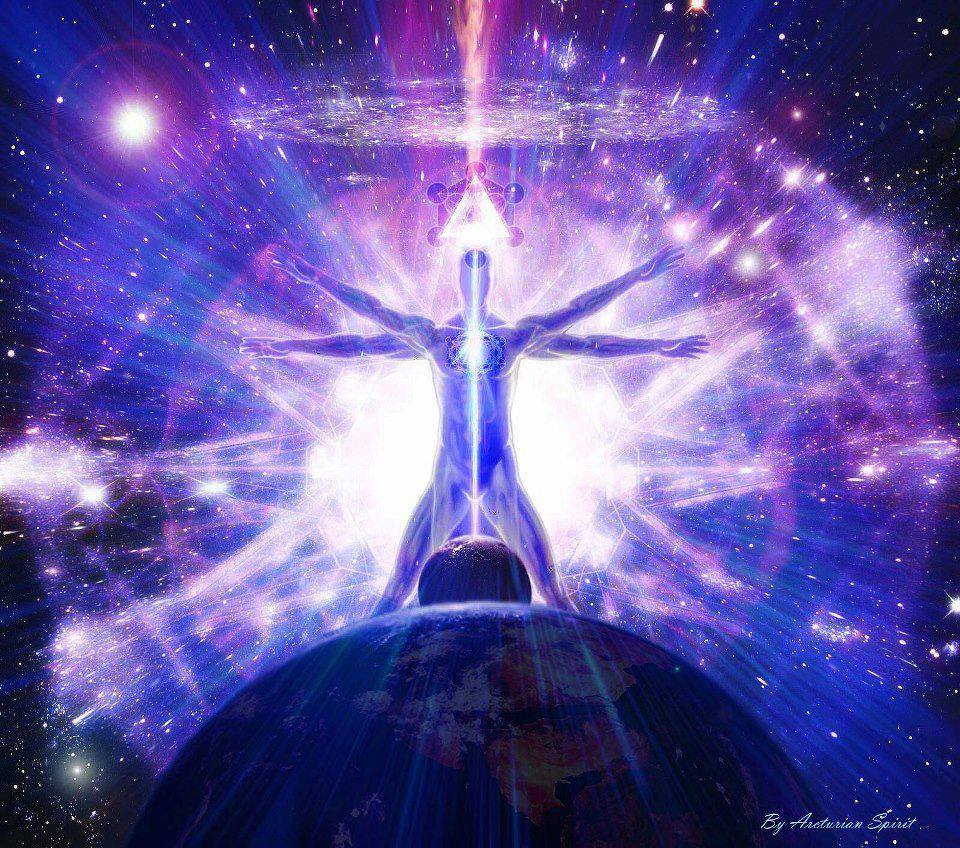
From this point of view, the Great Spirit, the world-fullness, which can also be seen as absolute emptiness, is simultaneously fully realized and completely homogeneous; it has always known itself and never began; it is at once one and many, beyond existence and non-existence. Yet at the same time it is free from the necessity of being one, and therefore one of the infinite forms of its self-awareness is the apprehension of itself as a multiplicity of individual perspectives — monads — engaged in self-exploration within a chain of actual manifestations.
Thus the fullness of the Great Spirit’s manifestation may be considered both in terms of its integral aspect — as the Pleroma — and in terms of its differentiation — as an assemblage of self-realizing spaces.
In other words, the concept of a “multiplicity of universes,” now gaining traction in modern physics, has long been a practical map for Magic. On the one hand, manifestation follows laws — certain causes lead to certain effects at each given level of energy — and on the other hand the world-fullness is simultaneously manifest and potential. From this arises the “multiplicity of manifestations,” the space of probabilities, which is the working field of the Magus.
Because every possibility of self-knowledge, and therefore every possibility of self-manifestation, of the Great Spirit must be realized, and because the category of time is relative and exists only within its specific causal chain, the world can be pictured as an assemblage of countless states, each internally lawful and closed, yet each merely one variant among an infinity of probable states of manifestation.
From this perspective the set of properties, qualities, processes and agents bound together by their causal links becomes the “actual” reality for a given flow of awareness, while all other probable states remain potential for that flow. Conversely, states that are actual for one flow are potential for another. This yields innumerable quasi-states, each characterized by its own configuration of actual and potential energies and manifestations, a configuration that is continuously changing.
In order to delineate each such flow, Magic introduces the notion of the self as the mind’s awareness of such a flow — that is, as the actual manifestation of the individuality of a monad. Thus it follows that by virtue of distinct awarenesses there exist separate worlds. The more inwardly closed the self becomes, the more fixed — and therefore less capable of development — becomes the world of its actual manifestation.
A second crucial point for Magic is the idea that flows of probabilities do not move from one state to another spontaneously, but under the influence of desire impulses — forces that do not arise directly from the system itself but are rooted in absolute fullness, the Pleroma. Since each impulse must be realized, three principal courses of such realization are possible: 1) the impulse is realized within the causal chain, which continues its smooth course — this is the evolution of manifestation; 2) the realization of the impulse leads to a substantial change in the flow of manifestation, altering the properties of that flow and shifting it into a new causal situation — a revolutionary change in the flow of probabilities; 3) the impulse cannot be realized within the actual flow and slips into a “virtual” reality. Clearly, Magic is most interested in the second route, since it is precisely this that allows one to reach higher states of consciousness.
The first route is what we encounter in “ordinary” reality; the third route creates the dreaming space — and of course what is actual for one flow of probabilities may be virtual for another, and vice versa.
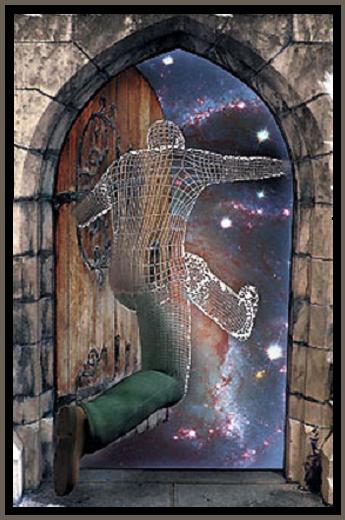
As for the second route, favored by Magi, it is clear that for its realization the impulse must possess significant additional energy, and the entire magical “pursuit of opportunities,” all magical realizations, require precisely this additional energy.
From this arises the Magus’s essential notion of “sickles” as objects that add energy and of leverage points necessary for any serious realization — that is, for changing the direction of the flow of probabilities for a given self or individuality.
We repeat: from the standpoint of Magic, flows of probabilities, “parallel universes,” are separated not by walls but by barriers of perception, a property of individuality, manifested in the self of the perceiving minds.
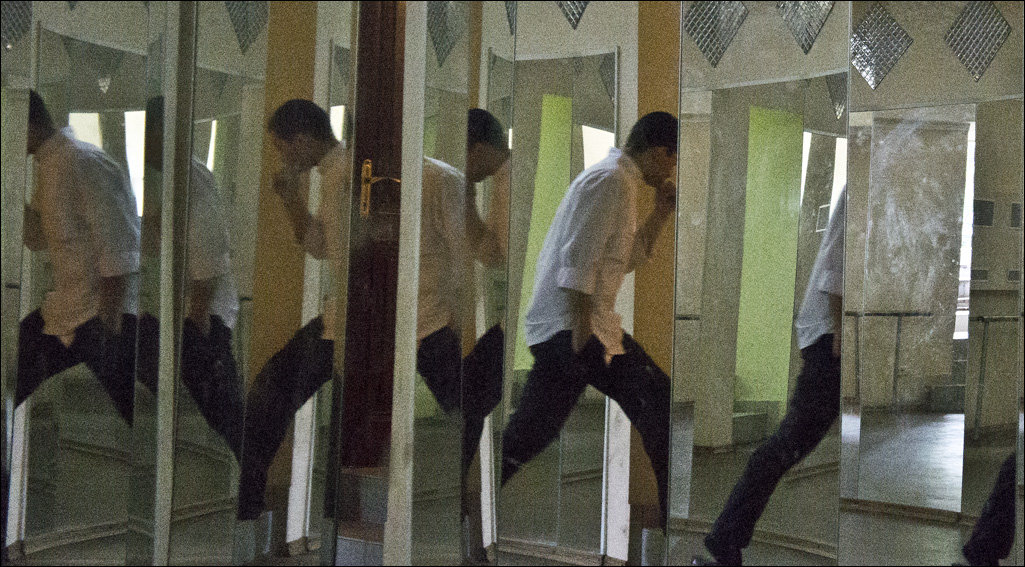
Each self continuously moves from one flow to another depending on which impulses it realizes, yet because of the countless possible states it does not notice this transition, experiencing its life as a single continuous process. Under the influence of our choices, we are constantly encountering and departing events, beings, and forces operating in different flows, but it seems to us that we are interacting with the same being or the same stream.
Only when beings make synchronous decisions, decide synchronously, and realize synchronous impulses does the contact between their selves remain, and in such cases people speak of “related souls” or “monadic families.”
Thus a Magus must clearly understand that the world consists of flows of probabilities, and every action he takes changes his self’s membership in one or another flow, in one or another chain of cause and effect; and if he wishes to effect these changes consciously and purposefully, he needs both awareness (Authority) and energetic power (Power).
Leave a Reply