
Chance in Magic

One of the key, yet little-discussed, concepts of magical practice is the notion of chance. Traditionally, a chance is the concurrence of circumstances that briefly creates a new opportunity, the use of which changes the direction of the flow of events.
In other words, in a chain of events — where each subsequent event follows from the previous event — a ‘weak link’ sometimes appears which, if broken by active exertion of will (it is worth noting that autonomous beings with undetermined wills can possess a chance), a person can significantly alter the subsequent course of events, more or less significantly severing ties with prior influences.
Opinions differ about the frequency of chance occurrences and whether that frequency depends on the level of Power. Experience suggests that the frequency of chances apparently doesn’t depend on the chosen Way or the level of Power, being a spontaneous feature of the flow of events. It is considered, nevertheless, that a chance can be “attracted” by loosening causal links persistently. For example, various unconventional practices, or using the fashionable term ‘non-doing’, serve precisely to attract chances. No matter how much the fabric is shaken, there is no absolute guarantee that a chance will appear and no recipe to ensure its occurrence. In any case, one can speak only of increasing the chance of a breakthrough, not of guaranteeing it.
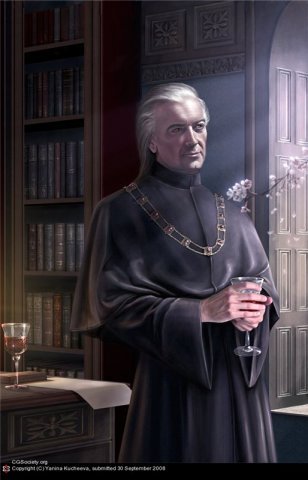
Schools also differ in their views on the significance of chance in the life of a Magus. Some Schools (let us call them “evolutionary“) prefer a deliberate restructuring of the flow of events, a gradual change so that the expected result becomes an inevitable outcome. This is precisely how the schools of the Rosicrucian tradition proceed, insisting on the necessity of prolonged “inner alchemy”, in the fire of which the mortal human is gradually transformed into the Initiate’s sacred Philosopher’s Stone.
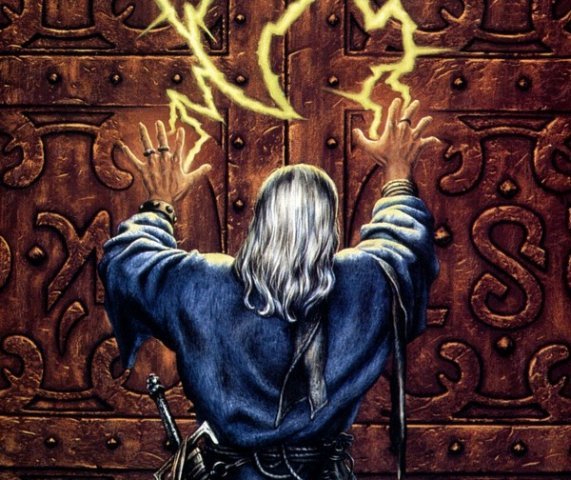
Other Schools (let us call them “revolutionary“) prefer to use chances that allow significant evolutionary leaps and pay special attention to training to track emerging chances and methods to exploit them. These include, above all, schools with a strong spiritualist element: for example, “classical” Ceremonial Magic (as it existed before its “cultivation” and “Hermetization” by the magi of the Golden Dawn), as well as pagan magical schools.
As any fluctuation in the Great Flow of Power, a chance is a rather capricious phenomenon. For a Magus who chooses the Way of “hunting chances”, it is very important to understand a number of peculiarities of this phenomenon. First, as noted above, no methods of “attracting” a chance ever give a 100% guarantee of its appearance. Second, as with any change in the Flow, a chance is preceded by a “sign of approach”, whose notice allows the Magus to be better prepared for it. It should be noted once again that even a correctly interpreted sign does not provide full certainty that the chance will actually occur; therefore the recognition of such signs is an important element of magical attentiveness. Third, a chance can be easily nullified, or, as some poetically say, “scared off”. For example, very often even talking about a possible chance leads to that chance being realized virtually, in the minds of those discussing it, and this imagined realization can block real manifestation. At the same time, in other situations, by contrast, keeping quiet about a nascent chance robs it of the power to manifest. Sometimes a nascent chance may need to be actively pushed by some action; sometimes — on the contrary — one should keep a low profile; and sometimes it is important to spot an obstacle promptly to the chance’s appearance and then remove it. Since a chance is not always desirable, sometimes one must, conversely, avoid it or try to diminish it.
All of the above underscores the necessity of exceptional alertness, sensitivity, and agility in the “chance hunter”. Cultivating them is central in the training of “revolutionary” magical Schools.
Let us once again emphasize that the history of Magic demonstrates the effectiveness of both the “evolutionary” and the “revolutionary” approaches to increasing one’s level of Power. Which approach proves more successful for any given person depends on the individual’s nature.
Doesn’t ‘non-action’ serve as a way to increase personal energy?
The term ‘non-action’ is equivalent to asceticism for me. The goal of asceticism is to obtain new personal energy or abilities.
‘Non-action’ is a way to ‘stop the inner dialogue’ (the chatter of the parasite of consciousness), and whether this results in an increase in personal power or acquiring a new ability is just a consequence.
I have the impression that the chain of events is more like a game of chess. At some point, the right to make a move temporarily passes to a person, enough time to make a decision, and then for a more or less long period, ‘fate’ makes its Response Move. In the moment of decision, a person is free. In the next moment, they are already a ‘victim’ of the consequences of that decision.
In a word – “whatever happens”, but keep your head spinning 360 degrees non-stop 🙂
Tell me, Enmerkar, would establishing some sort of “signal” alert system for when such opportunities arise and marking the so-called “standard” signals provide the mage with a clearer tool for determining such opportunities?
This “notification system” should be the attention of the magician. 🙂
Non-doing is not the stopping of the Will of the Divine. IMHO – Non-doing is either doing familiar things from an unfamiliar perspective and with a new balance of invested energies, with the goal of gaining new experience and expanding consciousness applicable to the mundane (this helps to be aware of the actions that can be done automatically) and also for gaining experience in tasks we have not done before, to expand the general points of view on the world and weaken tonal shields to better perceive non-tonal knowledge.
Generally speaking, chance or lucky break is that which breaks the law, disrupts regularity, and destabilizes the system. From this, it follows that the so-called ‘dark forces’ are responsible for introducing chances into the system. It is no coincidence that people have always considered such treasure troves of chance as, for instance, gambling or stock trading—as all from the devil.
In Greece, kairos or lucky breaks were moments when a ‘window’ formed in the fabric of fate, and directing an impulse of action into this window, a person could change their fate. It is not easy to see such moments, as the inner predator activates and tries by all means to divert attention or even paralyze consciousness, making it incapable of action. The more charge of power the consciousness possesses, the higher its ability to ‘illuminate’ such moments in the flow of events. A sign that reality begins to ‘leak’ and may soon offer a chance is the appearance of a set of synchronicities, like extremely unlikely coincidences.
In short, one could say that a chance is an opportune moment for making a volitional act of creation in time that will disrupt the current inertia of the system and change the direction of its development.
What happens when a sudden paralysis of will occurs at the appearance of an opportunity, an inability to seize the chance, unpreparedness for it? Who makes one ‘go into reverse’ at such moments? How can one always be ready?
This influence is called ‘Germarmen’: https://enmerkar.com/en/way/cosmic-fatum
Very interesting. Thank you.