
Spirit of the Western Way
We live in a mysterious world — a world filled with mysteries, and which itself is Mystery. A primordial mystery, moreover, insoluble.
The mystery of the world is not a secret. It is a fundamental property of being.
In other words, this mystery can and must be explored endlessly, yet it can never be fully solved…
People are usually quite sure that both their most terrible fears and nightmares, and their most beautiful dreams and longings, are nothing but fantasies. But as soon as the ordinary, routine course of events is disrupted, as soon as the seeming solidity of everyday existence is shaken, as soon as one feels the pressure of the Unknown in the presence of death, madness, or an irresistible compulsion to act, a human being — just as in immemorial times — instinctively feels the mind giving way. And in the depths of the soul there resounds that long-forgotten voice of Mystery.
We live in a world where people are capable of working wonders — that is, performing deeds that are incredible from the generally accepted point of view — simply by not even believing in them, but merely by seriously allowing the possibility of such deeds.
Why? — Why not?!
If a person can do something, they must do it!
And Mystery surrounds them everywhere.
And as soon as we acknowledge its presence nearby, everywhere, within and outside our being, an acute need awakens in us to attempt to unravel the mystery of the world.
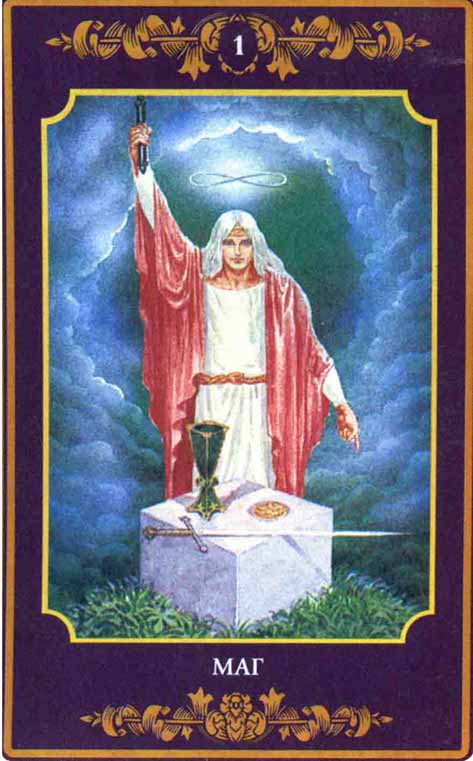
People who “professionally” devote themselves to unravelling the world (of course, without final result — and herein lies the wonder) are traditionally called magicians. And the life of a magician — the sum of roads, directions, and paths that can be gathered into a system called the Western Path — is the journey of a warrior, which, as is known, is easy to observe, but difficult to undertake oneself.
Magic is a dangerous word, burdened in our world with a host of the most absurd associations. And yet it is precisely this word that most adequately reflects the essence of the Western Path.
We will not now engage in a comparative analysis of the Western Path as one among many. We will not search for individual points of difference — no single distinction by itself conveys the specificity of this particular Path. Only a complex of ideas, methods of seeking, and modes of action weaves the unique fabric of the Western Path.
Two key words must be clarified at once. These words are Magic as the name, and Myth as the mode of existence of the Western Path.
Let us define Magic as the art of becoming aware of the ambiguity and mysteriousness of the world, and of acting in accordance with this awareness; and since there is nothing in the world except mysteries, we may define Magic as the art of authentic living. Magic is a way of self-knowledge and of acting in accordance with what has been known.
As they say, magicians are professional dwellers. That is, they “simply” live — but they live in the best, that is, the most honest way.
This means that magicians refuse to live a false life in a false world — as most people do; they refuse to artificially limit their possibilities, and above all — the possibility of becoming aware of the World Mystery.
That is the point. The Mystery cannot be solved, but it can be Realized. Then a wonder occurs.
So what is there in the world, apart from magic?
Any magic begins with a person’s awareness of their own mortality. Final mortality.
Without an immortal soul, without reincarnations, and the like.
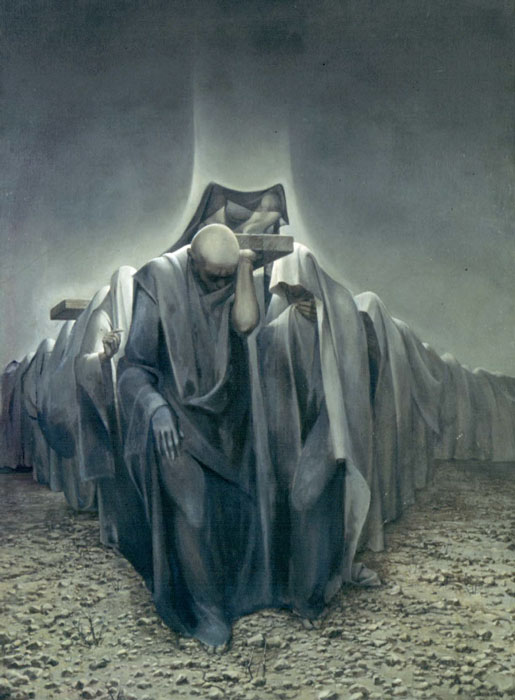
And magic is the search for a way to change this situation.
Throughout human history, countless methods have been developed, often the most sophisticated, for prolonging human life. At the cost of other lives, at the cost of lowering one’s own evolutionary status, and at the cost of who knows what else, magicians have sought to postpone the inevitable.
Thus, the Western Path is one of the paths to immortality. Let us immediately stipulate that the very notion of immortality is extremely complex and ambiguous. And individual. So individual that it is not even worth attempting to find a general definition for it. For some it is eternal bliss in paradise, for others — immortality in their children or creations, for still others — spiritual evolution, and for yet others — something else again.
And magicians pursue their goal methodically and single-mindedly.
This methodical quality is based on the conviction in Magic that in nature one definite event is inevitably and invariably followed by another definite event, if their course is not interfered with by a personal acting principle.
In other words, the same causes always lead to the same effects, and everything that is born must die. But magicians have found a way to die while still alive, retaining awareness. And thus they have gained a chance to preserve it even after the death of the body.
To this end they develop their consciousness to such a degree that it becomes capable of crossing the boundary between life and death.
At the foundation of the magical approach to the development and expansion of consciousness lies a deeply pagan conviction that everything in the universe has its place and purpose, and that any experience possesses potential value. The perfected human being, which is precisely what the magician strives to become, must experience everything and master everything.
This means that magicians strive for a maximum of experience; however, a magician is not someone who tries everything indiscriminately. The magician’s experience is systematized, ordered, and controlled.
Everything that a person is aware of and can become aware of must already be present within their constitution. In other words, we see outside ourselves only what is within us.
Magic asserts that a person can draw to themselves any Power in the universe by transforming themselves into a vessel adapted to that Power. Therefore Magic is the science of how to understand oneself and one’s own state, and translate that understanding into action, for the path to Power lies through action.
The actions of the magician are the manifestations of their activity. Yet at the very foundation of the nature of any being there is an inseparable union of the passive-receptive principle and the active-creative principle. One cannot be aware of oneself other than as both creator and creation at once, and in every manifestation of one’s being both principles invariably participate. Therefore, the notion that a person creates the outer world and is themselves its creation is yet another characteristic feature of the Western Path.
In developing the creative principle within themselves, the magician acknowledges no higher power; they do not appeal to the favor of some changeable and capricious being; they do not abase themselves before any fearsome deity (the magician honors all that exists, but reverence is not submission!).
For the magician, it is unimportant what gods, spirits, and so on really are, whether they are real beings, personifications of the Forces of nature, or embodiments of the magician’s own personal qualities. The magician relates to them with utter seriousness, as to the ultimate and highest reality, since it is precisely interaction with them that serves as that priceless source of experience and Power toward which the magician strives. At the same time, their Power, however immense they may deem it, is in no way arbitrary or unlimited. They can use it only so long as they observe the rules of their Path.
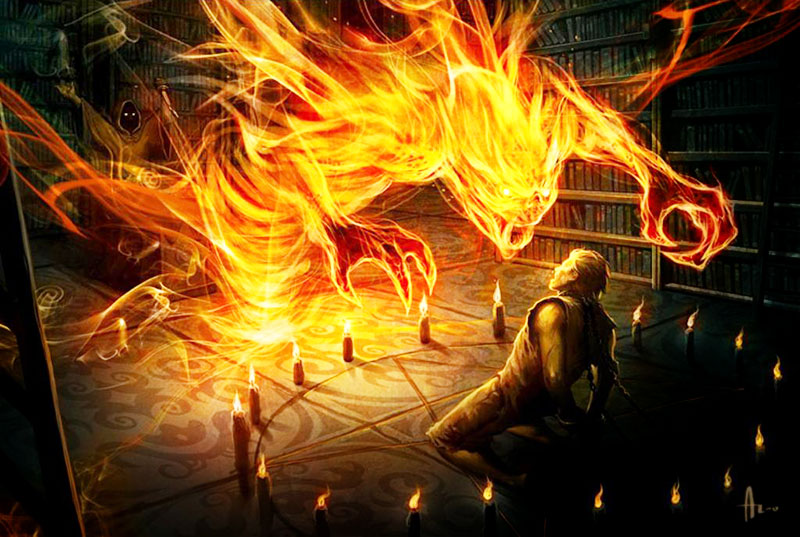
At the same time, the magician is an actor upon a cruel stage. The Forces with which they interact do not forgive the slightest mistake, the slightest manifestation of weakness or cowardice. The sacred madness of the magician demands exceptional sanity; otherwise they risk crossing that fine line which separates them from the psychopath and the schizophrenic.
The “strangeness” of a magician’s behavior is connected with the fact that people’s expectations and criteria for judgment are conditioned by views that are false from the standpoint of Magic. Therefore a magician who wishes to cross the threshold of Power must change their being, transform it from a state of weakness and disintegration into a state of Power and control — that is, in fact, be born anew — and to this end they must inevitably experience the complete disintegration of their personality. They work unceasingly to destroy all sorts of assumptions — both about what ought to be and about what is. Any notion for the magician is nothing more than a hypothesis, adopted for the sake of convenience in work. Nevertheless, at each specific moment the magician relates with utmost seriousness to the adopted hypothesis, as to the only important one, and then discards it with complete ease when it is no longer needed.
As has already been mentioned, Magic proceeds from the idea that a human being, on one hand, is a reflection of the Universe, and on the other hand, the Universe is a reflection of that human being. Therefore there is no fundamental difference between outer and inner. It is impossible to say where, in reality, the magical act takes place: inside or outside the magician. And it makes no difference where the magician acts, if their actions bring the desired result. If they do not bring the desired result, that is all the more irrelevant.
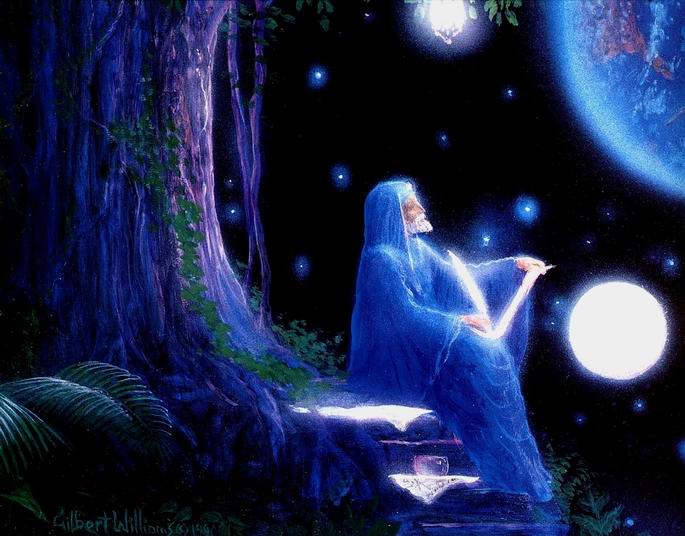
The very fact that some opinion or description has existed long and widely enough necessarily shows that it is in some sense true — specifically, psychologically true. The basis of the magician’s worldview is the magical Myth. It is precisely within the Myth that the magician finds explanations and justifications for their own existence.
Before turning to the actual content of this Myth, let us speak briefly about myth as such.
Let us call a myth a way of describing the world adopted either by an individual person or by an entire culture. And since perception is based on description, we can say that myth is a way of perceiving reality. In fact, the only way, because everything we perceive is interpretation, and therefore — MYTH. Thus, existence within myth is one of the essential features of the Western Path. Mythic thinking implies a search for the causes of observable phenomena, the aspiration and ability to see these causes among actively acting, volitional, and self-aware subjects.
In this way the notion of panpsychism arises naturally, or more precisely — the universality of awareness as a phenomenon. However, the Western consciousness is also characterized by a striving to construct abstract schemes to describe the Ineffable. That which cannot be expressed in words, that which cannot be conveyed in concrete images, can be approached through abstract symbols. Among such schemes are the Tree of Life, the Tarot, the Runes. The austere simplicity of these signs emphasizes the ultimate unambiguity of being. Therefore, according to magical ideas, the Powers governing the world can with equal justification be regarded as entirely personal or as absolutely impersonal — this is yet another of the lessons of the Western Path. Likewise, awareness can be described with equal success as a “spark” of divinity and the like, or as the result of the simple interaction of energies.
In light of the above, it becomes clear why the Western Path is a strictly practical, concrete system. Concepts like the “true Self,” “spirituality,” and the like do not occupy an especially important place in it. In their quest the Western magician strives for harmony of their own constitution — for a state in which their steps are relatively free and lead to an increase of their Power, and not to “spiritual growth,” since the latter notion is devoid of meaning for them. The harmony of existence to which magicians aspire is manifested in the fact that the whole constitution of the magician, as an integral system, moves in concord. The magician does not feel inner friction — and strives not to feel outer friction. Like water, the magician flows easily and flexibly through obstacles on the way to freedom. Like fire, their desires are untamable. Like the wind, their thoughts are light and swift. Like mountains, their intentions are indestructible. All the elements, all the parts that form the personality of the magician, must be in agreement and equilibrium. But this equilibrium is dynamic, for the magician is an extremely mobile, “superfluid” system. I have already said that one of the driving motives on the Western Path is the aspiration to expand awareness, to attain the maximum possible quantity of experience and lived feelings. Yet these processes are not considered in terms of “higher” and “lower,” “growth,” and so forth. They are changes. And they have meaning only when they have value — that is, when they lead to Power. Once more: the true and ultimate criterion of any attainment is its capacity to confer Power.
Yet we have already mentioned the word “Power” far too often without explaining what the Western magician puts into this concept. Power is a person’s capacity to realize their Will. Thus the Western Path is above all the Path of Will.
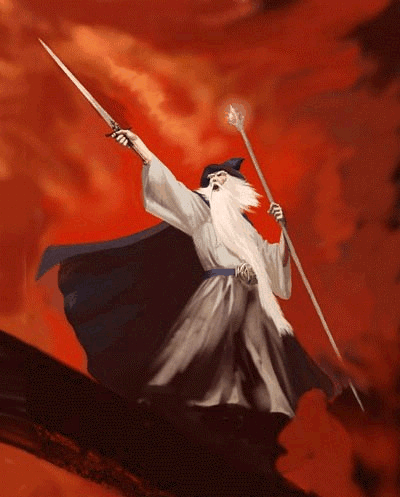
Neither mind nor feelings have ever held for the Western magician the same significance as Will. And between these last two the magician has always given primacy to Mind. This is yet another of the characteristic features of the Western Path. This path is the path of critical, logical, and analytical thinking; the path of goals, tasks, and directives. However, the magician’s thinking is not restricted; it is flexible, disciplined, and holistic. The magician acts in accordance with what they consider appropriate at a given moment. They strive, I repeat, not for “spirituality,” but for practice. Yet this does not mean that the magician is “unspiritual.” Power is also the sense of the unity of the universe, of the continuity and sacredness of Life. The magician simply does not flaunt their spirituality or put it on display, believing that actions are more important than words.
The Western Myth says that the world is not an idyllic picture in which everything becomes better with each passing day. The world is a harmonious coexistence of predators, and the magician is oriented toward survival in this world with the least possible losses. It is precisely for this that Power is needed. The magician is centered on the self. And at the same time they do not hinder the world, do not agree with it, but also do not wage war upon it without urgent necessity.
If Eastern culture is characterized by the identification of subject and object: “Thou art That,” then for the Western worldview the fundamental principle is the Law of Analogy: “That which is above is like that which is below, and that which is below is like that which is above.” Similar, but not identical. The only thing of which the magician can be certain is their own being, their unique way of seeing the world. But individuality is not to be confused with personality. Personality, from the vantage point of the Western Myth, is a product of conditioning. There is no Power in it. In individuality — there is.
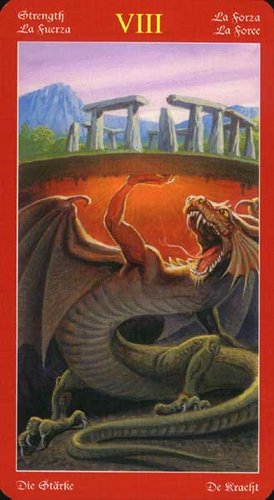
Another key feature of the Western Path is the magician’s striving not only to accumulate Power, but also to control it. Magicians understand that it is very difficult to accumulate Power, but incomparably more difficult to control it. Uncontrolled Power brings destruction.
To accumulate Power and simply let it burst out is, first of all, to end one’s manifest existence. And this is directly opposed to the aspirations of the magician. Thus — control, control, and yet again control. And responsibility.
Responsibility is the state in which the magician’s self-identification is most complete. It is the state in which they clearly understand that external events are a reflection of their inner condition, and that their inner condition is shaped under the influence of Will. Therefore the magician does not judge themself — or rather, does not condemn. They acknowledge their victories and their defeats, but not as a pretext for pride or regret; instead, as evidence of correct or incorrect tactics, and in accordance with this they plan their further battles. Control over Power and the acceptance of responsibility for one’s actions are inseparable notions, crucial for understanding the essence of the Western Path.
It may seem that the world of the Western magician, with its centering in Will and Mind, is cold and inhospitable. And this is so to some extent. But not entirely. Yes, the magician does not simply admire the manifestations of the elements as do devotees of “high spirituality” and adepts of the “cosmic mind” — or, more precisely, their admiration is not aesthetic, but energetic. The magician strives to cooperate with the Spirits of the elements in order to gain Power, and hence — to survive. And despite this, the Western Path is the path of love. Not sappy and hysterical, but strong and selfless. Magicians clearly understand that it is impossible to desire “for oneself” alone. In principle impossible. Yet without fullness of desire there is no fullness of Power. And the Will of the Western magician smashes all obstacles in the path of love. For the magician, Power and nobility are synonymous. The magician learns to love themself, and love of self compels them to love all that exists, for Life in its essence is one and continuous.
And here we come to yet another complex of ideas of Western Magic. The problem of the authenticity of perception, and therefore of the authenticity of life, is one of the key issues in this Myth. I have already mentioned that Magic proceeds from the idea that people live a false life in a false world — a world they did not choose, a life imposed upon them. The criterion of an object’s authenticity for the magician is that object’s ability to generate energy. And it turns out that most objects in the world are incapable of generating energy. They are only illusions, dummies that lend to the world the continuity it once possessed and has now lost. Equally false are the qualities of human beings themselves. What people usually call thoughts are in fact operations upon information; instead of feelings — responses to external irritants (equally unreal); instead of will — reflexive, chaotic movements. Magicians introduce the distinction between emotions (as a response to an external stimulus) and feelings (the action of Power), between needs and desires, between mind (from “to be able,” that is, to know patterns of action) and reason (that is, the capacity for “understanding” — for grasping the essence of things and processes). And the ability to distinguish these pairs is one of the important skills of the magician.
Truth expressed without contradiction is not truth. Such is one of the postulates of Magic. And this is yet another reason why magicians shift their attention from the world of words to the world of actions. A human being is in principle incapable of accurately conveying their thoughts to another, let alone their feelings. Each person lives in their own unique universe, which revolves around them. And there is nothing wrong with that. Training in Magic is not “upbringing” in the sense that the teacher must change the student. Rather, the guide seeks only to change the student’s perspective, to broaden it, to teach them to place accents in their actions so that these actions lead not to the loss, but to the acquisition of Power. Thus the teacher on the Western Path is not quite a teacher, but rather a guide with whom the beginner undertakes a joint journey, full of dangers and surprises, called the Western Path. Both — the guide who knows the way, and the one who travels it for the first time — are exposed to dangers together. Predators do not choose their prey based on how well it knows the road. And the result is a shared attainment of the goal, a shared accumulation of Power. The more honest the battle, the more authentic and sincere the motives, the closer the victory. The nearer the goal — the realization of the magician’s potential.
And this is yet another of the basic concepts of the Western Path. Magic regards the cause of the manifestation of the world and the birth of the human being as the drive to realize unmanifest potentials, the path to which lies through filling them with the light of awareness. It is awareness that is the cause and the purpose of existence. And therefore it is upon the expansion of awareness that Magic places its primary emphasis.
Awareness can be expanded in a vast number of ways. Magic is one of them. It should be noted that magicians have never considered their path — full of dangers and hardships — to be the best or the only true one. They simply knew that this was their path. And they walked it with joy and readiness. For attainment comes when there is not only the desire for attainment, but also readiness for it.
The path of Magic is the path of freedom — a path that does not bind one to any particular system of views or beliefs, to organizations or teachers, for freedom does not grow out of slavery. It is the path of Knowledge, which is Power. It is the path of actions that lead to Knowledge. It is the path of Will that governs action.
The path of the magician is the path of harmony with oneself and with nature. It is a way of observing and listening, but also a way of acting. And so — step by step — neither rushing nor delaying, striving toward attainment yet abiding wholly in the present, accepting both victories and defeats, the magician walks the path of the realization of their intent.
Magicians are the “hackers” of Life itself…
🙂 quite an accurate definition.
spasibo bol`shoe )
Thank you for the article, I think I found what I was looking for.
I express my gratitude for the article that makes everything clear, at least for me!
“If it is characteristic of Eastern culture to identify the subject and the object: ‘You are That’, then for the Western worldview the fundamental principle is the Law of Analogies: ‘That which is above is like that which is below, and that which is below is like that which is above.'” – especially these words! I felt that this power has only been preserved in the East, somewhere in the wilderness, in unspoiled civilization mountains… Since I see the propaganda of the West, namely America, corrupting the world and globalization! But upon stumbling upon this blog, and reading the phrase – ‘That which is above is like that which is below, and that which is below is like that which is above’, which resonates deeply with me, I was uplifted and understood that what I seek is not so far from me!
Enmerkar, I would like to ask, does the Order recruit neophytes only through the pursuit of Power? Or are there other paths?
Seminars have nothing to do with ‘recruiting neophytes into the Order’, and I myself have not been connected with the Order for many years. The goal of the seminars is personal development, expanding consciousness, and not recruiting anyone for any purpose.
Will there be a seminar in 2015?
Eastern culture is not so superficial. Both Shinto and Zen approach a person in the same way as the author: the mage is simultaneously empty yet full. By the way, it is quite in the Zen style to speak about events in contradictions 🙂 So, the Tradition of Magic and the Traditions of Eastern cultures do not contradict each other at all. Thank you for the article 🙂
I do not consider Eastern culture superficial in any way. My task is not to criticize other Paths but to describe my own. One can only understand their Path when maximally loyal to all other Paths, respecting the world’s diversity – the very fact of it being a vibrant tapestry is the best testimony that everyone will find exactly the Path that is optimal for them.
It seems Raidho meant that your description of Eastern culture is superficial. And the very opposition of Eastern and Western has no deep foundation behind it. Because whoever grasps the unified Being realizes the existence of correspondences in different teachings and descriptions of the world, which reflect true Knowledge. The article is very informative, thank you!
Unity does not mean uniformity. The fact that all is One does not mean that all is homogeneous. The fact that the Great Spirit is One does not mean that all Paths leading to Him are identical. On the contrary, unity is valuable when it arises from diversity. The unity of the unmanifested is uniform, but manifested existence is individualized, and the more individuality we have in us, the more accurately we reflect unity in our unique aspect.
I can say this is the most accurate and best explanation of the essence of magic and the magician as a personality that I’ve read in the 5 years of studying magic and its aspects.
Amazing, word for word. But! Aside from the question of reincarnation. To the question of whether it exists or not, I would respond as follows:
People, in the form they are now, are mortal. I can only be sure of my own life, as I experience it. I am not certain that there will be other lives after this one, as I have no personal evidence for that. Therefore, I feel that it is necessary for me to achieve as much as possible in my life, especially since this may be the only life I have. However, achievements would not be unnecessary even if there are future lives, as they will elevate me to the next level.
The Western path is itself a trap. There lies the world of the ancients, within which there is simply an infinite darkness of lost magicians – slaves of the Force. Only in harmony with the other three Paths is there an exit, a way to immortality, evolution, and life.
Leon: The ancients say: ‘…consider, know, and understand… 2 roots from one, one trunk from the trunk – 4 branches, each seed has its own side, the source is always one… for the fruits dreaming in the heavens, fallen from the 4 branches on time – 2 paths, the womb of the earth and a basket of the Mistress… Who divides the harvest, who planted the apple tree and garden, who weaved the basket… – each fruit will see for itself.’ (C) The Myth of Nothing.
Hmm… It doesn’t matter from which branch the fruit fell. It is simply eaten. And the seeds are sown again into the earth. So perhaps, can we eat our fruit from within? Cocoon ourselves and fly free? In one moment..)
Ochen,ochen NRAVITSJA!!!! AVTOR MOLODEC)
Mages are born… Strength grows individually..
Good day!
I disagree with the notion of the end of life and the absence of reincarnation; for me, it’s a fact, truth in other words. Otherwise, it would mean the evolution of matter rather than thought, and matter has the property of destruction. I don’t believe that billions of years have been wasted.
Hello. Very interesting and comprehensive blog. The phrase ‘The magician does not feel internal frictions’ caught my attention. Can you advise where it is described in more detail how a magician achieves this state? Thank you.
I don’t know how Enmerkar does it, but I did it by cleaning the subconscious of various trash – other people’s desires, harmful beliefs, influences of egregores, etc. + the maximum possible for me exit of consciousness from the field of illusions.
Great! No objections to the article. It would be good to write Western magic in Latin and there would be complete order. For example, magic or witchcraft. The Russian word “Magic” carries a different meaning than the meanings of the article. But our language still has a long way to go to clean up; can we start?
Our language is beautiful, as always, and this poem is another proof of that. )
Can one achieve perfect memory (photographic, eidetic) by following this path? To be able to recall any past event or the content of read books as if it is happening right now, in “real time”.
A question for practitioners, not philosopher-theorists.
With great gratitude, you are a Master of research and a Master of words! The text – as a healing manifesto – is therapeutic. Your works are so informative, logical, honest, of maximum benefit, and contain not a single superfluous word. True treasures.
How beautifully you described the Path. Thank you.
Great gratitude to the author! Your blog feels like home to me (a place where there is support and where one can speak frankly).
Is the path of a magician not dangerous for an ordinary person? If a person who is not a magician embarks on the magical path, does he not lose his effectiveness, getting rid of distractors? Considering that at his level of consciousness, destructive matrices (such as the manipulations of a “merchant”) are tools of manifestation of his consciousness and ways of existence of his personality. What will happen to the person if he loses his “tools of consciousness”: will he perish, losing means of existence; descend in consciousness level, unable to withstand competition among peers; or will he become a magician?)
Of course, the Path of Magic is dangerous for everyone. There is no such thing as safe or low-risk Magic, and therefore this Path is suitable only for those whom their previous history has led to it, for those for whom it is intended. All others will find only disappointments and troubles there.
Rather, he will learn to combine the magical way of life with the “ordinary” human one.