The Body — Conduit of Awareness
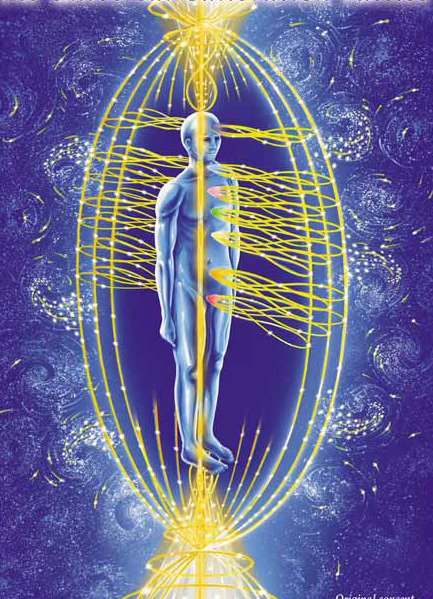
Most quasi-magical sources take for granted that a person has multiple “bodies” — the physical and several “subtle” bodies.
Such a view is often presented as ancient, traditional knowledge and is not even questioned.
Nevertheless, both traditional mythology and direct perception testify to something different. Yet magi accustomed to the impractical idea of ‘subtle bodies’ continue to make mistakes that stem from it.
To address this issue, let us first discuss another important concept in the Magical myth — the concept of worlds and planes.
We have already discussed that the Magical myth uses ‘world’ to mean a stable grouping of elements that are perceived together. This means that certain assemblages of energies are inclined to be perceived jointly and to produce similar descriptions among perceiving minds. This inclination forms the so-called “laws” operating within each world. Thus one may say that a world is a set of objects interdependent in their being and united by shared laws.
At the same time, a perceiving mind can apprehend it from different viewpoints. These points of view arise from the mind’s need, in its development, to move not only “outward” but also “inward“, to do more than encompass ever-new energies — it must also differentiate these elements according to various parameters.
Such different “points of view” are traditionally called the “Planes of Being.” The number of planes available to awareness depends on the state of awareness, its evolutionary status. In particular, it is held that at the human level of development the human mind has access to three planes. This means that the human mind can distinguish any element by three parameters: attractiveness (“physical plane”), applicability (“astral plane”) and expansiveness (“mental plane”). Clearly, these planes form a triad in which the “mental” is the thesis, the “physical” the antithesis, and the “astral” their androgyn. For other forms of mind, the parameters of differentiation will evidently be different.
Returning from this digression, let us return to the manifestation of awareness. We have already discussed that it is precisely the mind that integrates a Monad’s manifestations into a single system. It is obvious that in order to realize the Monad’s potentials, one must immerse oneself in the aggregate of energies. From what has been said above, it is clear that such immersion often takes the form of perceiving distinct worlds, and the immersion of awareness into a particular world with the aim of becoming aware of the elements from which that world is built is traditionally called ‘incarnation’. Yet as soon as awareness plunges into a world, a need arises to learn the laws governing that world. For this, the mind needs something that will experience those laws’ effects — that is, in fact, be part of that world — and, at the same time, serve as a conduit for awareness.

Such a conduit is called the body, and that part of it which has already been realized in the process of becoming aware of that world is the soul.
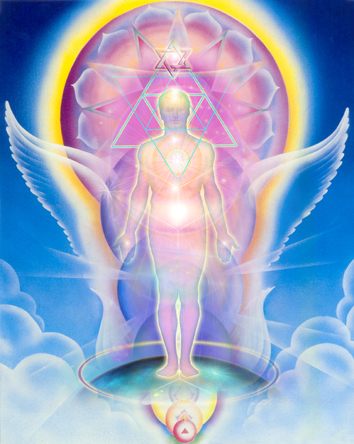
Naturally, within the body, as in any other element, the human mind distinguishes three planes, and it was these three planes that were regarded as distinct ‘bodies’ — “physical,” “astral,” and “mental.” In reality the difference is one of perspective: the mind perceives the physical plane through the physical body, and similarly with the other planes. But the mind cannot perceive two planes at once, so from a practical standpoint it is more convenient to speak not of “several bodies” but of “several planes of a single body,” since this view better clarifies the complementarity of the perceived planes, the interdependence of the conduits of awareness within those planes, and thus better maps one’s Way.
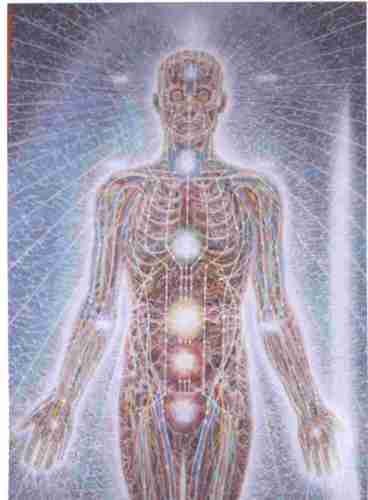
One more important point is that, as we have already noted, on the physical plane the mind has two channels. The reason for this division lies beyond the scope of the present discussion, but it is precisely the presence of the second conduit that allows one to form on its basis a “second body,” the vedogon.
Thus the traditional notion of the body and its “components” highlights the importance of the conduit for the functioning of awareness. Not considering the body merely as “garb,” Magic insists on its comprehensive, multi-perspective development. Magic has never called for the “mortification” of the flesh, nor has it proclaimed the absoluteness of the body. But regarding the body as the conduit of awareness, magi understood that “a healthy body, a healthy spirit,” and that suffering and bodily limits inevitably reduce awareness. Moreover, by not dividing the body into “subtle” and “coarse,” Magic emphasizes the equal importance of perception on all planes, without privileging any as more or less valuable for the development of the mind or for the realization of the Monad’s potentials. It is precisely the comprehensiveness of development that is a key characteristic of this Way.
Please tell us about the reason for two conduits of consciousness in the nearest entries 🙂
‘Destroy everything, and then…’ is very revolutionary in a communist way. The DNA of that cannot bear it. 🙂 In light of modern achievements and realities (psychotechnology; ion engines; nuclear fusion; ‘string theory’ and ‘M-theory’; developments and views by Tesla, Stauberger, etc.; the historically instantaneous emergence of a race of cyborgs based on the fusion of man and machine (transport, computers, prosthetics, energy systems, communication), etc.), it would be interesting to know your opinion, as an expert in the modern magical interconnection of consciousness that defines being and these info-material realities. (It seems the topic is broader than the expanses of the Wild West 🙂 and relevant. Your opinion – …?)
Is it true that there are only seven plans, and each of them has seven sublevels? The second conductor on the physical plane is probably the mental body? And is it the mental body that forms the visionary fire? I mean manas… do not confuse with the mental plane.