The Lemegeton System: Gates of the Mind
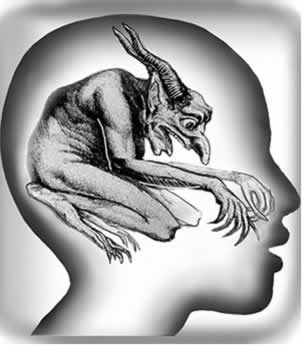
Understanding the structure of the Psychocosmos and the laws of its functioning can help chart the most effective routes for its development and locate and stop the loss of power.
The Magical Myth describes mind not as an “inner reality” but as a unified reality from the subject’s standpoint of the perceiving subject.
Therefore every description created and developed within this Myth aims to facilitate perception on both sides — and can be applied both to the Macrocosmos (“the world of objects”) and to the Psychocosmos (“the World of subjects”).
Since it is obvious that the ordinary functioning of the mind is far from optimal, the chief task of the Magical Myth is to search for and correct defects of mind, and the numerous systems for describing and classifying these defects are intended to help view the problem holistically.
We have said many times that this Myth treats the forces that drive creation toward ineffective existence as personal, willful entities — demons — and deals with them accordingly. This approach is neither better nor worse than others, for example those that treat the problem more mechanistically or, conversely, more poetically; however, for those drawn to the spirit of Magic, this approach demonstrates greatest effectiveness as an aid in locating and minimizing the influence of destructive elements.
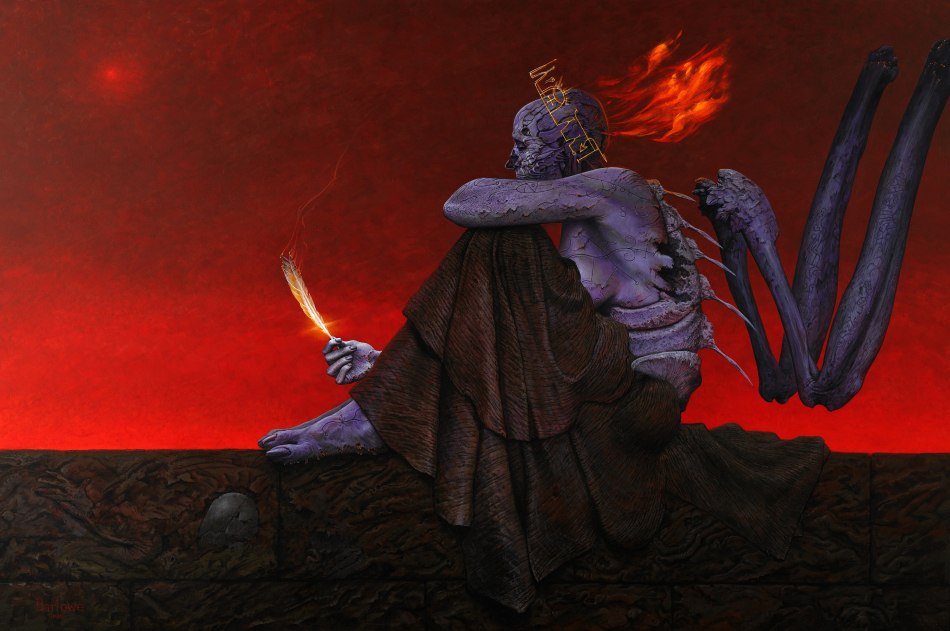
Depending on the aims and tasks of the description, two global classification systems of destructive beings have been developed: a ternary (Babylonian) and a quaternary (Alexandrian) system.
The ternary system (given extended treatment in the “True Grimoire”) is based on the primary distortion of the alchemical “Three Primal Elements” — Fire (Lucifer), Air (Astaroth) and Water (Beelzebuth). This system is convenient for working with forces that are in the process of formation and is more suitable for dynamic operations such as divination or attempts to change the course of a system’s or situation’s development.
The quaternary system (most fully reflected in the “Goetia” and in the Lemegeton generally) emphasizes defects in existing systems, and therefore relies on astrological correspondences (not in the divinatory sense, but as a descriptive system). This system is particularly useful for identifying defects of mind, and so we will speak about it in more detail.
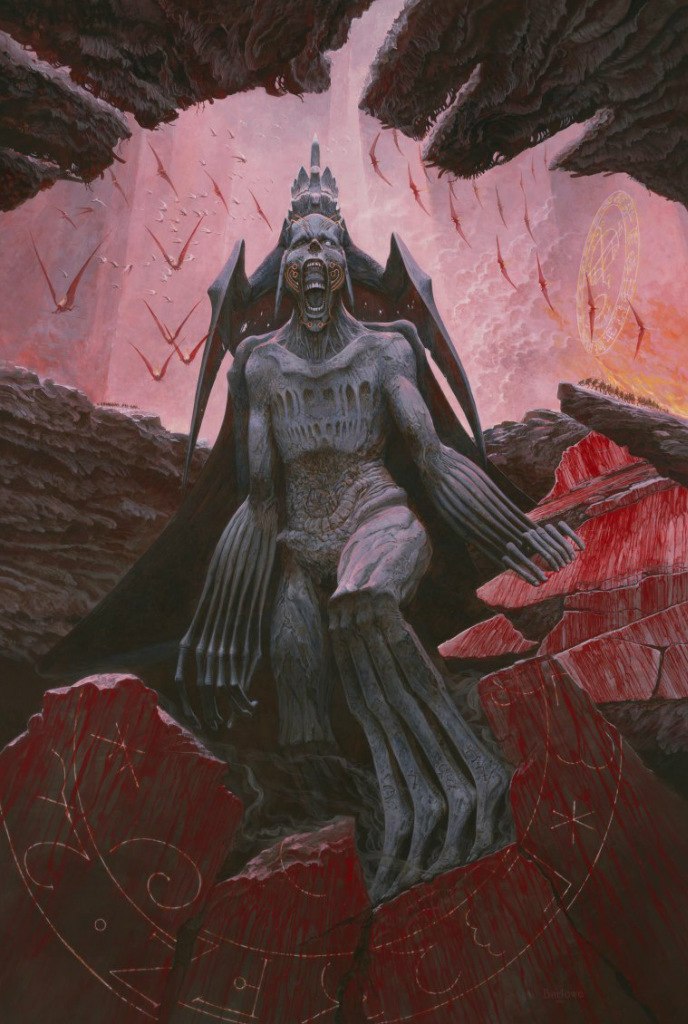
We have already discussed that, from the standpoint of the Goetia, there are 72 Gates through which Power can flow out of a system (Macro- or Psychocosmos).
This number comes from two ideas.
On the one hand, it is held that the firmament has 10 decans (sephirotic divisions), each of which includes a bright and a dark “Leaf” (360:10×2=72), thus producing five sections of the Zodiac (360:5=12×6=72). On the other hand, the same number is obtained if one considers the possible distortions of the Creative forces (their three triads), again taken in Beneficent and Wrathful aspects and considered in each of the quarters of Creation (9×2×4=72).
Regarding the Psychocosmos the second approach is of greatest significance.
Indeed, in the Psychocosmos, as in the Macrocosmos, one can distinguish four quarters: three Principles (Desire, Mind and Will) and the Realizing Power that actualizes them, corresponding to the Myth’s Water, Air, Fire and Earth.
In each quarter governed by the Emperors (the Lemegeton distinguishes them, since each Emperor encompasses the corresponding Gatekeepers (Heb. Shomer ha-sef, שומר הסף or simply Shomer, שּׁוֹמֵר, also Shoar, שׁוֹעֵר): Amaimon rules the East and Mind, Gaap – the South and Passion, Corson – the West and Emotions, and Zimimar – the North and Realizations), each quarter contains nine spirits, viewed as Leaves of the Gates (thus, there are 18 Gates in each quarter, since each Gate has two leaves — an Active (operative, “diurnal”) and a passive (receptive, “nocturnal”) one).
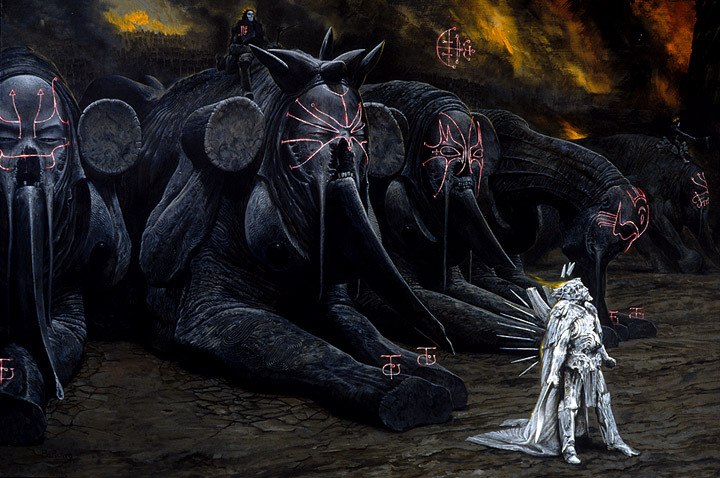
For example, in the Principle of Mind the first triad of action consists of Bael, Agares and Vassago (in the Goetia – numbers 1, 2 and 3), and the corresponding triad of Perception is Phenex, Halphas and Malphas (respectively numbers 37, 38, 39). The second triads of this Principle are, correspondingly, Foras/Amduscias, Asmodeus/Belial and Gaap/Decarabia; the third triads are Furfur/Seere, Marchosias/Dantalion and Stolas/Andromalius.
To detect in oneself the “open Gates” through which power leaks out, or, which is the same thing, to detect the dominion of the corresponding demon over oneself, it is important to understand which particular principle that demon distorts — in other words, what it “clings” to in the mind, what its support is. And having identified the demon, there is a chance to free oneself from its sway by “correcting” the corresponding destructor and restoring the mind to a harmonious state.
That is precisely why it is so important to understand the character and peculiarities of the demons, to “read between the lines” in their descriptions, or, if one has enough resolve and strength, to face them directly.
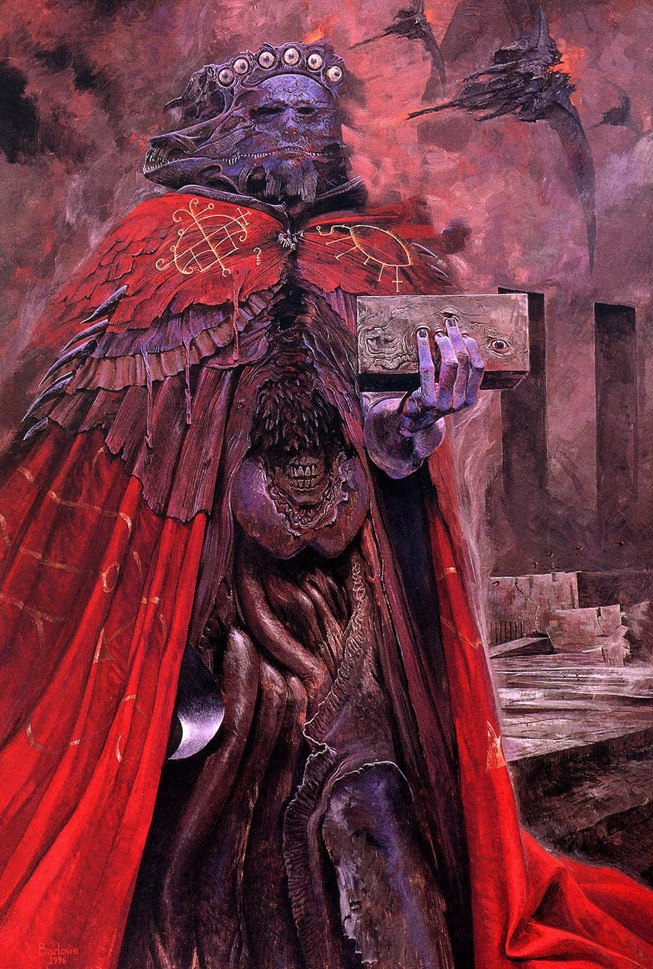
We will continue a detailed discussion of the demons of the Lemegeton, their entry points and resistance methods, but for now we will briefly summarize the general character of the system:
“Diurnal” demons:
Demon – Principle – Hook – Result – Resistance;
Bael – Mind – desacralization – Loss of center – Sense of the sacred;
Agares – Mind – Fear of the Way – Flight from oneself – Acceptance of the inevitability of development;
Vassago – Mind – Regrets about the past – Departure from the Way – Acceptance of oneself;
Gamigin – Realization – Messianism – Loss of support – Emphasis on one’s own development;
Marbas – Realization – Mechanism – Loss of inspiration – A poetic outlook;
Valefor – Realization – Greed – Theft – Use of one’s own resources;
Aamon – Realization – Pacifism – Indifference – Active engagement with life;
Barbatos – Realization – Consumption of nature – Conflict with Nature – Being in the Flow;
Paimon – Realization – Emphasis on the exterior – Blindness to outwardness – Inner activity;
Buer – Realization – Bodily health – Neglect of spirit – Emphasis on wholeness;
Gusion – Realization – Illusion of knowledge – Craftsmanship – Understanding, not mere knowledge;
Sitri – Realization – Passion – Possession without love – Respect for others;
Beleth – Emotions – Passion – Painful attachment – Self-respect;
Leraje – Emotions – Fighting “for justice” – Intolerance – Tolerance;
Abigor – Emotions – Submission to authority – Suppression of one’s opinion – Emphasis on oneself;
Zepar – Emotions – Passion – Fruitless unions – Joint creativity;
Botis – Emotions – Inability to decide – Endless vacillation – Courage to take a step;
Bathin – Emotions – Pleasure in “knowing” – Inflexible thinking – Interest in the new;
Sallos – Emotions – Love of the powerful – Dependence – Reliance on oneself;
Purson – Emotions – Intoxication with logic – Neglect of meaning – Seeking support in the spirit;
Marax – Emotions – Uncritical reception – Blind faith in “sources” – Analysis;
Ipos – Desires – Desire to seem brave – Aggressiveness – Ability to admit defeat;
Aim – Desires – Desire to seem clever – Humiliation of dissenters – Ability to be wrong;
Naberius – Desires – Desire to seem persuasive – Suppression of the weak – Ability to listen;
Glasya-Labolas – Desires – Striving for independence – Desire to inflict pain – Respect for others’ space;
Bune – Desires – Loyalty to the past – ossification – Ability to let go;
Ronove – Desires – Striving to be important – Dependence on one’s image – Ability to be ridiculous;
Berith – Desires – Respect for authorities – Loss of one’s opinion – Critical thinking;
Astaroth – Desires – Thirst for knowledge – Replacing feelings with ideas – De-virtualization of the mind;
Forneus – Desires – Desire to be liked – Spiritual prostitution – Search for oneself;
Foras – Mind – Fascination with logic – Loss of meaning – Balance of the rational and the irrational;
Asmodeus – Mind – Replacing feelings with ideas – Loss of the capacity to love – Capacity for selfless devotion;
Gaap – Mind – Desire to be in charge – Despotism – Respect for others;
Furfur – Mind – Calculatingness – “Marriages of convenience” – Respect for feelings;
Marchosias – Mind – Striving for “teamplay” – Inability to decide – Ability to err;
Stolas – Mind – Gathering information – Lack of generalization – Systematic cognition.
“Nocturnal” demons:
Phenex – Mind – Preoccupation with others’ words – Epigonism – Self-identity;
Halphas – Mind – Dependence on others’ resources – Fickleness – Capacity to fast;
Malphas – Mind – Solidity of others’ opinion – Fear of innovation – Ability to move forward;
Raum – Realization – Use of others’ resources – Deprivations – Generosity;
Focalor – Realization – Self-assertion at others’ expense – Loneliness – Loyalty;
Vepar – Realization – Lies for self-assurance – Confused mind – Self-limitation;
Sabnock – Realization – Logical constructions – Stereotyped thinking – Fluidity of mind;
Shax – Realization – Broken promises – Devaluation of words – Loyalty to oneself;
Vine – Realization – Protection from the unknown – Narrowness of thought – Step into the unknown;
Bifrons – Realization – Return to the past – Treading water – Letting go of the obsolete;
Vual – Realization – False unity – Disharmonious unions – Striving for complementation;
Haagenti – Realization – Outward glitter – Intoxication by images – Looking “under the cover”;
Procel(l) – Emotions – Fear of the unknown – Timidity – Ability to face danger;
Furcas – Emotions – Veneration of another’s wisdom – Suppression of individuality – “Killing the Buddha”;
Balam – Emotions – Cunning – Loss of inner axis – Ability to see inner inconsistencies;
Alloces – Emotions – Veneration of authorities – Self-abasement – Respect without blindness;
Caimes – Emotions – Admiration of one’s wisdom – Dependence on admirers – Not to be a “peacock”;
Murmur – Emotions – Thirst for fame – Dependence on praise – Honesty;
Orobas – Emotions – Pleasure in “enlightenment” – Halt in development – Ability to see one’s limits;
Gremory – Emotions – Don Juanism – Emotional emptiness – Search for “one’s” person;
Ose – Emotions – Striving for “independence” – Lack of inner wholeness – Not to reject all ties;
Ami – Desires – Absorption in knowledge – “Bluestocking” – Ability to move into open spaces;
Orias – Desires – Poseurism – Empty glitter – Emphasis on content rather than form;
Vapula – Desires – Thirst for mastery – Fixation on activity – Ability to take pauses;
Zagan – Desires – Desire to seem smarter – Complication of speech and concepts – Awareness of one’s current level;
Valak – Desires – False purity – Fear of “getting dirty” – Awareness of the world’s multiplicity;
Andras – Desires – “Divide and rule” – Loss of wholeness – Ability to see unity within multiplicity;
Flauror – Unrestrained anger – Irritability – Ability to master oneself;
Andrealphus – Desires – Pride in high rank – Humiliation of the weaker – Understanding of universal harmony;
Kimaris – Desires – “Coolness” and “untouchability” – Narrowness of view – Ability to forgive oneself;
Amduscias – Mind – Brilliance of mind – Fear of losing the system’s coherence – Ability to see contradictions;
Belial – Mind – Corporate unity – Loss of individual value – Emphasis on individuality;
Decarabia – Mind – Flight of thought – Speculation – Loss of tactical thinking – Pragmatism;
Seere – Mind – Striving for material goods – Neglect of mind’s development – Ability to combine the material with the spiritual;
Dantalion – Mind – Trap of “enlightenment” – Arrogance – Seeing Power in everything;
Andromalius – Mind – Penetration – Confidence in one’s infallibility – Drawing lessons from one’s mistakes.
Of course, such a brief overview will not allow a full grasp of the character of each Gate, since the demons are not so simple as to be unambiguously described in a few words. One must also take into account their mutual influence, for example the complementarity of Astaroth and Asmodeus as a single principle in different Principles, or the relation between Leaves, for instance Bael (the principle of an egregore) and Phenex (fan-clubs). Nevertheless even this brief overview can prompt certain thoughts and conclusions, and, who knows, perhaps those conclusions will contribute to the growth of Power and Freedom.

“The fear of being misunderstood – being able not to be afraid to behave openly. Saying what they want to hear – not being afraid to frankly express one’s thoughts. Agreeing with the opinion of the majority against oneself – not being afraid to express one’s opinion. Hiding feelings – openly admitting to them. Not being coy or fearing rejection.”
Behind all this lies a fear of solitude.
The fear of solitude- to accept oneself, one’s individuality and the individuality of those around. To understand that each is an independent unit.
Each will continue their path independently. To recognize the independence of another. This will lead to respect for the choice.
Many brainteasers I solve using three main methods.
Conspiracies – Freemasons, cohabitants, and horoscopes as a variant.
The first thing that comes to mind is the method of strength, of course, this is the most normal method.
Persuasion, as the most complex and ambiguous one.
It is easier to convey to the client with an uppercut what they have not been taught in 100 years.
Ignoring – suitable for both the strong and the weak, but somehow it just isn’t it.
But for decision-making, it would be better to be impulsive.
The best method is divination.
As a result, with one finger poke on the site, the responsibility lies with the source, and you seem to have not chosen or decided :)))
Thank you! Practical! Indeed! It’s interesting how you have formulated this? Based on something open or from a clean slate, in the flow?
And what is meant by the term ‘spiritual prostitution’?
Everything I write is the fruit of my own experience. ‘Spiritual prostitution’ is its readiness to join any flow that gives a sense of convenience, regardless of how closely this flow is related to consciousness.
Yes… and apparently, demons change clients. Thank you for the answer.
What does knowing the name of the demon give? From a practical perspective.
Knowing a name means the ability to address directly. And that means more chances for expulsion.
Clear. Thank you. Is there a description or system or just a list of gifts and/or initial qualities that we are given at birth? To which we are initially inclined, from past experiences/lives or possibly knowledge/purposes initiated in this life (accordingly and means)…. it would be interesting, perhaps it would push/nudge us, similarly to what is described here.
If possible – please tell more about the influence of Belet.
Thank you, this is a great foundation for creating your descriptive system.
This is AWESOME. This is just a ready guide. Super. Thank you.
I would like to understand what ‘Killing the Buddha’ means.
To kill the Buddha means not to imitate enlightenment. True enlightenment is within, not outside.
Mistake, true enlightenment comes from the outside in, and not the other way around as you suggest. Dr. Bai-Bal. Author of the monograph “Tetraktys.”
This is something amazing!!! To move forward, you need to discover and close all ‘gaps’; otherwise – it won’t work. It’s been tested.
It is interesting how the heart reacts clearly to this scanner.
Enmerkar, I want to express huge gratitude for this work! This is one of the most significant impulses and an entire dimension of perception and interaction for me…
Great article. But there is a question along the way. Why are Bael, Agares, and Vassago attributed to the element of Intellect if astrologically they belong to the three corresponding decades of Aries (Two, Three, and Four of Wands in Tarot) – a fire sign? That is, in theory, they should relate to passion.
It’s not that simple with the Zodiac and Elements. Just as it’s not simple with the Quaternaries. Activity in the heavenly layer differs from activity in the depth of matter. And what may seem like Fire from below can well turn out to be Wind from above.
This thing works! I checked. I would like to find out more sources for a deeper immersion into the topic, if you don’t mind, please let me know.
You take yourself, enter the most incredible state you can imagine, and let yourself go You just let it all flow out, both dirty and clean, everything… without looking for any explanation, description, observation, or any moral standards… Just a pure stream flows out of itself… for the sake of simple glowing… Only in such a state can you manifest something secretly magical within yourself… melt into your soul by letting yourself go, be in This genuine before yourself as much as you can… People wait for fair weather from the sea, seek methods and levers… THE MAGE-WARRIOR creates their own mood, from themselves through themselves…
Question: one can go from the opposite, taking chronic psychoses as reference points… If a person constantly yells at everyone, it means they want to sing… If a person starts breaking everything around, pounding their fists on the walls, it means they want to play (on the guitar, piano or drums depending on temperament…) If a person unnaturally writhes, stomps their feet, waves their hands, it means they want to dance… One must catch themselves in their outburst of rage, understand in what direction it manifests and learn to express their feelings creatively…
Thank you for your response. This is all certainly interesting. But it won’t work without specific clarifications. How, for example, do I know how to enter such a state? And regarding methods, why not use proven methods? It’s good to use your own findings, but to use them they must also exist. It’s easier for me to study something ready, and then create something from the sum of what I studied. To each their own. Moreover, I specifically asked about the system. You describe only the sphere of feelings. In which I happen to have the least problems 🙂 Sincerely.
Thank you for such interesting, detailed information…. But there’s one “BUT” to “see” your demon(s) you need a mirror — a person, teacher, friend, an outside perspective. That’s why we live in a world of people.
No matter how much you scan yourself – you are surprisingly good))))) the outside will tell you everything – just be ready!
Okay, since you want it that way, here you go: I see something dishonest in your “BUT”.
We live among people and to see our demons we need mirrors. So they are all around us. But you also need speaking mirrors 🙂 Who knows better than you all your feelings, thoughts, words, actions? Other people have their own quirks, they need to deal with their own problems. It turns out you need a person who knows you better and more than you do. This resembles our consumer attitude towards health. I’ll come to the doctor, he will understand everything about me and cure me. To engage with my health, myself every day – where can I find the strength?
Sonya, don’t take it personally. I’m just saying all this out loud to myself.
“From the outside, everything will be said to you — just be ready!”
But will they say it about you?
Will they be direct mirrors? Or warped? And are they even mirrors?
A friend – like a mirror? In the pleroma, this is possible. In today’s mass reality – there’s an 80% chance that the mirroring will turn out to be the still waters of a quiet whirlpool, where who-knows-what dwells, and it’ll jump out at that very moment when you’re looking at your own reflection.
You are right that we live in a world of people, therefore we must know ourselves and others through society. But is there a society in the deep sense of the word now? If you have one, then I’m glad for you.
In my humble opinion, it is much more reliable to make oneself an observer. By the way, many recommend such an approach.
A few years ago, I directly encountered and realized the existence of other harmful consciousnesses among humans. I got closely involved with creating my own demonology. I am now very glad to see that there is already a system. Since the maps are drawn, there’s no need to go blindly. I will study.
————
‘Pure soul prostitution’ – how accurate a term.
————
Earlier, I sometimes entertained myself with the thought that conquering all the demons within myself is indeed the highest victory, after which what happens will become apparent to those around, and all actions will come easily.
Now I see that the internal victory over demons grants the real right to fight them outside oneself.
———–
Enmerkar, please tell me, if we draw a parallel between the Lemegeton and the works of Vadim Zeland, can we say that a demon is the same destructive pendulum, a destructive egrigor for human consciousness?
18 demons in one quarter. By correlating, combining daytime demons with nighttime ones, it results in 9 spirits, gates in one quarter.
I want to learn more about these spirits. If summed up, it amounts to 36 out of 72 demons. Please tell me where I can find out about these 36 spirits or wings. As far as I understand, they are responsible for the dynamics of opening a pair of demons.
Let me know if possible what distinguishes daytime demons from nighttime ones.
Everything described above confirms once again that the main art of life: is the art of measure and balance. Which of course is individual to each. And yes, it takes courage to look into your “cellars” and see, for example, murderers, rapists, liars, and other demonic structures. For this, the light helps us transform all this… And demons are merely workers and servants of the psycho-cosmos… Who, in my opinion, constantly check us for integrity.
It’s interesting, what is this destructive element affecting consciousness, saying: Extract benefits from everything. Do nothing just like that… And you take and give, despite the condemnation of others.
Numen, as a variant – a destructive element of the mind. It is difficult to identify a specific demon, as they act collectively and are intertwined. The demon of this element, AmaiMon, sells itself profitably (help, attention, time, etc.) as a source, and one can continue to gain benefit – the Demon of Realization, the craving for profit, a certain form of gluttony, egoism, and calculativeness to the detriment of one’s true nature. However, a destructive element can hide within feelings and desires, in their imbalance, in the effects of your “charity,” which may not be so good.
Every destructive element arises from a loss of balance between the elements, from external interference. Therefore, my advice to you is to find your point of balance, your center (meditation, special asanas, exercises, solitude in nature). Then you will know where the balance has been disrupted, where your nature has been darkened, and where imposed programs and foreign influences lie. Listen to yourself. And if your actions bring you benefit, even if not material, without any outflow and unpleasant residue, you are also rationally accountable for them. Detractors may be those around you who project the destructive elements of the psyche that influenced you before.
And yes, where is the benefit, and where is the profit?))
Hmm..
Benefit is always something known..
I would call it a detractor of the denial of the impossible..
Why are all Goetic demons male?
First of all, not all: Gremory is female, and Paimon has no definite gender. Secondly, Goetic Gatekeepers are predominantly expansive, as they actively ensure the outflow of energy through their Gates, developing appropriate distractors in consciousness. This expansiveness is reflected in their predominantly “male” appearance.
Excuse me, but Flauros’ element is not mentioned. Can I find out what it is? Thank you.
Fire, desires.
Enmerkar, how justified is the use of obscene language in articles? Specifically about “the hook” of the spirit Kimaris.
Dear En, thank you for such valuable information.