
Bael: Deceived Gods
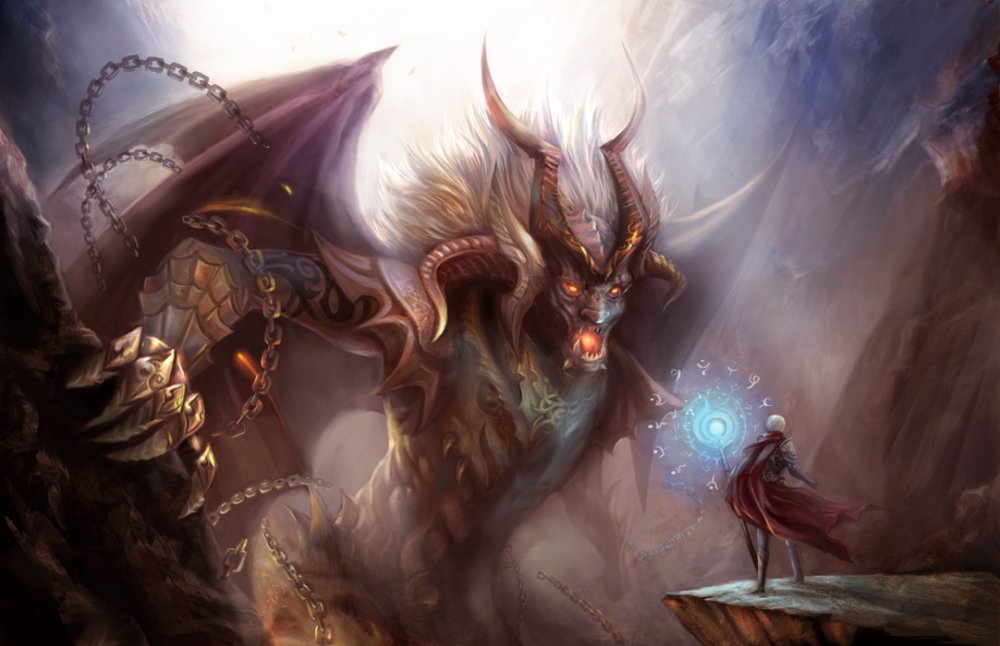
Humanity’s interaction with the spirits — the World-Rulers — has gone through many phases: sometimes it was wholly harmonious, as in ancient Slavic paganism; sometimes passionately tense, as in ancient Greece; sometimes wary, as in Mesopotamia; and at times openly hostile.
An example of one of the most complex relations between humans and gods is provided by ancient Phoenician religion.
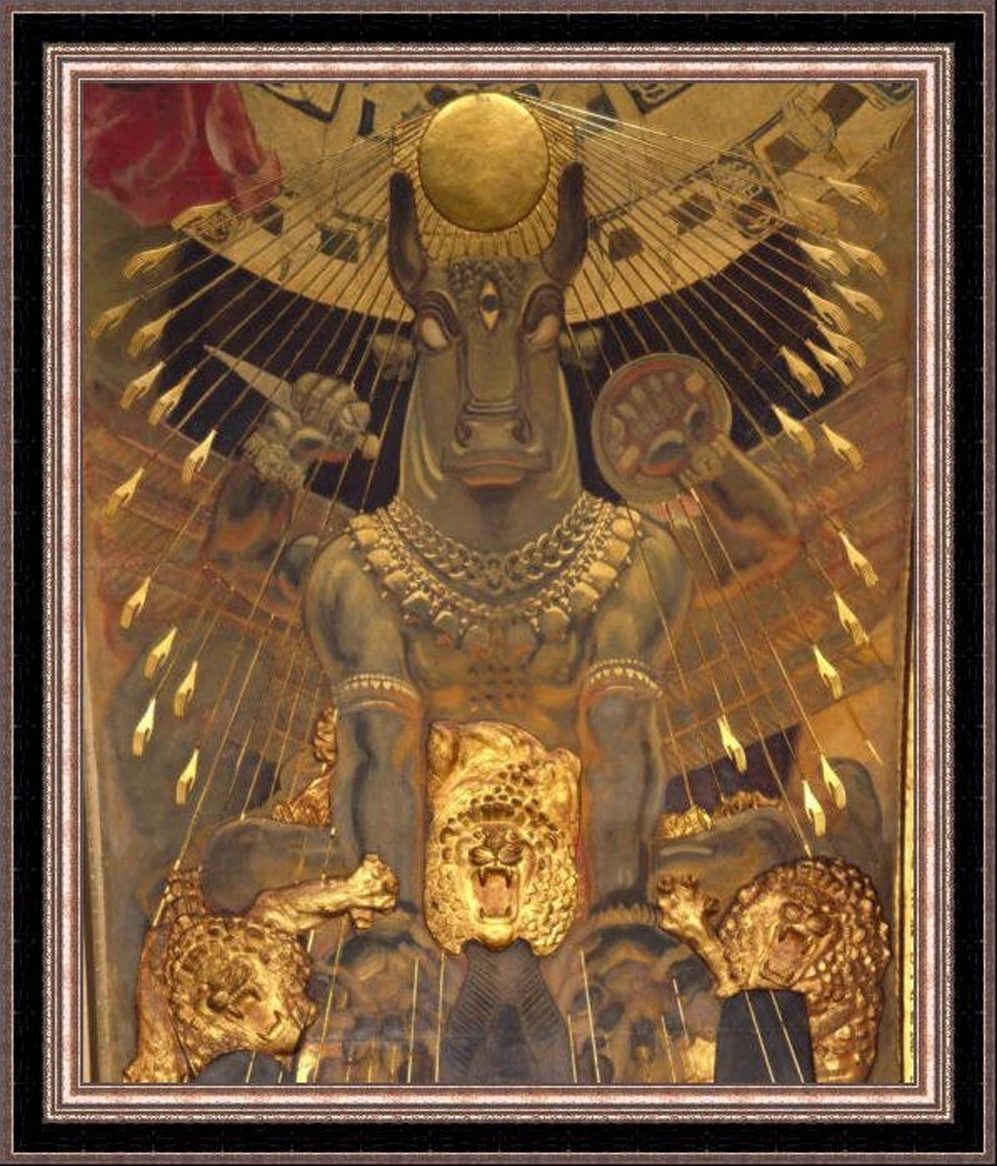
The Semitic peoples inhabiting the Eastern Mediterranean long encountered a powerful divine creative force expressing the elemental principle of nature. They called this force Baal (“Lord”), and its particular manifestations were called “Baals” — Baal-Zebub (“Lord of the House”), Baal-Figor (“Lord of the Account”), Baal-Hadad — Lord of the Storm, Baal-Shamem — Lord of the Sun, Baal-Berit — Lord of the Covenant, and others.
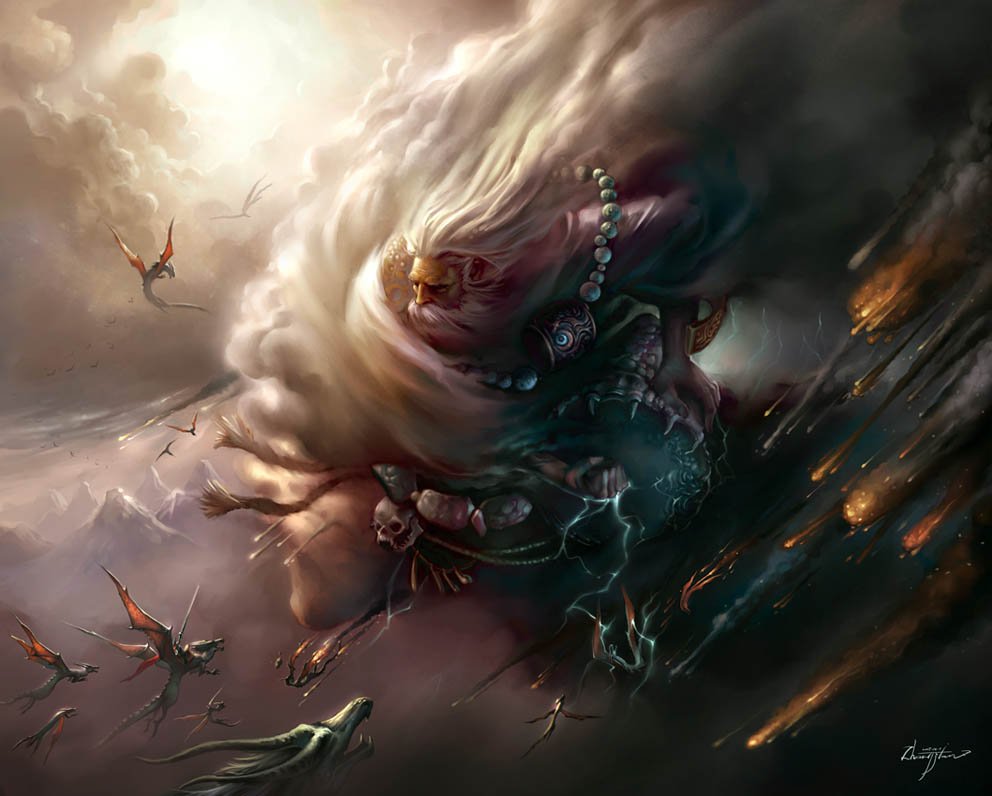
At the same time, the “Baalic Force” itself was conceived from the start not so much as hostile as unfriendly to humanity’s cosmizing efforts and civilizing tendencies. For example, Baal-Shamem expressed the scorching, wrathful power of the Day-star (just as it was reflected by the Akkadian Shamash or the Slavic Hors, as well as the Egyptian Set), and Baal-Hadad — the same uncontrollable force of the hurricane.
Fatefully, Baal in all his manifestations was perceived as the lord of a Universe uncontrollable by reason: autocratic, unpredictable, at times appearing cruel and unjust. The power of Baal rejects the organizing aspects of both the human being and of nature — all the forces and processes that dissect, affirm, and subordinate particular forms and modes of being.
Under Baal’s influence, the harmonious unfolding of life’s content yields to a disorderly outpouring of its power.
It is therefore unsurprising that this force came into acute conflict with civilizing efforts and was, as a result, rejected by human consciousness.
But a divine power cannot simply be discarded. When relegated to the margins of consciousness, it undergoes a transformation, turning from benevolent and divine into dark and demonic.
And it is no surprise that humanity, having rejected Baal’s elemental forces, fell into slavery to its ‘perverted’ form — the Demon Bael.
This happened more than once — people, rejecting a force that was incomprehensible or unconventional to them, fell into the trap of its opposite — in place of the fiery, passionate Astarte, the chilling Demon Astarot firmly established itself in people’s minds, and in place of the Baals came their shadow manifestations: Baal-Zebub turned into Beelzebub, Baal-Figor — into Belfegor, and so on.
In this sense, Bael is a demon of ignorance, of the rejection of intellectual inquiry, of capitulation before the unknown, distorting one of the basic needs of the human mind — the need for knowledge, for acquiring conscious experience.
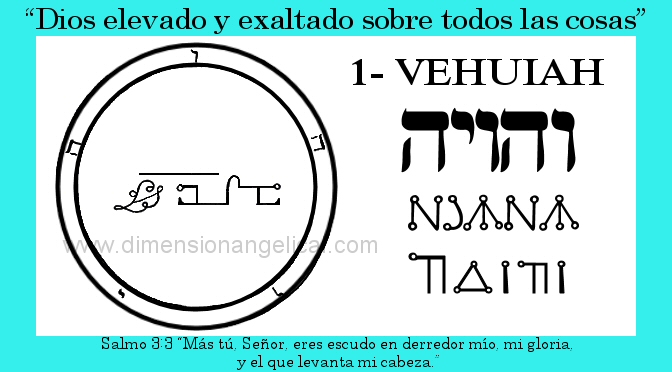
From the mind’s point of view, the divine will, the Power represented by the Baals, is expressed by the Genius Vehuiyah. This force reflects the mind’s striving for creativity and knowledge; it carries a fiery power and the impulse toward active manifestation. At the same time, creativity effected under the influence of this Genius is harmonious, organic, and occurs within the framework of consonance with the universal process.
The Genius’s motto — “God exalted and praised above all things” — precisely reflects the superiority of harmony, of the universal symphony, over fragmentation.
In the case under consideration, the striving for the organic union of each living being with all that surrounds it and for inclusion in universal unity is replaced by a blind craving to entangle them all into a single writhing mass.
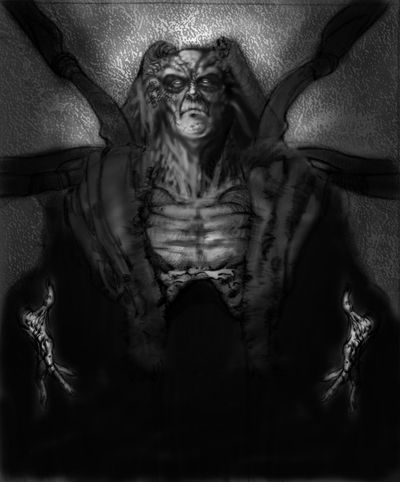
According to the “Grand Grimoire”, Bael is one of the three chief spirits in the service of Hell’s prime minister Lucifuge Rofocale. In late Kabbalah (for example, in MacGregor Mathers and others) Baal (Vaal Chanan – Baal Chanan) is the 7th of the 10 archdemons (“evil elementals”), a spirit of treachery, ruthless and cunning.
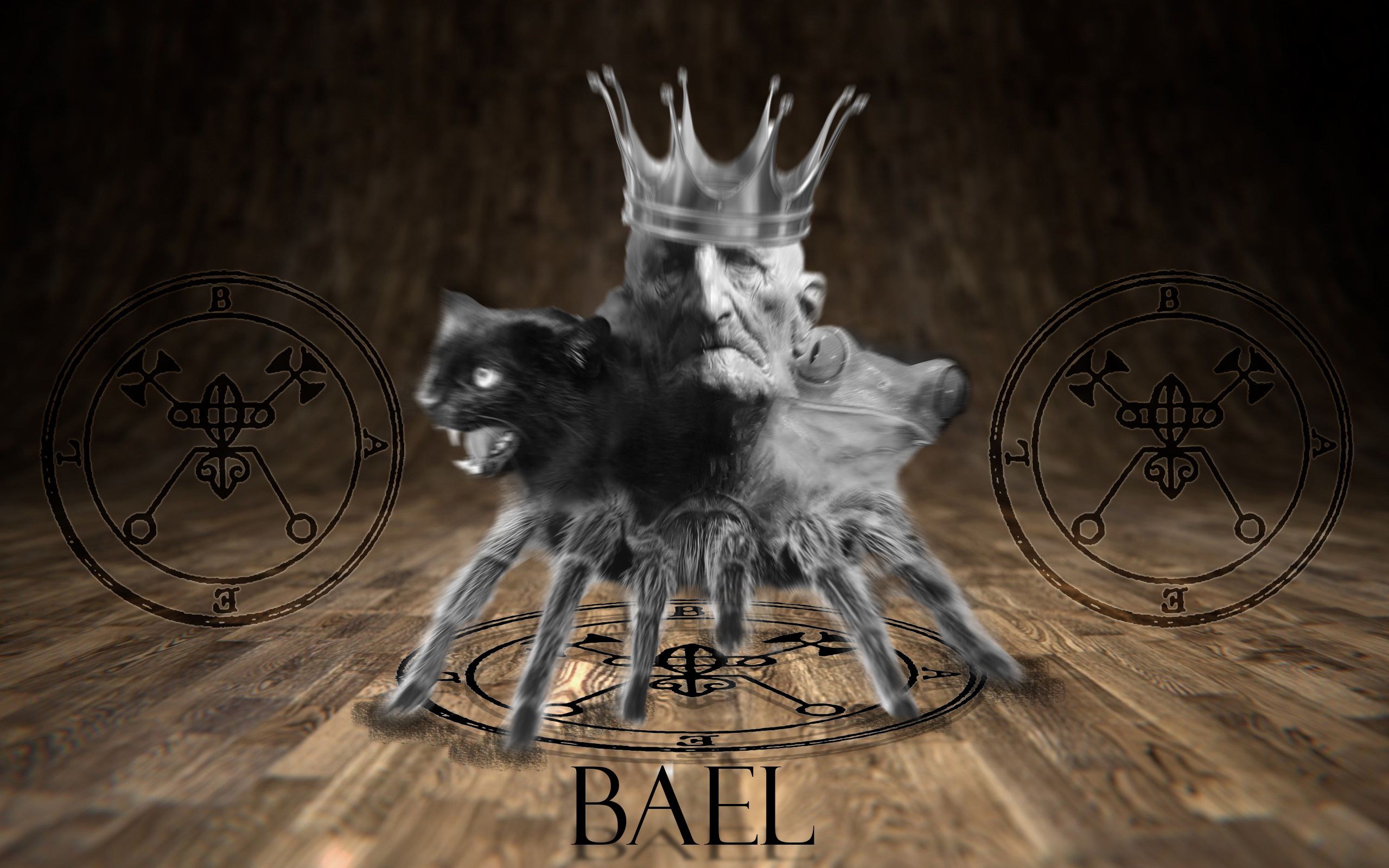
According to the Lemegeton, Bael is “the first chief spirit — a king ruling in the East… He appears in various forms, sometimes like a cat, sometimes like a toad, sometimes like a man, and sometimes in all these forms at once”
(J. Weyer (Johann Weyer) believes that Bael appears with three heads — a cat, a toad [variant — a crab], and a man in a crown; in later descriptions, this was augmented by a broad, corpulent body and numerous spider-like legs extending in all directions).
Such a form of the demon symbolizes that, having cut himself off from all restraining and organizing principles, a person falls under the despotic rule of passions.
And it is no wonder that not only the King of Ignorance but many of the other archdemons of the Qliphoth bear the name Bael (with various prefixes or epithets) — this uncontrollable force is easily prone to perversion and inversion.
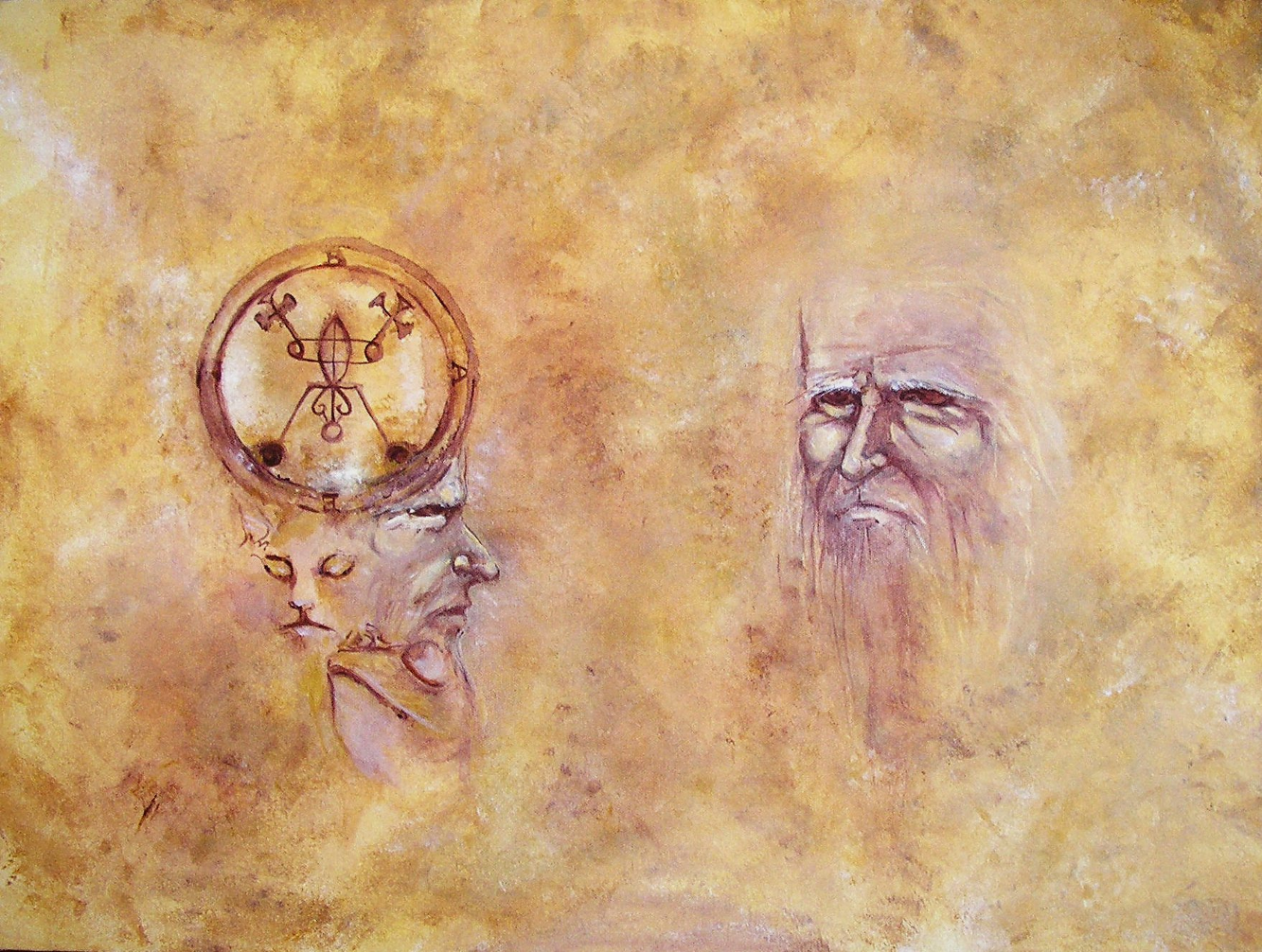
Hence Bael’s first curse — depersonalization, slavish subordination to the external world, emptiness and the meaninglessness of life.
As a result, Bael is a demon of false (or, more precisely, empty, unprocessed) experience — from the vast storehouse of realities he forces people to draw only the small part which is called passive experience in the strictly empirical world.
At the same time, by distorting the notion of “power” as a hierarchical structure and perverting the “Baalic” order of the psychocosmos, Bael often imparts despotism to the mind and a blind lust for total domination, which is reflected in the “martian” nature of the King of Ignorance. In this case, the striving for harmonious coexistence is replaced by a craving for indiscriminate total domination.
To resist this demon, the mind can, by cultivating a sense of the cosmos’ sacredness, its integral harmony and its diverse currents.
Thus, by rejecting a power, a person risks encountering a peculiar “rebound” in the form of the Qliphothic variant of that power, and instead of becoming stronger and freer — becomes weak and enslaved.
That is precisely why Magic insists that the only way forward is to confront directly all the forces operating in the Psychocosmos — and only by acknowledging and assimilating these Forces does the magus have a chance to gain control over them and to transform from a marionette to their master.
“Enmerkar, if you continue to present topics in this style, I will have no questions or comments left, only recognition and assimilation. (I’m worried because I’m afraid of losing it :))”
A good blog, an interesting perspective on magic, although not entirely original. A thoughtful article about a deity unjustly forgotten by humanity, which represents a synthesis of various personal and historical notions regarding the Master of the Astral planetary plane, Bel. There is much to agree with, some points to dispute, and on other ideas, one can remain steadfast in their opinion.
To begin with, I would only note that:
First, a mage never gets involved in disputes and does not proclaim himself from the “pulpit”;
Second, Bel, also known as Vol or Veles, like all beings created by the Creator in His image, seeks development and divides into two aspects, creating a polar binary. The part that separates from the substance loses memory but continues to possess divine abilities. This is a great mystery that remains unsolved by most who claim to have sacred knowledge. However, I do not insist on my assertion, as there are as many viewpoints as there are Paths—countless.
Enmerkar, I enjoyed your blog. There are many clear and rational thoughts, useful for forming a personal concept of the arrangement of the world. Thank you, friend. To be honest, I found pleasure in reading it, even though I do not entirely agree. Overall, I was pleasantly surprised and glad to have made a new acquaintance. There is a sense of good creative potential and youthful vigor. Perhaps someday, during my free time from sorcery, I will drop by for a visit. If, of course, you don’t mind. Good luck and the blessings of the gods.
Thank you for the high appraisal of my work 🙂 I would be glad to communicate.
However, I would not equate Baal with Veles; although both of these Forces correspond to uncontrollable elemental energy, they do so in somewhat different aspects, in my opinion. Baal is more aligned with the idea of “ownership,” meaning an external relationship to the Force, while Veles relates more to its inner essence.
As for the duality of the forces, that is precisely what is discussed in this post—each Force has two faces: a light one and a shadow one, and the shadow aspect of the Force is also a Force, albeit one directed towards destruction.
This is not a “debate” :), but rather a free exchange of opinions. Regarding the “platform,” everyone has their own goals, and pursuing them in the best possible way is the perfection of a magician, and my sense of perfection at this moment is the maintenance of this blog.
Basically, everything is clear, but now the plane is being replaced by sphericity, so there is no point in struggle; instead, there is a concept of gathering oneself from all levels. An uncontrollable point of the Universe is being explored by the lower gods, and they are getting annoyed as they descend beyond control, unable to find it. Enmerkar, it’s time to switch to a modern dialect; not everyone here is Ancient.
Sure! Here’s the translation:
“En, could you clarify for me the etymology of the name Bael? Is it borrowed in the Western tradition? Where does the similarity with the name of the deity Baal come from? Similarly, you provided examples with other Kabbalistic demons. I’ve been curious for a long time whether this borrowing is intentional or if it happens at the level of synchronicity.”
As is often the case, the opposite side of any force differs from it by some detail. For example, if the evolutionary vortex is described by a straight pentagram, then the involutive one is described by the reverse. The same story goes for the names of spirits—demon names often arise from the names of gods or angels with a slight alteration. Therefore, Bael means the same as Baal (“Lord”; specifically “Master,” not “Lord” as is often translated, since “Lord” implies a level of control that this force does not possess, while “Master” denotes merely the possession of power rather than control over it), but with a specific nuance that emphasizes that this “Master” is false, although no less powerful.
I would like to clarify my thoughts. Bel and Bael, or Baal, are different entities possessing either creative or destructive energy. The vast majority of them are nothing more than thoughtforms of certain religious-mystical groups. The true Bel, however, is a powerful deva-entity, the ruler of the astral plane, implementing the Plan for humanity’s development; it is especially significant during this period due to the nearly one hundred percent astrality of mass consciousness.
Many names that resemble Bel’s name are merely labels that lack any content. The Semites, often in slavery, were never allowed access to truly sacred esoteric knowledge, and being overly materialistic and rational-logical in nature, they consequently transformed magic into a tool for increasing their wealth and gaining power. Therefore, Kabbalah, in its current form, serves to develop technologies that allow for the control of dark entities from the deva-realm (fallen angels) that respond to the coarsest vibrations of personal consciousness.
By the way, etymological analysis has allowed me to partially uncover some aspects of ancient history. In particular, the word “волхв” (volkhv), meaning “one who praises Vol or, what is the same, Bel,” referred to a priest serving the light aspect of Bel, while those who served the dark aspect, bearing the name Dıy (the dual), residing in a selfish state of consciousness, catered to their own selfish “self.” The unlearned, condemning both the light and dark cults of Bel, conflated the names of both. Thus, the term “devil” has its origin here. I apologize for the verbosity.
“I don’t think it’s possible to claim the truth of one god or another; I don’t think that, in a one-on-one dialogue, one can even talk about truth.”
Magic, in general, does not rely on the concept of “truth”; it is primarily based on the practical significance of a given description. For a magician, the “ontological component” is not particularly important; what matters more is to describe the interactions of the objects in the world as they perceive it, in such a way that effective action can arise from that description. Therefore, the magical myth does not pay much attention to the “static” nature of the universe, its principles, and objects, but rather focuses on “dynamics”—the description of actions and relationships. In this sense, each concept is valuable to the extent that it leads to effective actions—development of consciousness.
Thank you!) I share Arata’s opinion; your blog is truly wonderful, I’ve been reading it for a long time and have learned a lot for myself!)
Often, words serve as a dividing factor due to the diversity of concepts they conceal. As far as I understand, a true magician is one who has developed their consciousness to comprehend the essential wholeness of the universe, transcending their individual state of duality. This can only be achieved by coming to a more or less true understanding of the principles and laws that govern the world. Truth cannot be constant. It is one of many accessible versions to consciousness that allows one to see the world in the most realistic light and avoid rash actions that disrupt the order established by the Creator.
As for effective action, the pinnacle that any self-respecting magician should strive for is what is referred to in Daoist philosophy as non-action. If you want to change the world, change yourself. For by changing yourself, you not only change your perspective on things but also alter its matrix consciousness, and therefore the form in which it expresses itself, without fighting anyone, waving a sword, or coercing anyone into submission. Moreover, the closer your paradigm is to the divine, the greater power you will acquire, the less you will desire anything, and the greater sense of responsibility will guide your actions.
As for non-doing, this type of activity does not require the taking of any vows. A true mage exerts a tremendous influence on the surrounding world of threefold forms simply by being present in it. The responsibility of the mage lies in understanding that, having acquired the ability to manipulate energies, he may cause harm through his actions to others, lacking perfect insight into the world’s needs and not entirely free from the imprints of the astral body. To adopt a position of non-doing, it is not necessary to physically die. It is sufficient to simply live, observe what is happening, and evaluate everything and everyone from the perspective of wise love, thereby replenishing its supply in the world. However, again, such a position does not prohibit taking any measures to enlighten the ignorant or to serve in any other sphere.
Several interesting and new variations are opening up.
Something seems disputable to me – as usual, though 🙂
Thank you.
It seems that the traps of the mind and the traps of emotions are usually caused by this same demon. Rejecting the element of feelings in oneself, a person surrounds themselves with a wall that does not allow feelings and emotions to come out, refusing any new experience and merely philosophically skimming the surface, not seeing the depth.
Rejecting the element of reason, a person renounces the ordering and organization of their life, proclaiming emotions and feelings to be the only things worthy of their attention, but, unable to control them, ‘falls under the despotic power of passions.’
Hence the difference in manifestations of the demon, from complete external indifference to uncontrollable emotionality.
Such people and magicians find it difficult to cross the first abyss. When facing the emptiness and meaninglessness of their past lives, in the first case, a person has no desire to change anything; in the second case, there is no understanding of how it is possible and how best to cross this abyss.
Wow.. This first curse is really about me. After everything was so good, even though incredibly hard – I lost. And how to get out of this state – I have no idea. What other ‘curses’ are there for those who have rejected power? Maybe it’s not completely over for me) Yet something doesn’t add up. I no longer believe in myself at all.
You have raised the bar very high. A leap to several levels at once. ‘Heavenly chisel’ of Ursula K. Le Guin: ‘Purity, innocence, wholeness’. And Baal and Veles are definitely not the same, this is felt.)