
Where Do Monsters Live?
When speaking of the reality of predators and parasites that feed on the energy of people and other beings, we have mentioned that the habitat of many of them is the Psychocosmos.
At the same time, many readers may have formed the impression that the Psychocosmos is an “inner” world of consciousness that contains only thoughts, feelings, and illusions, and therefore the predators in the Psychocosmos are not as real as, say, forest wolves and bears.
That impression is not only completely false, it is also extremely counterproductive from the point of view of the development of consciousness.
On the one hand, we must not assume that the “inner” and “outer” worlds exist independently, and on the other hand it is necessary to understand clearly that all the principal “friends” and “enemies” of the individual dwell precisely in the Psychocosmos.
Although the Macrocosm also teems with predators of varying degrees of manifestation, and there is no product of human life — whether excrement or the resources of the physical body or energy emissions, anger, or joy — that would not be food for some beings, the most dangerous predators nevertheless inhabit the depths of the ocean of consciousness.
Let us clarify what the Magical Myth calls the “Psychocosmos.” From the standpoint of this Myth the universe can be regarded not only as manifested being, but also as a field of consciousness of varying degrees of development, actuality, and tension.
It is this supreme binary — Being and Consciousness — which, from the Myth’s point of view, constitutes the ultimate edge of reality. In this binary, being as such defines the first hypostasis of substantial Reality; the second hypostasis is the transcendental consciousness inherent in that Being; Being and its Mind are inseparable in their mutual affirmation, since Consciousness is the inner nature of Being, and Being is the nature of Consciousness.
The world of differentiated being is defined as a field of varying intensity of Consciousness, whereby the general Cosmic consciousness is differential as opposed to the Integral Consciousness of the Absolute.
The individual mind synthesizes both hypostases of Being into a third, and thereby a ternary of Affirming, the Affirmed, and the Affirmed Being emerges.
At the same time the individual consciousness is the differential component of the integral mind, and it is precisely this field of world consciousness, which includes individual manifestations as its aspects, that is called the Psychocosmos.
In other words, the Psychocosmos is not the “inner” reality of individual mind, but the world-wide reality considered in terms of consciousness, just as the Macrocosm is the world-wide reality considered in the aspect of being.
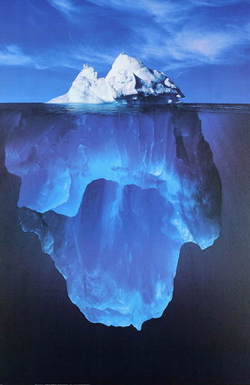
The center of activity of a human and of many other forms of manifestation lies in the sphere of being. In other words, a person first exists, and only afterwards becomes aware, whereas the center of activity of other beings is situated in the sphere of consciousness. Therefore the Myth says that humans live in the world of being, in the Macrocosm, just as other beings dwell in the world of mind — the Psychocosmos.
However, the inhabitants of the Psychocosmos are as much participants in being as the inhabitants of the Macrocosm are in consciousness. It is simply that the description of the world for these groups of beings is presented from different reference frames. Furthermore, an encounter with beings focused on Being happens in the “external” world, while an encounter with the inhabitants of the Psychocosmos occurs when one plunges into the depths of consciousness.
Note that, since the purpose and task of manifestation is the development and actualization of consciousness, while being constitutes the field for this actualization, the Psychocosmos is the more saturated state, and all real processes that beings undergo in the course of their development take place precisely in the domain of consciousness.
Therefore the “original” inhabitants of the Psychocosmos are much better adapted to the milieu of consciousness than are beings “diving” into the abysses of consciousness from the sphere of being.
Moreover, the harm that the inhabitants of the Psychocosmos can inflict is deeper than that which can come from neighbors in the Macrocosm.
Such notions help one to regard the human being as a unit enclosed between two infinite oceans — the ocean of being and the ocean of consciousness — participating in both oceans, living in them both, developing in them both, but also exposed to dangers from both sides — stalked by predators from the side of being and from the side of consciousness.
Very clear, thank you.
🙂 Yes, this understanding is where one should start learning magic. A person usually finds it difficult to develop consciousness in the Psychocosm, it is like being in an unreal world. A mage must be able to do this even more than in the Microcosm?
If the parasite of consciousness were a resident of the psychocosm without a ‘body in the macrocosm’, would a person, once losing consciousness (as a result of stress, for example), free themselves from all their psychocosmic parasites (if there is no personal psychocosm, there are no parasites)?
“Personal” Psychocosm is part of the world consciousness, and it cannot be ‘lost’ just like one cannot lose existence. If a person temporarily leaves one place in the Macrocosm, it does not mean that the Macrocosm stops influencing them. To live and to be aware are synonyms. The question is only one of perspective.
I didn’t quite understand. What is consciousness, what is existence? You place existence in the macrocosm and consciousness in the psychocosm, but where is the boundary? Does a being always manifest in both cosmoses, or can it be manifested in just one? Is existence in the psychocosm impossible?
Any being always exists and is aware, that is, lives both in the Macrocosm and in the Psychocosm. The whole question is where it places the point of its self-identity. Being is an integral category of the Psychocosm just as consciousness is of the Macrocosm.
The main victory that the Predator wins over Man is the belief in absolute own non-existence :). And even accepting this existence in the Psychocosm has a slight tinge of unreality and indifference, characteristic of higher primates when it comes to non-material substances… So the struggle is only just beginning.
Hmm… interesting. In the last article, we discussed that our world is “universal”, i.e., it is a point of contact between worlds. A kind of balance of Powers. But having studied this post, we see that a person first Exists and then realizes. So being does indeed prevail… and the scales tilt in that direction. Perhaps the aspiration of people toward realization, as a striving to attain this balance, leads us to movement.
Enmerkar, could you please tell me if it is correct to conclude that since any being is and is conscious, then every living being in the macrocosm is endowed with some particle of consciousness, and therefore any predator from the Psychocosmos must have some support, expressed physically through something, if not through its own body, then through some kind of species…
And the second question, a bit strange, but inspired by this article, you often talk about predators of the Psychocosmos, is there anything friendly there? Or something useful to us… in the material world we support our physical body by eating others, as well as thanks to water, sunlight, air… if we take the principle of analogies, then there should also be something beneficial in the Psychocosmos… Please illuminate the friendly side of the Psychocosmos for clarity.
I don’t fully understand the difference between Psychocosmos and Macrocosm from the author’s perspective. I will write my vision, and perhaps Enmerkar will correct me. As I see it right now – for me personally, my ‘life’ is a single conglomerate of subjective being – awareness (Psychocosmos), without dividing it into internal and external. This separation is conditional and created by the mind to build a model describing the phenomena presented in this conglomerate. Everything that lies outside this ‘bubble’ of awareness is inaccessible to ‘me’ (by definition as separated by boundaries; whether at all is a separate question), as it is unawareness. Whether anything exists outside is also a separate question, but let’s accept the axiom of the existence of other individual ‘awarenesses’ with which I interact only indirectly, and the results of these interactions (what their real nature is – I do not know) are presented in my bubble of awareness in the form of observable phenomena. This environment that lies beyond the walls of my awareness bubble, and in which my ‘I’ and other ‘Is’ exist, is what I consider ‘Macrocosm.’ But how you differentiate between the two oceans of ‘being’ and ‘consciousness,’ I don’t understand yet. To me, they are synonyms – consciousness by definition ‘is’, and everything that ‘is’ as phenomena is represented in one or another consciousness.
You are absolutely right, there is no substantial, ontological difference between being and consciousness, ‘matter’ and ‘spirit.’ This distinction is only epistemological, introduced for the convenience of awareness, for describing the process of awareness since any description implies subject-object relationships. And although being does not manifest independently from its awareness, and consciousness does not manifest otherwise than in the differentiation of being, this distinction is introduced for examining the driving forces and stages of various processes. This is about this conditionality – this article)
Thank you for the depth.