
The Energy of Names
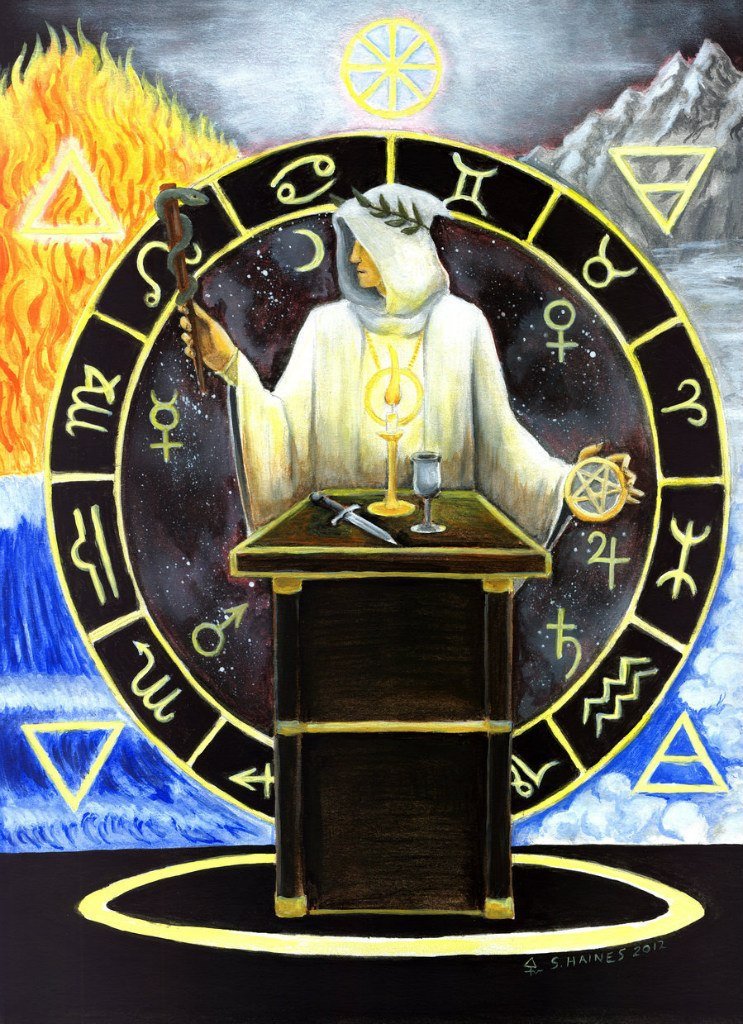
Since, according to Tradition, the Name of any entity expresses its energy, any interaction with that name is equivalent to interacting with that energy.
We have already discussed the importance of this thesis for Magical philosophy and for practice.
It is precisely the logos, as the foundation and system-forming factor of any being, that makes it a dynamically stable system capable of interacting as an individual.
One could say that as long as an individual stream of consciousness lacks a name, it lacks individuality and a stable existence; its distinguishing properties and the character of its interactions are blurred. This is precisely why, in Magic, to create means to name, and to name means to create.
Therefore all Magic is inherently nominative, and the use, analysis, and composition of Names are the three key arts of the Magus.
We have already discussed that these arts are of particular importance for Goetics, and it is precisely the degree to which one masters them that determines success, and sometimes the practitioner’s safety, even their life.
In practical Magic, the Name of a being is as multifaceted and multilayered as the being itself. And, perhaps rightly so, the analysis of a Name ranks second (after evocation) as a method for investigating the nature and studying the particularities of a being’s or essence‘s manifestation.
At the same time, reading a Name always activates the corresponding energy, and therefore the biblical prohibition: ‘Do not take the name in vain’ has, for Magic, not so much moral as practical significance, protecting against uncontrolled interactions with destructive energies.
In goetic practice a Magus must approach the analysis of demons’ names with special care. Each additional layer of meaning, each reading, each possibility of interpretation contained in the name opens new facets of the Gatekeeper’s energy.

How a name is written, how it is pronounced, its vocalization and stress are all of great importance. It is for this reason that every successful Magus is a ba’al-shem, a ‘master of names’, and this is not merely a title but a way their mind functions (and a special ability — a ‘siddha’).
For example, the name of the Demon of unbridled rage historically used in the ‘Lemegeton’ — Flauros — comes from the Latin ‘flatus’ — ‘roar’, ‘bellow’ (through the Anglo‑French form ‘flaur’) and fits his image as a predator; the form ‘Haures’, as noted earlier, goes back to ‘hauriō’ — ‘to devour’, adding a dangerous temperament to its formidable manifestation.
The Hebrew forms associated with this demon’s name are related to the Aramaic root «פעל», meaning action, which, on the one hand, indicates the demon’s active nature, and on the other points to a method of resistance against it.

The next group of meanings — ‘Haur’, ‘הָאוֹר’ — comes from the word ‘אוֹר’ — ‘light’, ‘fire’ and relates to the demon’s fiery nature, which can be understood both literally and metaphorically.
The written form ‘חאכס’, as discussed earlier, is a safe rendering of destructive energy because, if recorded in the ‘correct’ order, such a name would pose a threat to the practitioner.
Thus, a multifaceted linguistic, etymological, and energetic analysis of names increases magical Authority and ensures necessary safety measures, which in Goetic practice must never be neglected.

Greetings!
So it turns out, Ahura Mazda is a manifestation of the demonic nature of the Deity? Or is it a Deity that contains the manifestation of the demonic nature of fire as an element?