
Beings and Entities
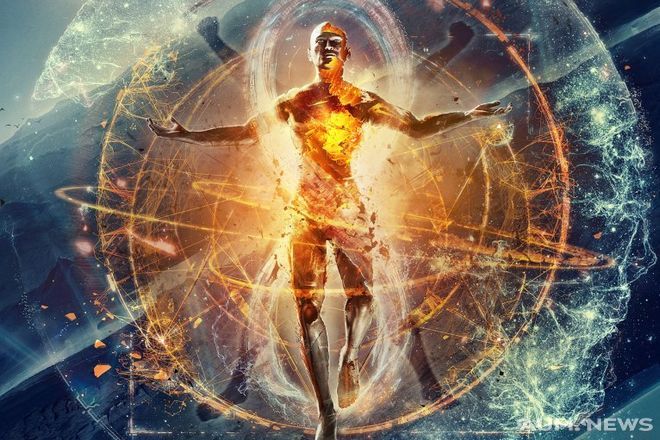
As we have discussed, from the perspective of the myth under discussion, the cosmos as a whole and in its parts can be perceived by human consciousness from three positions: 1) as a collection of forms (we usually refer to this view as the perception of “physical reality”, and traditionally it is called the “dense plane”); 2) as a collection of energies and interactions (traditionally called the telesmi plane, or, in modern times, the “astral” plane); and 3) as a collection of ideas, form-generating principles (traditionally called the plane of the logoi, Me, or, in modern times, the “mental” plane). The “planes” are hierarchical: any “physical” object can be considered in the telesmi aspect and in the plane of ideas; any “energetic” current, vortex, has its own “me”, yet it does not necessarily manifest as forms, while a logos may be either “manifested,” “realized” as vortex and form, or remain a “bare idea.”
Accordingly, the mind can manifest on all of these levels or only on some of them. For example, traditionally the human mind is three-planar — that is, it can manifest and act on all three planes, creating forms, streams of energy, and ideas, whereas, for example, angels and demons manifest only on the “mental” and “astral” planes, without direct physical form, and are therefore called “two-planar” beings. Likewise, elementals manifest only on the “physical” and “telesmi” planes and may also be termed two-planar beings, whereas, for example, elementals that manifest solely in the world of forms (although, of course, manifestation is reflected on other planes) can be called “one-planar” beings.
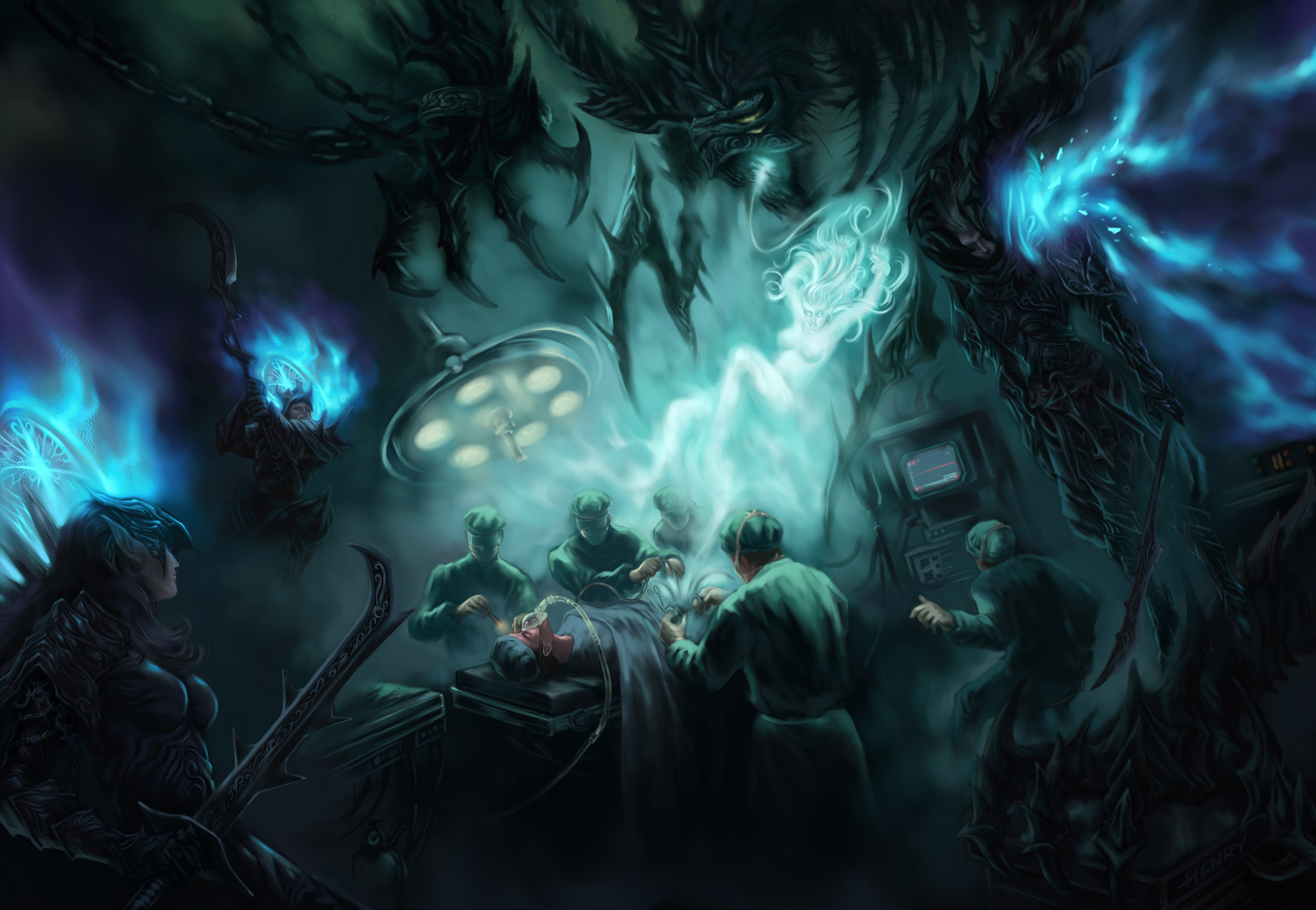
At the same time, on each of the planes beings exchange matter, energy, or information, entering into various kinds of interactions. These interactions are of two kinds: 1) direct, when matter, energy, and/or information passes directly from one being to another, and 2) mediated, when an additional element, a mediator, is used for the interaction. Objects that mediate interactions between beings are traditionally called entities.
For example, a sword piercing an enemy, or a bullet striking a target, may be considered killing entities, whereas a scalpel in a surgeon’s hand is an entity of healing. At the same time, neither the interactions themselves nor the entities of those interactions are always so obvious. As mentioned, in many cases interactions occur on the “etheric” level, and virtually any interaction includes a “vortex” component. Indeed, Magic, as an attempt at the broadest possible view of the world and a description of the greatest number of processes and interactions, most often focuses precisely on the “higher” interactions, since it is the exchange of information or energy that is most often the cause of changes in the plane of forms.
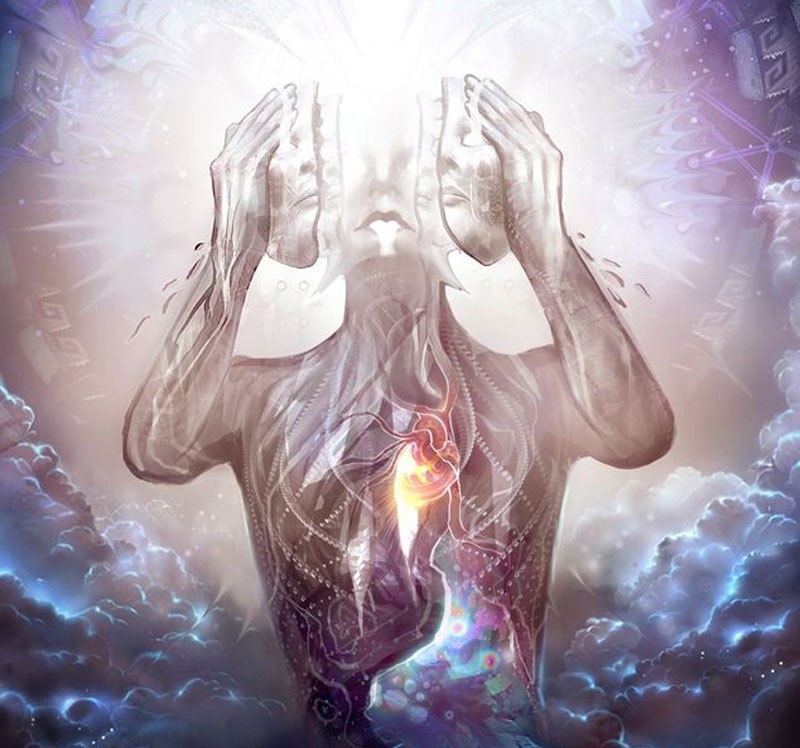
A human emits four principal kinds of energy – 1) vital energy, 2) sexual energy, 3) transformative energy, and 4) the energy of interactions. Accordingly, both direct and mediated interactions in the telesmi aspect amount to exchanges of these energies. The entities that participate in mediated interactions are traditionally called “larvae,” and the interactions themselves can be 1) “vampiric,” when the purpose of forming a larva is the “taking” of one being’s energy by another (a typical example is the “theft” of sexual energy by so-called incubi and succubi); 2) “donor,” when one being seeks to “forcibly” add its energy to another; and 3) “modificatory,” when the purpose of forming a larva is to change the character of one being’s actions under the influence of another’s desire.
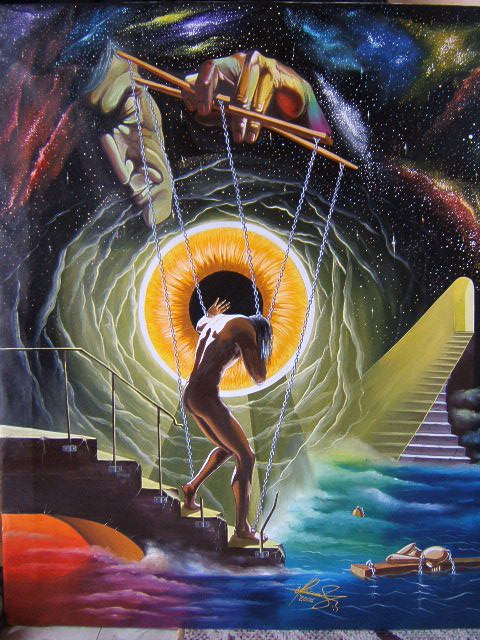
Note that mediated interactions are very common: in fact, any stream of attention from one person (or any other being) directed at another being generates a stream of somewhat stable vortices or larvae, some of which dissipate fairly quickly, but some eventually reach the other’s energetic structures and influence them. Such an interaction can be significant for both recipient and source because, firstly, any larva needs energy for emergence and for continued existence, and secondly, the interaction itself forms an imprint, reshimo, which launches further processes. In fact, it is the constant exchange of larvae that binds the cosmos together at the telesmi level into a tight knot which it is hard for any being to escape.
For the Magus who strives for greater efficiency in existence, control over the creation and perception of larvae is one of the most important tasks aimed at optimizing energies. Controlling one’s impulses, purification rituals — all these components of the Magus’s Way are intended precisely to optimize energies, to prevent dissipation, and also to prevent creating undesirable bonds and creation of unwanted Reshimoth. By learning to control not only direct but also mediated interactions, the Magus also learns to accumulate energy, channeling it into streams of realization necessary for his Way, for his development, and, ultimately, for attaining full perfection.
And what about the fourth position – intentions? Or is this plan not included in the myth?
Consciousness exists in the world, year, and person – there are only 3.
Is this an approved list?) Just kidding…
I see. If it doesn’t include, then it doesn’t. I just wanted to clarify the depth of the description.
Is this the most effective thing required?
m.. yes. I would say it’s the zero stage of what is initially necessary. Then it’s essential to gain knowledge about the schemes of worlds, levels of consciousness (depth and slices of power levels), which essentially is the same thing because consciousness determines the development of each individual world and much more.
Here is the translation:
“But if there is already a connection through an entity with another person, a mage, and it is very necessary to get rid of it, what ritual would be effective?”