Me – models of created things
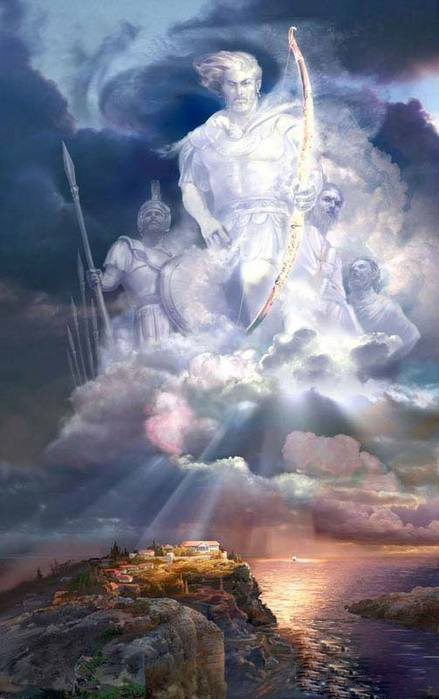
“My father, lord of the universe,
Gave me life in the universe
My ancestor, ruler of all lands,
Gathered all the Me together and placed them into my hands”
(“Enki and the World Order”)
We have already discussed that every object in the visible cosmos is formed, on the one hand, as a product of description and, on the other, as a block of energies that in fact requires that description. According to the magical worldview, only the so-called “energies” have objective existence — differential elements of the Absolute’s potentials, in which He knows Himself.
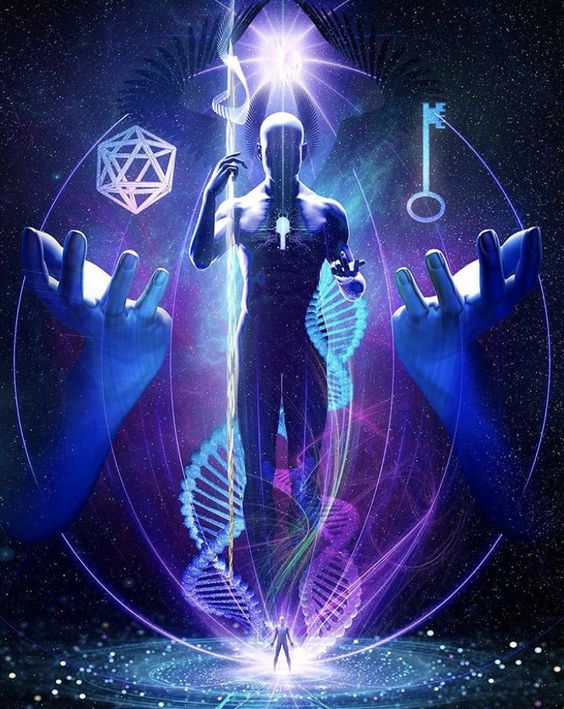
Perceived reality arises from the interaction of an individual mind with these energies; through that interaction an image — the image of objects, the image of the real world — is formed in the mind. By virtue of their own internal characteristics, each block of energies requires certain properties be included in its description. In other words, some of the qualities we observe in any object, from the standpoint of the magical myth, are arbitrary and may be altered by an act of will (this is the key to Magic), while another part is its essential characteristic, determined by the internal properties of the set of energies that form the object’s image. This means that in every object one can distinguish its “immutable part“, without which it would cease to be itself, and a “variable” part, which is perceived in a certain way only as the result of a relatively arbitrary agreement between observers. The “immutable” part of an object is commonly called that object’s “matrix“; the Gnostics examined it in the abstract and called such a “higher idea” the “logos“, the absolute model, the principle of form (and the concrete embodiments of the logos — ideas, eidos), while the ancient Sumerians, working from a practically oriented mindset, treated the concrete aspect of the idea and called such a matrix “Me“.
The idea that every phenomenon or thing corresponds to an idea (or a word) under the authority of the gods was later developed by Plato, and then gave rise to the notion of “logos“. The concept of “Me” differs from Platonic ideas by its greater concreteness; it occupies, so to speak, an intermediate position between the concept of “logos” — the divine words by which the world is made — and the concrete expression of those “words”. The word is the “body” of the idea, and Me is an active, not merely ideal, force; in this sense the concept of “Me” is close to another Platonic category — the “eidos“.
If the “logos” is understood as the general principle of relations that produce form, and the “eidos” as the ideal image of a form or object, then “Me” is the aggregate of internal laws that make the object what it is, the “nomos” of the object.
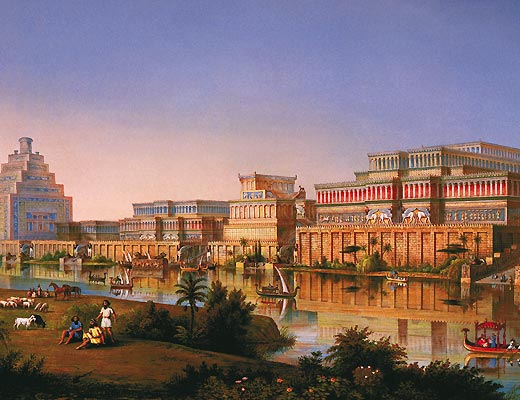
According to ancient Sumerian ideas, “Me” are the prototypes of all that is living, emitted by the gods and their temples — “Divine rules.” Each such set of rules was given to every cosmic function and cultural phenomenon with the purpose of eternally maintaining their function in accordance with the clans of the deity that created them. Without Me the gods would not have been able to maintain the constancy of the cosmos, for in an ever-flowing world only the Me constitute stable formations.
Me (translated as “external attractiveness”, “manifested being”, “potency”, “word”, “ritual”; it is also the verb “to be”, the Sumerian grammatical copula, and “to speak”, “to say”) — is the prerogative of the gods. By means of Me, sent down by An (Heaven) to the younger gods, fertility and order are secured. This implies that every object had its celestial (or divine) prototype, and the object itself was only a copy of that prototype.
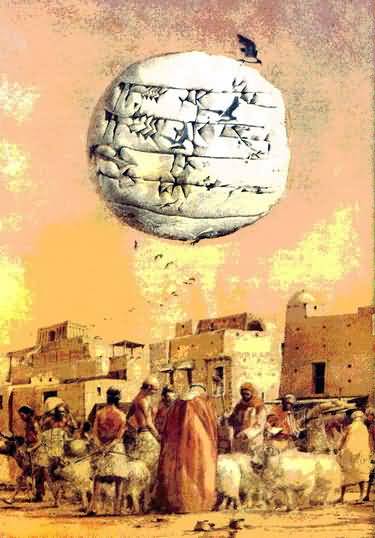
Me is at once power and order, is, object and property. According to Sumerian conceptions, Me could acquire a material shell and be represented by material means in the form of symbols; one deity could transfer them to another. In Sumerian thought, an ideal destiny in certain cases (for example, in deified kings) could be read as the incarnation of Me previously given to the chosen one by the gods.
It was believed that an object or action acquired significance, and therefore became real, only because it was in some way connected to transcendent reality.
The master who fashioned the statue of the god had first to form in his heart the “image of An” (that is, the ideal model of the thing, the Me), and only then proceed to the material embodiment of his vision. When the statue was finished, a ritual of disavowal by the craftsmen of their work was performed. Each craftsman had to declare that he had not made the statue himself, but that it had been created by the gods in heaven; thus Me was regarded as the source of being for every object.
Only the creation of Me is true, absolute creativity of the word. One can say that Me is the description of the system of relationships between energies in that block which is perceived as an object. This system of relationships in metaphysical space lies immeasurably above the phenomena it connects.
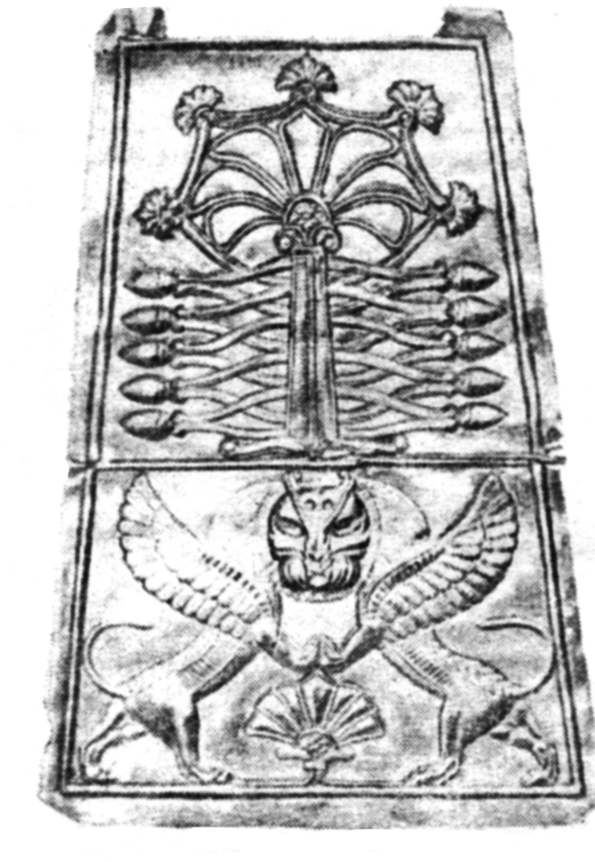
For a human (and for the gods as well) it was very important to know (in the Sumerian context — to possess) the Me, the “skeletons”, the “ideas”, the “matrices” of things and phenomena, in order to be able to act upon those things correctly. Possession of the “Me“, according to Sumerian beliefs, meant wielding the fullness of power. The gods fought among themselves for possession of divine knowledge (there is a myth devoted to Inanna’s theft of the Me from Enki). The chief holder of Me ultimately became Enlil, thus making him the supreme god. In one myth more than a hundred “Me” are named, of which just over half could be read and even fewer deciphered. The list includes a wide range of concepts: justice, heroism, wisdom, righteousness (honesty), kindness, peace, victory, enmity, falsehood, fear, lamentation, the destruction of cities, weariness, discord; “professional and craft” items: the craft of the builder, the craft of the tanner, the craft of the basketmaker, the craft of the smith, the art of metalworking; names or symbols of authority: the royal throne, the exalted and eternal crown, and so on; priestly offices and notions related to faith and cult: the exalted sanctuary, descent into the underworld, ascent from the underworld. Also named are the art and the battle standard, prostitution and sacred purification, musical instruments and the art of the scribe.
For the Magus, knowledge of Me acquires special importance, since it not only grants power over an object by revealing what in it is essential and what is arbitrary, but also sheds light on the essential nature of his own being, helps one to know oneself and thus — “the gods and the universe”.
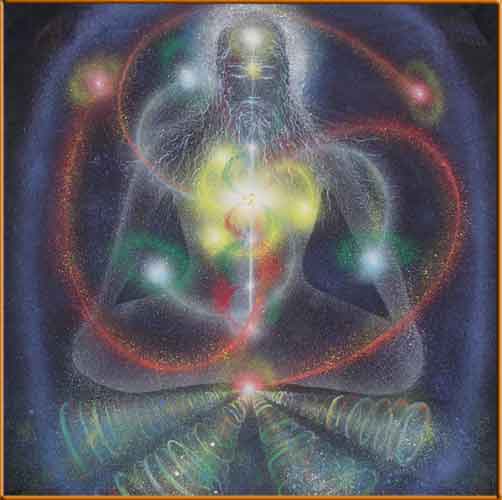
Could you give a hint about how and in what one can see the key to the vision of Me. For further development of this gift.
Interesting, can 1 me have multiple incarnations? And does me have a specific rune?
Me does not have incarnations, but manifestations, and of course there are many of them. Runes are also Me – basic vectors of the flow of Power.
If you relate Me to a person, will it receive actualization at conception?
I received information that runes are something like road signs directing and managing flows of energy.
In contemplating the metaphysical space, the inaccessible experience of the Origin of the world, from which the system of relationships between energies and the consciousness perceiving them flows, I pose the question: ‘Who? Defines the Boundary between the accessible and inaccessible perception of potential experience, other than the Mind itself (as a tool for dividing the Whole, with the subsequent Naming of Parts), reflecting on the metaphysical space 🙂 In attempting to comprehend Who? Programmed the ‘tendency’ of energy blocks to be described in a specific way, thinkers from different eras and cultures converge in a common opinion regarding the Transcendent Source – God (Gods), setting the Laws of Being and the Boundaries of Phenomena – accessible to human perception and understanding of phenomena and processes. (I omit Darwin’s theory in this context due to the presence of numerous gaps, filled only by logical conclusions without material and experimental confirmations.) After realizing the impossibility of knowing the origins of the world empirically, one has to be content with only hypotheses that seem more or less plausible. What remains for Consciousness in ‘dry residue’ is just the Given of Being – the Perception of the Current Moment, conditioned by the available tools of perception.