The Human Matrix
“Man is a joy to his fellow man,
A heap of dust,
and the ornament of ships”

The transition to the emergence of neutrality at form level leads to the establishment of an energy stream that shapes the principle of the human being — that set of forces whose full or partial manifestation in a being allows us to call it human.
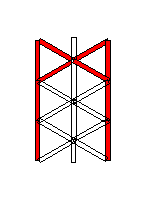
The rune Mannaz (Man (Madr), humanity) describes the system-forming factor of this aggregate. The graphic depiction of this Rune, which can be reduced either to the superposition of two Hagalazes, to the composition of a Wunjo, or to two Turisas facing each other, emphasizes that the human being arises at the point of contact between two Worlds — belonging to both and to neither, resisting both. This principle of the human’s middle position, the liminal position between above and below, Valhalla and Hel, Fire and Ice (since the point of the human marks the boundary on the vertical and horizontal axes), is a cornerstone for human existence and for understanding it.
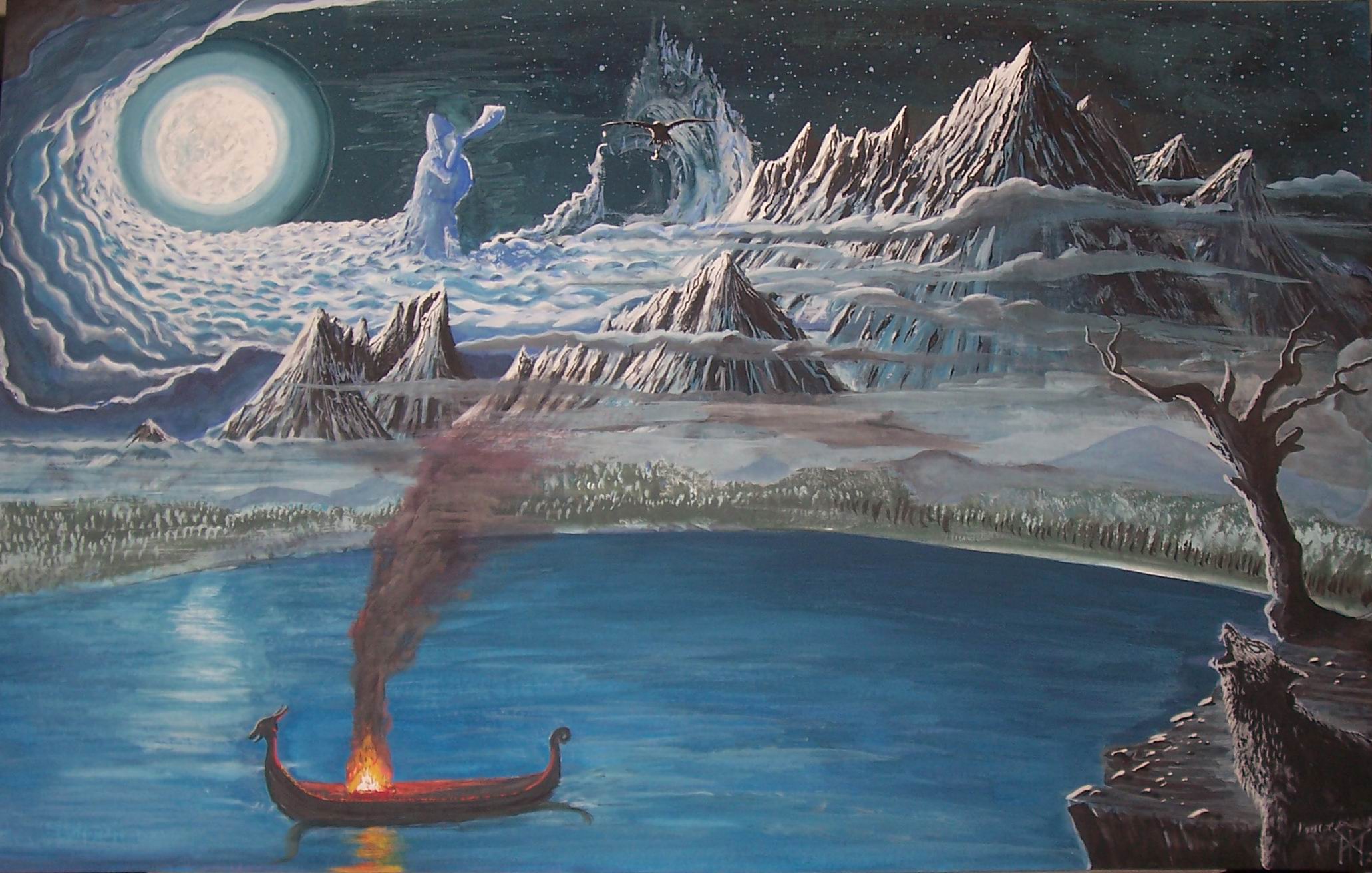
It is clear that the mythological counterpart of the Rune Mannaz is Midgard, an enclosed realm where opposing influences meet and achieve balance.
It is precisely Midgard’s pivotal position in the cosmic order that makes it a place where unique forces manifest, objects, and beings impossible elsewhere. This very position allows the human to challenge the gods and even to defeat them, although human powers are vastly weaker than the gods’ might.
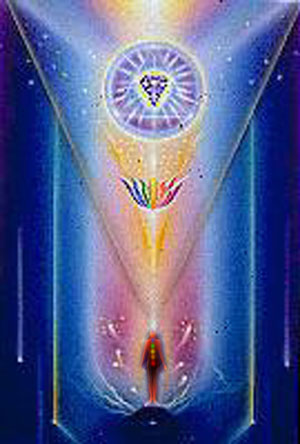
It is the human, as the point of the complete interpenetration of spirit and matter, who fully balances them within themselves, which gives them perspectives inaccessible to lower and higher levels of consciousness.
At the same time, Mannaz also describes key qualities whose strengthening makes a person most complete: individuality and responsibility, asserting that the human is not only a product of their environment but also their creator.
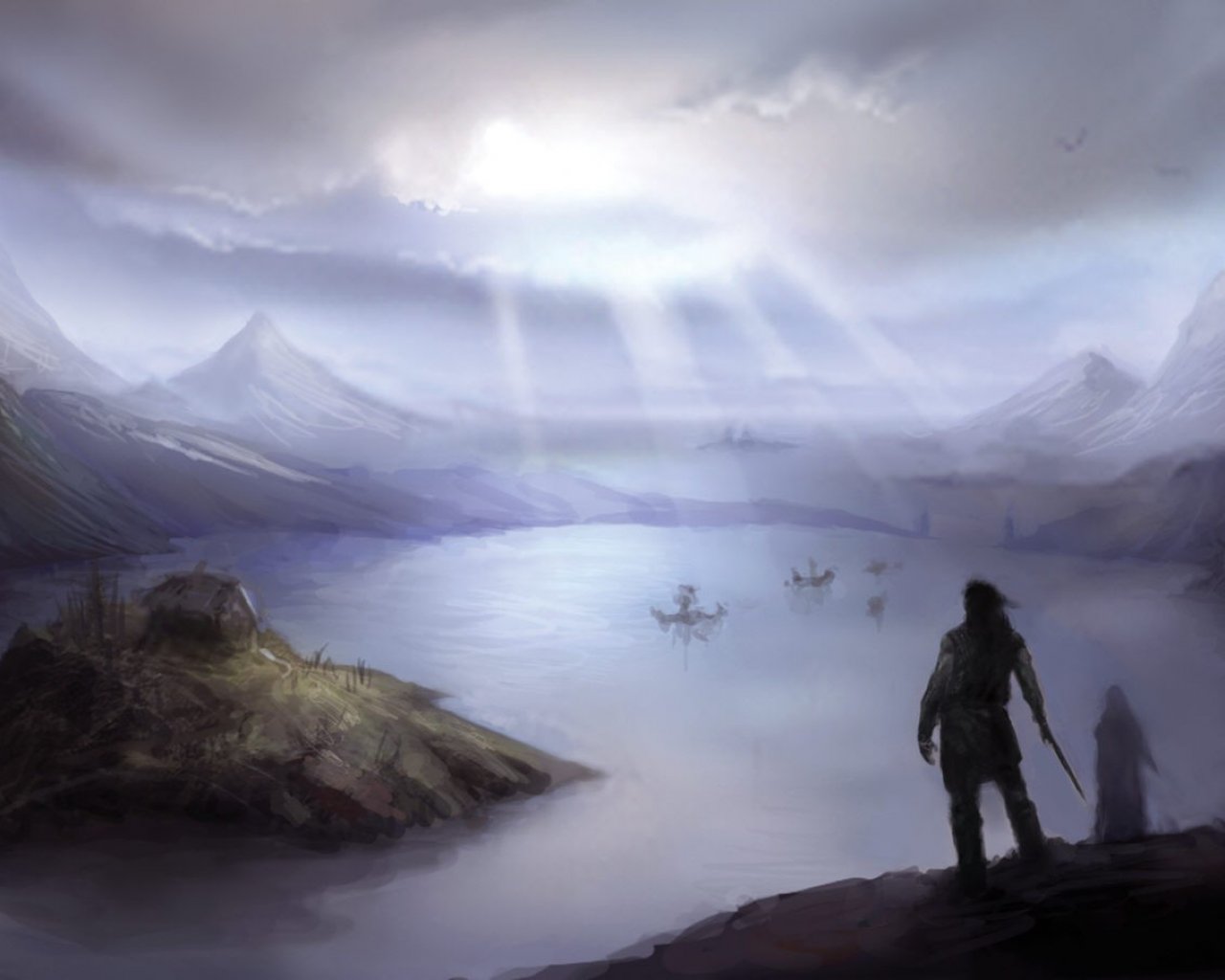
The symbolic field of the Twentieth Rune also includes the principle of human intelligence, which participates in the differentiation of the cosmos, symbolized mythologically by naming things.
The duality of Mannaz’s form points to several key binaries key to human existence: intelligence/intuition, individuality/collectivity, while affirming the points where they are neutralized within humans. It should be emphasized that the principle of collective existence, the social level of existence, arises from Mannaz, whereby this Rune symbolizes not only the human as an individual but also the collective (and the egregore).
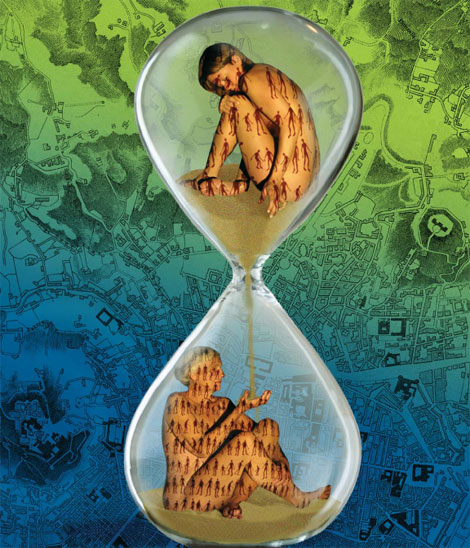
Another crucial binary neutralized in the Principle of the Human is the duality of life and death; accordingly, Mannaz makes mortality the cornerstone of human existence; full awareness of this makes humans whole.
At the same time, it should be noted that Mannaz does not point the way to transcend human limitations; on the contrary, it affirms humans in their being, develops them only within its framework, permeating them with the forces of Yav, while simultaneously closing the way to both Nav and Prav.
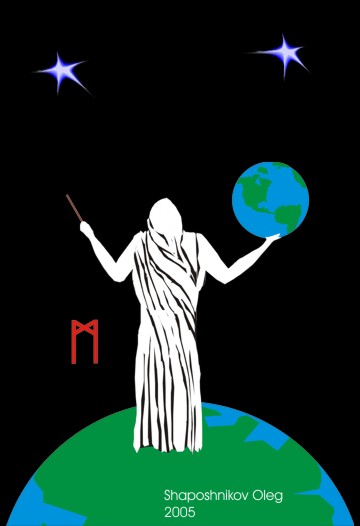
Therefore, to transcend these limitations, complete destruction of the human image — so harmoniously and perfectly developed by Mannaz — is necessary; liberation from this matrix is required, which is symbolized by the notion of the Magus’s social death.
However, this understanding will arise only at the level of Dagaz, while in Mannaz humans appear beautiful and nearly omnipotent.
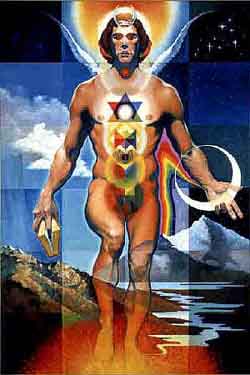
The magical application of this Rune included easing interpersonal relations, facilitating joint achievements, and developing intelligence.
It is clear that clumsy use of Mannaz reverses its principles, turning the human from the point of equilibrium between opposites into their mere sum, making them a slave to formal reason, ossified notions and collective thinking.
Why do you use the ‘Icelandic runic poem in the description of the runes of the elder Futhark? Mannaz and Madr are signs from different systems, and merging their meanings means not understanding the essence of the graphic transmission of information provided by runes.
You may have noticed that I used all three Runic poems to describe the Runes, and you may also be interested in why I included Old English – after all, the Northumbrian row is also a different Futhark. Indeed, overlaying the rows would be a mistake, but the Runes are a tool for inspiration, and in some cases, a fitting quote can be found in a ‘non-classical’ variant. Regarding the Runes Mannaz and Madr, in this specific case, the transition from the Elder Futhark to the Younger reflects the shift in human awareness from recognizing oneself as part of a collective (which Mannaz – Humanity signifies) to recognizing one’s individuality (Madr – the individual person), and at the current stage of consciousness development, it’s precisely the Self that reflects the essence of the concept of ‘Man.’
Do you even use the runes truly yourself?
I’m sure that you won’t succeed, the fact is that runes, rune stones served to transmit energy and their combinations with subsequent effects. As you know, in ancient times in villages in sacred lands and places of power, huge boulders with one rune inscribed on them served as a transmitter and energy accumulator; then a rune was inscribed on some object, and energy flowed to that very receiver, but man has gone further – he began to combine energies, the energy prayed for in villages for protection + nature’s energy = natural protection.
Tactik696: Even evil takes over when you read something like this… Some completely illiterate young person, making 2 mistakes in one word, with great expertise teaches everyone around, daring to doubt and accuse everyone of hopeless stupidity…
I don’t understand where the opinion comes from that if you’ve read just one book of grandma’s recipes in your life, confusing it with a book of magical spells, you are free to consider yourself a Mage, having grasped all the subtle nuances of the Universe? Even if you have mixed dill with parsley in a mortar a few times in your life, this in no way gives you the right to teach people who know more than you.
It came out a bit harsh, but oh well…
To what extent can Manaz be considered as Dagaz, resting on two Isa?
🙂 an original interpretation – but perhaps correct – Enlightenment lies through overcoming dual passivity – the passivity of the body and the passivity of the spirit – and that is the lot of humankind 🙂
Manaz can be considered as a Composition of two Uruz (direct and mirrored), and then it is somehow possible to draw a parallel with Hagalaz (direct and inverted Uruz).
Then Manaz can be considered as two forces: one internal force of the personality directed outward and another internal force of the environment directed inward to this personality, influencing it (the society affects the person, the person affects the society).
Maðr is the rune of the Icelandic Futhark that was used in Icelandic graphic magic and served as the basis for the famous Helm of Awe,
“I carry the Helm of Awe between my brows.”