Streams of Mind and Streams of Energy
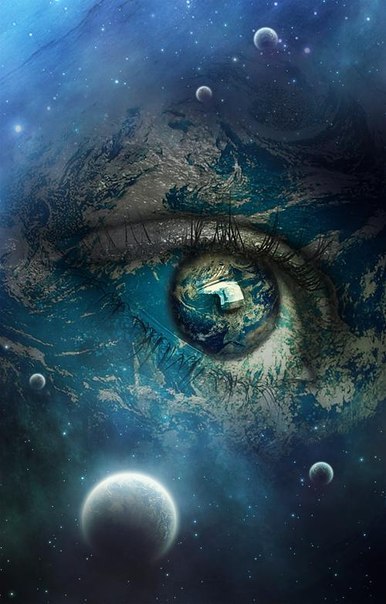 From the point of view of the Myth under consideration, the sole creator and author of manifested reality is active awareness.
At the same time, the process of the emergence and creation of this reality can be considered in several stages. We have already noted that the cause of the arising of the manifested, “material” world is regarded as the Great Spirit’s striving — absolute and homogeneous in itself — for self-knowledge. For this purpose, a primary duality is distinguished within it — the knowing and the known activities, that is, mind and being, or, as is sometimes said, Spirit and matter, Rod and nature, Purusha and Prakriti, Shiva and Shakti, etc. Moreover, this process is analogous at all levels — both at the level of the emergence of reality as such and at the level of the individual act of perception/awareness.
To know itself through its reflections in being, the mind first forms within itself images/forms (traditionally called logoi), which, when imposed on a homogeneous, featureless and formless medium, create in it “inner gravitations” (eidos, Me), disturb its internal homogeneity, generate differences of potential, driving forces, and their interactions. In fact, what we call reality is the aggregate of such forces and interactions perceived by us (actually, generated by us). Thus, the well-known assertion becomes obvious: perception is identical to creation; to be aware is to create.
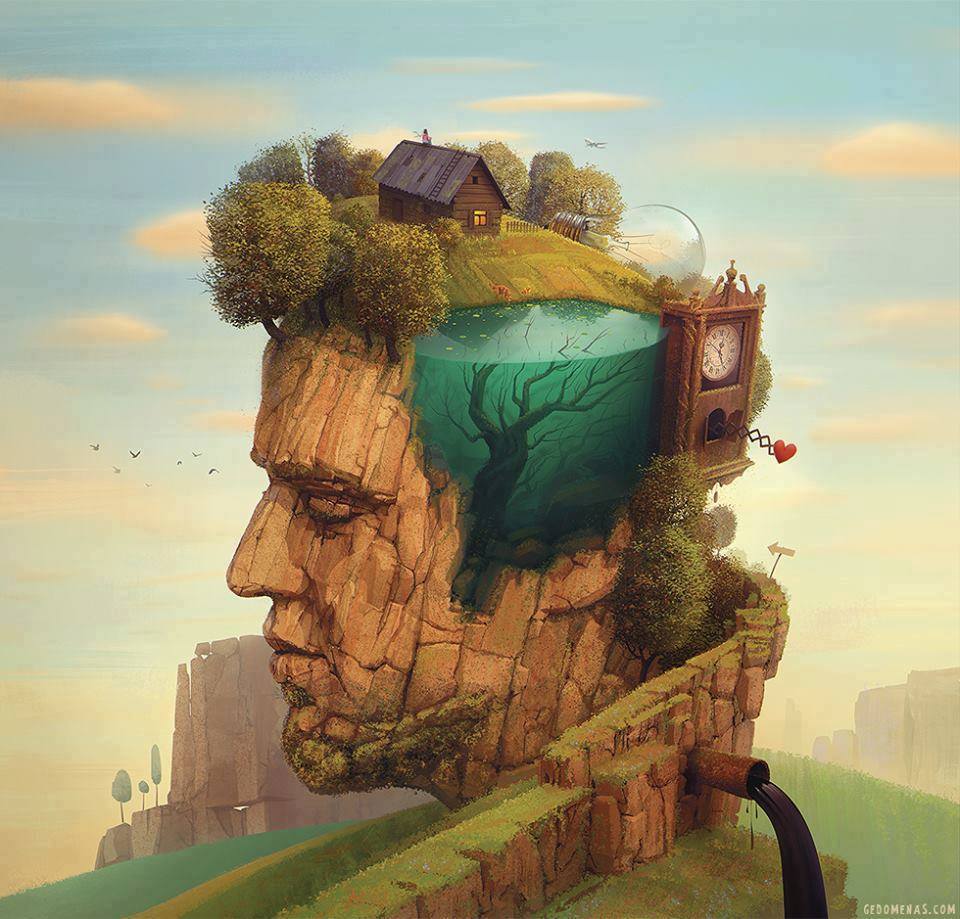
From the foregoing, it is clear that “reality,” that is — the stability and capacity for interaction — of any object depends on two components — 1) the clarity of its Me-formation and 2) the amount of energy invested in it.
Since the Magi are not satisfied with the “natural” process of creation carried out by the mind in the course of its “ordinary” functioning, but strive to expand this mind and increase its creative/realizational capacities, they seek new modes of realization. This is why nearly all magical traditions emphasize the development of attention and visualization skills. Understanding that we create what we perceive, Magi achieve control over reality by directing their perception and shaping it creatively. It is precisely the development of the creative capacity of awareness that underlies magical accomplishments.
At the same time, mistakes are often made due to insufficient understanding of the principles indicated above: sometimes Magi lack clarity in forming eidos (and then the Magus creates distorted forms), and sometimes there is not enough energy (in which case the created structures are either unstable or predatory).
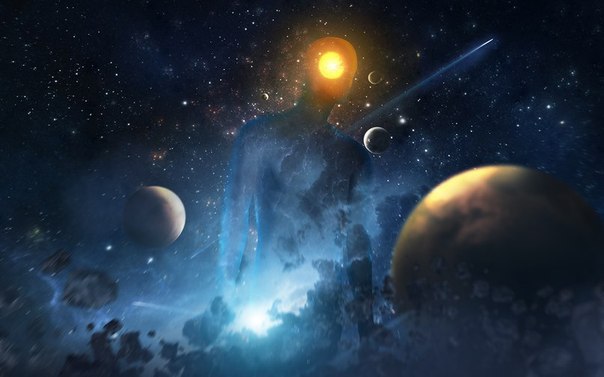
Note that each person, as indeed any being in the manifested world, can be considered from two perspectives: as the product of self-description and as the product of others‘ descriptions. In other words, each of us exists as both subject and object of creation; we create ourselves, but other beings also create us through their attention and awareness. And the higher the degree of our self-realization, the more aware we are, the greater the contribution of our own mind to our existence, and the less we are a product of another’s will.
At the same time, the same is true for any other beings we perceive.
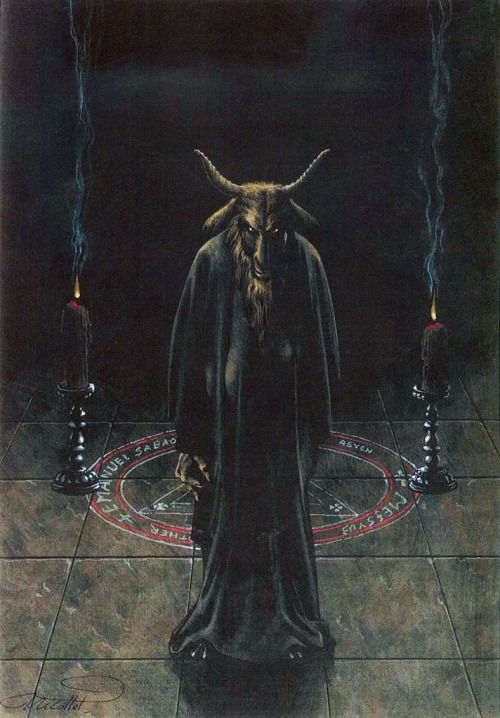
In ritual activity, the Magus constantly seeks interaction with various minds: gods, angels, demons, spirits, and so on. It must be understood that the image the operator contacts is also a “joint product” of the creative activity of the operator’s mind and the active self-creation of the being contacted. Accordingly, any Ritual must include two kinds of distinct mental activity on the part of the Magus: at the first stage there is active creation, the making of a “foothold for interaction,” laying the path for contact between minds; but as soon as contact is established, this kind of activity must yield to a receptive ‘mirror’ activity, during which the Magus seeks to minimize his form-shaping activity; otherwise, what he will see will be only his own reflection, with minimal inclusion of the “other’s” mind.
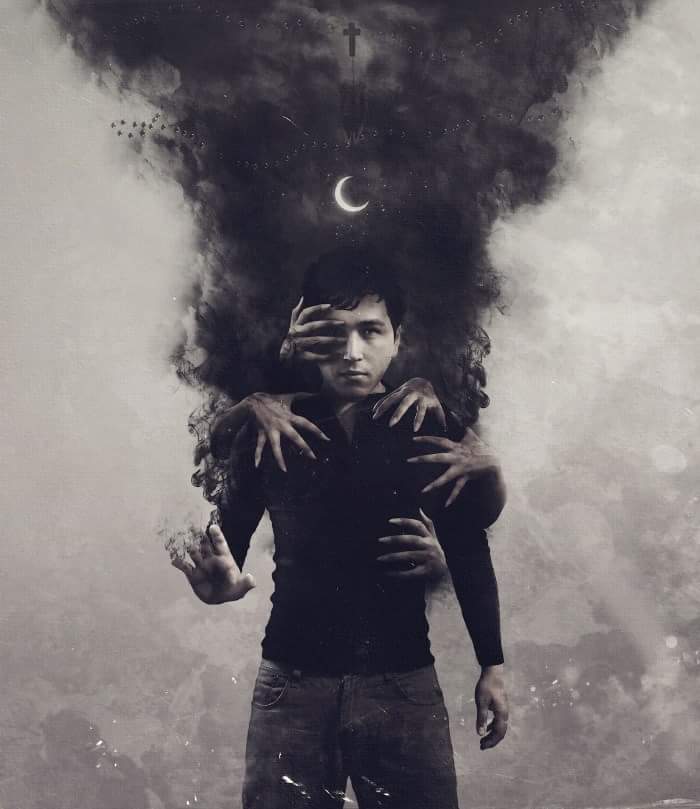
On the one hand, such “contemplation of reflections” can be useful and fruitful; in practice, many modern operations amount to this, and it is precisely this that underlies the treatment of gods, spirits, and the like as forms of mind, its “archetypes,” its “complexes,” etc.
Furthermore, Magi less inclined toward “Jungian” perspectives have resorted to creating such “artificial beings” — tulpa in the East, homunculi, golems, etc. in the West, incubi and succubi as unconsciously generated phantoms, all manner of “imaginary friends” and “invisible teachers” — these are all examples of more or less conscious and more or less successful creation of “external reflections” of one’s mind. The stability and ability of all these images to influence the operator depend on the same two conditions mentioned above: on the clarity of their image and on the amount of energy invested in them. And while a single operator’s consciousness is usually sufficient to create a clear eidos, the need for a significant amount of energy to maintain the created image’s stability often requires collective creativity (which is precisely why beings created collectively, or even more so egregorically, are usually “stronger” and “more stable”).

However, alongside contacts with “one’s own reflections,” the ritual activity of the Magi has always been aimed at interacting with other minds. Of course, perceiving a god as an “archetype” may have its purposes and values, but contact with it as a being, as an autonomous, volitional being, is no less important for the Magus.
And if the Magus wishes to know himself not only in the reflections of his own stream of awareness but also in interaction with other manifestations of the absolute‘s awareness, he must cultivate both the creative and receptive attitudes — while maintaining control and protection.
Hello! And what do you think, is it possible that the fixation of consciousness on its reflections, all these tulpae, mahatmas, etc., is just an element of the “growth” of the cosmos, as an environment that always induces consciousness within itself, which in turn simply strives for its maximum fullness? If, for example, a tree represents a certain (not necessarily perfect) mind, and each discrete consciousness is akin to a fallen fruit from the tree, and possessing like a seed, a piece of consciousness of a more developed/realized being tries to somehow fractally repeat the structure, to grow its tree-consciousness by feeling, from the resources available and due to the limitations of the environment sees distorted reflections of the “ideal plan” in the form of angels, mahatmas, and ancestral spirits. Significant deviations from the optimal “tested” paths of development may be perceived as malignant mutations, where the new balance becomes a competitor to the old, a kind of Luciferian sin, and resources are spent not on the growth of the tree but on competition between branches, which can lead to visions of demons, evil spirits, etc. And attempts to limit such interferences, the search for a “pure” environment can be subconsciously assessed or deemed “super-tree” as a rejection of the unity of being, although it’s evident that without such “fences” it is impossible to create something new. It is no wonder that the Gnostics referred to this world’s creator as Yaldabaoth, an artisan incapable of understanding love.
Any teaching turns out to be just a step towards overcoming that teaching. Understanding opens the next step. Interaction is an attempt to establish contact with the lost.
Perhaps so, I think such an overcoming should arise from a conflict between creative need and the structure of the Myth itself. Because each Myth describes a predetermined cosmic morphology toward a certain final result, and whether the traveler ascends the tree of sephiroth or attains gnosis, the supports can always become a cage depriving him of creative spark.
I don’t know why, but lately I have a strong feeling that even if I do not take any actions, my consciousness will still arrive at the necessary understanding at the right moment in time. It’s like knowing your future. You strive for something, but then you begin to realize that this striving will not go away from you.
“The depth of consciousness in the human mass is usually very small”. Interesting – Why? – Because the technogenic civilization dilutes power, clogging consciousness with empty objects, automating it with imposed algorithms, and getting used to gliding on the surface without penetrating inside? – or maybe civilization turned out to be technogenic because consciousness was initially automated, clogged with empty husk, and drunk with illusory images that are tied to bodily pleasure and ‘spiritual development’? Perhaps we were originally created for a purpose known only to the creator and programmed in a way that is unknown to us, and perhaps we diligently serve this purpose, playing in the meantime with symbols, archetypes, gods, angels, demons, love, war, and other important things.. Perhaps truly, some Yaldabaoth – a sort of stamping machine – stamped a new civilization after the self-destruction of the previous one, and someone there observes under a microscope the development or rather the next degradation of the community of godlike beings 🙂 How is the Depth of Consciousness measured? – By the volume of the Barak? – ‘White light’, synchronizing with which and filling with grace, you need nothing more – just to be closer to its source… and here I COLLIDE WITH THE LACK OF SEMANTICS (which may be originally programmed or not, not originally, but at the moment of the collapse of the tower of Babel – when we began to misunderstand each other) – In Order Not to Go Beyond the Limits – Not to Grow Up to the Heavens for such was the Will of God… but that’s already fairy tales))
We strive for contacts with new consciousnesses, of course, primarily for understanding new connections. The reading of “new” information occurs, and the more often we contact, the better the “integration” happens, i.e., adaptation and understanding.
I reflect on the words “The Great Spirit knows itself through self-knowledge.” I can agree with this.
I created my world with that goal – giving freedom in development to discover new sides of those forces that I placed in the original matrix of the world, i.e., I wanted to see new aspects of my consciousness.
Conclusion: the brighter the element of Creation, the more multifaceted it is, the more interesting it becomes.
Very important information. Thank you.