
Under the Sway of Egregores
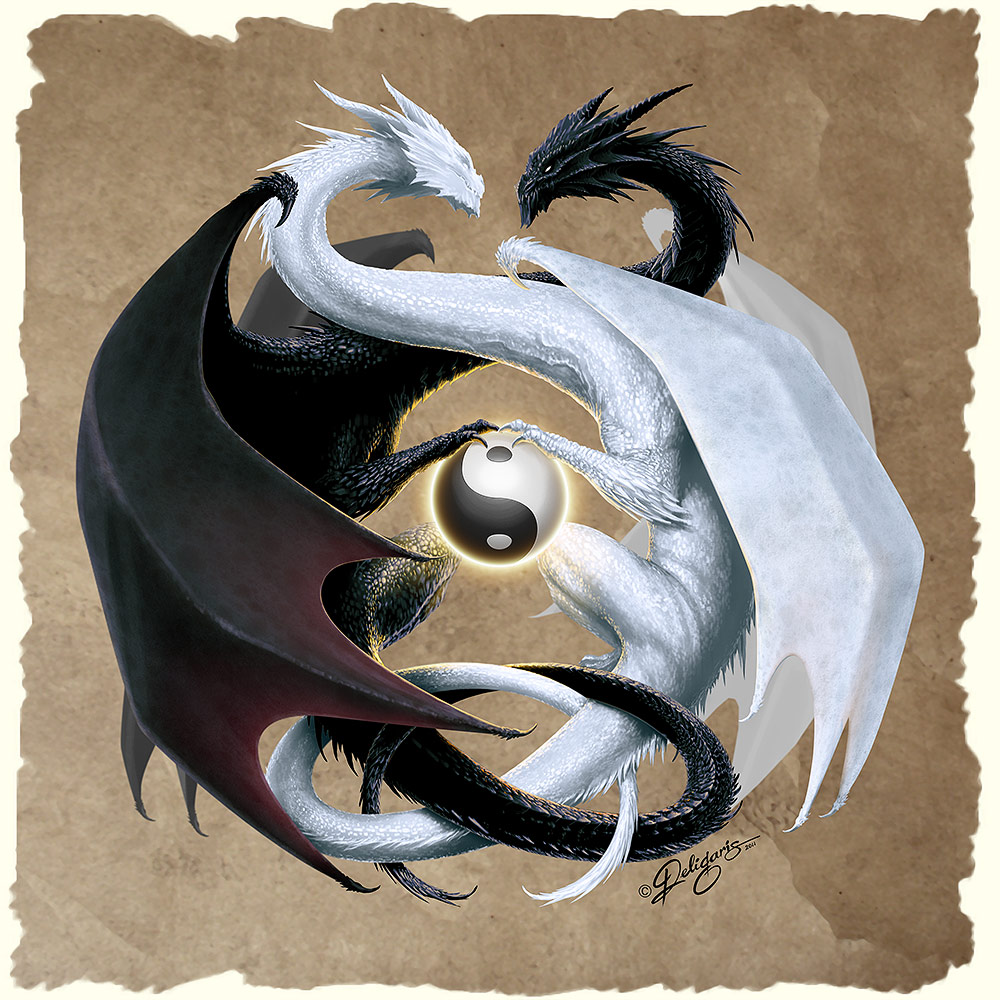
As a differentiated mode expressing the One, the individual mind is subject to two balancing forces – the force of separation (Naxash) and the force of union (Ea). Accordingly, each individual stream of mind experiences a drive toward separateness, individuation, self-determination, and, at the same time, toward union, merging, unity.
A person realizes the first drive through the search for self-expression, and the second through love; by integrating them, one attains the pleroma’s great perfection.
However, when not sufficiently aware, the first drive often spills into various forms of alienation and disconnection, while the second gives rise to the formation of various collectives and associations.

Since, of course, fullness of awareness is not very widespread, both of these “imperfect” drives are ubiquitous. In particular, it is obvious that the drive toward collectivity and sociability is deeply rooted in human nature and rooted in the drive to realize unity.
It is also clear that both drives, being basic to a stream of mind, involve powerful energy currents in their realization.
At the same time, whereas drives toward individuation among different people often conflict with one another, drives toward socialization frequently fall into sync. One can say that almost every person, in one way or another, strives to be part of some group, their “tribe,” and persistently attempts to form such collectives on different grounds. This impulse, of course, generates in the World Environment a corresponding current which, when it meets another similar current, may combine with it in a whirlwind forming a higher-order system. Thus, when the collective drives of several people (at least three) unite, a certain suprapersonal structure is formed, traditionally called an egregore.
It is obvious that an egregore, like any unit, any stream of being/mind, is subject to the same two forces, and therefore, like the individual stream, it strives both to oppose other egregores (those not aligned with it) and to merge with those that resonate with it.
Whatever basis an egregore is built on — on the notion of “kin“, religion, statehood, nation, profession, etc. — it forms in the same way as personality forms on the ‘first’ level: as a conglomerate of various reactions, patterns, and behavioral programs oriented around a common axis. And if for a personality that axis is the notion of selfhood, then for an egregore it is the primary unifying idea that shapes its collective vortex.
One can say that belonging to one or another egregore is practically an inalienable feature of any social existence: a person more or less identifies with some collective vortex, which is for them simultaneously both a support and a consumer of their energy.

Accordingly, it is important to take into account two aspects.
First, one must determine the degree of genuine affinity with the egregore(s) one interacts with. It is important truly to be “one of one’s own,” to join the collectivity that most closely resonates with the individual’s Orlög, the Way of that individual’s development.
Second, one must understand that any collectivity is a “double-edged sword”: on the one hand, it fulfills the basic need to socialize, providing protection and support; on the other, it requires constant energy expenditure to maintain itself and, moreover, restricts personal freedom to varying degrees.
Precisely because of the latter, the Magi traditionally regarded the egregorial form of association as a “lower” collectivity, and sought ways to form chains, families, lines, and schools free of the “superstructure” in the form of an egregore, and built on a principle close to the pleroma.
Nevertheless, the very drive toward collective action, the value of collective effort and mutual influence was never denied; on the contrary, the Magi always sought them out.
Accordingly, when entering any association, each wayfarer must ask four key questions for themselves:
1) how closely this association’s idea aligns with their spirit;
2) how well the group’s members resonate with their nature;
3) what efforts membership will require of them; and
4) what restrictions it imposes on their freedom.
Only after studying these questions and answering them honestly can the wayfarer responsibly choose to join the collectivity or refuse.

Why is the Idea of Non-Egregoric Unions unpopular and difficult to implement?
__
What process is hidden under the cover of the phrase “the magician in the family absorbs others himself”?
All ideas requiring significant effort, especially mental effort, are unpopular. The “difficulty of implementation” of this maneuver is primarily related to the necessity of a high degree of mutual correspondence of the flows of consciousness of those who join this union. In turn, determining the extent of this internal correspondence requires great attentiveness and significant internal honesty, as usually people, when establishing such correspondence, are guided not by their deep feelings but by some external criteria and signs.
When it is said that members of the Family “absorb each other”, it refers to the same highest degree of mutual correspondence. Since any person, as a microcosm, contains all the energies of the world, they can find in themselves those energies that currently make up another person. In other words, each of us can theoretically find in themselves any other, but with significant current correspondence, this finding becomes greatly facilitated and turns from a potential probability into a real possibility. Each member of the Family “contains” the others, sees them not only “outside”, but also as if “from within”, finding and knowing their energies within themselves.
A magician is always outside the egregore. This is the truth.
Earthly egregores – these are distorted social fields; the essence of the distortion is that any social field should be managed – by a strong personality, a responsible god, a star family.
—-
The egregore, however, uses the principle of shirking responsibility. It seems like no one manages it, and at the same time, no one prohibits it from managing. And it seems there is interaction, and yet there is none. It seems there is someone at the top, and yet there isn’t. And in the case of force majeure, “oh, it just happened, fate is to blame for everything”, or find random scapegoats whom the egregore managed, and blame them for everything.