
Collective Vortices
It is well known that collectivities acquire individuality.
Multiplicity is the fundamental property of the immanent world. At the same time, the idea of multiplicity has no independent substantial existence: it is born from the idea of unity as its binary counterpart, and both ontologically and materially it is the antithesis, while unity is the thesis. Therefore any collectivity, any multiplicity, strives to become individual. The whole process of evolution involves organizing simpler elements into more complex wholes and individuating them. Such an aggregation of elements can occur organically, which raises the evolutionary level of the formed system, or it can occur chaotically, which may not change or may lower it. If the degree of chaos or artificiality is too great, the group becomes utterly unviable and its illusory existence collapses at the slightest adverse circumstance.
Since every act of will, every striving of a being is accompanied by the birth of vortex in the World environment, collectivities united by a common orientation of attention or ideology give rise to related vortices that can attract and merge, forming shared entities possessing a form of quasi-self-awareness.
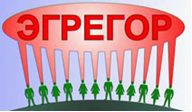
A typical example of such individualization is the emergence of egregors (from Latin ex– and grex — literally “out of the flock,” or from Greek ἐγρήγοροι — “watchers”; the latter etymology often causes confusion, leading egregors — collective entities — to be conflated with spirits — the grigori). According to the Myth described here, egregors are collective vortices formed around some axial idea by the volitional effort of beings who accept and support it. Tradition says that “an egregor is the organic aggregate of the active minds of all the group’s members.” Just as the potentials of the individual monad unfold in its corresponding embodied consciousness, so the potentials of the group’s common unity unfold in the egregor.
Most groups and organizations have an egregoric structure — ranging from families and corporations to churches and states.
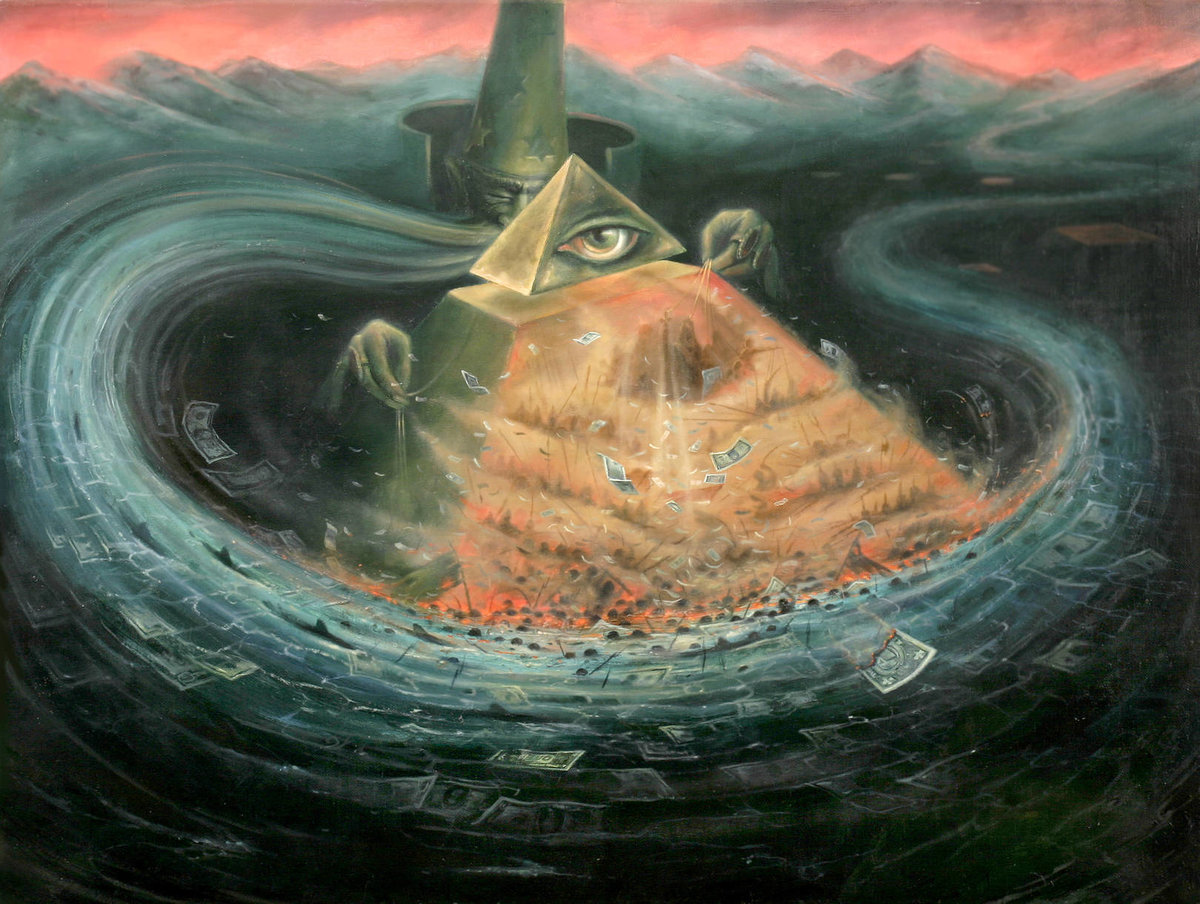
Despite its secondary role to the volitional efforts that give it birth, any egregor is an individual being with its own will and aims. Both the egregor as personality and as mind are subject to the same laws of evolution. The egregor supports all members of the group, granting them access to collective resources, but it also feeds on them, for to maintain its vitality it requires a steady influx of energy that only the group’s members can supply. By its very nature an egregor strives to expand, to absorb weaker communities or to destroy them — i.e., it possesses a powerful will to live that makes its behavior quite aggressive. The life of a society and of its egregors is governed by the same laws as the life of individual human personalities. Egregors are born, grow, wage a fierce struggle for existence, and die. The energy invested in an egregor is finite and can be entirely consumed over the course of a certain period of activity. The only source for replenishing and increasing this reserve is the activity of the individuals that participate in it and are directed toward maintaining its vitality — that is, those guided by the idea that forms the axis of the egregoric vortex. If those organisms for one reason or another die, or the organic link between them is broken, the egregor, having exhausted all the energy previously invested in it, is destroyed and dies.
A classic example of an intellectual egregor is the school. Its center, both in philosophy and in science, is either a single integrative idea or a whole constellation of such ideas that establishes a specific worldview. All active followers and interpreters make up the center’s periphery. Finally, the surrounding intellectual community constitutes the external environment.
At the same time, although the egregor is the most widespread form of individualization of collectivities, it is not the only one. An egregoric structure is unsuitable for many magical Lines aimed at accumulating power, since the egregor, as we have already seen, requires a constant inflow of energy for its existence.
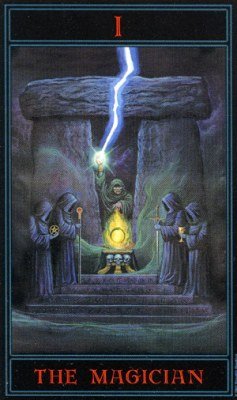
Fortunately, union can also occur according to the “pleromatic” principle. If the members are carefully chosen, they form separate “puzzle pieces” of the overall picture, and the vortex formed by their efforts is supported by their personalities without giving rise to a separate egregor-type individuality. This type of union is best described in Latin American literature in the form of so-called “families,” or “parties of Magi.” However, such formations were also known in other traditions, reaching back to the ancient Egyptian initiatory currents.
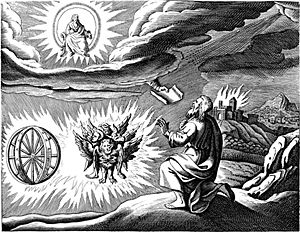
It is this kind of non-egregoric (or, as they say, “pentagrammatic“, which emphasizes that it does not usurp members’ individual wills) vortex that the Wheels of the Merkava, surrounded by the Four Animals, symbolize, and those Animals themselves reflect the principle of constructing such a vortex. At the same time, unlike the egregoric vortex, the pentagrammatic vortex can never include more than a certain number of people, and selecting those people is itself difficult.
Thus, creation methods vary, as do the vortices. In any case, however, a multiplicity is a definite entity, a phenomenal personality that is not indifferent to its surroundings, but either provokes conflicts or seeks to avoid them. The personality of a multiplicity is gradually created and evolves. As this evolution progresses, the more significant the features of that personality matter for its future development. Moreover, the higher the evolutionary stage attained by the multiplicity, the greater the strength and intensity of its personality and the more pronounced its individuality becomes.
More precisely, models of Egregores were developed by Daniil Andreev, Selchenok K.V., Absalom Podvodny, and Vitaly Bogdanovich in their book ‘Egregores’.
“Models” can be numerous, but a magician must rely not on “models”, but on the data of their experience and their vision.
Is it possible to create an egregore that draws strength not from its members but from the universe using the principle of similarity? If the egregore contains images resonating with the reality of the universe?
Ilya, partially yes. The power source of the egregore ties into a separate flow (channel), different from the leading link. Then, the structure will draw its main energy from a source close to the key idea of the egregore or level of its vibration. Ideally, it should be fohat in the etheric mental layer, since mental electricity is closest in nature to the lower egregores. Then it will be controlled by the key link and minimally vampirize the energy of the participants.
Magicians create egregores for their goals, and there are many nuances here.
Additionally, there are higher structures, urts, non-egregorial, where there is a different principle of collectivity and a more powerful influence on the consciousness of participants, and on the space of the egregores itself.