
Archons and Gates
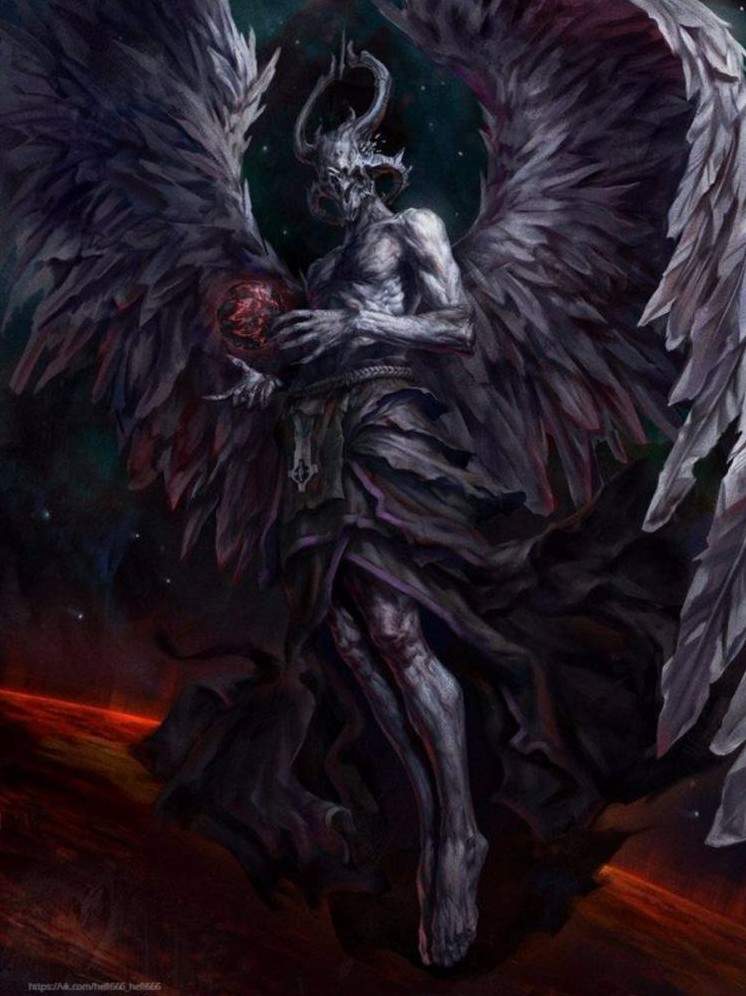
We have already mentioned that any act of creativity, any transition of a system from one state to another, includes a stage of instability, a stage of uncertainty or “superposition,” that is, in fact, contact with the Interval. We also said that such contact usually involves encountering at least one type of force that forms the Interval as Space (that is, with the Archons) or as an Edge (that is, with the Goetic Gatekeepers).
However, these two groups of forces differ not only in their “spatial” properties: they operate predominantly in different spheres, symbolically described as the “zodiacal” and “planetary” levels, which correspond to the conditions and causes of any manifestation. We have noted that in the “Magical” glossary “planetary” influences correspond to the inner activities of any system — its causal level — whereas “zodiacal” influences are usually understood as the set of conditions within which the existence (development, evolution) of a being or system unfolds.
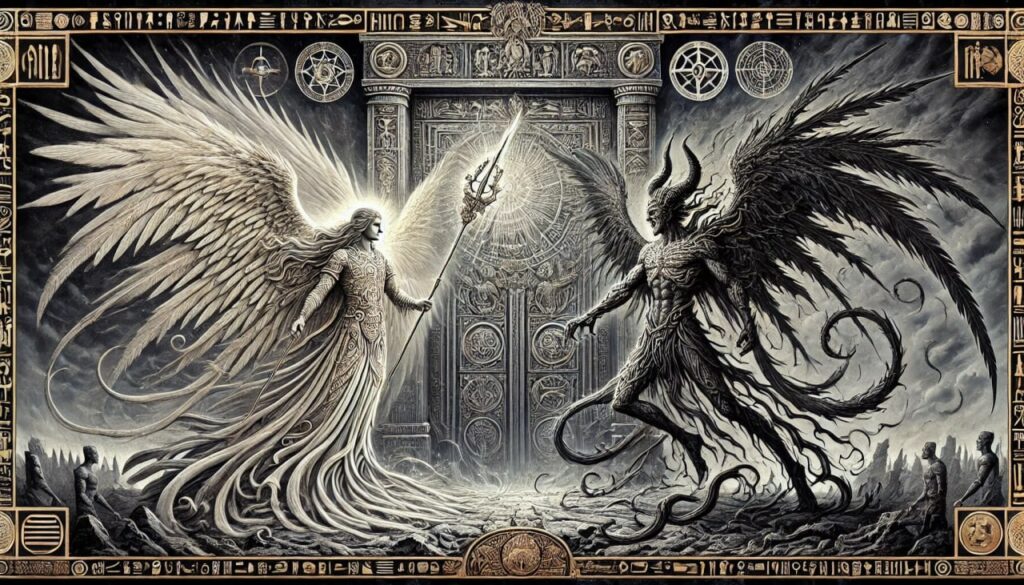
Although the Gate System always comprises both levels of influence — both causes and conditions — and accordingly both zodiacal and planetary correspondences have been proposed and substantiated for both the kidemons and the Archons, by their very nature demons are closer to the sphere of activity, that is, to causes or “planetary” influences, whereas the domain of the Archons is the Medium — manifestations, conditions, or “zodiacal” influences.
This is precisely why, across methods of classification and identification, one can discern a sevenfold heptarchic organization of the Gatekeeper system and the dodecad that underlies manifested existence.
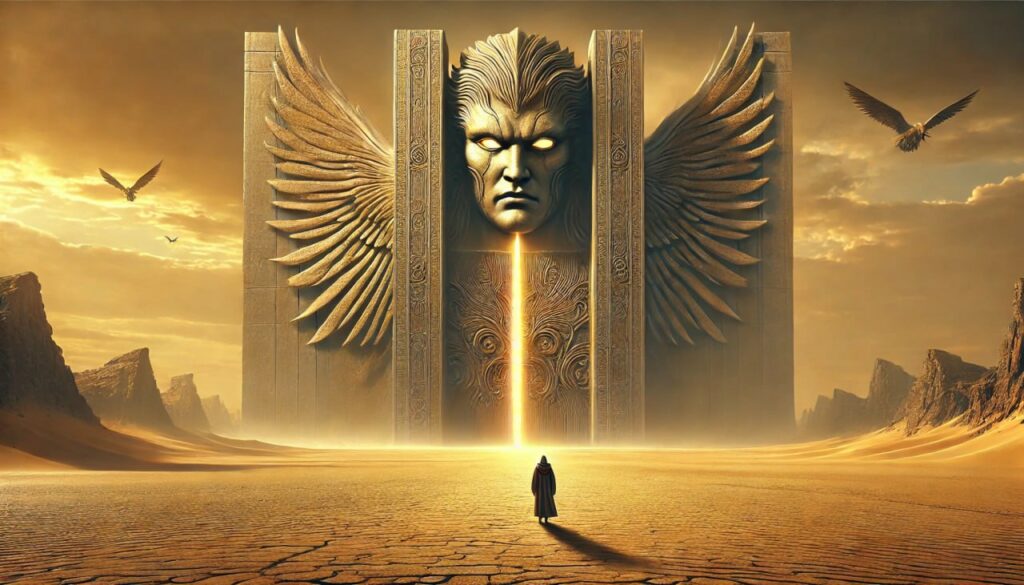
Thus, the 72 Gates of Goetia are, of course, also the “zodiacal circle” of Kiners and decans, but, more fundamentally, in their inner nature, they constitute a system of nine “kingdoms,” each ruled by a King and Seven Grandees. It is these Grandees who form the level of control over the causes and inner activities of any system. In this sense, one may say that demons are features of inner mental currents, and therefore at their level both “planetary” and “zodiacal” correspondences belong to the sphere of the psyche, although, naturally, they also flow outward into the manifestations of “external” reality. We began to address this level of systematization in the second volume of our “New Lemegeton.”
Similarly, although the hierarchy of the Archons also represents the “origins” of “planetary” influences in a more “physical” sense, by their nature — as the authors of probability fields that give rise to worlds and universes — the Archons embody the “zodiacal” principle: the medium’s capacity to favor a system’s movement in certain directions and to hinder (or even block) it in others.
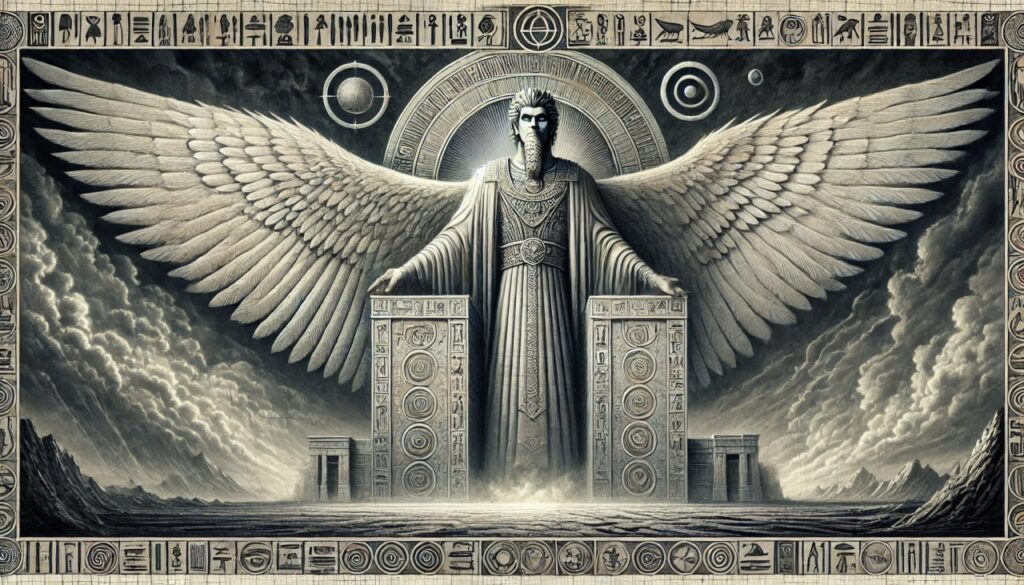
Therefore, although many sources list seven Archons and mention only their names, it is important to understand that this reflects the ancient custom of dividing the signs of the Zodiac into “daytime” (seven) and “nighttime” (five). Authors tended to concentrate on the more “prominent” actors while implying that behind them stand another five more “secret” forces. This is made explicit, for example, in the text “Pistis Sophia,” which first lists the five Senior Archons:
Madness (Paraplex) — an “anti-Athena” (or anti-Apollo) and the female hypostasis of Yaldabaoth, embodying the principle of ignorance and illusion that underlies manifested worlds.
Wrath (Ariuf) — an “anti-Artemis” (the name derives from Ariadne, who in Crete was revered as the Great Goddess and later identified with Artemis; one of her aspects was control over the forces of wrath, as with the Minotaur), embodying the distorted principle of repulsion.
Envy (Hecate) — a force or Archon of “selective realization” in its object aspect: the arbitrary switching of attention from one realization to another without any intrinsic regularity; the name “Hecate” comes from the Greek “ἑκών,” “willing,” and means “She who creates her will.” In this aspect Hecate is not the Goddess of Magic but the Archon of Arbitrariness.
Greed (Typhon) — the Archon of excess, a distortion of the force of attraction, the urge to acquire that with which one need not interact. In this sense Typhon is the force that sought to overthrow Zeus for dominion over the cosmos.
Inequality (Yakhfanabas) — an “anti-Dionysus” (the name means “Iacchus Tenebras,” “Dark Dionysus”), the Archon of “selective realization” in the subject aspect; as the text says, he “enters people and compels them so that they ‘look upon faces,’ harming the righteous and favoring sinners, taking gifts in order to avoid true justice, forgetting the poor and needy” — in effect the energy of undeserved blessings.
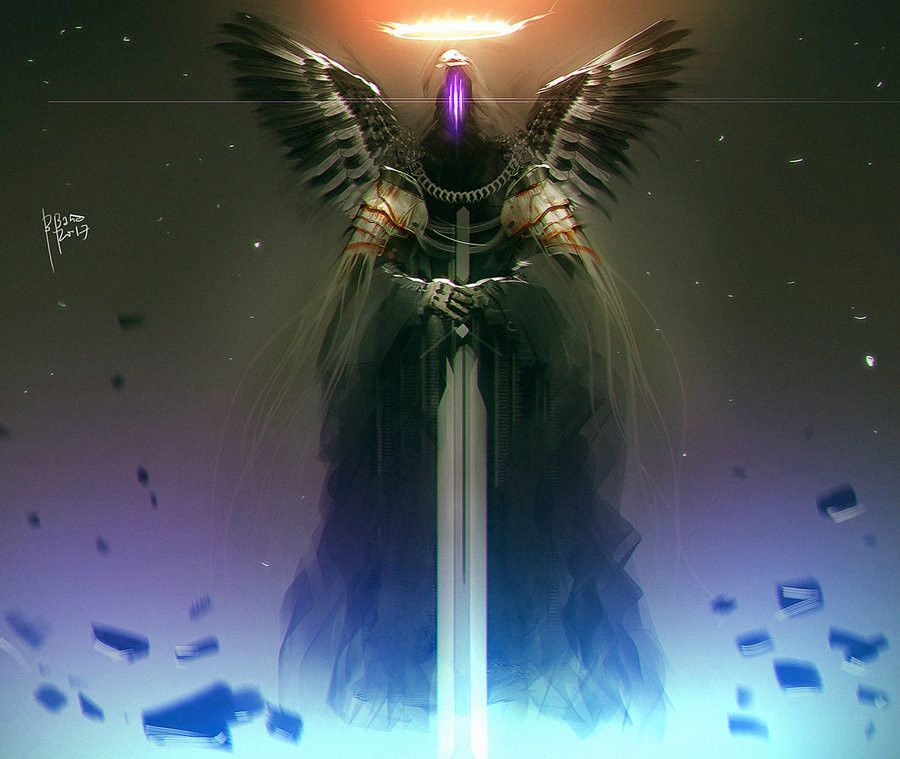
Note that each Archon is two-faced and bisexual: within each one can distinguish its energy (the female hypostasis, analogous to the Eastern Shakti) or quality, and its form (the male hypostasis, a personal deity). In this sense, the first epithets in the list indicate the energy, and the Names indicate the personal Archon that serves as its source.
These five “night” or “secret” Archons are regarded as five hypostases of Yaldabaoth, five initial forces manifesting the potential field in its “darkened” form as Heimarmene.
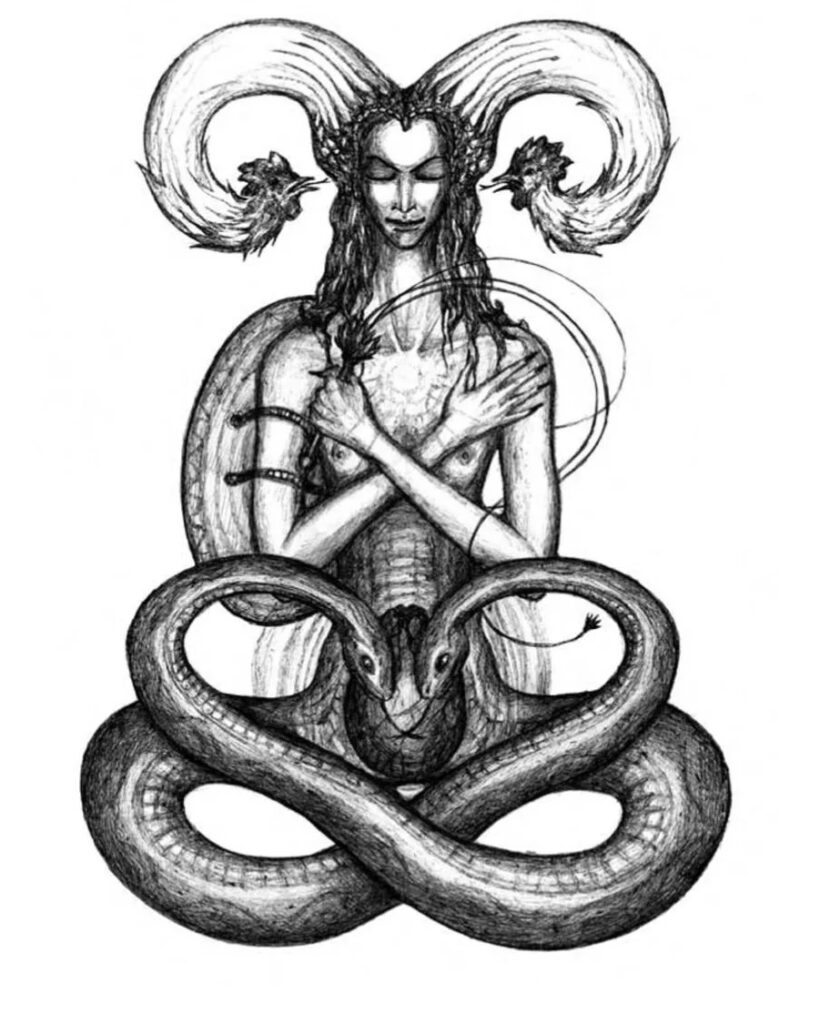
From this pentad arises the following heptad, from which the “distorted” or “darkened” planetary principles are born:
Good (Moon) — the principle of distribution of energy manifests as Atot or Khorei (Sheep-faced), expressing the energy of Giving as indifference, drowsiness, and apathy;
Providence (Mercury) — the structuring, informational principle manifests as Eloai (Donkey-headed), giving rise to the quality of adaptability;
Deification (Venus) — the force of admiration, which should lead to attunement with the higher, manifests as Astafai (hyena-faced — a scavenger), expressing a readiness to rejoice in destruction and to assent to evil;
Dominion (Sun) — the force of organization, manifesting as the urge to be at the center of attention — Iazo (Seven-headed serpent) — a false principle of systemhood in which the organizing element is the one who wants it, not the one who can;
Royalty (Jupiter) — the force of integration, manifesting as Sabazius (fiery Dragon), expressing organization based on alienation, violence, and coercion;
Jealousy (Mars) — the force of property, manifesting as Adonin (Monkey-faced) — the Archon of seizures, imitation, imposed foreign properties, hypocrisy and mimicry, expressing the energy of attunement in a perverted form, as coercion into sameness;
Vision, Wisdom (Saturn) — manifesting as the assertion of “one truth,” a limited view raised to the absolute — Sabbatai (Sambatas, Fire-faced) — the “lower” hypostasis of Yaldabaoth, the Archon of False Truth, giving birth to narrow-mindedness and the limitations of manifested worlds.
It is not difficult to see that while, for example, Belial expresses the “Jovian” principle in its “psychological” aspect, and Astaroth in its metaphysical aspect, Sabazius embodies it in the conditions and properties of manifested worlds; in this sense Sabazius is the Archon generating the “fiery” and domineering zodiacal signs, with their expansiveness and aggression.
It is precisely in this sense that one can speak of the “rule” of the planets over the constellations, and say that the Archons generate this “outpouring” of the inner into the outer:
| ♈ Aries | Mars | Adonin |
| ♉ Taurus | Venus | Astafai |
| ♊ Gemini | Mercury | Eloai |
| ♋ Cancer | Moon | Khorai |
| ♌ Leo | Sun | Iazo |
| ♍ Virgo | Mercury | Hecate |
| ♎ Libra | Venus | Ariuf |
| ♏ Scorpio | Pluto | Typhon |
| ⛎ Ophiuchus (?) | Pluto | Typhon |
| ♐ Sagittarius | Jupiter | Sabazius |
| ♑ Capricorn | Saturn | Sabbatai |
| ♒ Aquarius | Uranus | Sakla |
| ♓ Pisces | Neptune | Yakhfanbas |
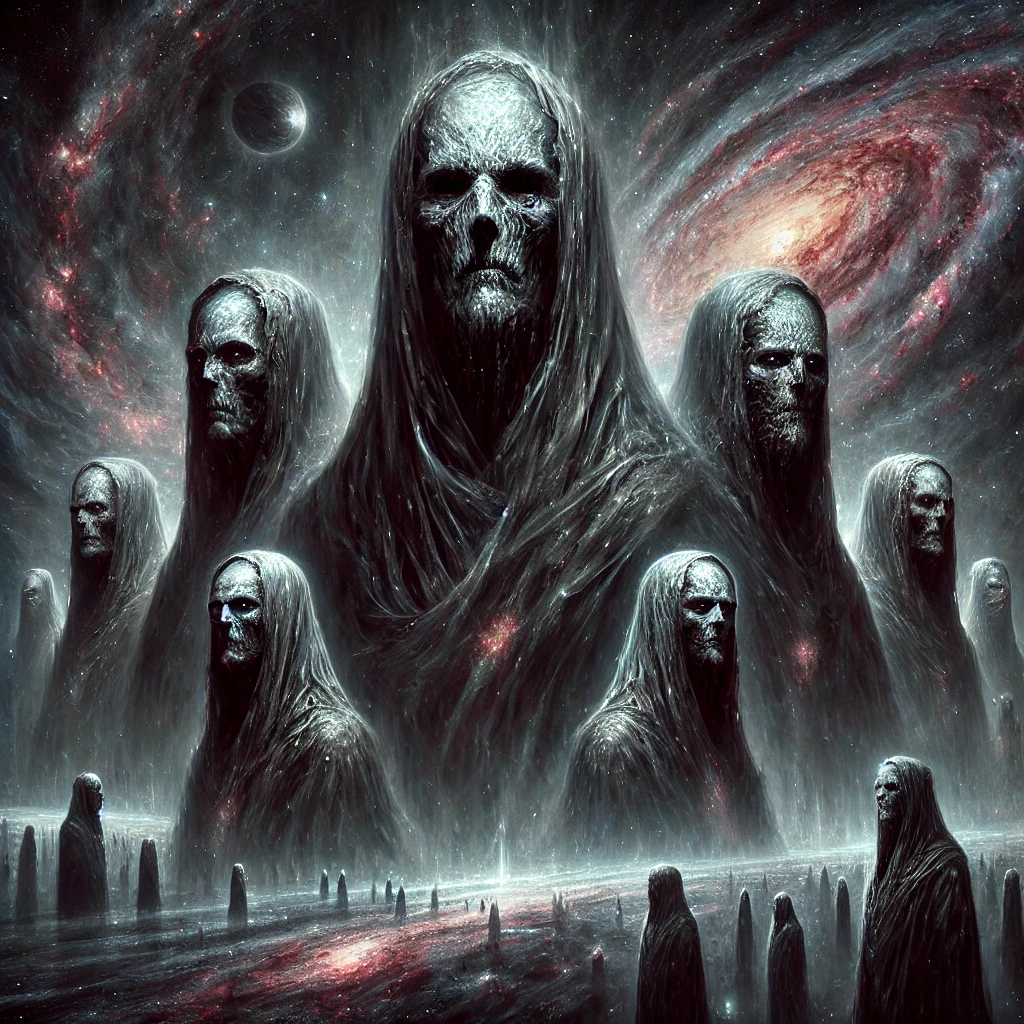
How interesting to relate my awareness to the looming Archon. I am 43. Like ash to ash, apple to apples, etc.