
Technologies of Gnosis
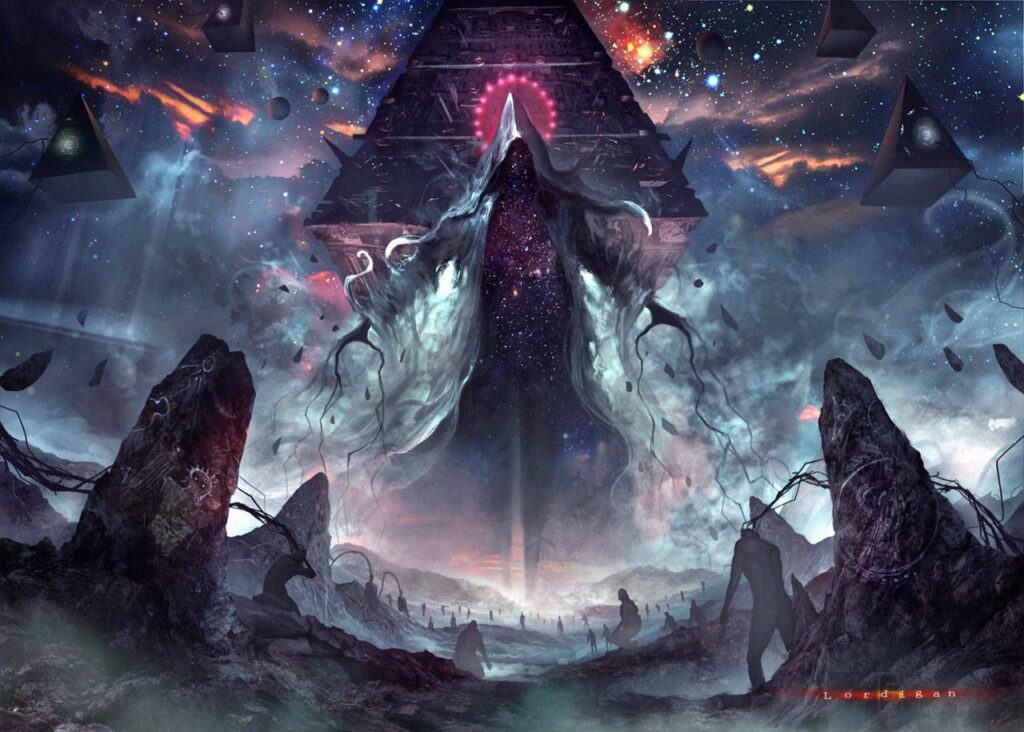
Among the various schools and currents that have shown their high evolutionary effectiveness in relation to the human mind, holds a special place Gnosticism. Having burst into bright light at the turn of the new era, this movement flourished for only two or three centuries, after which it withdrew to the periphery and is now almost forgotten. And yet, during its existence Gnosticism produced many highly realized Masters as no other current (except perhaps Vajrayana). Like Buddhism, Gnosticism is, strictly speaking, neither a religion nor a philosophy; it is a special method for attaining a higher state which, in this case, is called knowing or gnosis (γνῶσις).
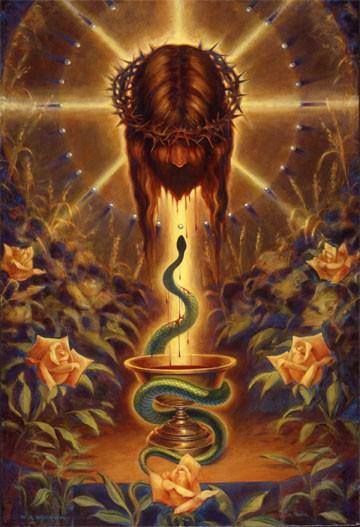
Studying the views of the Gnostic schools is surprising and sometimes confusing because of the complexity and diversity of their cosmogonic and theological descriptions, the wordiness of their classifications, and the intricacy of their connections. Nevertheless, if one makes allowance for the fact that the first Gnostics were only learning to interpret and bring order to the completely new spiritual experience that overwhelmed them, then such wordiness and diversity become understandable. In the same way, early quantum physics, developing its terminology — learning not just new descriptions but an entirely new mode of thinking — spawned many bizarre terms, attributing to elementary particles “charm,” “color,” “flavor,” and so on.
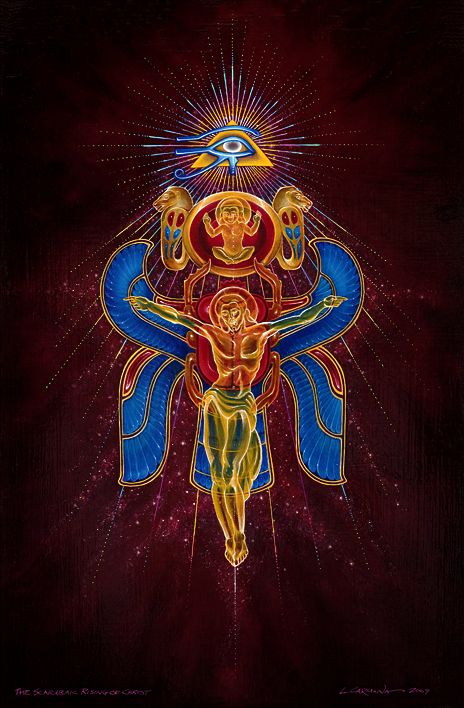
Thus, Gnosticism is a special method for developing consciousness that arose when people discovered the possibility of a direct ascent along the Column of Wisdom of the Tree of Life. If before that practically all the highly realized ‘Perfect Ones’ followed either the path of Understanding or the path of Knowledge — arriving, respectively, at Higher Wisdom (Binah, Tevunah, or, as the Gnostics said, Sinesis), or at Absolute Knowledge (Chokmah, Sophia) — then as a result of a mystical illumination the Path to the Abyss was opened, and it became possible to attain the Higher wisdom of Daath (in the language of the Gnostics — Barbelo, Βαρβηλώ, “Great Expansion,” or Pronoia, Προνόη, “First Thought”).
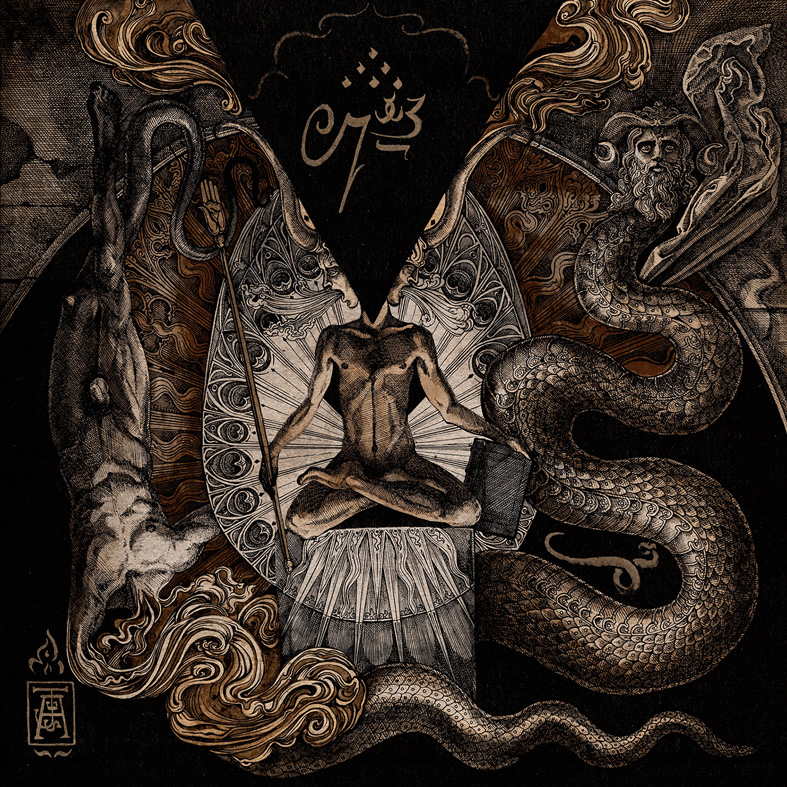
It is hard to say whether this Path was opened by Hellenistic Semites on their own, or “seeped” in from the Hermetic schools of Egypt, but its practices confronted seekers with the Abyss, and at the same time — with the Mystery of Wisdom, and with the Great Demon, and with the Boundless Interval.
The Gnostic approach used the method known as “Saddling the Dragon,” practiced in the East by Taoists in the form of “Sublimation of Desire.” The idea is to create a maximum potential difference between desire and its embodiment, which propels the mind across the Veil of Keshet. It was precisely this approach that later evolved into the asceticism of the hesychasts and the “purity” of the Cathars, giving rise to the entire spectrum of Christian mysticism, while among the Gnostics it was pure “God-seeking,” a fiery striving of the “spark” toward its Source.
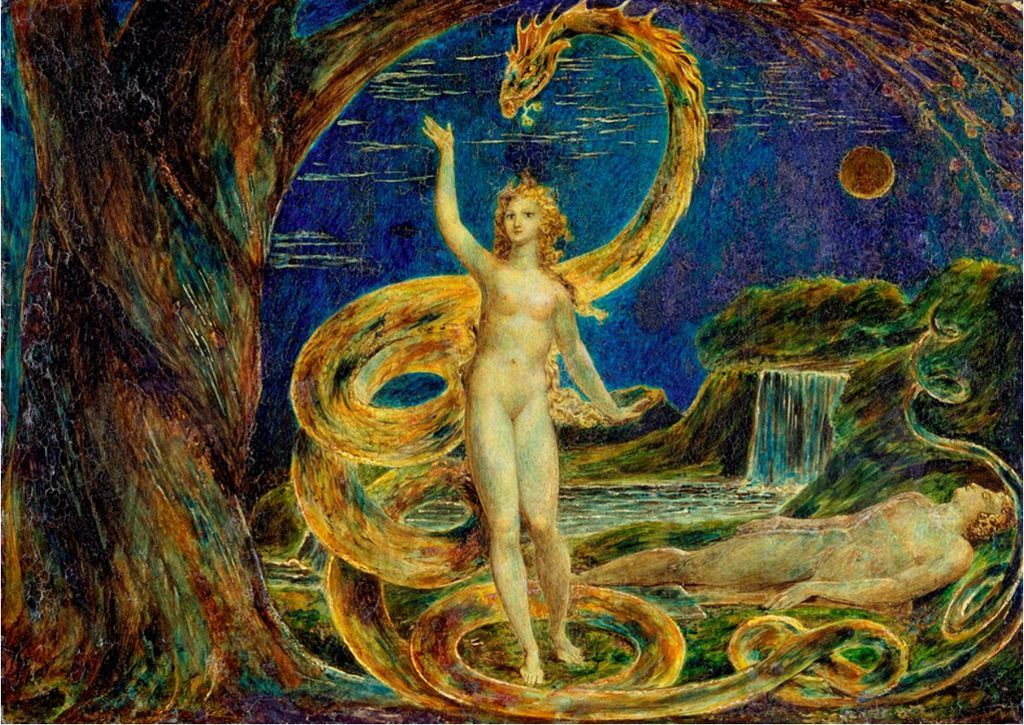
However, having passed Keshet and gone beyond Paroketh, the Gnostic moved on, and, having met the luminaries–hierophants, plunged into the Interval, where his main quest and principal battle took place. Here he had to overcome the bonds of the Blind God and find the absolute Light of Pronoia. At the same time his own Light — heated by practice — Epinoia — merged with the “Mother-Father,” the androgynous Pronoia — Barbelo. Thus, in its “soft” form, the Gnostic dualism is not only the opposition of the “Blind God” to the “Higher” God — the Father Keter, but also the union (syzygy) of this Father with the First Thought that looks into the Darkness.
Thus, Gnosticism is a method of enlightenment based on the search for the sources of one’s desires, the “distillation” of their driving energies, and the release of light-bearing principles. For this, the practitioner must look into the very heart of their darkness, meet the darkest demons and evil gods, and, without succumbing to them, emerge pure and immaculate into the radiance of the Higher silent and formless Wisdom.
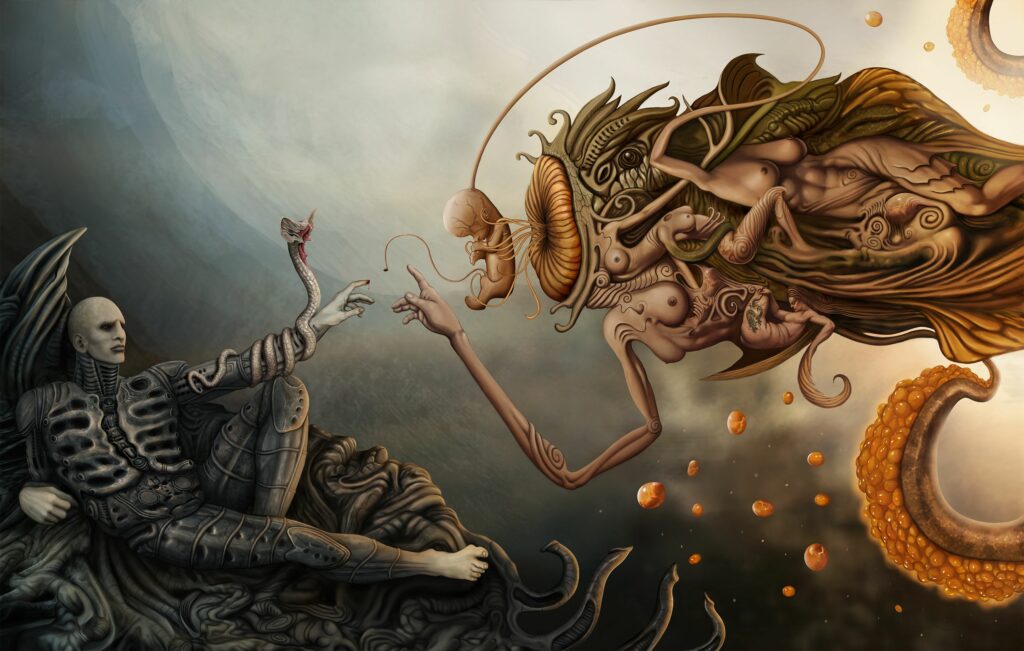
The diversity of Gnostic schools and teachings of Gnosticism are various attempts to “adapt” this technology to the needs of specific Wanderers, and also to interpret the experience that arises when confronting the Veils and Abysses that constitute the main part of their Path.
Today, when the experience of interaction with the Interval is once again re-entering human life, studying the knowledge and approaches developed by the Gnostics two thousand years ago can provide invaluable support and serve as an “instruction for survival” during the expansion of Interworld forces.

Hello. It is not very clear how this looked technically. That is, the gnostic through exteriorization/dreaming while awake immersed/projected their consciousness into the Interval and there ‘evolved’; and from the individual point of view, ‘immersed’ into the sephira Da’at, reached its foundations, overcame the Abyss and so on, am I understanding this correctly?
Hello. Yes, the main ‘technique’ of the gnostics was what we would today call ‘deep meditation’, ‘insight’ into the Higher levels of being, and ‘anchoring’ there.
Here is the translation of your text to English:
“What definition can be given to the concept of wisdom? How does it differ from knowledge? And what are the ways to achieve it?”
Here is the translation to English:
“More about wisdom here:
https://enmerkar.com/en/way/knowledge-and-inner-knowing
Wisdom is the energy of the true Path, that is, a state in which correct actions are taken not based on criteria or analysis, but from the experience integrated into consciousness.”
Did the Gnostics not strive for revelation? In your opinion, what is it? Having read various sources, if briefly, it is a Plot (idea) contained in the First Thought (Pronoia). Existence (the world of generation) is cyclical; it has two streams, an ascending and descending. Coagulation and solventing. The standard tradition provides technologies for ascension, the final point of which is the Identity of Being and Thinking/Good/the golden age. Wisdom is all possible states of being, the presence in the center. It is also related to music, therefore it cannot be verbally expressed. The Gnostic goes beyond Being and receives revelation?
“The revelation of the gnostic is the awakening and cleansing of the ‘spark of light’ in his soul. In other words, Gnosis as a technology is the ‘divinization from within,’ the removal of barriers to the inner Light of the Divine, and thus the merging with the Pleromatic ocean.”
Dear Enmerkar, where can I find detailed information on all methods of the gnostic Path for those who resonate with this path and find it identical?
Unfortunately, not much ‘primary’ gnostic literature has reached us; however, through creative analysis, it may be enough to reconstruct the paths and practices. I can recommend a good resource: http://apokrif.fullweb.ru/gnost/
Thank you!