
Seeking, Adeptship, and Mastery
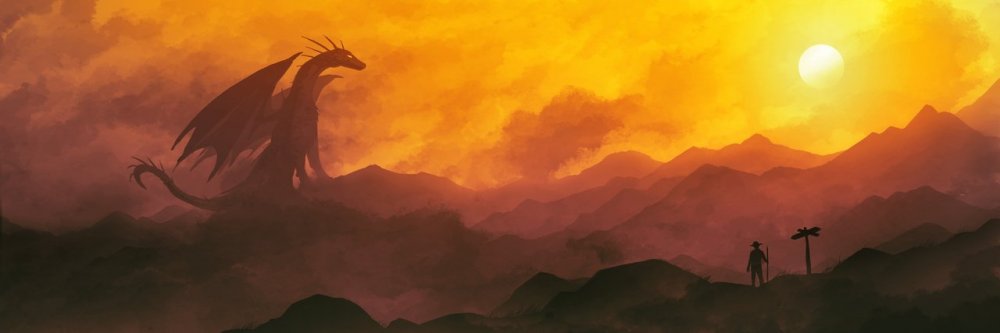
Even the first cartographers who sketched the maps of the Magus’s Way noted that this Way includes three major stages: the Druids divided their companions into Ovates, Bards, and Druids. The Golden Dawn tradition likewise introduced the notion of the “Three Orders,” and so on.
This division reflects objective changes that occur in the Magus’s mind as they develop, and it emphasizes that this very development encounters two thresholds, or, as the Western tradition calls them – Abysses, which divide the Way into three qualitatively different stages.
Strictly speaking, one should also introduce the idea of a third Abyss which, although not an abyss in the strict sense, is often the most difficult to overcome — the Abyss that divides the World of Victims and the World of Hunters — i.e., the “ordinary” world and the world of Magic. However, the Magi have not been particularly indulgent toward people who linger in indecision in the face of Power, and therefore did not call this barrier an Abyss nor did they rank it with the Great Abysses, though they recognized the need to overcome it.
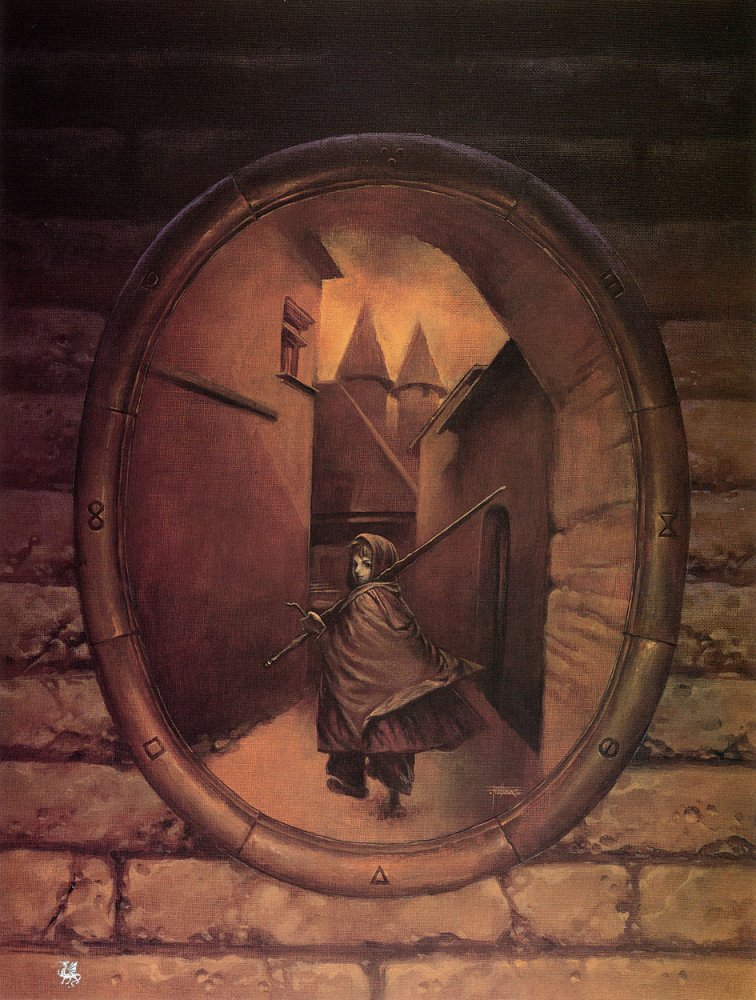
Thus, the Magus’s Way begins when a person takes a step toward Power. In fact, this is the beginning of any Way; before that, it makes no sense to speak of movement or of a Way. As soon as Power knocks at a person’s door and they make contact with it, the first stage begins — their search for the Way.
A person becomes a Seeker of Power, or, as they say, a neophyte.
The Seeker’s main task is to determine the character of their Way.
This often takes years, decades, and sometimes a whole lifetime or even several lifetimes.
Nevertheless, until the Way is formed, until its key characteristics are found, movement proceeds rather chaotically, and periods of acquiring Power, illumination, and discovery alternate with phases of decline, dispersal, and bewilderment. Sometimes one gets the impression that this is how it ought to be, and then the person stops at this stage, becoming a sorcerer or a philosopher.
If, however, alongside the accumulation of Power the mind begins to organize itself, then gradually a grasp of one’s Way forms as well, ability to navigate it grows, and movement becomes progressively ordered.
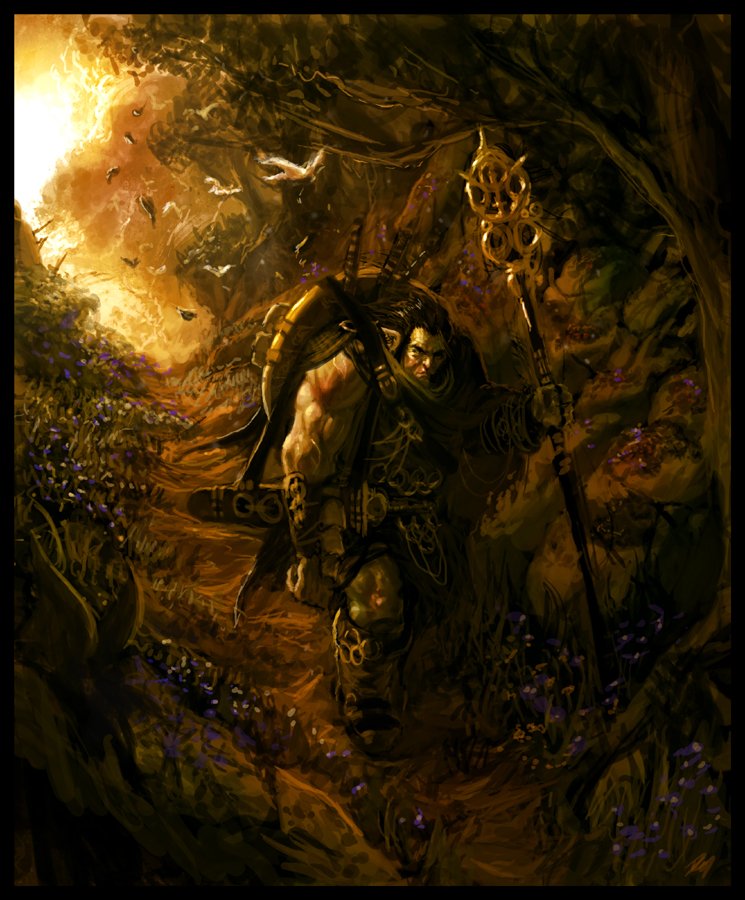
At a certain moment the disparate picture of the qualities of the Way and the Myth comes together, and illuminations give way to understanding. Then the Seeker becomes an Adept, and it is from that moment that true development properly begins. The Adept understands what they are doing, and therefore their movement is ordered, although, of course, it still includes descents and ascents.
All the Adept’s efforts are directed toward self-development, and, naturally, this stage of the Way can also take years, decades, or a number of lifetimes.
However, sooner or later a moment comes when the Adept not only walks the Way but merges with it, and not only understands the system of their development but becomes fused with it, having overcome its internal contradictions. Then the Adept becomes a Master, one who does not merely walk the Way but shows the Way.
In this sense each Master brings a new system of Magic, and that is precisely why it is correct not to speak of “Magic” in general, but of Agrippa’s Magic, Crowley’s Magic, Mathers’ Magic — just as it is more accurate to speak not of Runes in general but of Egil’s Runes, or Shaposhnikov’s Runes, or Synko’s Runes.
Put another way, the Way attains its fullness only by synthesizing, merging, and individualizing within the personality of a Master, who brings a new path for those who also seek to find themselves, to develop themselves, and then to pass their Power further along the Chain.
Thus, from seeking the Way to self-realization and to creating a System the magical mind develops.
If I understand correctly, every magician’s desire is to merge into the common flow, bringing a fresh vision of some aspect, their method of working on one of the known directions. But then it turns out that a magician cannot create anything new, except for the concept of new, as a new vision from their angle. Hence, if a magician has reached the level of Master, he merges into the common flow, and his innovation is the very vision of a given direction presented by him as a person who has reached the Master level.
Dear Alira. A magician, even a novice, can create fundamentally new traditions of magic that are not related to previously manifested traditions, using the field of potential possibilities. Or they can project a new vision of established traditions into the manifest world. Or they can work with pure energies, without any points of support. But in all cases, they merge into the flow of the power of awareness. A novice seeks the principles of their magic and lives in two worlds (hence the fluctuations in power – sometimes present, sometimes absent). An adept knows the principles and walks the path described by them. They discard what doesn’t work (downward fluctuation) and build on what is effective (upward fluctuation of power). When they become a Master, they themselves are the flow, and their life is the flow. And then they do not practice magic, but live, breathe, stay alert, and sleep in magic. The ability to create new things is not power but helps develop it.
Hello,
I have such a question – when you mention the Tradition of the Golden Dawn do you mean this Tradition http://teurgia.org/index.php?option=com_content&view=article&id=377%3A-2&catid=36%3A2010-01-12-03-37-34&Itemid=1
or is it some other Tradition…?