
Pleroma and the Luminaries
We have already repeatedly noted that the Magical worldview does not consider gods, angels, and other “higher” beings to be friendly or, more precisely, helping the development of mind. Since the manifested world is based on and sustained by cycles of energy and, in essence, by food chains, the magus who refuses to be food, a resource, is seen as a disruptor of the natural order of things and therefore is often regarded as a criminal deserving of punishment. Therefore, the best that “ordinary” patronal or protective forces can give a magus is protection of his “worldly” life, providing a favorable environment for his life — and even that only insofar as it is compatible with the “natural order of things.”
Nevertheless, a magus is not always “alone against the whole world”; more precisely, in the world itself in the strict sense he truly has no real support, but above and outside this world (and in general all worlds and spaces) there is something that provides support and guidance. Different Traditions called this “something” differently: “Ain sof or” (אוֹר אֵין סוֹף, “Unknowable Light”), Vijnananantyayatana (“Sphere of Infinite Mind”), while we will use the Gnostic term — Pleroma. Despite the fact that this sphere is (still) not the Absolute, it is precisely it that is the highest state accessible to consciousness, and it is precisely from there that forces flow into worlds, leading inhabitants toward freedom (and Enlightenment).

Pleroma is not a world and not a place where beings dwell; it is a special state of consciousness, when it is free of any limitations, including the limitation of separation, and is also free from the prohibition against separation. That is why Pleroma is called the “indivisible Unity” of mind, and, of course, its manifestations cannot be spoken of as “beings,” gods, or anything of the kind; these are pure manifestations of the very foundation of mind.
At the same time, these manifestations can exert influence on the “lower” worlds and can be perceived as enlightening matrices leading the mind to Great Perfection.
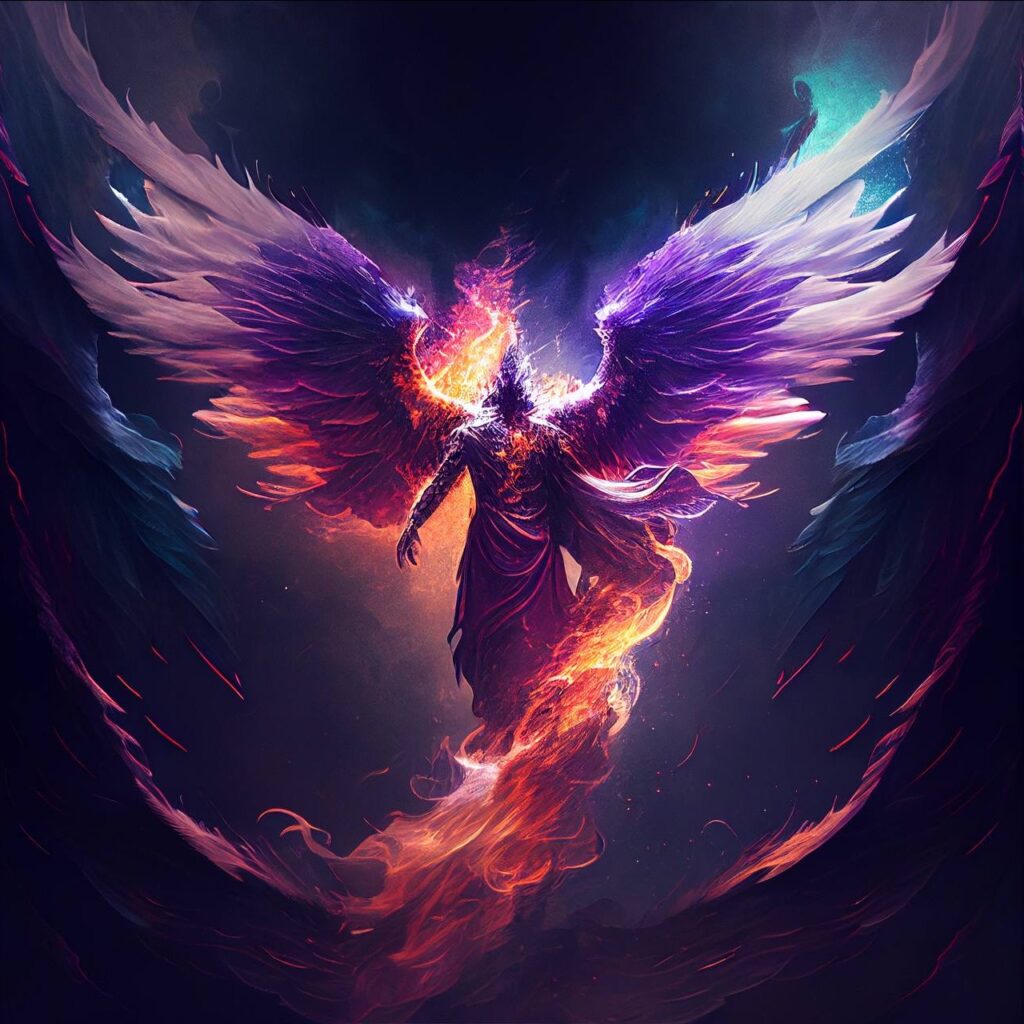
At the same time, Pleromic manifestations lack personal aspirations, desires, or will; they appear only “upon request” and to the extent of the limited mind’s request, as guiding forces. One can say that Pleromic manifestations are reactions of the pure foundation of the universe to the striving of the limited mind to transcend its limits.
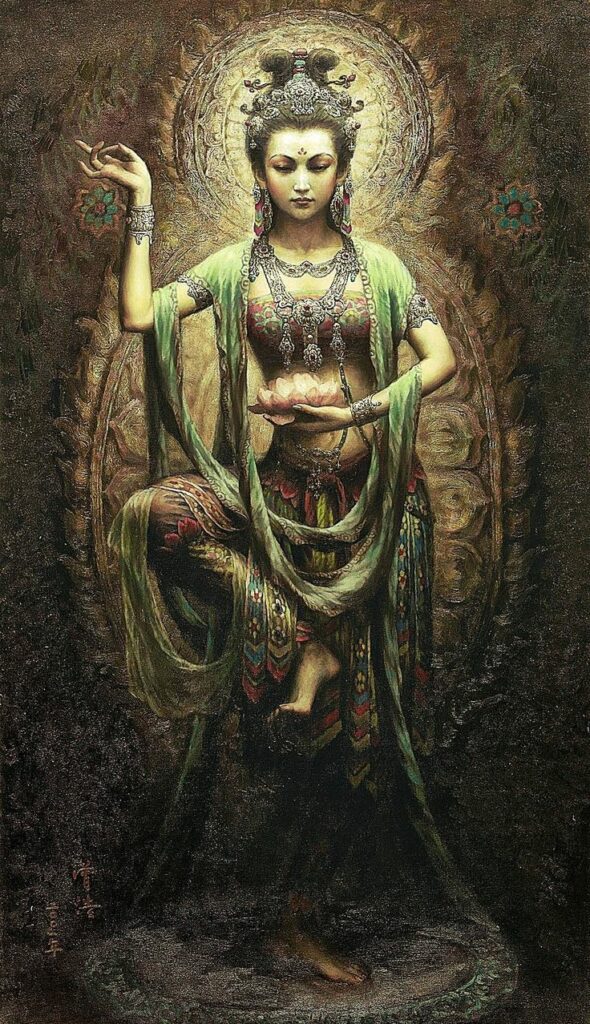
To the Gnostics these “reactions” were known under the name of the “Luminaries.” Just as Buddhists relied on pure manifestations of the “Nature of Buddhas,” appearing in luminous visions, as an answer to Gnostic prayers there would be manifestations of Luminaries, instructing, guiding, and protecting them. The most famous of the Luminaries was Eleleth (“God’s Permission”), who perhaps played the same role for them that Arya Tara plays for Buddhists.
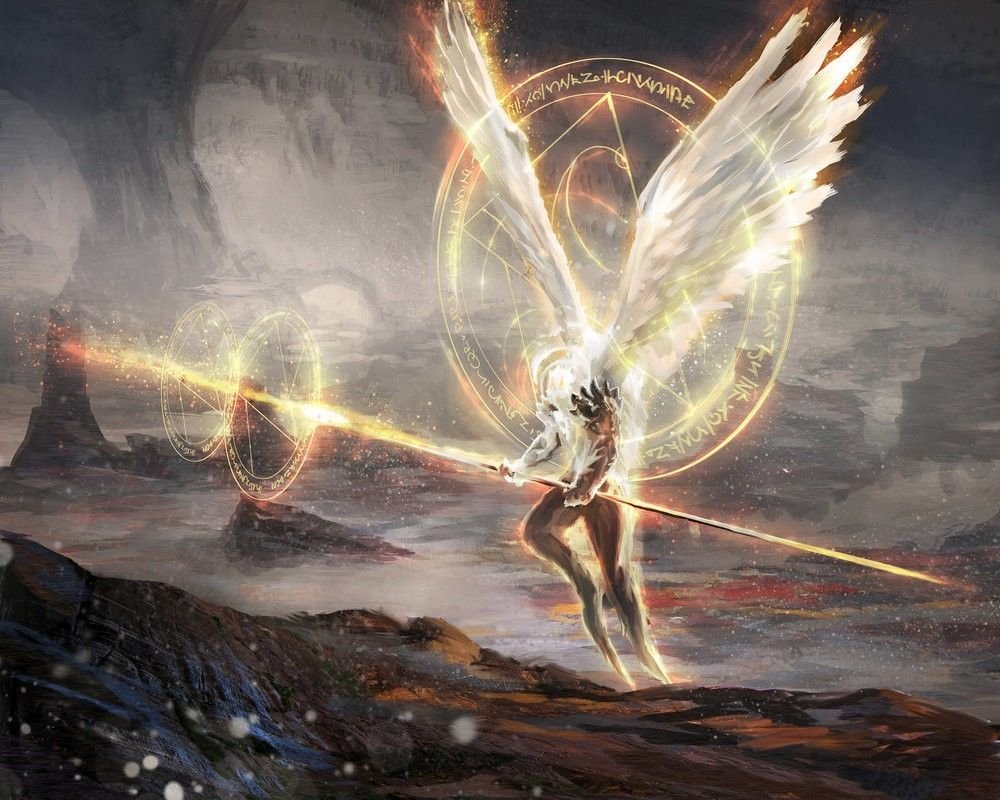
Let us note once again that the phenomena of the Luminaries are not the result of “favor” or any kind of “luck”; they are exclusively the reaction of the Light to the request of an individual mind, and therefore the condition for contact with them is purity of striving. Properly speaking, the nature of the “lower” manifestations of the Light is the same — hierophantic and protective: both Initiatory and Enlightening forces appear not by anyone’s arbitrary will, but solely as the reaction of the Light to a vessel ready to receive it.
Therefore, just as during initiations a magus is in one way or another guided and supported by hierophantic forces, during important insights and illuminations he may be inspired by Luminaries. At the same time, of course, it is well known that “Satan himself takes on the image of an Angel of Light,” and therefore, as in all other cases, the true value of such “guidance” can be determined only by its fruits. Being manifestations of the Pleroma, Luminaries always lead the mind to light, love, and freedom, and if any vision — of any degree of delight and luminosity — does not direct toward these three manifestations, then it definitely does not originate from Great Perfection.
“This ‘something’ has been called differently by various Traditions: ‘Ain Sof Or’ (אור אין סוף, ‘Unknowable Light’), Vijnananantyatanas (‘Sphere of Infinite Consciousness’), and we will use the Gnostic term – Pleroma.”
Tell me, is this “something” that Jesus called the Father?
Thank you.
The state of the pleroma is the state of samadhi of the yogis who are in bliss and eternity? Or how can this be approximately described?
I would rather compare it to the “Rainbow Body” of the Dzogchen Tradition.
It turns out that luminars, in some sense, can be compared to Dhyani-Buddhas, for they are such dharmic manifestations of the Adi-Buddha (pleroma)?
Not quite, since Adi-Buddha is consciousness that recognizes its true (enlightened) nature simultaneously with its emergence; Luminars, however, are the active part of the Pleroma, and thus it would be more accurate to relate them to the Enlightened matrices of Sambhogakaya.
Thank you so much!!!
Hello, dear Enmerkar. Can luminaries manifest in flesh?
The image that the luminaries take on is determined by the request of the consciousness that calls them.