Three Ways of Liberation

Liberation — that is, the radical and final change of self-identification from the limited and dual stream of mind to abiding in the boundless, indivisible, unified, supra-conceptual state — is, of course, the goal and the content of all the spirit’s aspirations in all its incarnations.
And although freedom itself, as an absolute state, cannot have degrees or subdivisions and therefore does not depend on the routes by which it is attained, there can be several such routes, and it is crucial to understand in which of these directions a particular individual stream of mind is developing — i.e., what its own Way of liberation is. It is clear that the same goal will be seen and described differently depending on the Way of attainment; and although the Magus who follows the Way of realizations and the mystic who moves through contemplation and introspection ultimately arrive at the same transcendent state, steadfast following the inner logic of one’s own Way is the most important prerequisite for success. Lurching from side to side, shifting from one system to another, the mind cannot accumulate sufficient continuity of development, sufficient momentum for the change of self-identification that is necessary for its liberation.
All the Ways of transforming a particular stream of mind may be divided into three types, each with its own methodological and ideological characteristics, and its own internal logic which must be adhered to in order to achieve high effectiveness in harmonizing that stream.

While in a particular state, a stream of mind may either strive to reach its completion, i.e., to fully realize itself as a field of possibilities, or to “return” to a state of original repose, i.e., to cease its movement, to “stop” itself, or to find within itself, in its current state, its primordial absolute nature and identify with it.
In any system of Ways one can find all three groups; for example, in Buddhism these are the Way of cessation — Theravada, the Way of accumulations — Mahayana, and the Way of realizations — Vajrayana; in the Western Tradition these are the Way of purification (gnosticism and Catharism), the Way of realizations (Magic), and the Way of extracting the quintessence (alchemy).
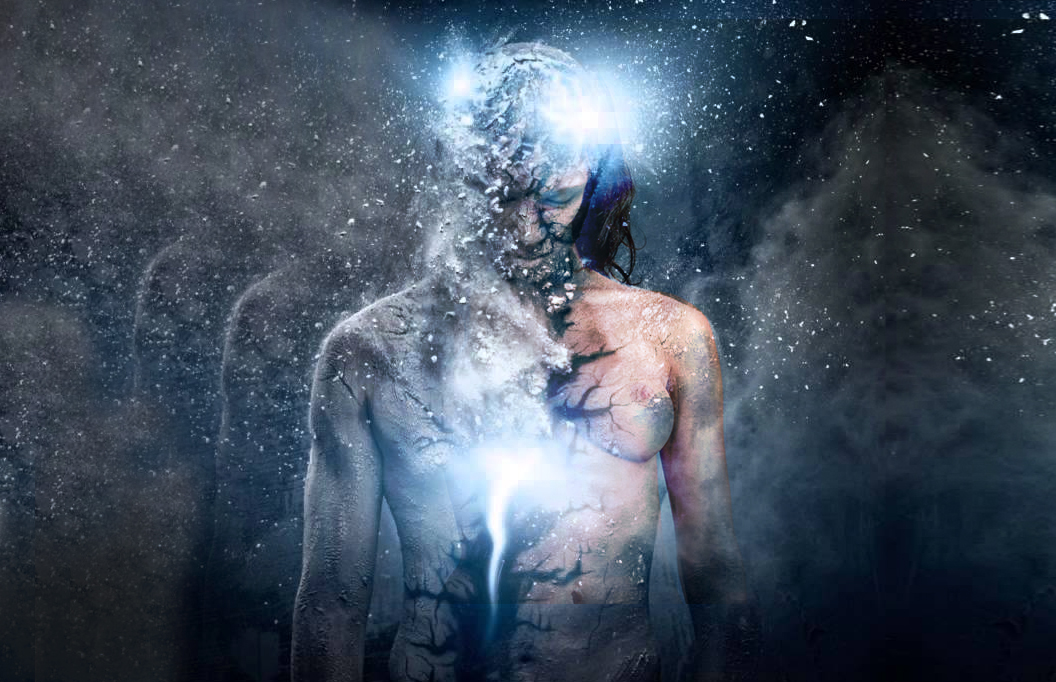
Movement along the first Way means a gradual and steady disidentification from all the “particular,” limited, “polluted” qualities of the stream, a return to the original pure and unclouded state. The Daoist seeking to “leave the world in peace,” the arhat dissolving the mind in the bliss of samadhi, and the Albigensian Parfait abiding in his endura all seek to transcend the limits of the embodied condition by returning it to its primordial blissful, divine, luminous nature. The world is perceived as something that obstructs and limits. A prerequisite for successful progress on this Way is a clear perception of the constraining, “polluting” character of the embodied world and an acute desire to cast off those pollutants, to purify oneself of them, to transcend them. Overall, the ideal toward which travelers of this group aim is the “Perfect” being, utterly alien to all the anxieties and sufferings of the embodied world.
Movement along the second Way means the “exhaustion” of the possibilities of the finite state, the full realization of its potentials and capacities, and, as a result, its “surpassing,” integration and transcendence into the Pleroma. In fact, this blog primarily considers these Ways. These directions of development are typically suited to those whose streams of mind have a high intensity of realizational impulses and are oriented toward achievements and accomplishments. If the ideal for an adept of the first group is Purity, then for the second group that guiding star becomes Power — the measure of the realized mind.
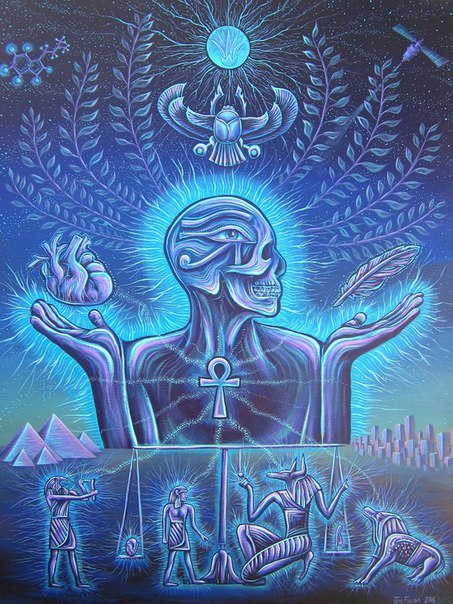
Movement along the third Way includes features of the first two and signifies the search for and “cultivation” of the “seed of enlightenment,” the “divine quintessence” directly within the current state of the particular, limited embodied condition. The Daoist, the Western alchemist, the Orphic, and the tantric Buddhist practicing Mahamudra or Dzogchen, in their labors to create the “golden embryo,” the “philosopher’s stone” or to realize tathagatagarbha, proceed from the premise that the “current” and the “ideal” states of being are essentially indivisible, indistinguishable, and we perceive reality as limited or absolute, samsara or nirvana, only relative to our perspective. Unlike the first group of Ways, which emphasize “exiting” and “purification,” practitioners of the “seed” are engaged less in “exiting” and more in the “cultivation” of the absolute nature. This Way is usually most congenial to those streams of mind that have a living experience of interaction with the absolute reality peering through the veils of the relative. The ideal for this Way is Suchness — that is, “being/awareness as such,” stripped of properties and qualities.
It is clear that all three Ways are equally effective; movement along any of them can liberate the mind. However, for this to happen it is necessary, first, to understand which of them the given individual stream most gravitates toward, and second, to adhere to the chosen Way firmly and unwaveringly.
Could you please explain again the fundamental difference between the 2nd and 3rd paths? The first one is quite noticeably different from them. But their difference from each other, according to your classification, is fundamentally unclear to me. I feel that the presence of a “crystallized self” to a certain extent is a necessary condition for the Power required for realization – its support. Conversely, the intensity and pressure of the Power is a necessary condition for the crystallization of this self. In the sense that I can imagine the 1st path almost without the impurities of the 2nd and 3, but I find it difficult to envision the division between the 2nd and 3.
The Path of Realization is the path of discovering the potentialities of one’s current nature, translating them into a current state and thus gradually identifying the actual nature with the potential nature from the perspective of the actual. The path of transformation is the path of discovering in oneself the manifested seeds of potential nature, and, relying on them, gradually spreading potential nature into the actual from the perspective of the potential.
Yes, that’s clearer, thank you.
A deep observation. But are you sure that we are talking about the turner, not the quaternary? I have the feeling that these three types of paths fit more into the quaternary, although I lack clear arguments for that. Except, perhaps, for one point – in Hinduism, four paths of realization are distinguished – bhakti, karma, jnana, and raja, and the last three can generally be correlated with those you described, but the first – the path of absolute surrender and absolute love, the path of dissolving in this love, is difficult to relate to any of those described in the article. The descriptions characteristic of it can be found among Hindus, Sufis, and in Christian mysticism, and it is clearly distinct from the second and third paths, as well as from the path of purification, which, however, is characterized by a more passive and anti-self nature compared to the aforementioned paths. Perhaps, from such a perspective, it makes sense to talk about two paths of “dissolution” and two paths of “coagulation”.
Both quaternary and ternary subdivisions can sufficiently describe any system. They simply originate from different centralizations. Quaternary systems always describe from the standpoint of embodiment, from identification with the “body”, being, matter. Ternary descriptions originate from centralization in consciousness, spirit. If we look at the Path, identifying ourselves with a finite embodied being, then, of course, different forms of dissolution, pantheisms, Mother cults, and a whole range of Paths will be added. From this perspective, we indeed obtain four Paths – two Mother’s Paths – the Path of the Maiden – Purification and the Path of the Mother – Dissolution, and two Father’s Paths – the Path of the Youth – self-realization and the Path of the Man – house-building. This roughly corresponds to the methods you mentioned. Nonetheless, from such considerations, it does not seem possible to completely step beyond the bounds of self-identification in the specific, and therefore – it is much more difficult to imagine Liberation in its absolute sense. In the article, the Paths are analyzed from the perspective of consciousness, which is ternary in its nature – the unit that births the binary, together forming the turner. And from that perspective, the three Paths are considered – the Path to the Source, the Path to the Mouth, and the Path inward.
Thank you! Now the difference between the trio and the quartet is clearer.
Thank you, I have listened several times about the path of “sutras, tantras, and dzogchen”, but only now it became clear. Enmerkar, do you know of any authors who have written about the third path (conditionally “contemplative presence”) from a Western alchemical perspective? Am I right to understand that here attention is shifted to the “living subjectivity”, which is usually not recognized by people as fish are to water, and which gradually detaches from all identifications (physical, energetic, mental) and remains in pure form? Also, could you clarify what you consider the pair Nagual-Tonall in the terms of Western magic?
The pair Nagual-Tonall are also terms of Western magic (Mexico is still in the West, not in the East)))… Any words defining the term Nagual are distortions. Nagual is BEYOND Words. Even Castaneda’s “Active Side of Infinity” is also a distortion of essence. Tonall, on the other hand, is everything that can be expressed in words (including our feelings as well). And there is no difference in who expresses the opinion: you, me, Enmerkar, or someone else – Nagual-Tonall relates to the World Picture left to us by the Toltecs.
Is it correct to assume that an adept at the level of Tiferet must already choose not only the Path of liberation but also a specific Magical Tradition? To save such precious time and from the understanding that you cannot exit through two doors at once.
It is unlikely that we can speak of a “choice”. An adept does not choose their nature, and then – does not choose their Path. They must find the Path that corresponds most to their nature and follow it.
Good day to you, esteemed Enmerkar. If the first and second path can be perceived as allergic reflections of each other, thesis and antithesis, then the third path, as a synthesis, quite frankly blows the mind of a dilettante in matters of liberation paths. While the first path is widely known to ordinary people, the second path you eloquently describe “here.” A brief overview of the third was just a wave of resonance for me. The dissemination of the nature of the potential to the actual nature from the perspective of the potential through the discovery of manifested seeds of the potential medium is implied. Does it mean that in the current state one can discover correspondences of their internal inclinations, but not as a method of realization, rather as a compensation? Is that so? Perhaps I did not express myself clearly enough. If we utilize your concept of desires, then the third path is not the realization of desires but the method of avoiding obscuration by compensating for something accessible in the current state and corresponding to the desire, while erasing the so-called roughnesses characteristic of the individual. That is, to “cleanse” the desire from… I don’t even know how to put it, from personality? From… and having received a pure, unconditional desire, make it actual by finding a corresponding opportunity. Is that so? Is it somewhat underhanded towards oneself?
Good day) The “Third” Path is the Path of discovering within oneself the “original,” ” primal” inclinations that do not arise from conditioned nature and are not connected to the embodied state itself. It’s about studying your consciousness in a particularly attentive manner, noticing how through the layers of numerous processes accumulated over infinite periods of embodied lives, the “initial light” of the original potential nature “shines through,” which has never been altered by manifestation. And finding such “glimmers” and using them as a foundation, the person can gradually, thread by thread, pull this nature out exactly as on the “second” Path where gradually, sip by sip, the being is filled with the actual Light.
If we consider that each path has the goal of disidentifying oneself from the conditioned, and thus limited flow, i.e. the personality which serves as a filter with respect to the “pure” unconditioned potency. The second path is the completion of the inclinations that are products of the layering from life series, toward the primordial impulse. However, in practice, even without considering the abstract burden of past incarnations, the realization of some desires appears to be literally unfeasible. You have already repeatedly explained that true will tends to distort under the pressure of various forces. And the difference between distortion from the contamination of the husk and the form of primary, zero potency through one’s individuality seems clear. The individual from this perspective appears not at all as a creator of absolutely free will but rather as a manifestor of a huge array of unfulfilled aspirations through which something passes beyond the bounds of description. And being in the grip of the “destiny-villain” (which according to the described myth is nothing but the residue from the personalities through which the stream of consciousness now expresses itself through the presently living being), so, being bound by unyielding fate, could consciousness not find itself in a truly hopeless situation? That is, there is undoubtedly a way out, but it may only be conditionally a legal possibility, whereas in fact, if its realization is indeed possible, it carries a very low chance of manifestation. Again, in the described myth, it has been repeatedly postulated that following the “pattern” of Orleg is the most effective mode of existence. As for the perspective that the conditions are too harsh, it may turn out to be a common cowardice. However, when looking without pathos or romance, it may be more practical to adapt to the “current” situation rather than to attempt to reach for the stars. Efficiency is a product of a propelling force, and therefore, it is necessary to adhere to the architecture of the chosen path. Does this mean that an adept of magic simply has no choice but to strive for their goal regardless of how unattainable the task may seem? And under such conditions, does the concept of acceptance for a magician become unacceptable? Or are there still certain possibilities for compromise, remaining within the framework of the path of realization, of course. If there is no other choice but to act steadily, without expecting results, for the sake of the action itself and all that. What would happen to the potency if the Magician fails to implement it, and there are no longer chances left? Is this considered a total failure and with no consolation, or can it be that through the passionate effort to achieve what is desired, a discharge occurs and the so-called “human form” residue will be erased? Can it happen that as a result of an honest (towards oneself) but unsuccessful attempt to achieve realization, the residue might be erased, and the desire subsequently transforms and manifests in another form?
Your narrative prompted me to question the origin of the soul. Thanks to my Teacher and the Forces, and based on the received reflections, I got the following answer: The original stream is pure. All beings that appeared and all spaces (including the stream of souls) appeared from the interests of those sections of the Sphere in which this Energy transformed into certain forms, with certain combinations. And these combinations have no templates; they are the very Abstraction of Individuality without boundaries.
I want to thank Enmerkar for everything and for this Article! This morning, I realized that My Path is the Third Path. I have always been following the Second Path, but this is probably because I ended up here, on this Blog. A real powerful Flow has been created here that captures you. Now I can move forward.
The third path is optimal at least because it somewhat combines both previous ones and even more.
Such names of Archdemons – Echin, Rimma, Sedun do you know anything about them? These Archdemons are currently managing the sphere. This is so that you don’t think of me as a fantasist.
If the third path is a synthesis of the first and second — will it be possible to use the tools of the first and second paths while following it? That is, I feel an inner pull towards the third path; I am close to Daoist Alchemy. At the same time, I am drawn to runes and meditations. Is it possible to harmoniously use these tools, or will it be a chase for three hares?
Such an awareness has emerged that there is no need to choose just one path; all three are necessary:
1. To cleanse the flow of consciousness “from murkiness,” to dissolve illusions and confusions.
2. To solidify, cultivate, and coagulate the absolute nature, to affirm oneself in the Spirit.
3. To realize the full scope of the potentials of consciousness.
The first two are needed as auxiliaries for the third path. The paradox is that even the third path is not an end in itself…
Thank you, Enmerkar; sometimes such interesting insights arise when I read you, and I realize that perhaps it’s better not to speak of them to anyone else 🙂
The most important thing is not to repeat someone else’s paths, as they always reflect their own vision.