Orpheus: Between Apollo and Dionysus
“I will sing for those who understand — close the doors, uninitiated!”
(from an Orphic hymn)
To the magically oriented ancient Greek, with his subtle philosophical outlook, both the cold abyss of reason represented by Apollo and the hot abyss of frenzy reflected in Dionysus were equally unacceptable.
The first to bridge these two abysses was the legendary Orpheus.
According to ancient Greek legend, Orpheus hailed from Thrace (the same homeland as Dionysus) and lived in the Achaean era. He was said to be the son of the Thracian river god Eagre and the Muse Calliope (Eagre was a descendant of Atlas). He was also associated with Eleusis and with the cult of the three-faced goddess Hecate, Hecate.
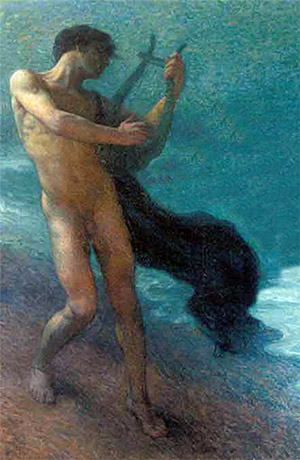
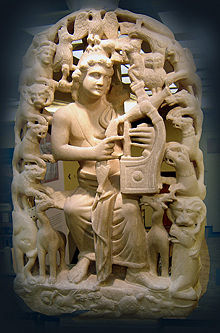
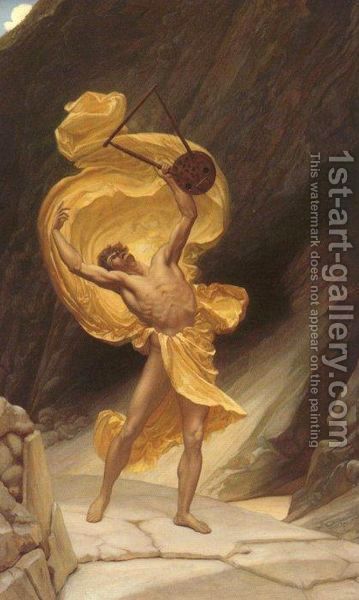
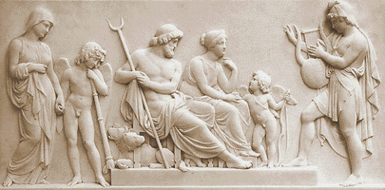
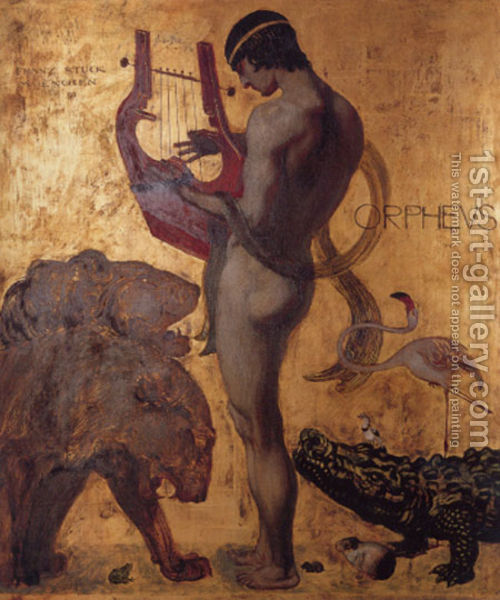
On the one hand, Orpheus was a compatriot of Dionysus and therefore embodied the “Dionysian” principle. On the other, myths tell that he was also loved by Apollo, and it was Apollo who gave him the golden lyre with which one could tame wild animals and move trees and rocks. It was precisely this dual affiliation to the two cosmic principles that enabled him to create a teaching that opened the first way to freedom for humankind.
It was believed that Orpheus was famed for his magical gift he received from his mother, the muse Calliope. He increased his lyre’s strings to nine. His playing and singing subdued the elements; when he sailed with the Argonauts, the waves and the wind were pacified, enchanted by his wondrous music.
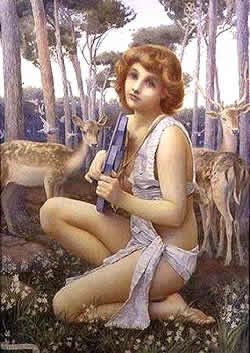
Thanks to his gift, Orpheus won the kithara contest at Peleus’s funeral games.
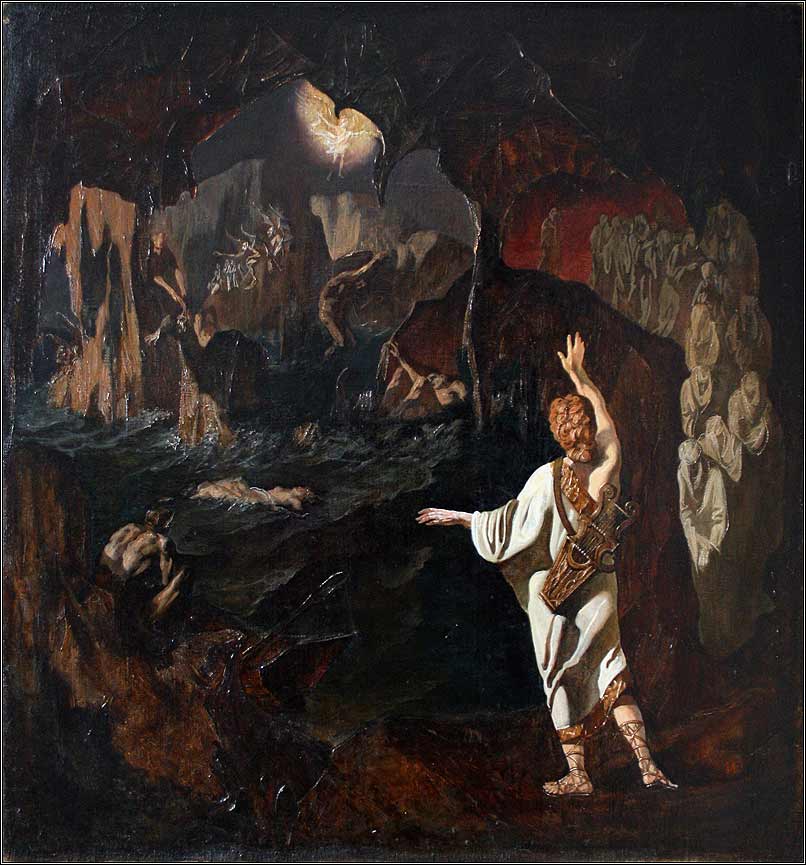
According to a body of myths, Orpheus was married to Eurydice and, when she suddenly died from a snakebite, he descended to the realm of the dead to fetch her. All the inhabitants of the underworld — Hades’s hound, Cerberus, the Erinyes, Persephone, and Hades himself — were subdued by Orpheus’s music. Hades promised to return Eurydice to earth on condition that Orpheus did not look back: not to look back at his wife before he had entered his home. But Orpheus was overwhelmed by emotion and looked back: Eurydice was swept into the abyss forever. Inconsolable, the singer wandered the earth, finding no rest. Soon his death overtook him as well.
All legends agree that Orpheus died young. Some said he failed to honor Dionysus, instead esteeming Helios as supreme and calling him Apollo. In anger, Dionysus sent maenads against Orpheus. They tore him apart, scattering his limbs. Moreover, according to legend, Orpheus’s promotion of same-sex love provoked Aphrodite’s wrath. Alternatively, he was killed for having witnessed the mysteries of Dionysus and was placed among the stars as the Kneeler.
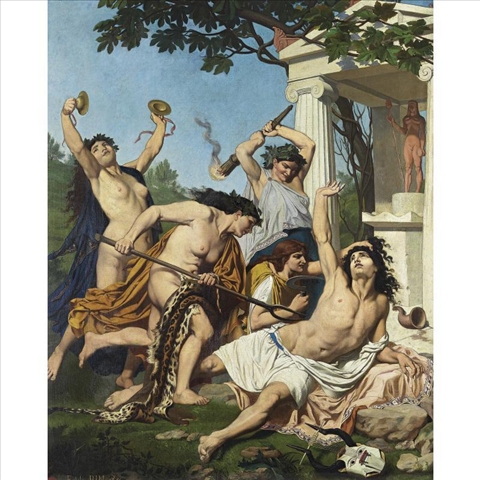
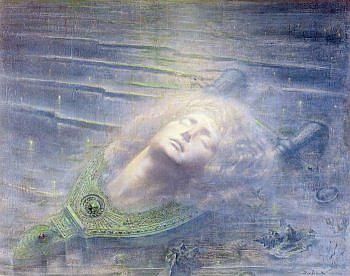
Calliope, weeping, gathered the bloodied fragments of his body and buried them on the summit of Mount Pangaeus. The death of Orpheus, killed in the bacchantes’ wild frenzy, was mourned by birds, beasts, forests, stones, and trees, all enchanted by his music. His head, with his inseparable lyre, floated down the river Hebrus to the island of Lesbos, where Apollo received it. There it was set in a rock cleft and gave oracles.
In one ancient Greek myth, after his death Orpheus was placed in the sky as a swan, near the Lyre. After death his soul chose to live as a swan because he hated women.
In another version, Orpheus’s shade descended into Hades, where it reunited with his beloved, Eurydice.
According to Ovid, the bacchantes who tore Orpheus apart were punished by Dionysus and turned into oak trees. In revenge for Orpheus, Thracians tattooed their wives.
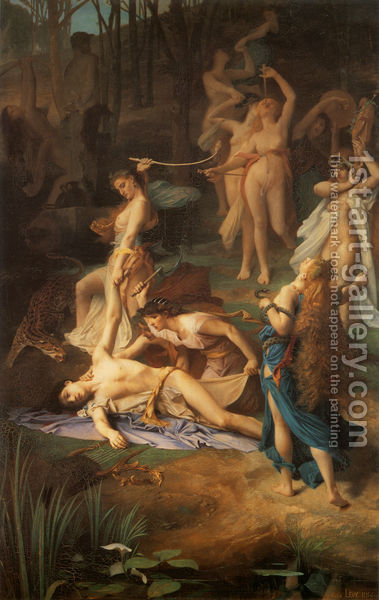
The myths of Orpheus’s dismemberment by the maenads formed the basis of Orphic cults. His dismemberment by the Bassarids is described in Aeschylus’s tragedy The Bassarids, which also mentions Mount Pangaeus.
For us, not only the myths about Orpheus’s life are important, but also the beliefs of his followers.
Many works are associated with the name of Orpheus, including the so-called “Orphic theogonies” — alternative genealogies of the gods. The bearers and custodians of these “Orphic theogonies” were the Orphics, followers of a religious teaching also attributed to Orpheus.
This teaching was explicitly esoteric, aligning it with Pythagoreanism and the Eleusinian mysteries. The Greeks were convinced that Orpheus learned secret wisdom in Egypt. They said that Orpheus secretly traveled to Samothrace, and from there to Egypt, where he resided in the temple of Memphis. There he was initiated into Egyptian mysteries. Twenty years later he returned to Greece. According to this tradition, the very name Orpheus (“healing by light”) was given to him at his initiation.
At the heart of Orphism lay a secret closed cult of Dionysus, markedly different from and even opposed to the Olympian religion, including the traditional view of the Olympian Dionysus. The cult of Dionysus in its original form was barbarous and in many respects repellent. However, in the spiritualized form created by the Orphics — through their ascetic practice, substituting spiritual ecstasy for bodily intoxication — it became one of the pillars of Greek philosophy. The ecstasy sought by the Orphics is “enthusiasm,” union with the god.
This mystical element was introduced into Greek philosophy by Pythagoras, as Orpheus had a reformer of the religion of Dionysus.
The teaching of the Orphics was one manifestation of the ancient, universal dualism — the opposition of light and darkness, order and chaos — which, for the Orphics, has many nuances. For them this appeared primarily as Apollo and Dionysus. One personified unity and order; the other — multiplicity and fragmentation. In the same way the dyad consists of the feminine, maternal nature and the fertilizing force of Dionysus.
According to the Orphics, man is also dual. In him there are two principles: the lower, corporeal, titanic, and the higher, spiritual, Dionysian. In Orphism the Dionysian was apollonized. If for Homer earthly life is preferable to the life beyond, for the Orphics it is the opposite: life is suffering. The soul in the body was incomplete. The body is the tomb and prison of the soul. Therefore the aim of life for the Orphic is the liberation of the soul from the body. This is not easy, for the soul was doomed to migrate between bodies. According to the Orphic hymns, such bodies could be human, animal, insect, or plant but also of animals and even plants.
It was precisely the deliverance from the curse of endless rebirths that the numerous purificatory rites of the Orphics — and indeed their communal way of life — served.
The world, according to the Orphics, arose from a fateful elemental process in which the rational, divine element was not primary but derivative. Such fateful necessity produces the constant transmigration of souls into human or animal bodies, so that after the body’s death the soul may receive temporary reward in the afterlife, but then is again cast back into the cycle of births. Only Dionysus and his mother Persephone can lead a person out of this inescapable circle. Their mercy and help must be earned in order to attain liberation.
The Orphics strove for “purification,” partly through the ceremony of cleansing, partly through avoidance of defilement. The most orthodox of the Orphics abstained from animal food, with exceptions only for rituals (when food was taken sacramentally).
Freed from the wheel of rebirth, the pious soul attained the “Isles of the Blessed“, where it lives carefree and happily, experiencing neither bodily nor mental torments.
The late antique philosopher Proclus (5th century) saw Orpheus’s superiority in that whereas Hesiod accepted as the primal that which arose in time (Chaos), Orpheus found the primal in time itself.
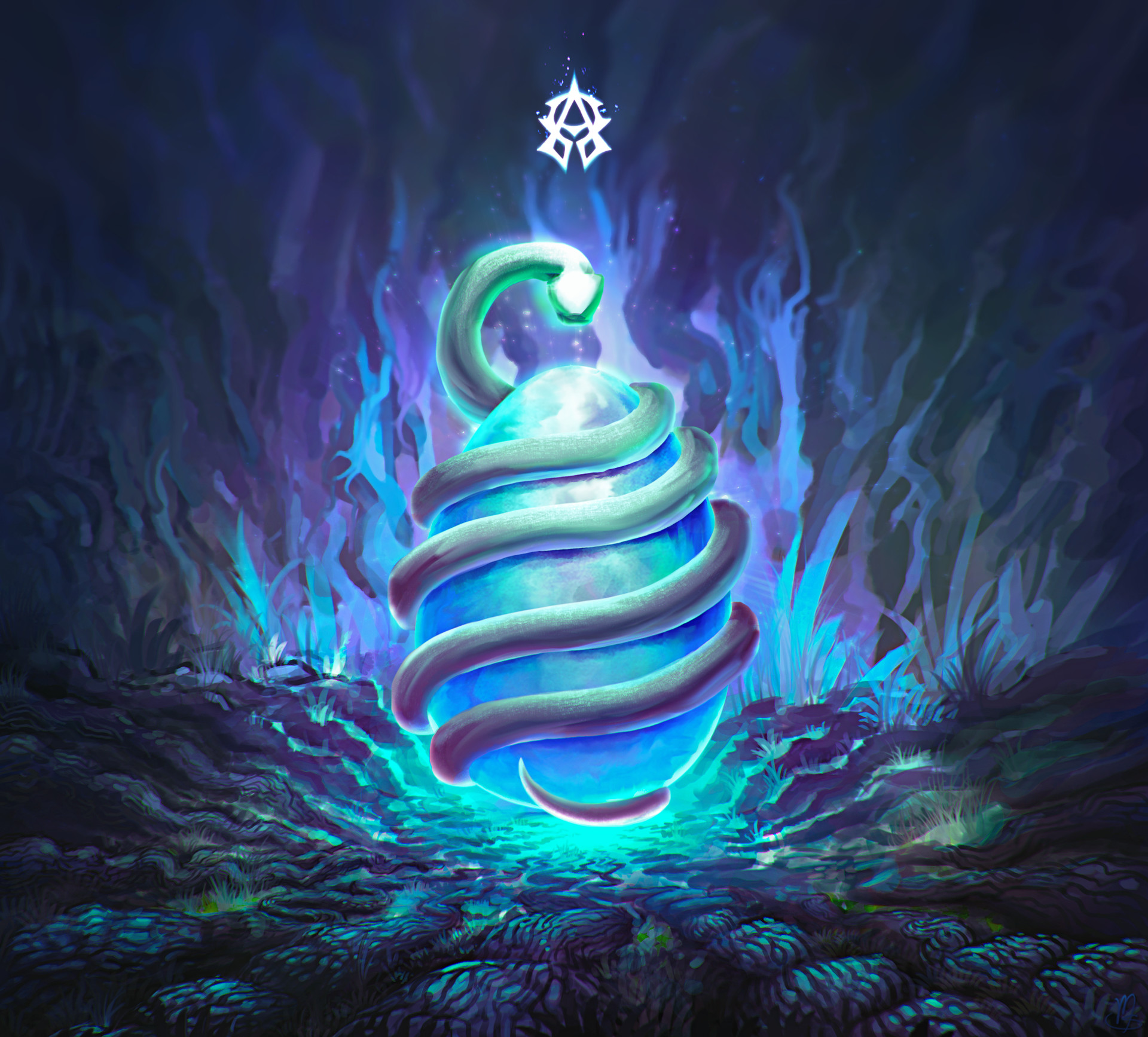
According to Orphic cosmogony, the world arose as the result of the activity of the Great Triad — Phanes, Chaos, Kronos. The first principle of the world is Kronos (Time), from whom sprang boundless Chaos, a kind of misty abyss, and Aether, the bright celestial principle. Kronos formed a silver egg from the two, which later burst, and from it emerged the special being Phanes (also Protogonos, Eros, Priapus, Metis, Ericapaeus, etc.).
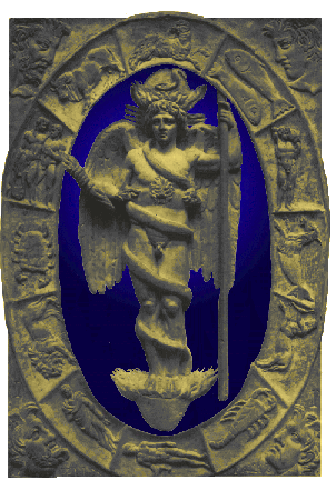
Phanes (‘the shining’) was a hermaphroditic winged serpent containing within himself the seeds of all the gods. Heaven and earth were formed from the egg’s halves. Phanes was regarded as the first king of the gods. He created heaven and earth, and the ‘other earth’ — the Moon. The subsequent evolution of the cosmos in the Orphic theogony is presented as a succession of six generations of gods. Phanes begot Night, and from her were born Uranus and Gaia. From them came Kronos and Rhea. Kronos, having overthrown Uranus, seized power; thereafter Zeus was born from Gaia, who in turn deposed Kronos and, at Night’s counsel, swallowed the firstborn serpent Phanes, thereby placing within himself the seeds of all things.
This gave him the ability to continue the birth of things and gods. After some time Zeus begot by Persephone his finest creation — Zagreus (Dionysus), to whom he entrusted the governance of the world. But the Titans (the elemental forces), enemies of Zeus, tore Zagreus-Dionysus apart. From the ashes of the Titans and Zagreus’s blood soaked into the Titans’ ash, the human race arose.
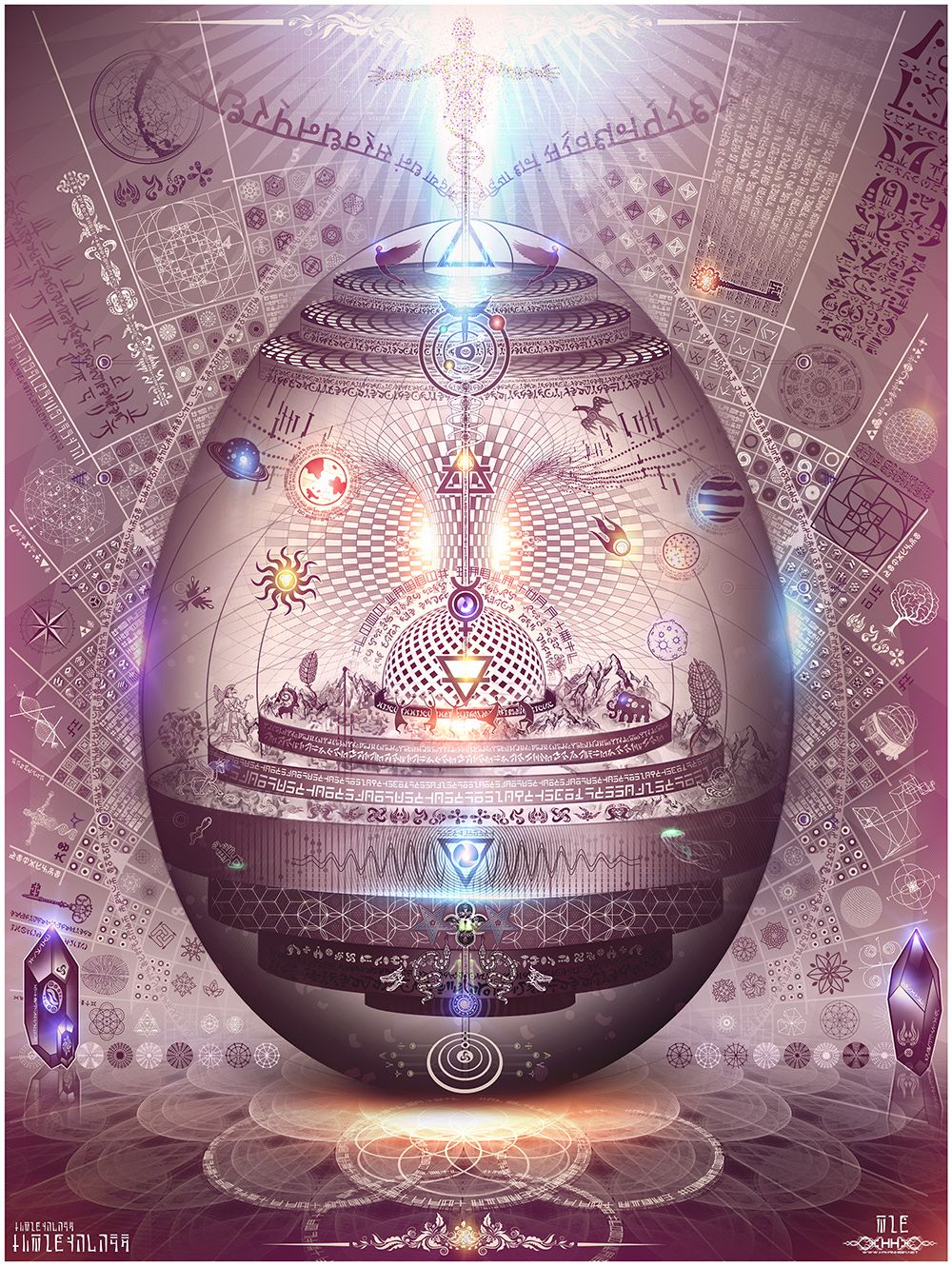
The Orphics believed that the first golden race of humans was created under Phanes, but that each subsequent race became worse than the previous. The second, the silver race, was created under Kronos, and only the third, the present one, was fashioned by Zeus from the ashes of Dionysus, torn apart by the Titans.
Recognizing the elemental character of the cosmos, the Orphics naturally sought ways to influence it. They sought union not with the mindless creator‑force that had created the world, but with a rational force that, though derivative, commanded respect, as rational aroused human respect.
Thus magic became a means for them. Many spells have come down to us from the Orphics; they practiced various divinatory systems, offered expiatory sacrifices for the living and the dead, performed mysterious healings, manifested the gift of prophecy, and so forth.
Initially Orphism was perceived as a purely popular, grassroots cult and was ridiculed by various philosophical schools; later its elements were used by Neoplatonism to construct its own systematized cosmology.
Orphism exerted a vast influence on all ancient Greek — and indeed European — philosophical thought. Elements of Orphism can be traced in the views of Pythagoras, Heraclitus, Empedocles, Plato, and in later philosophical and religious teachings.
In its original form the teaching of the Orphics fell into decline even in antiquity, leaving very few surviving testimonies. Orpheus’s revelations, even when expanded by Pythagoras, painted a picture of existence that offered little hope to a person surrounded by chaotic forces beyond him.
So it can be concluded that without finding interactions with the creative mind and gradually immersing into chaos, humanity can be reborn into something even lower. And what is the significance of people in this, if the gods control the world?
as the poet said –
The severed head of Orpheus continues to sing…