Magi and Power
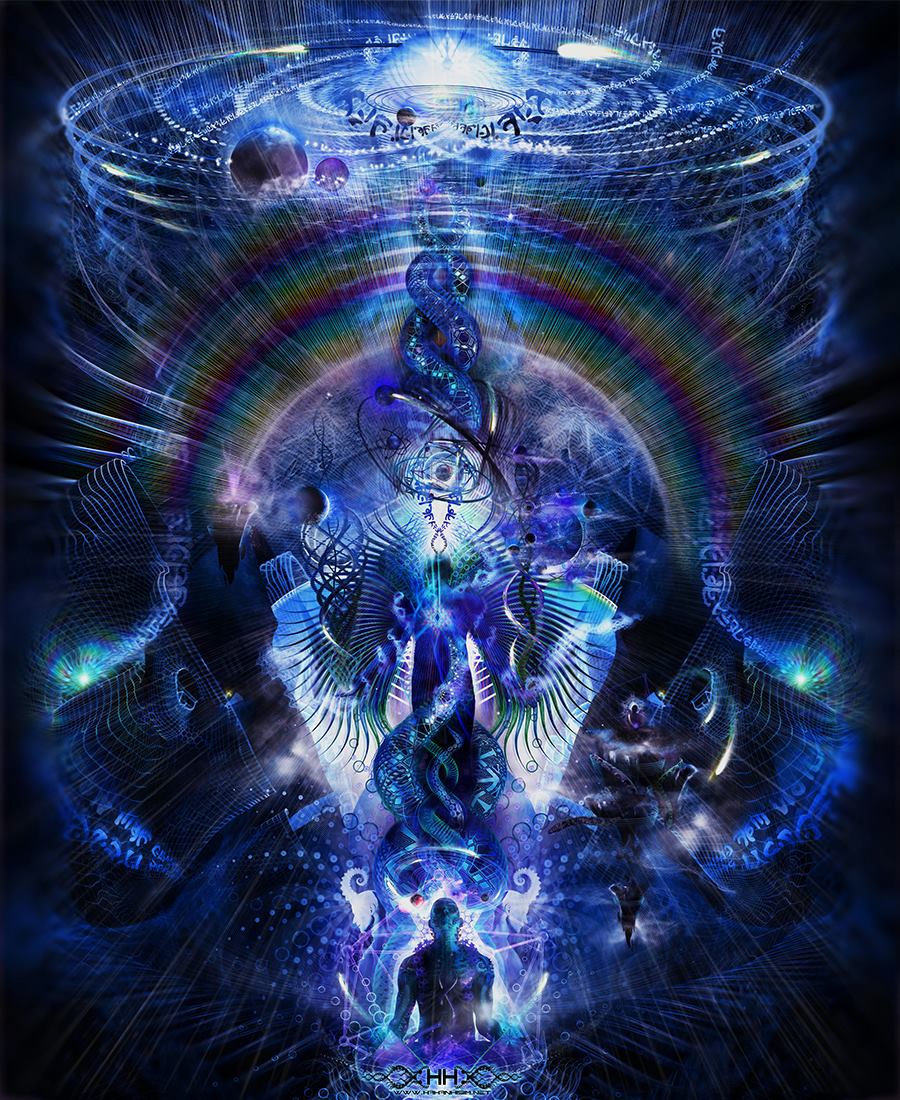
Perhaps, if one were to attempt to define the single most essential concept for Magic as a system, its “cornerstone” concept would, of course, be “Power“. For some this word is a magnet drawing them to Magic, for others an intimidating notion, and for still others simply an irritating “red rag to a bull”.
Nevertheless, all notions of Magic and the Magi are firmly bound to Power: Power is sought, is hunted, people try to acquire it, induce it, build bridges, and open gates for it, interact with it; learn to use it, to prevent its loss, sometimes become addicted to it, but never forget it.
And no matter how much the Magi clarify that Power is not a substance, not energy, but a capacity, a quality, an attribute, the word itself is so loaded that its mere mention provokes whole emotional storms.
Let us examine once more what the Myth says about Power and its significance.
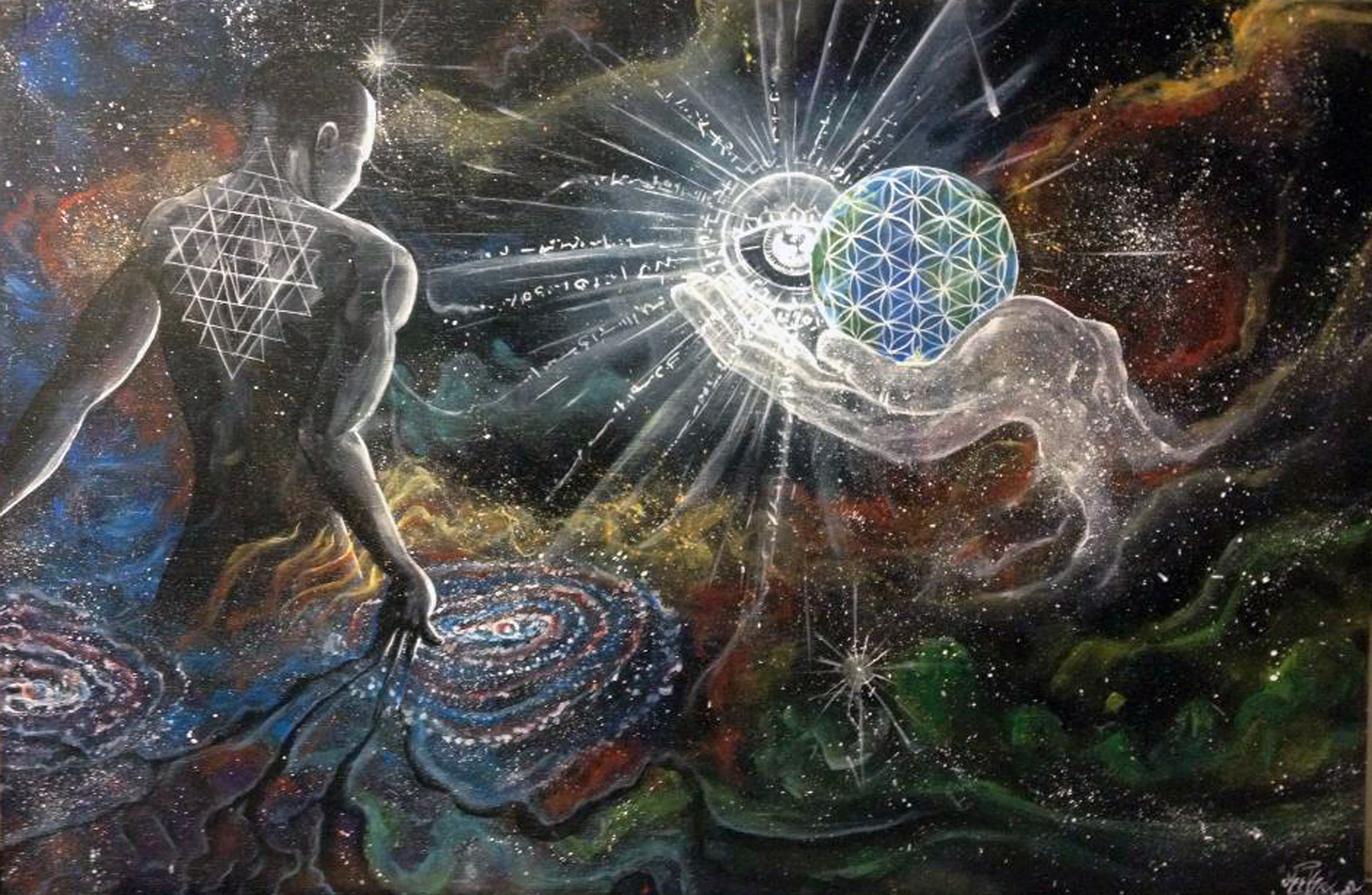
So, in the broadest sense, Power is called the capacity for realizational activity. In other words, every manifestation, every action, every event is a product of Power. To clarify which particular realizations are in question, the Myth introduces a distinction between 1) the “impersonal” Power — pneuma (or the “Power of life”), a uniform agent of manifestation without qualities, a kind of “active pole” of the pneuma-environment binary, Power in the aspect of being; and 2) “vectorized”, directed Power — nusa (or the “Power of awareness”), is Power in the aspect of acting consciousness. In the narrow sense, “Power” is usually the name for nusa and refers to the mind’s realization activity.
The two aspects of Power are closely interrelated and flow into each other, and it is this transformation that constitutes the meaning and content of the world process: penetrating being, mind gives direction to, directs, and orders the pneuma, giving it the capacity to create forms, to reveal those aspects of being that are, in fact, permeated by mind. In this context, nusa is described as the “white light“, the manifested; pneuma — as the “blue light”, the potential; and the process of transition of Powers — as imparting “tension” — “tonos“. At the same time, the source of Powers is considered to be “Choshekh” — primordial totipotence. The Myth also says that after mind actualizes its potentials, it “leaves” the pneuma, returning it to a “homogeneous” state, but leaving in it its “imprint” — reshimo.
Thus, Power is the basis for the emergence of forms, objects, processes. When a Magus speaks of the “quantity” of his power, he is in fact describing his mind’s capacity to be present in existence, to shape that being, the very capacity for awareness, for the emergence of subject-object relations within it, since awareness in this way is identical to creation. At the same time, it is clear that “amount of power” is not the same as its ordering, for Power as the capacity to create forms does not at all imply those forms are harmonious. To assess the “degree of harmony” of those forms — that is, their internal non-contradiction and coherence — the Myth uses the concept of “logoi“, i.e., the internal tendencies of the potential field to actualize in a certain way.
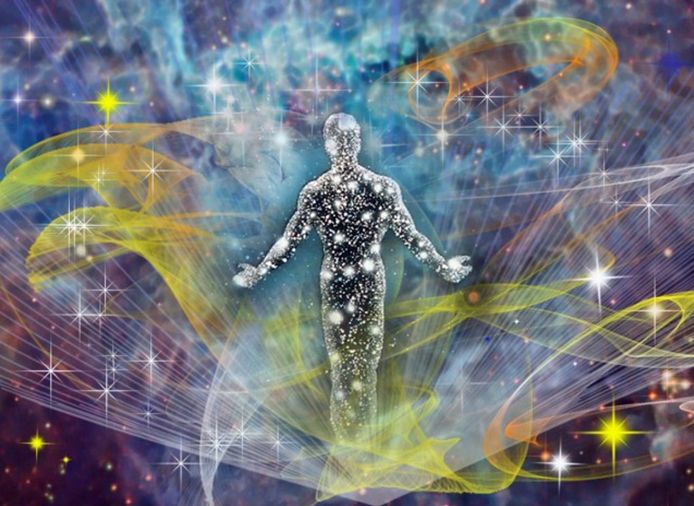
Accordingly, it becomes evident that the application of Power can give rise to forms of varying degrees of harmony, and another important concept arises: constructive and destructive forms. When mind acts as an ordering, cosmizing activity, its realization — that is, the application of Power — promotes further awareness, and therefore is constructive. In this case, people speak of “evolutionary” forces. Conversely, when mind in its actions originates from the “shadow” — that is, from its “repressed” or “rejected” regions — its activity leads to destruction and deconstruction, and we are dealing with “involutive” powers. Thus arises the notion of the light and dark sides of Power — that is, Power itself can lead both to “creation” and to “destruction”, and this concept gives rise to a whole stratum of “white” and “black” Magi enthralled by conflict with one another.
However, the nature of Power itself is ambivalent — any particular creation ultimately becomes an obstacle to further growth and requires destruction, a “molting”, which in turn must be followed by further growth. Any action is not absolute and therefore creates a shadow; yet both ignoring the shadow and its absolutizing are equally distant from the nature of Power. Power as the source of manifested existence is integral and directed toward the mutual penetration of being and mind (indeed, it is the content and product of that mutual penetration), and therefore includes both creation (while it is harmonious) and destruction (when it is necessary).
Thus it becomes clear why the category of “Power” is so central to Magic: Magic is a worldview describing the existence of manifested being and the methods of effective action and awareness within that being, and Power is the capacity for manifestation, which actualizes potential. For a Magus, it is very important to understand that, in striving to accumulate Power, he is in fact striving for creativity, and for that creativity to be effective and harmonious, his power must be balanced, directed, and controlled. Therefore the Magus’s Way reduces to three primary actions: 1) the search for Power — finding modes suited to his individual awareness of manifesting creative activity; 2) the acceptance of Power — acting according to his individuality; and 3) control of Power — the ability to direct the mind’s creative activity into a harmonious channel. The “how”, “what”, and “where to” the Magus directs his mind determine the course of that mind’s development.
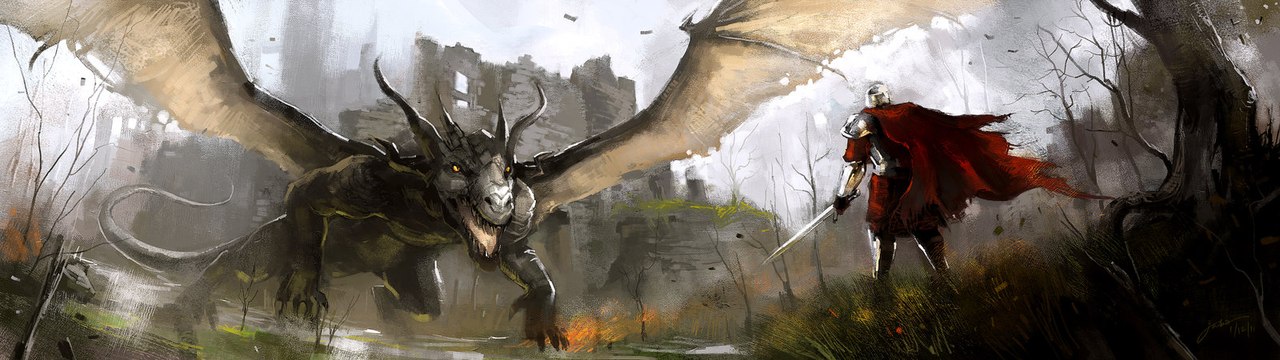
The state of this world is at a position where forces will gradually return. Therefore, I would focus people’s attention on their life principles. If a person has no goal (and, to a large extent, most do not have one), they can easily be bought. Buy their body, child, soul. I recommend reflecting and, using your consciousness, determine your purpose for being, establish principles, and adhere to them, being more responsible and serious in your choice and desire. And if this is absent, is there any need to call oneself a Human?
Do you have a goal?
I listen to myself.
Interestingly, it is not we who choose the goal, but the goal chooses us. We merely make choices in the process of movement, and based on the correctness of our choices, we have the outcome.
Essentially, a being flowing along the stream of fate is already born with a purpose; thus, when I say that people do not have a goal, I mean their inability to hear themselves.
Power is conscious energy. It is important to understand that power is a reflection of our aspirations. Change the goal – the properties of the forces will change. The choice is always with the person.
P.S. Not all beings perceive power equally. Some need to hunt for it and accumulate it, while others flow in its stream and only need to responsibly realize their desires.
And I communicate with it without leaving home.