
Shadow and Darkness
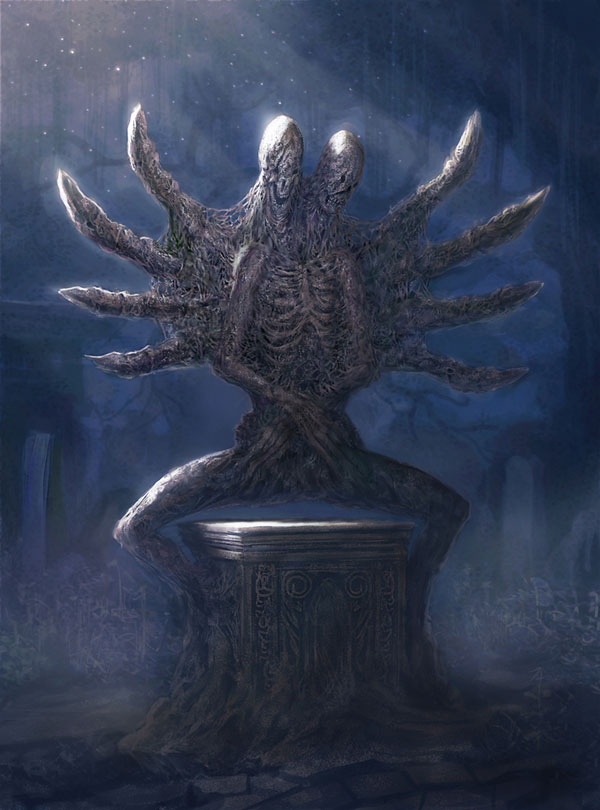
We have already, in a way, discussed the ambivalence of the concept of darkness in the Magical cosmology, according to which “not every darkness is evil, but every evil is darkness.”
Let us note again that darkness can arise both from the absence of Light and from the absence of the will to accept that Light.
At the same time, we have also discussed that a necessary condition for the predators flourishing in the Psychocosmos is the presence of dark regions within the mind.
Let us now examine the Myth’s view of the nature of this darkness.
So, darkness can arise when 1) Light did not yet exist, 2) the Light was rejected, and 3) something blocks the Light. The first case corresponds to the notion of “Choshekh“, and its kin — the “tohu-bohu” of primordial chaos, Navi, and its first manifestation — the Interworld, while the latter two cases are processes in the development of the Psycho- or Macrocosmos.
In past discussions we summed the latter two cases under the notion of “internal darkness“, but now we will try to consider their differences, since this may be important for getting rid of that darkness.
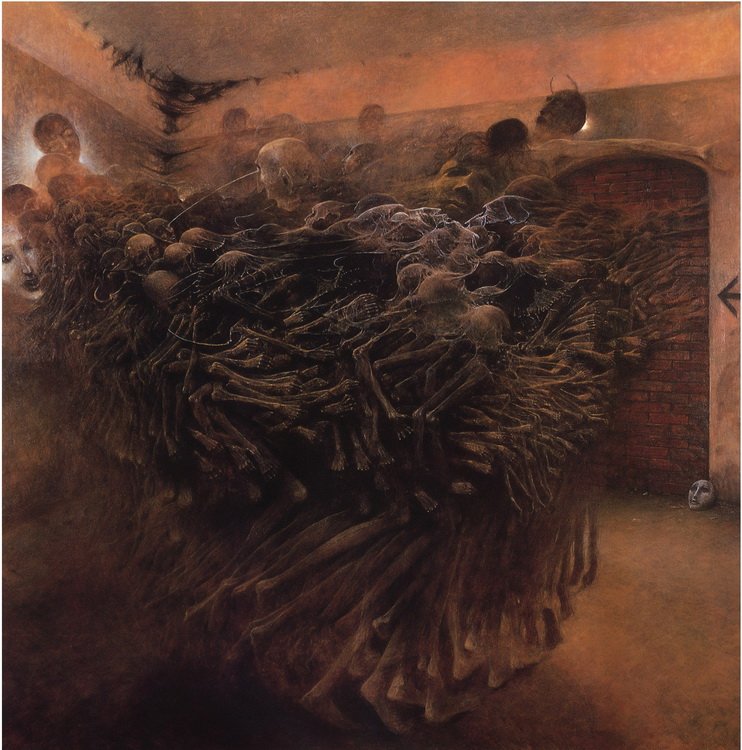
Qliphothic, properly speaking, is the “active” darkness — that is, the darkness that resists the spread of the Light. This darkness is persistent and aggressive, and its bearers, in whatever form they exist — human, angelic, bestial, vegetal, mineral or even divine — are traditionally called “Demons.” Thus a Demon is any being that offers active resistance to the Light, that is, to the expansion of the mind. And when the Magical myth says that “Demons live among men,” it refers not only to cases of possession, i.e., “demon-bearing,” but also to the fact that a considerable number of people become Demons without any Ibbur, but simply through folly or weakness, embark on the path of resisting the Light.
Unfortunately, this phenomenon also occurs among decadent Magi who, preferring Authority to Power, find ways to use others’ Authority, others’ Objects of Power and the Books of Spirits, and, following the path of the paffers, gradually become repelled by the mind, since it is incompatible with such a consumerist attitude.
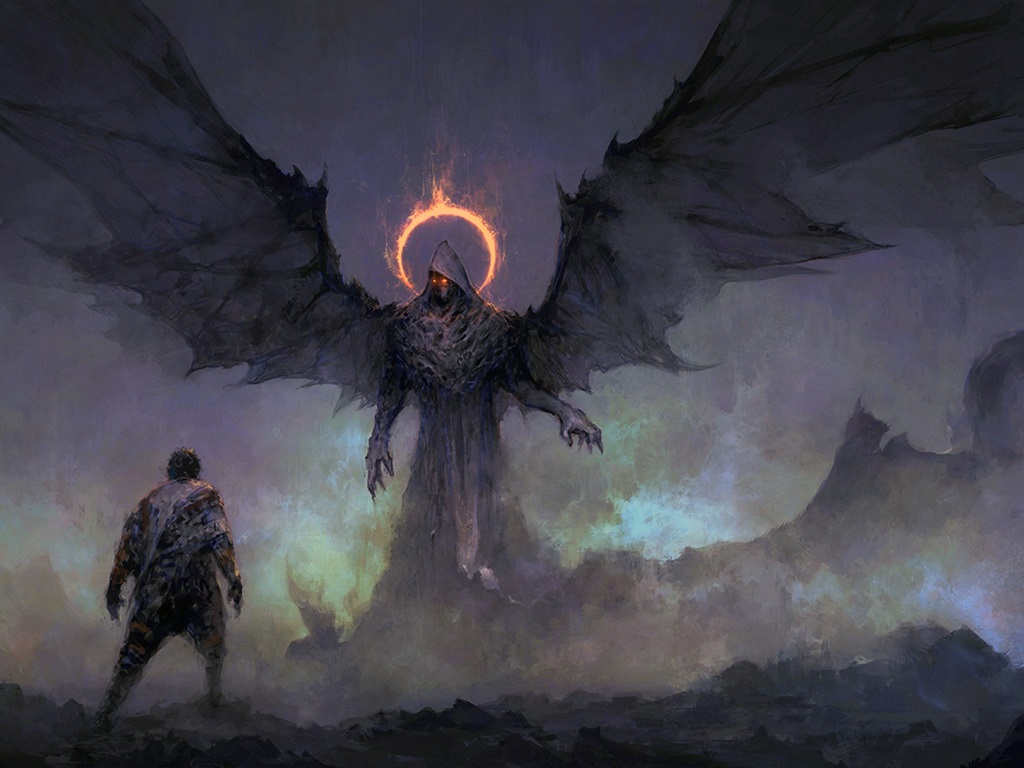
Note that “external” darkness can also be a habitat for predators, although they dislike its potential turmoil and prefer the seclusion of ‘internal’ darkness. This is yet another reason why Magi strive so urgently for intensive development, for the vigorous realization of their potential, and thus for the transmutation of darkness into Light. By doing so they not only foster the growth of their minds, but also deprive predators of their secluded habitats.
Yet far more often one encounters not the darkness of the soul but its shadowing — that is, the Light is not consciously rejected, yet its inflow into the Psychocosmos is limited.

Typically such a “shadowing” structure is the system of destructors, carefully cultivated in the mind by the Lamassu and aimed at distorting perception, at reducing the flow of awareness. The mind becomes entangled in its internal contradictions and, instead of generating Power, merely dissipates it.
We have said that the cunning and slipperiness of the Parasites of mind often succeed in deceiving even very experienced Wayfarers, and in confrontations with beginners they, as a rule, emerge victorious.
And the main problem, oddly enough, is the same as in the human world — Magi stubbornly refuse to recognize the presence of destructors and Parasites of mind in their own minds, arrogantly assuming that, since they have already found their Way and set foot on it, they have automatically and permanently freed themselves of predators’ influence.
But, as is well known — a correct diagnosis is already half the cure — therefore a Magus must look into himself with calm, dispassionate attention, understanding that his Psychocosmos is his own hill of Megiddo, upon which a fierce battle unfolds, and he must not underestimate the enemy in any case. Unfortunately, I knew many talented Magi who suffered defeat solely because they denied the very necessity of battle. And having been defeated by forces that shadow the mind, the Psychocosmos becomes vulnerable even to forces that bring genuine darkness… The mind becomes unaccustomed to the Light, and initially draws the curtains against it, and later closes the shutters.
I will add from my experience, predators and parasites do not leave you alone, but on the contrary, their attacks become more sophisticated, stronger, treacherous, so to speak. Thinking that I have entered my path, I cannot rest on my laurels; I have simply moved from the category of vegetables to the category of meat hors d’oeuvres! 🙂
Should the condition of “possession” involve the “good” will of the possessed (weakness, misunderstanding), or is it still violence from the predators? Should there be a specific moment when a person opens the “door” for the demon?
The condition for “possession” is the readiness to describe oneself in the flow of the predator’s myth. When a person has most of the “doors” closed, they open the “doors” they are ready to enter.
Thank you for your answer. I agree with that. But then it turns out that exorcism rituals are meaningless. The person and the predator “found” each other of their own free will, which means there is no one to “save”.
It makes sense to perform an exorcism ritual when there is something to save.
So he is no longer a human? But is that even possible? Could Hamed clarify his answer.
The qualities and properties of a person have meaning for the Myth. If there is a quality or property of a person that allows him to be called a Human and will allow his further evolution, then, in principle, one should give the person a chance.
Am I correct to understand that the qualities and properties of a Person are the Image and Likeness? If so, then very few people fit these criteria even partially. This raises the question: who are many of the surrounding bipedal beings? A chill runs down. I understand that many answers and conclusions from them may cause a strong resonance, but at least a little clarification on the topic would not hurt. And it would also be great to create an entire article… Because conclusions need to be made carefully. Perhaps entire crowds of unknown beings, and not people, at all. For Enmerkar: I apologize for a certain departure from the theme.