The Battle for Self-Identity
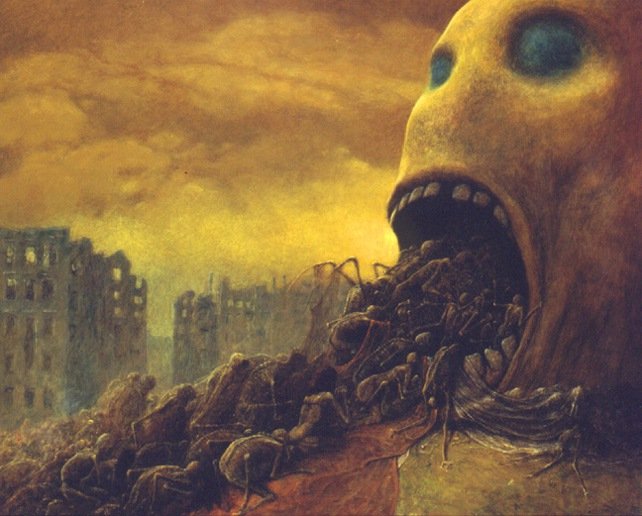
Being a participant in the worldwide Game, the Magus often risks, amid changing guises, losing himself and becoming, like most people, a collection of masks, with no face behind them.
In fact, a significant portion of the efforts of the Parasite of consciousness is aimed precisely at depriving the Psychocosm of its inner support, since in that case the mind will be forced to rely on the destructive forces and stereotypes offered by the Parasite, losing the chance to generate a sufficient quantity of energy for its independence. Moreover, every person is surrounded on all sides by numerous and powerful egregoric currents, which likewise strive with all their might to draw a new consciousness in.
It would seem — to stay true to oneself, once one has already found one’s Way, once its key points have been marked, is not so difficult. Attention is usually focused more on the “search” for oneself and on one’s Way, on the “acquisition” of one’s selfhood, and it seems that, once one finds that selfhood, everything thereafter will be easy and obvious.
In many respects that is, of course, true. The long and painful Way of the Seeker, the Zealot — preparatory stages of self-development — cannot be underestimated. And, certainly, to find a Myth appropriate to oneself and to build on its basis one’s own worldview, in which the mind is not a victim but a developing and free, power-generating aspect of the Great Spirit, requires an enormous expenditure of time and resources.
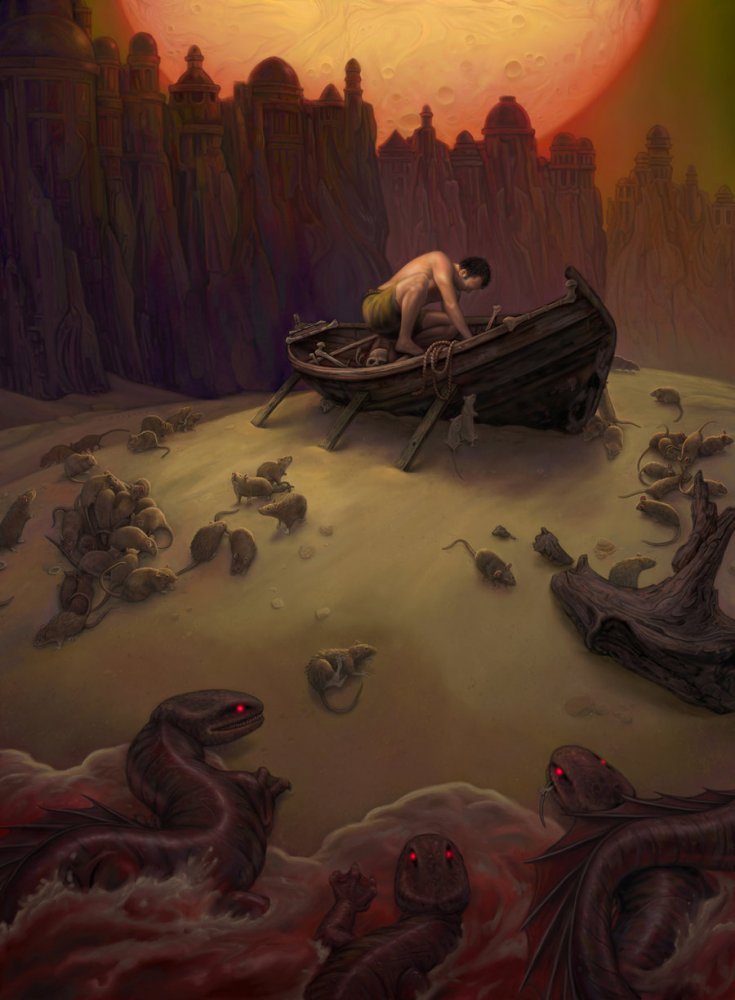
To find a Way means to feel out the thread of one’s individuality, a unique way of perceiving the world and oneself which belongs specifically to this Monad, specifically to this aspect of the One in the One’s essence. However, this individuality is not a collection of objects, not a sum of attributes or qualities. It is, rather, merely a guiding thread; having found it, it is crucial to follow it without distraction, not being distracted by the bright currents and templates offered by the consumer world.
Therefore, to preserve what has been found — not only to find the Way but also to hold fast to it — is sometimes no less, and perhaps even more, difficult a task.
The moment the optimal Way of development is found, and the mind ceases to be the mindless slave of Parasites and Predators, they regroup their efforts and by every possible means try to force it off the Way, slipping in various plausible pretexts and motivations to begin “fighting for the world’s good,” to “educate the lost,” or simply to “accumulate resources for further advancement” or even to “take a rest.”
Therefore the Magus’s primary struggle becomes precisely the battle to stay on his Way, the struggle to remain himself, to preserve his identity, not being led astray by shifting roles and masks.
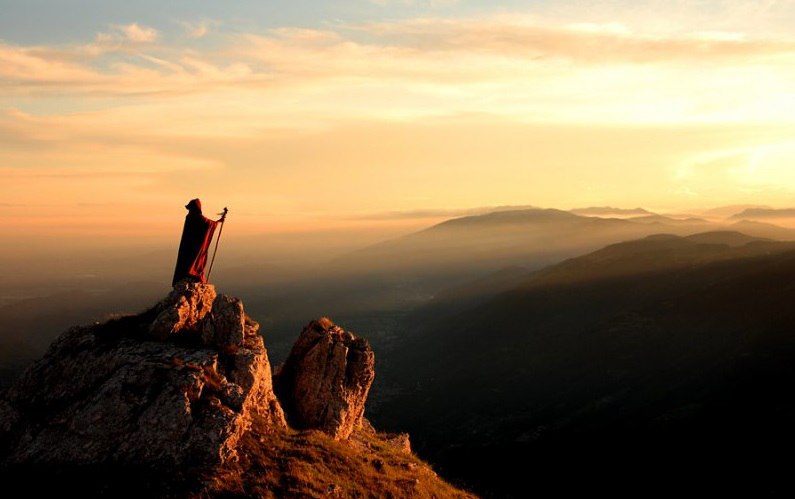
Like a tightrope walker above an abyss, the Magus must maintain balance, never allowing himself to forget even briefly who he is, where he is, and where he is going.
No diversions of activity, no fatigue or impulses to ‘help the suffering’ should distract him, for one who cannot stick to his own Way is all the less able to show the Way to others.
The more self-contained the Psychocosm is — the more it contains its own elements, elements matching that mind’s individuality — and the fewer imposed images and roles it contains, the greater its chances of withstanding the attacks of parasites and predators and of accumulating a sufficient quantity of energy for its Final battle. A Magus can never fulfill his potential by following other people’s paths. Only by rooting himself firmly in his Way, only by identifying with that Way, can he move from achievement to achievement — to his chief goal — Freedom.
Your publication is, as always, timely. Very much needed to maintain discipline, as I started to relax. 🙁 Each new publication sharpens, compacts, cleanses something within me. Thank you.
Interesting!
It’s just strange that not a word is said about the power of Silence…
After all, this battle is often called – The Battle for Silence.. 😉
Good luck!
At one point, I was sorting through my masks and stereotypes, discarding one after another. Eventually, the question arose: am I, or am I not? But the search continues, with the aim of finding Myself. Thank you for the useful information.
In the cycle of birth and death, gilgul/samsara, individuality disintegrates and loses its self-identity, am I understanding correctly? Why is it so? And why is this necessary, what is the meaning? It plunges into maya and begins to wander through the kaleidoscopic mirages of dreams. Hence all this theme with parallel universes, where the situation of choice, free will, and predestination is played out. As I understand it, true freedom is the revelation of one’s unique immediate capacity for interpreting possibilities? Indirect, meaning what is imposed by the matrix, by the dream. But why play this game of disidentification, searching and collecting oneself at all? Why not just be in self-identity? This considering that, in absolute time, we as individual monads have already formed, we are already realized. Or is realization itself only possible if there is a difference, in this case, a difference formed by the dual pair of Identity and Difference? To achieve identity, do we play with differences? Here Identity is not something abstract, but becomes actual. From a philosophical standpoint, this is called “The Eternal Return of the Equal.” A person as a light-bearing idea plunges into matter, loses its light-bearing self-identical nature, and the game of returning back to the pleomorphic reality begins, but already, as I understand, with the acquisition of new qualities and states in which the soul remains for further eternity. It is often said that samsara and nirvana or kenoma and pleroma are interconnected. In kenoma, a human as an idea has the opportunity to know himself through the other (through his alterity), but in the pleomorphic it seems not, there is self-identity. Well, generally speaking, a synonym of the idea is self-identity, but at the same time, development is impossible because for it to occur, difference must exist, there must be contradiction. But then, what goal do the followers of the left-hand tantra pursue? If the right hand is self-identity and achieving the perfection of the idea, then what about the other guys who delve into kenoma? And there are also third guys who have completely emerged from the cycles of pleroma and kenoma? And they hype, saying that nirvana is samsara, and samsara is nirvana, that is, these are two halves of one whole, two sides of the same coin. I hope I conveyed my thought adequately))