
Angel of Death
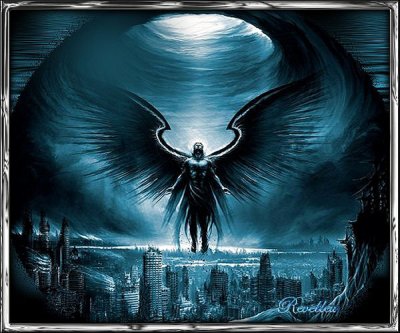
The great Abyss that the mind must overcome before it meets itself consists in disidentifying from separate personalities, subpersonalities and other psychic epiphenomena, and in discovering the single, indivisible nature of mind as such. In fact, it is precisely the notion of a “chasm” as an infinite expanse that reflects this experience, in which the mind focuses not on its own manifestations or objects, but on the continuum in which all those phenomena occur.
It is unsurprising that contact with the Abyss is intensely disintegrative and subjectively painful, since all the ties that seemed essential to structuring the psychocosm lose their meaning; for that reason this experience is described as an encounter with the “Demon of Annihilation” — Horonzon.

At the same time, the Abyss has another face — the face of absolute reconciliation, the disappearance of all conflict and gloomy paralysis, usually symbolized in its “upper shore” — the “virtual” sefirah Daat.
Since Keter, as the supreme synthesis, is inaccessible — “veiled” from the rest of the Tree, manifesting only through the pair Hokma–Bina that gives rise to the rest of the Tree — the highest degree of harmonious unity available to the Tree itself is expressed precisely in the relationship of this First Pair, and those relationships are objectified as the “imaginary sefirah” Daat. One could say that Daat is what Hokma and Bina “remember” of Keter, their source, and thus Daat is, as it were, the “Tree’s dream of Keter”. According to the traditional definition, the binary pair Hokma/Bina integrates into Keter and is “reconciled” in Daat.
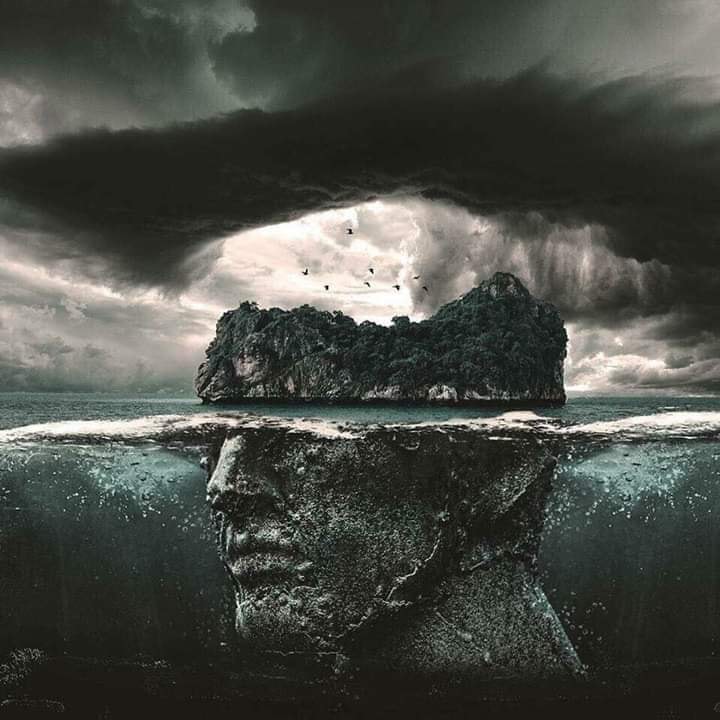
At the same time, Daat does not mean knowledge as a result, as something already present; rather it refers to the process of knowing, to cognitive capacity. With regard to any object, Daat is the highest concrete knowledge available about it. Yet Daat has no independent expression, no “sefirah-ness” of its own, because in expressing this “knowledge” the mind alternately operates with Hokma and Bina, balancing them at this hypothetical point.
It is Daat that is associated with the knowledge which brought about the expulsion of Adam and Eve from Paradise. This underpins the well-known kabbalistic postulate that the Devil reaches with his head only to the sefirah Daat. At the same time, according to Kabbalistic teaching, the sefirah Daat corresponds to the highest point a human can reach. In other words, Daat is the death of the Self. Being such an “exit point”, Daat is simultaneously the power of Initiation, the Great Doing, and the place of conjunction between the Tree of Life (“Sitra aKedusha“, the Side of Holiness) and the Tree of Shadows, “Sitra akhra“, the opposite side. Therefore the number 11, formally associated with Daat, is both the number of transcendence, of going beyond, and the number of the fall.
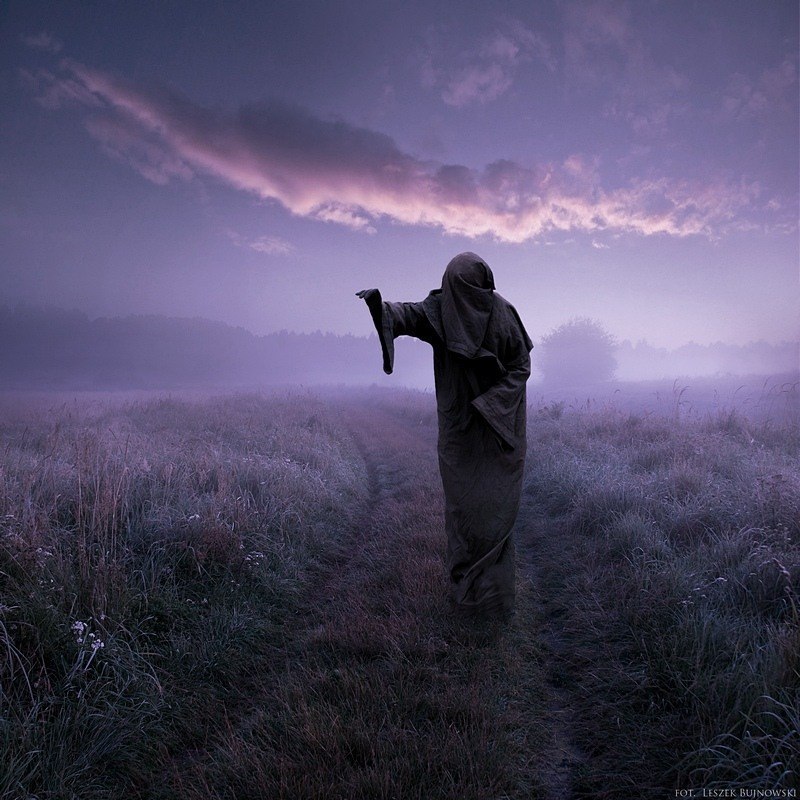
In this sense Daat shares the same nature as the Abyss that lies directly beneath it. Daat is the only point on the Tree that opens access to the world of the Absolute — a Gate preserved and formed by Initiatory forces.
Herein lies the paradox of Daat’s “knowledge”: at this point everything is already known, yet nothing has been decided, made, or brought into being. Daat is the possibility of duality in pure form, the necessity of duality, objectified into a separate “imaginary” partzuf. One of Daat’s names, the “Upper Chambers“, can therefore be likened to the death-cell and to the room of reflection in Masonic tradition, where the candidate, before Initiation, takes stock of his life in the profane world and prepares for the rite of Initiation that opens the way to the higher spheres. At the same time, one of the principal vices and dangers associated with Daat is that the Magus, upon reaching this point, attempts to preserve some fragments (nitzot) of his former “I”. In doing so, Daat is mistaken for Keter, and the aspirant, instead of identifying himself with the Spirit, identifies the Spirit with himself, endowing it with human imperfection.
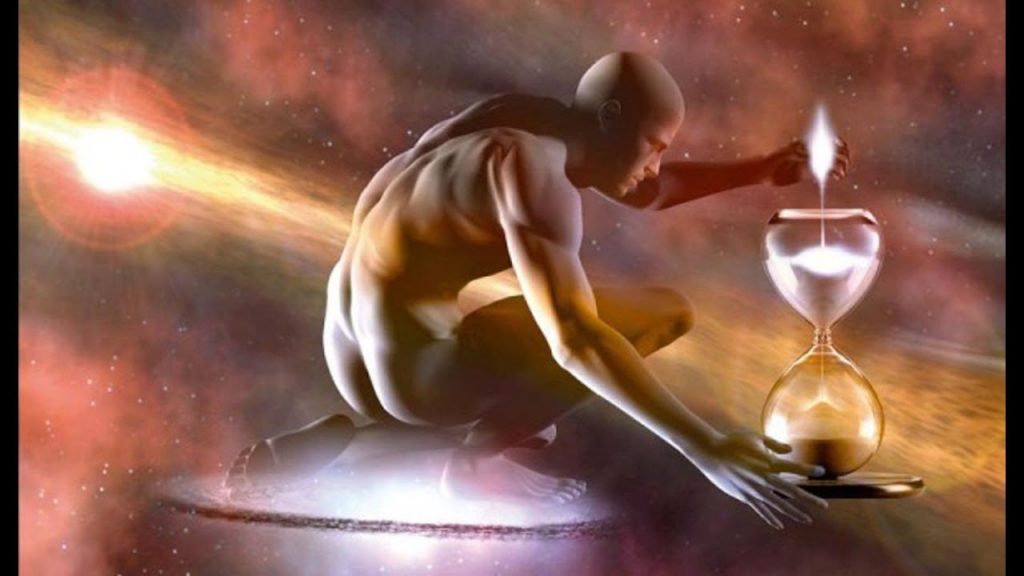
As the expression of the very point of bifurcation — the ambivalence of “choice” inherent in the being of its Way of development — Daat has no pronounced shadow, belonging equally to sefirot and Qliphoth. At the same time, in the Tree of Death Daat corresponds to the Divine Sparks lost and imprisoned in the world of the Qliphoth (nitzot), formed at the moment of shvirat kelim and awaiting their release; hidden Divine potential awaiting realization; the Diamond that fell from Keter and was lost in the depths of the Qliphoth.
The Angel of Daat has the same “dual” nature — Abaddon (Heb. אבדון, Ǎḇaddōn, “the Destroyer”, expressing the fall into the Abyss), called in the Revelation of John also Apollyon (Gr. Ἀπολλύων; Rev. 9:11), and also – Azrael (Help of God) — embodies the dichotomy of the concept of Transition: as transcendence, an emergence into a new stage, but also as the death of the old, the casting off of the spent; accordingly he is regarded as having simultaneously divine and demonic nature, acting as a kind of alter-ego to the Demon of the Abyss.
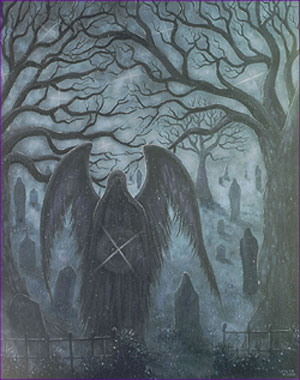
In the Old Testament tradition the word “abadon” simply meant “death” and was sometimes regarded as one of the regions of Hell or even a synonym of “Sheol“, denoting the grave of all the dead: both righteous and unrighteous.
As the expression of “utter darkness”, Abaddon is also the “shadow” of Bina, because it is precisely this dissolving, engulfing aspect of the Dark Mother that forms the “gates” between lives, incarnations and states of mind. At the same time, Abaddon is the dazzling radiance of Hokma, the “light at the end of the tunnel”, the supreme knowledge that brings death to any relative intellect.
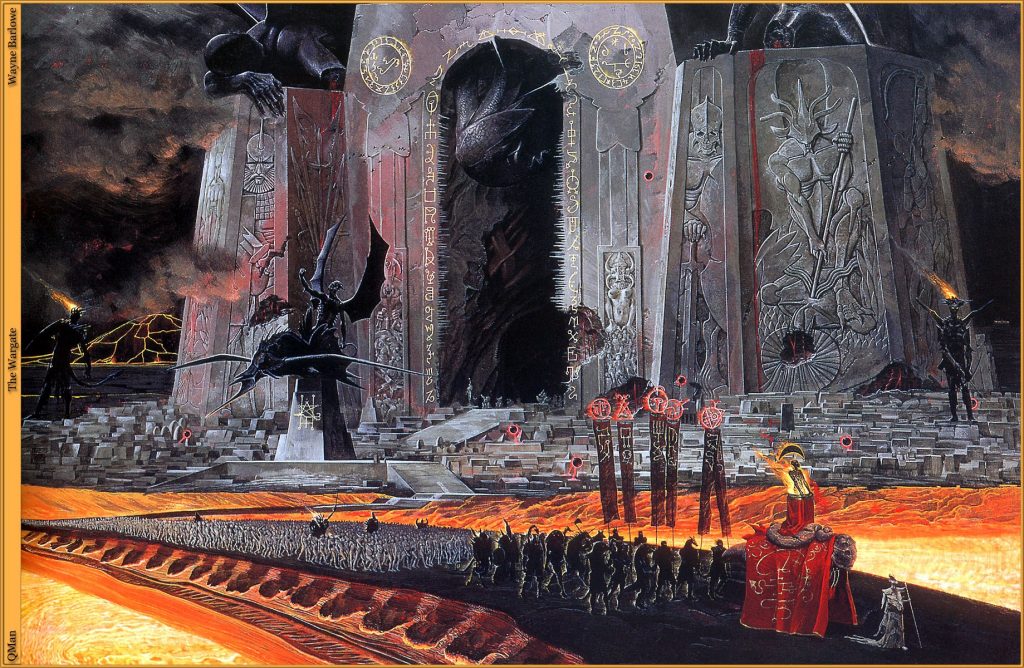
As the embodiment of the very “Gates of the Abyss”, Abaddon also corresponds to the “ministering” aspect of the Power of the Threshold, the great power of separation, and can therefore be compared with Naxash. He is at once the “fiery gates of Paradise” through which the purest souls pass, and the dark gates of the netherworld into which those who failed to neutralize the binaries of the Knowledge of Good and Evil fall.
Thus, whenever the mind makes a leap in its development, whenever it crosses some relative Abyss (and, of course, all the more so when it crosses the Abyss of its own development), it not only encounters Horonzon, it also passes through the “gates of death”. Every new state is the “death” of the old; every new creation is the child of the Angel of Destruction. It is naive to hope to move into a qualitatively new state while bypassing the Angel of Death. If it seems to us that we develop exclusively “evolutionarily”, without shocks and pain, we are mistaken, and in fact we are merely treading water.
In your texts, the thought runs red thread everywhere that development is linear, jumpy. But this is characteristic only of traditional society. We are in the age of metamodernism, where a person is faced not only with ‘infinitely receding horizons,’ but also the possibility of using two directly opposite concepts simultaneously, which was unthinkable a hundred years ago, not to mention even more distant epochs..
Daath is the entry point into the world of the Absolute and is associated with the Tree of Death of the Klippot, meaning, so to speak, that it lies in the middle? From this, it follows that within oneself (on a conscious level), one must somehow reconcile the dual pair of life (birth)/death; only then will access to Daath be possible? How accurately does this source describe the concept of the Tree of Sefirot, for instance, mentioning that the sefirah Malchut has been removed? With what can the world of the Absolute be compared in other descriptive systems? For me, it is the primordial tension between the two poles of space (pure consciousness) and matter (the Medium), which produces the initial sound and represents an omnipotent “field” where worlds are born and die. It can also be compared to the womb of the cosmos or depicted symbolically as the vesica piscis.