
‘Cellars’ of the Interworld
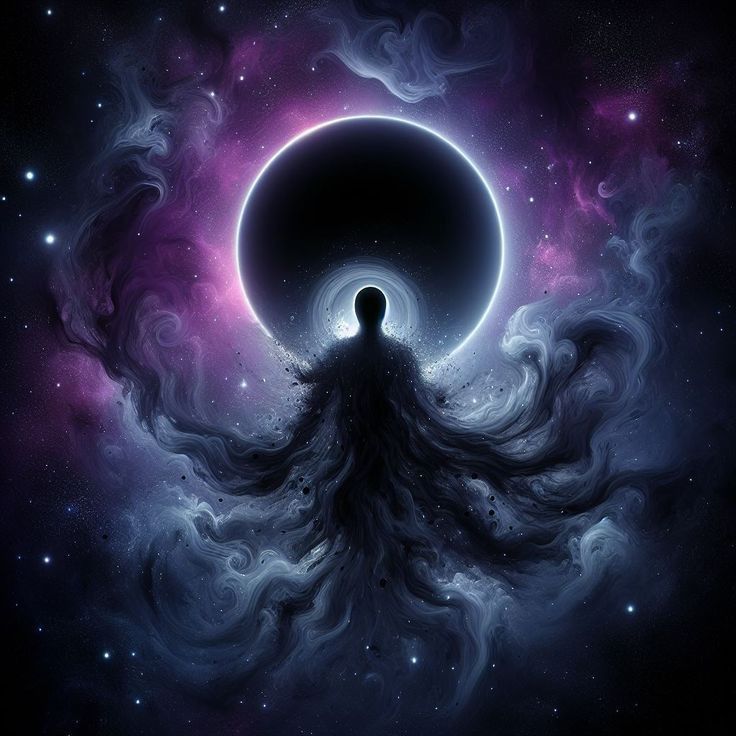
We have already said that, in the broadest sense, the Interworld, considered as a universal hyperspace of potencies, contains within itself the possibilities of manifestation of all forces, and therefore can be identified with the “Abyss” or “Chaos” of classical mythologies.
And although “in itself” the Interworld is featureless and homogeneous, beings that enter into contact with it — in visions, trance, postmortem states, and so on — perceive those potencies that find a “response” in their constitutions (“adiras”), and therefore may describe various “regions” and “spaces.” And since the number of such “describing the indescribable” streams of consciousness is quite significant, for any being contacting the Interworld, it appears as such an aggregate of regions and spaces, separated by zones of chaos and instability.
In the most general description that arises in the mind of most beings known to us, the Interworld is structured primarily into a series of “layers” or “ethers,” representing not so much spaces as levels of potencies, their “frequencies” or “tones,” reflecting the influence in the chaos of primary structuring factors — Aeons.
We have already discussed that, according to Gnostic conceptions, both the Aeons themselves and the ethers arising as their manifestation in the Interworld can be divided into three groups:
- “Divine,” that is — Aeons/ethers of primary causes, the most abstract potencies of the universe; they are usually described as the creative Ogdoad;
- “Legislative,” that is — Aeons/ethers in which one can find possibilities for the birth of the laws of manifestation; they are usually described as “Sephirothic” potencies;
- “Substantial,” that is, fields of possibilities for the manifestation of individual worlds and actual spaces, or the so-called “Archontic” ethers — the tertiary dodecad.
At the same time, it is clear that the Interworld, as a totipotent abyss, contains both the possibilities of creation, of making — that is, the transition from chaos to cosmos — and the potencies of destruction, i.e., returning to chaos and increasing disorder. And besides this, it also contains the possibility of this very duality, the principle of dividing forces, which is traditionally called the Limit or Choros. In other words, by analogy with known worlds, the Interworld can be described in three parts — as 1) “surface” superspaces, i.e., the totality of ethers, 2) the Edge or Choros, and 3) “inferno” or sets of possibilities of chaotization.
And by analogy with the three-part division of the “upper,” “manifesting” potential fields, the totalities of disordering potencies can also be described in the form of three “Basements” or “chthonic ethers,” together composing the “Night” (Nyx) of the Interworld — Tartarus, Erebus and Hades.
Tartarus (or Abadda) is “darkness” in its most abstract sense, as a force dual to the very principle of manifestation or awareness. One may say that Tartarus (and its personification — Choronzon) is the element of “anti-mind,” which in its highest aspect merges with the divine Light in the primordial gloom khoshek.
Erebus (or, as modern Traditions more often say, qlippot) is the totality of “anti-legislative” potencies, which manifest as “resistance to the forces of creation” or “counteraction” to possible ordering and the principles of regularity. This is an “echo,” or paired potencies, to the “Sephirothic” ethers.
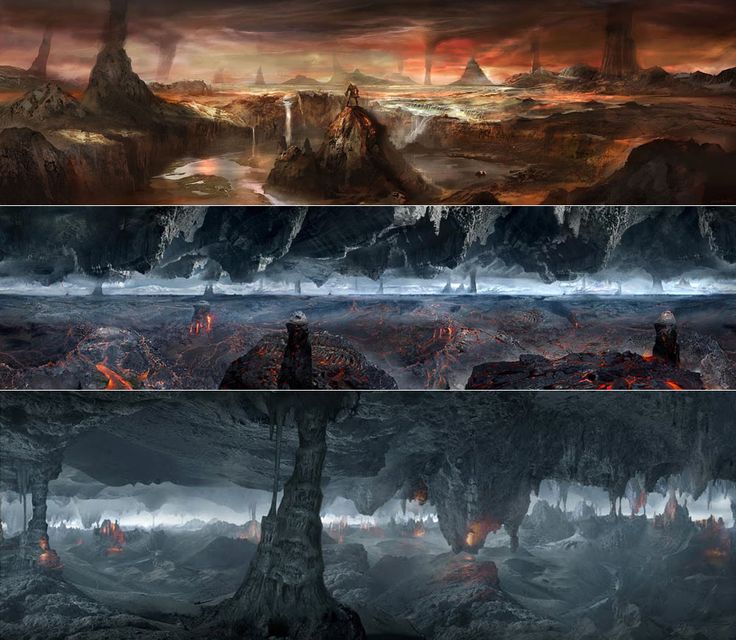
Hades (or, in more widespread occult terminology, sheol, שְׁאוֹל) represents regions of “heavy mind,” that is, actualized resistance to order, the potencies of manifested (and recognized) destructive drives, arising as “spaces of retribution” and “purification,” and serving as an “intermediate” stage of the descent of mind into the “hellish” worlds.
At the same time, since the “spaces” of the Interworld are not regions in the proper sense and are “separated” only by levels of attention, both individual ethers and the “regions of Night” may be considered as mutually interpenetrating and closely interrelated potential totalities.
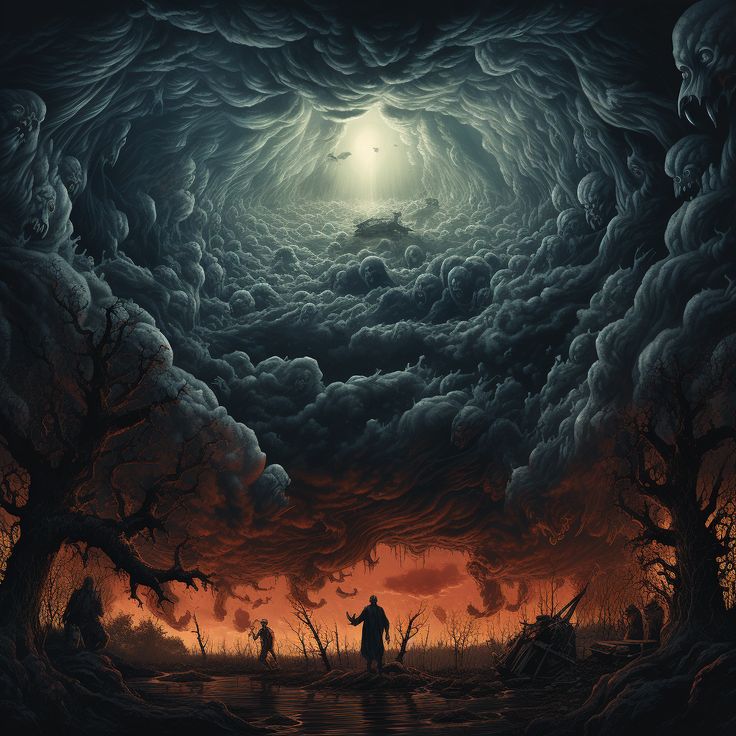
For example, for a visionary or an elementer passing through the regions of “ordinary” postmortem existence — the space of the RII ether — the transition into Sheol looks like a “fall” into gorges, chasms, caves, or rivers in the case where the mind is “weighed down” by destructive tendencies. And then such an elementer may either “climb out” again into the “aboveground” Duat, or continue the “fall” and be born in one of the “hellish” worlds.
And, for instance, drow — dark faeries living in the caves of RII and the basements of the Elemental cities — can reach regions bordering the demonic spaces of the qlippot or even the “worlds of dark gods” of Tartarus.
At the same time, the “worlds of night” can also be described as a gradient of chaos: Hades can be regarded as the entry level of infernal states, where the mind still holds form, but already suffers; Erebus can be described as a zone of denial of structure, where destructive tendencies oppose the principles of coherence and structuredness, and Tartarus is pure counter-potency, from which anything can arise, but nothing is required. It is more correct to imagine these “Basements” not as downward floors, but as zones of growing and “deepening” chaos, and moreover Tartarus is not deeper than all, but outside all.
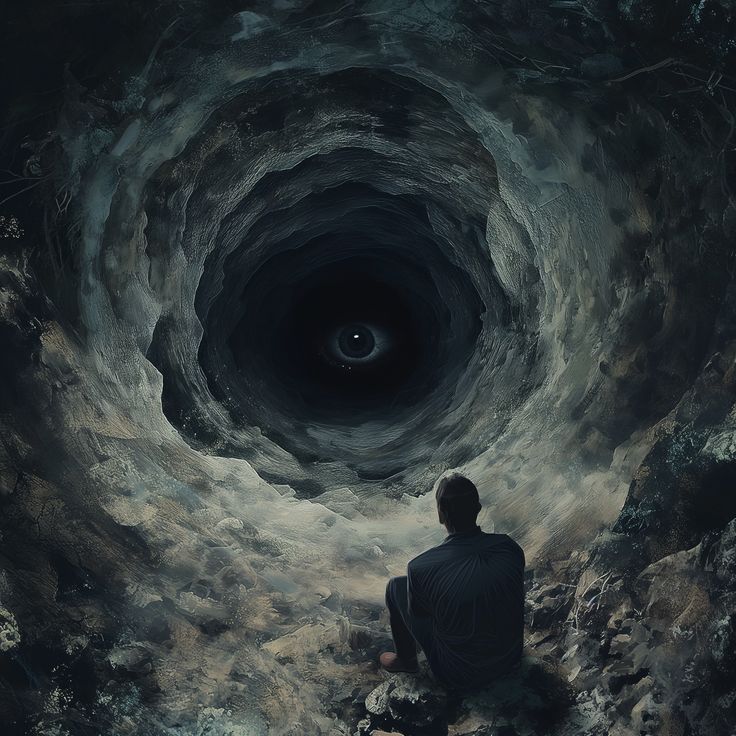
Thus, the Basements of the Interworld are totalities of negative potencies that are just as ready for manifestation as the structures of creation. However, their manifestation is “heat death,” a more or less intense increase of entropy in being and mind. It is important to understand that the zones of Night are not “evil” in the moral sense; they are completely inevitable and are part of the overall potential field. And without them there could be neither death, nor purification, nor transformation, nor an exit beyond forms. However, contact with them requires a high level of awareness and energetic integrity, otherwise even a fleeting descent into the Basements proves, at best, destructive, and at worst — demonic. We have more than once said that contact with darkness is always madness, and the only question is to what extent it will turn out to be reversible — whether one will manage to get out of it, or darkness will devour and dissolve the mind. A Magus striving for transformation must be able to distinguish when he is working with the Shadow, or when encountering forces that do not transform, but only devour. Working with the “grey spirits,” Klippa Noga, one purifies, strengthens the will, and recognizes weaknesses. But only by touching the Cursed qlippot does he risk being destroyed without a trace. However, only one who has passed through Hades, refrained from predation upon hearing the call of Erebus, and, having looked into Tartarus, preserved his monad — is capable, through free creativity, of truly surpassing both destruction and demiurgic construction.
Thank you for the article
It’s interesting and informative. I remember you once mentioned that the pleroma (of the Gnostics) is akin to dreaming, but it is the “CORRECT” dream. As I understand it, this original omnipotent space (the womb of creation?) is the same for everyone, both for the pleroma and for the kenoma?
In relation to the Interval, it is incorrect to speak of any measurable or definite characteristics – it is impossible to say whether it is “one” or not, since everything that can be defined or measured are worlds. It would be more accurate to say that both the potentiality of the kenoma and the pleroma are the Womb.