Geography of the Interspace: Aeons and Ethers
Although the space of the Interworld is immeasurably vast, some of its regions are accessible to perception, description, and mapping.
It is clear that “perceptibility” also implies the possibility of mutual interaction — and this not only makes such regions objects of study, it makes them sources of influence on the mind, including (and even chiefly) predatory ones.
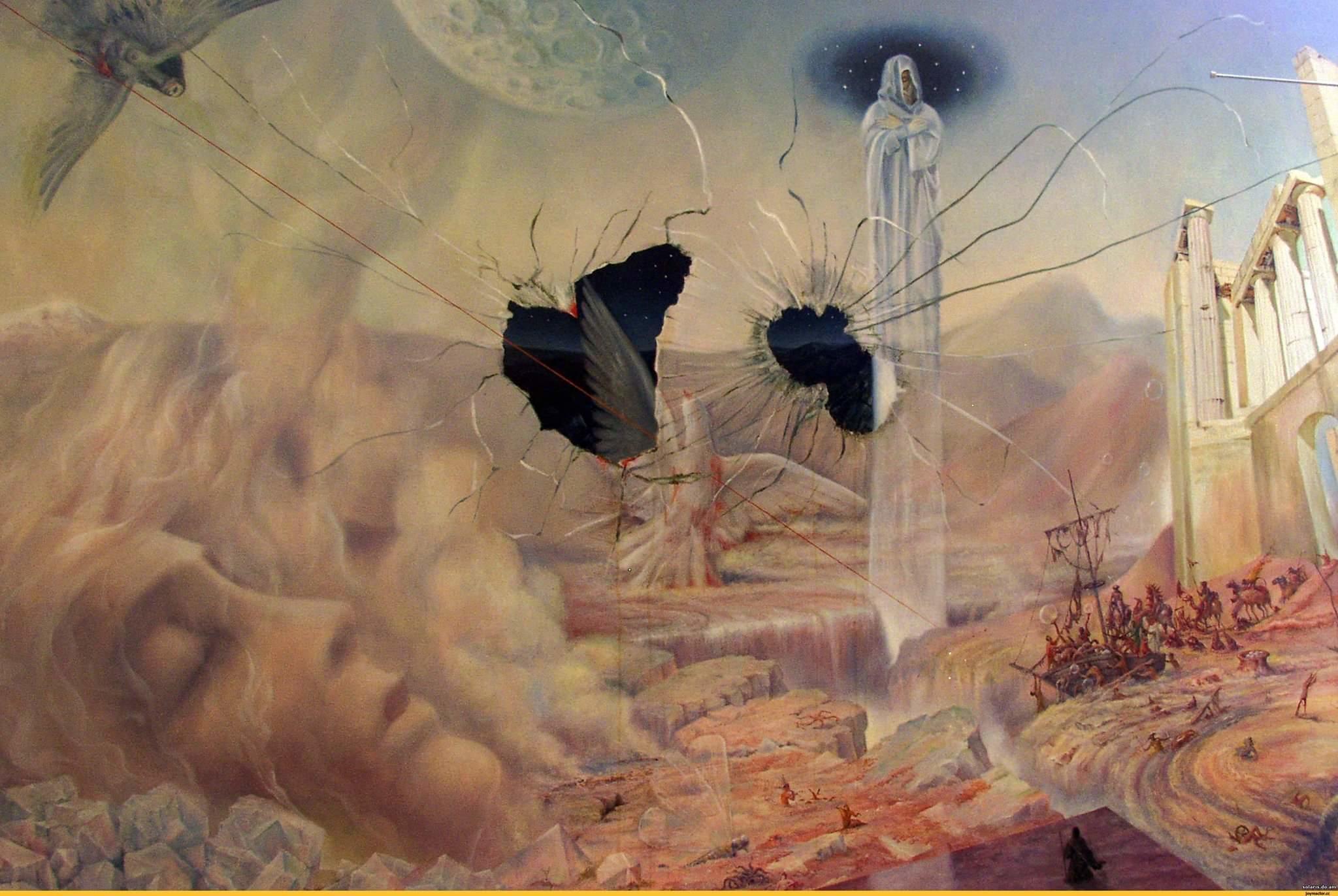
We have already discussed that for any world, any space, any material realm, a condition of its manifested, “stable” existence is the presence of a mind that describes and orders; and for the unstable environment of the Interworld this is especially true: psychocosmos and macrocosmos in the interspace are not merely closely interconnected, not merely reflections of the same reality, they are in fact identical.
Therefore, unlike comparatively stable worlds, where gods and other governing beings merely direct processes by their will, in the interspace every object, process, or region and the will that shapes it are inseparably bound and may be regarded as manifestations of a single entity. Thus, when we consider any structure in the interspace, we are, in effect, considering the “the contents of a being’s mind” of a particular being, and conversely — by interacting with any mind in the interspace, we enter that being’s “own world”.
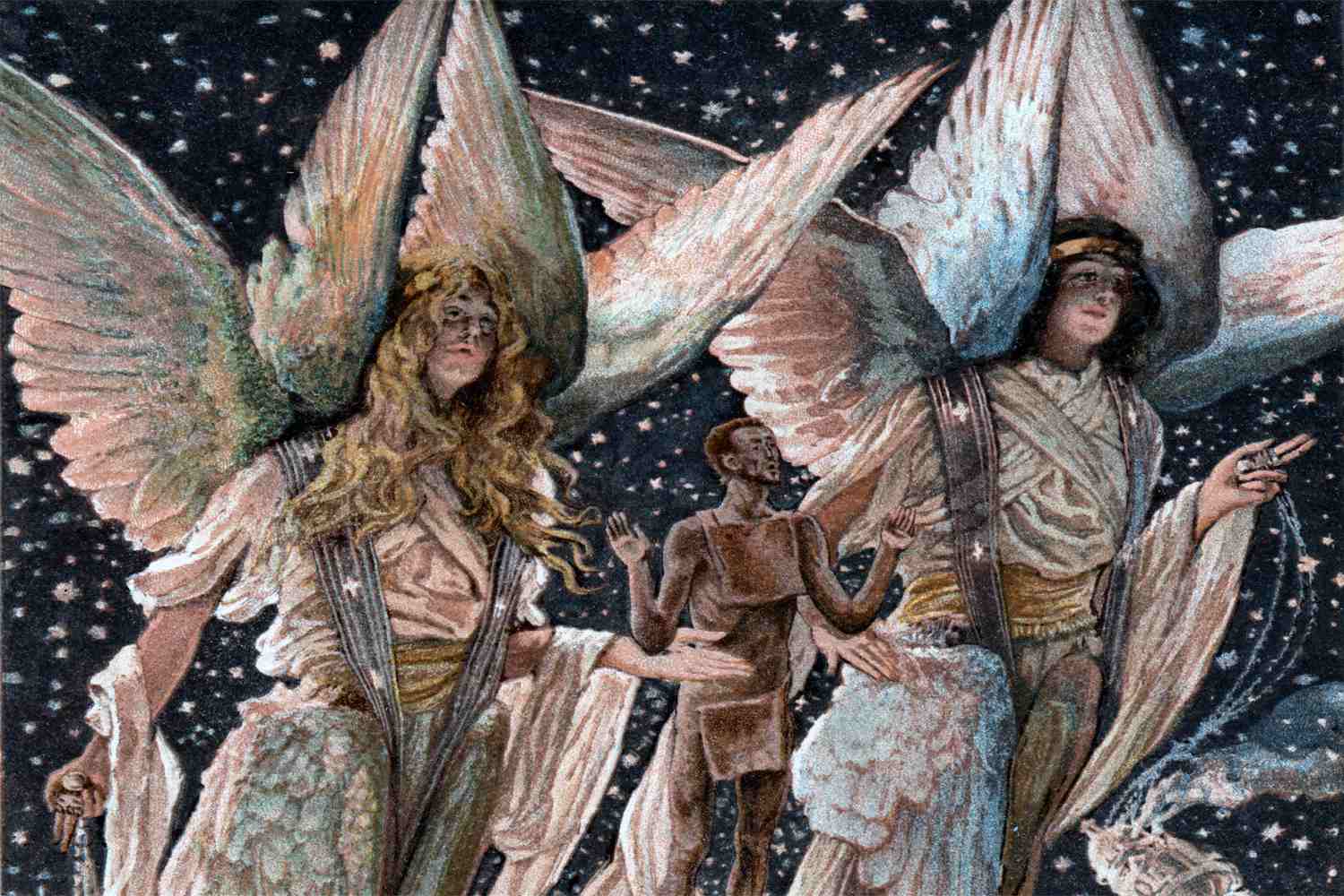
It was precisely this interconnection that misled many mystics, who saw the expressions of Interworld spaces as beings — angels, archons, and the like. For example, the analogy between the thirty aeons of Valentinian Gnosticism and the thirty ethers from the visions of E. Kelley is a different perspective on the same reality; it is simply a different perspective on the same reality.
We have already mentioned that the Interworld has a “three-dimensional” (from the human mind’s point of view: of course other forms of mind perceive other “dimensions” of this space) geography, meaning movement within it is possible in any direction, and therefore a “sixfold” coordinate system operates there: four “horizontal” directions and two vertical.
This is precisely why the number 6 so often appears in descriptions of the intermediate reality, and, together with the “center” of the hexad — i.e., the perceiving subject — it yields a heptarchic system.
There is a whole series of maps describing Interworld spaces from different perspectives and for different purposes: the “Books of the Dead”, the “Theurgy of Goetia”, Gnostic treatises, and the visions of Dee/Kelley (as well as their development by A. Crowley and modern Orders).
“Vision and Voice”, “The Trials of Blessed Fedora” and other works present the results of directed research into the interspace.
Analysis and comparison of such descriptions can help form an understanding of this space. For example, relating the “Compass” of the “Theurgy of Goetia” and the system of “Watchtowers”, supplemented by the notions of Paracelsus’s “Elemental cities“, allows one to create a “horizontal” map of the interspace, taking into account the aforementioned identity of the space and the mind that creates it.

In a similar way, correlating Valentinus’s “aeons” and the “ethers” of Dee/Kelley makes it possible to outline the “vertical” structuring of these spaces.
Such correlation can be all the more useful because the system of aeons describes the “creative”, divine forces that create their corresponding spaces — the ethers. Accordingly, considering each of the interspace’s subregions from the position of the “subject” that creates that subregion and from the position of its “object field” allows one to form a more accurate understanding of its nature and energies.
By obtaining a direct experience of interacting with the interspace — in ” projections” or “visions” — and subjecting it to verification and systematization within various descriptions, one can avoid errors and confusion.
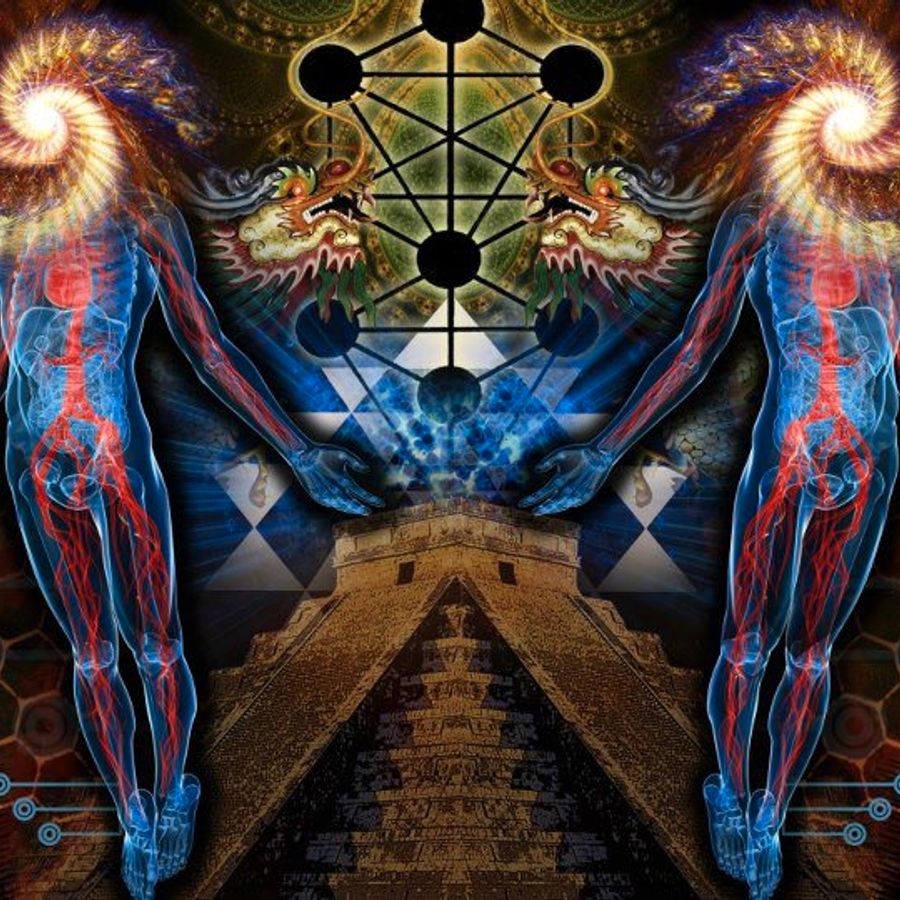
At the same time it is useful to observe the “golden mean” and not make unnecessary adjustments in such comparisons, sensing their “internal logic“. For example, applying Kabbalistic approaches to the analysis of “Enochian” systems is not particularly productive, since those viewpoints are built on different bases — decimal and hexadecimal respectively. With that caveat, using various descriptions as “puzzle pieces” that mutually complement the overall picture can be most useful.
In any case, the work of composing at least a “personal map” of the Interworld can be an important part of the magical way, since it organizes contacts with that space and its inhabitants in both “ordinary” and “intermediate” states and stages.
Enmerkar, thank you for sharing your knowledge. Could you please tell me why consciousness, when sleeping, enters this interval? Is it possible and necessary for consciousness not to enter there?
The intermediate state of consciousness is any unstable functioning of it, and the deeper consciousness plunges into it, the fuller it enters the interworld. This concerns not only sleep but also trance states, deliriums, etc., at significant depths. Consciousness may ‘not enter’ the Interval during sleep as long as it does not see dreams, but is simply immersed in its own depths.
Hello! To create a “personal map” of the between world, is it necessary to use methods of astral projection, OBEs, and WTP?
Hello.
Of course, it’s possible.
En! Thank you very much!