
Chaos and Cosmos
Among the topics and discussions popular in the contemporary fringe magic scene, the theme of “Chaos” has become extraordinarily fashionable. Beginning with Lovecraft, interest in destructive influences became widespread and has produced a great deal of confusion.
Let’s untangle this issue.
Let’s define our terms.
Strictly speaking, the concept of Chaos belongs to the ancient Greeks:
First of all, Chaos came into being in the universe, and next
Broad-bosomed Gaia, the secure abode of all,
…
(Hesiod, Theogony).
Nevertheless, the Greeks are by no means original in this idea. In one Egyptian version, the world likewise arises from an initial chaos — the ocean (Nun): it brings forth the Sun — Atum or Ra, which “brings forth” the god of air Shu and his feminine aspect Tefnut.
Homer has no concept of “chaos” — everything comes from the god Ocean, “ancestor of the gods” — but close to Chaos is the notion of the “deepest abyss,” Tartarus. The same idea appears in the concept of the Abzu — the world-ocean in Sumerian-Akkadian mythology, and the abyss of Ginnungagap in Norse mythology.
The ancient Greek word “chaos” derives from “chaino” — “to gape,” from the root cha-; hence chaino, chasco, “I yawn,” “I gape.” Chaos therefore primarily means “a gape,” “yawning,” “an open space,” “an empty expanse.” It is a yawning void in which all is born and into which all disappears. At the same time, Chaos is a mixture, an unordered blend of potential elements.
After the formation of the world, Chaos, as the “great abyss” — “chaema” — remains at its foundation: “The Cosmos (that is, the world as an ordered whole) is one, yet the cosmos does not constitute the (entire) Universe, but (forms) only some part of the Universe, while the remainder (is) raw material” (Empedocles).
Overall, in ancient Greek philosophy Chaos appears as a majestic, tragic image of the prime unity of the cosmos, where all being is undifferentiated, from which it appears and into which it perishes; thus Chaos is a universal principle of continuous and uninterrupted, infinite becoming.
Thus we see that in the ancient Greek conception of Chaos two ideas fused: the principle of disorder (“entropy”) as such, and the idea of “primordial matter.” Plato understands Chaos as pure matter, or prima materia, deprived of determinate properties, as “the boundless abyss of the unlike,” “a state of ancient disorder.” By the end of the classical period two different concepts of Chaos had developed in Greece, deriving from Hesiod’s concept. One places the emphasis on Chaos as a physical space, empty and unformed; the other understands Chaos as something infinitely full and life-giving, as the foundation of worldly life. And it is precisely this mixture that gave rise to further conceptual confusion.
It was the idea of Primordial Matter that produced some of the notions associated with Chaos: the idea of a Primal Basis from which the world begins and into which it returns. However, in this sense Chaos is absolutely inert; it is only the potentiality of being, containing no possibility of events, activity, or creation. It is merely a “terrible abyss” ready to swallow everything without remainder or trace. In Chaos everything is homogeneous; there are no variations in forces, and therefore no possibility for action, no energy.
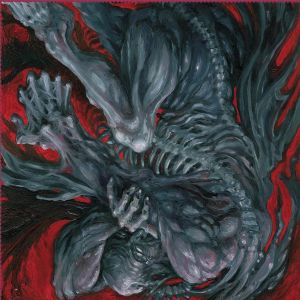
Yet Chaos also has an active component — a force of destruction, the binary analogue of the creative force. The embodiment of this aspect of Chaos is the World Serpent — a force that seeks to return the universe to a prenatal state. The Serpent itself manifests only when it acts within the cosmos; in the Abyss its being is purely potential — there it “sleeps.”
Since the force that creates the world is mind, it is clear that Chaos is hostile to mind; moreover, it is not merely the absence of mind, it is anti-mind.
Note that the attractiveness of the idea of Chaos lies in a mistaken understanding of its attributes: Chaos’s boundlessness is taken for its “might,” whereas in fact Chaos is simply outside the concepts of “time” and “space” — indeed, effectively outside the very notion of being, since being is a binary pair with mind, and by denying mind, Chaos inevitably denies being as well.
Chaos is not the absence of limits; it is the absence of that which is limited. It is not freedom of movement but the absence of movement; not a source of forces but merely unformed potentials. Aristotle in the Physics understands Hesiod’s Chaos simply as a physical place where certain physical bodies are located.
Chaos is usually understood as ontologically anterior to Creation. However, from the quotation from Hesiod given above it is clear that Chaos “came into being,” and it arose simultaneously with the rudiments of the cosmos. According to Hesiod, Chaos is placed among the prime potentials alongside Gaia, Tartarus, and Eros.
Chaos and cosmos form a binary pair whose poles have no meaning apart from each other, being strictly analogous and opposed. When people say “the cosmos arose from chaos,” they mean only the epistemological aspect, a way of knowing, not an ontological priority. Midgard and Utgard do not exist outside one another; they eternally struggle yet remain one. The cosmos is eternally born from chaos, but that means that chaos eternally produces the cosmos.
Now let us try to understand what this conception of Chaos implies in practice.
First, it is obvious that any “extraction” from Chaos is already cosmos; any differentiation within Chaos is its ordering. In this sense it is completely meaningless to speak of the “energy of Chaos” — any energy is already cosmos, order: it has two characteristics — potential and direction — and is therefore ordered; hence there can be no question of chaos, disorder, or homogeneity.
Second, when people speak of the “energy of Chaos” they usually mean simply the energy of destruction, but destruction itself is not Chaos; it is a process within the cosmos, for by definition there can be no processes in Chaos.
Thus we see that the fad for Chaos is simply an inclination toward destruction, which of course can be evolutionary when directed at removing obstacles. But to call this “Chaos” is to fail to chart one’s path clearly, and therefore to risk becoming lost.
Balanced)
Questions of chaos are quite significant for many, even if they are not fully recognized. There is a sense that there’s not only confusion in the terminology but also very inaccurate mapping of phenomena. Just look, for example, at creation and destruction. Excuse me, these are different processes. Why do we mix them? Chaos is a convenient generic term, but it implies quite different phenomena even in a magical context (perhaps similar to how one word in a dictionary can have very different meanings).
This is somewhat alarming because the term is used everywhere, while the definition of processes is lacking. “Underwater we were born together” absolutely does not imply any kind of melting. The energy of the great ocean is a completely different energy. But there is something common in them, something deep. At the same time, sex related to subsequent conception is heavily influenced by the energy of a volcano (magma). Essentially, sexual energy is largely tied to destruction (in terms of energy), yet no real destructive processes occur—nothing is destroyed. I would probably say that astral destruction happens—something like that.
“This is merely the ‘terrible abyss,’ ready to consume everything completely and without a trace. In chaos, everything is homogeneous, there are no gradients of forces, and therefore, there is no possibility for action, no energy.” From the depths, I will draw one thread. It is precisely from the deep feeling of chaotic potential that the so-called “illusion of dominance” arises. It is not entirely an illusion since the energy that manifests (astrally) is quite significant.
It is also interesting to know if you have shed light on Gaia anywhere, as this question is probably much less clear to me. Thank you.
I thought of something else. Importance, size, so to speak, is a crucial characteristic of chaos (even if it’s tautological) or of the ocean. Who knows, but when you watch a movie on a big screen, it always impresses you. The same goes for large objects. I don’t know the mechanism, but there’s something to it. There’s something important in that mechanism, and size makes it all significant. Why? Simple reasoning, personally for me, doesn’t explain any of it. It doesn’t capture all the breadth and power, and the authority, if you will, of the sensations.
Maybe it’s an illusion? Maybe. Or maybe not. It’s important to understand how it’s created. If we see a huge elephant disappearing in the middle of the stage, it will impress us instantly. To a much greater degree than if someone made a grain of sand disappear (right before our eyes, yes). The same goes for clothing; a simple, branded piece makes a much bigger impression than, say, some complicated puffy jacket made who knows how.
The mechanism here is somewhat similar. But how is it structured.. hmm.. 🙂
Midgard and Utgard,
Cosmos and Chaos,
Tonall and Nagual,
World and Abyss…
For some time, the whole theme related to chaos was popular: Lovecraft, chaos magic, and the like. But no matter how much I tried to analyze these resources, I couldn’t grasp the meaning of interaction with the denizens of the abyss? I noticed that the deeper you delve into this theme, the more muddy it becomes, and consciousness falls into sleep and barren fantasies. I suspect that the ATTRACTION to all such things is in some way embedded in us by default (an attraction to something unknown, frightening, and incomprehensible. Just the forces of imagination are playing out), and is also initiated by those same beings in the form of an imprint that lulls consciousness.