
Worlds of Being and Mind
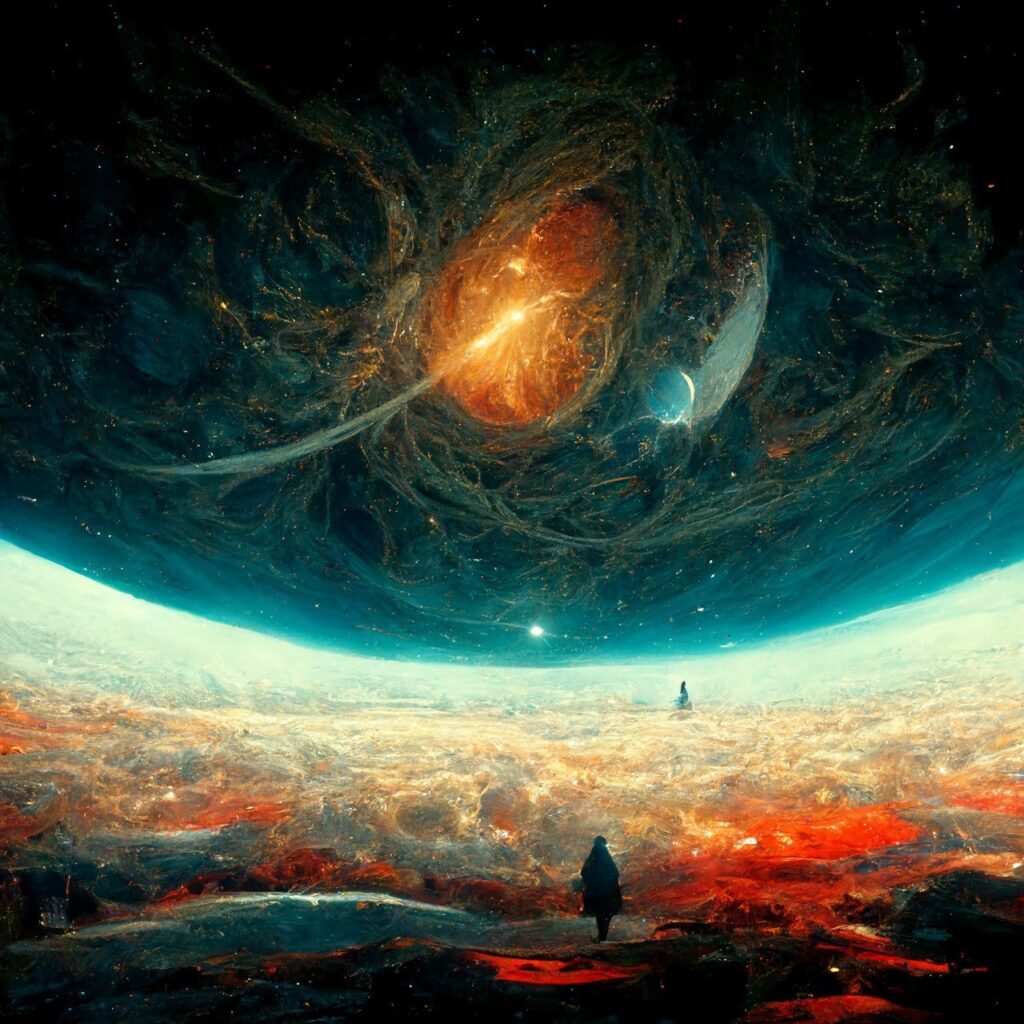
Although the Traditional worldview has always insisted on the “equal standing” — but not the identity — of the “two cosmoses” — the “objective” and the “subjective.” People rarely manage to find a balance between the “macrocosmic” and the “psychocosmic” perspectives: for some, the world is the objective “physical reality” and the mind is merely its epiphenomenon; for others, conversely, the psychocosm with its “archetypes,” “models,” and “complexes” appears to be the source and cause of the “illusory” external world.
At the same time, the harmonious development of the mind, which relies on its conduits and manifests itself through interaction with the objects of its attention, requires precisely a balanced outlook — an even-handed attitude toward the “objective” and “subjective” facets of reality.
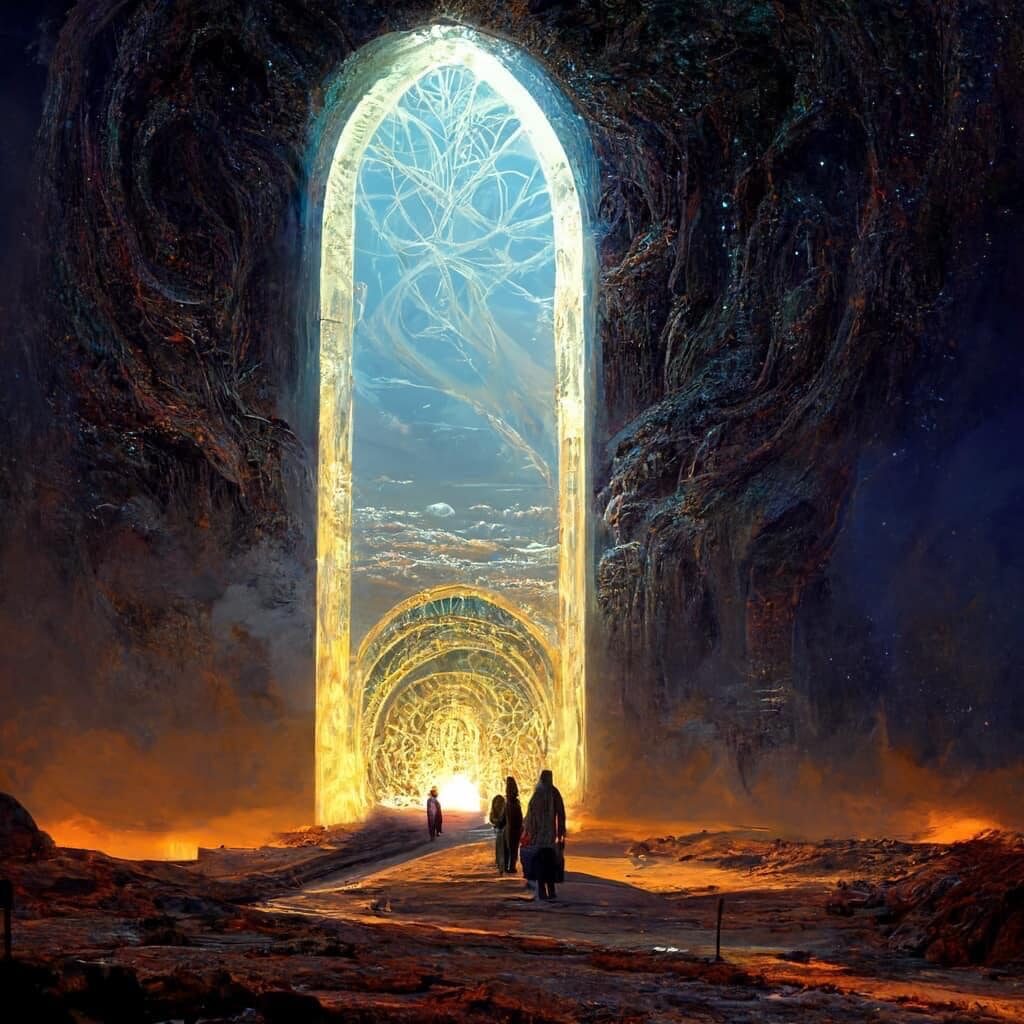
Indeed, on the one hand, the state of the mind and its level of development determine the “outer” world in which it manifests; on the other hand, in any of the “physical worlds,” one can observe manifestations of minds at different levels. For example, on the one hand, the Worlds of the gods are specific “slices” of objective universes, distinct and quite real for their inhabitants, populated by beings of the corresponding evolutionary level; on the other hand, in any of the worlds, one can find its own “gods” — beings characterized by the appropriate level and state of mind. Thus it is easy to see that in our human world, there are our own “inhabitants of the hells” — the poorest and most wretched groups; there are our own “hungry spirits” — people possessed by acquisitiveness and unable to be satisfied; there are “human animals” who live only by instinct; there are “people” who live by simple desires and see no life beyond the bleak cycle of work and home; there are our “asuras” occupied with “competition”; business “sharks” who dream of breaking through to the “peaks” and tear at one another for “career” — and there are our own “gods” whose lives are full of abundance from birth. And it is clear that both reality and its governing laws differ greatly for a slum-dweller of Nairobi and an inhabitant of an ancestral castle in Switzerland. In the same way, it is easy to find people with “human,” “animal,” “vegetative,” and even “mineral” levels of mind. One might even speak of people with the natures of vanir, alfar, aesir, or dwarves. At the same time, this in no way cancels the independent reality of the corresponding spheres, universes, worlds of retribution, or exalted regions. And of course, the “gods” of European royal houses and the gods of Asgard or Olympus are entirely different in their level of being, although they are analogous.
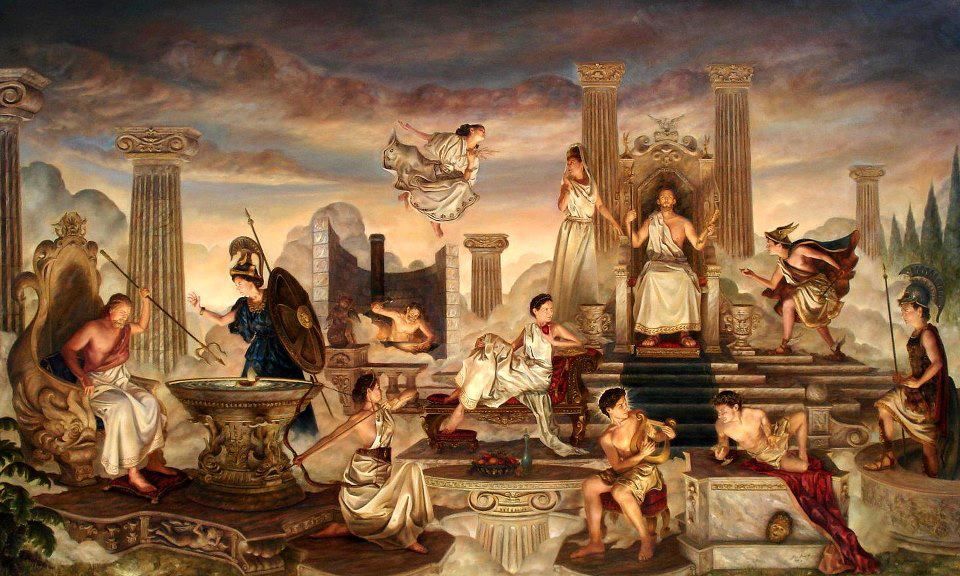
In each of the universes, one can find beings with different levels of mind — that is, living in their own “slices,” subspaces of that reality; and even among the gods, there are their own “infernal beings” and their own “animals.”
Whatever system or classification of worlds we adopt, we will likely find both corresponding spaces in the objective reality and corresponding levels of mind in any of the worlds under consideration. It is no coincidence, for example, that stages of development of mind in one eastern classification are called “lands,” “bhumi,” which reflects this duality: on the one hand, each “bhumi” is indeed a distinct sphere of reality, and on the other, it is a characteristic state of mind.
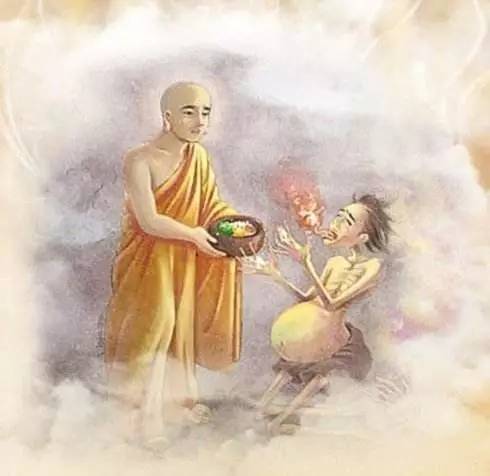
At the same time, it is by no means certain that a being inhabiting the animal level in a world of gods will later be reincarnated as a “god of the world of gods” or as an “animal of the world of animals”: the corresponding sub-gradations allow the widest range of conditions of existence and allow the needs of each stream of mind to be fully expressed.
When we say that in a “future incarnation” a being is destined to be born “in hell,” this can mean that it will be born somewhere in Somalia, or that it will be reborn in the world of Avichi. It all depends on the impulses, drives, and attractions created in the mind, and sometimes being born “a god” in Sheol is more favorable than being born “an infernal being” in Devaloka.
For a correct understanding of the process of one’s own development, it is important to see that both the personality and the conditions of its life are the product of the orientation in the stream of mind — what causes have been created in it and what drives have been activated. Accordingly, by observing these drives and impulses, we can determine toward which of the “worlds” our stream of mind is moving and, while there is still time, correct that movement if necessary.
Leave a Reply