
Objects of the Mind

Although the process of self-knowledge of the One reality requires a division of that unity into a knowing (subject) side and a knowable (object) side, this division is largely conditional and limited, since dual awareness is only an imperfect way of describing a single cognitive act.
In other words, both the subject and the object of the mind are contained within it, appearing only as temporary components.
Nevertheless, from a relative perspective, both the knowing activity and the knowable’s attractiveness are perceived as relatively autonomous aspects, and one even gets the impression of their relative independence from one another.
The magical myth describes this conditional aspect in terms of four binaries, ascribing four knowing activities to the mind and four knowable qualities to the knowable ‘environment’.
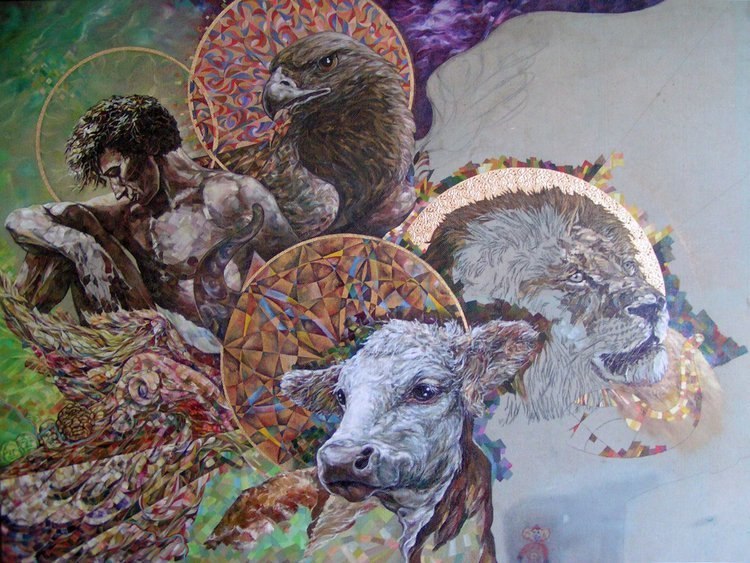
We have already mentioned that from this point of view the mind is capable of reflecting, evaluating, distinguishing and actualizing energies, and the properties of the “environment” corresponding to these manifestations are described as “the primary elements.”
We have already said that the knowing activity manifests as an assemblage of monads, while the knowable field of potentials manifests as an assemblage of energies.
The process of awareness begins when the mind perceives the energies it comes into contact with as something subject to objectification, that is, it reflects them. At this stage the criteria of “reality” and “form” arise as the mode of existence of that reality. By “form” are meant all the ways energies influence the mind, the totality of that influence as it is reflected in the mind. This creates the possibility that what is perceived as a real, concrete object is created.
At the same time, energies’ striving to be perceived and reflected is expressed in their tendency to form stable blocks and complexes, and this property is traditionally called the Element of Earth. Thus, the One Reality’s impulse to reflect itself constitutes the first activity of the mind, and the reality’s impulse to be reflected — the first Element of the Environment.
Yet this first binary already carries the first danger: once aware of the subject–object principle, the mind begins to divide the world into “I” and “not-I”, falling into separateness and the rejection of everything perceived as alien.
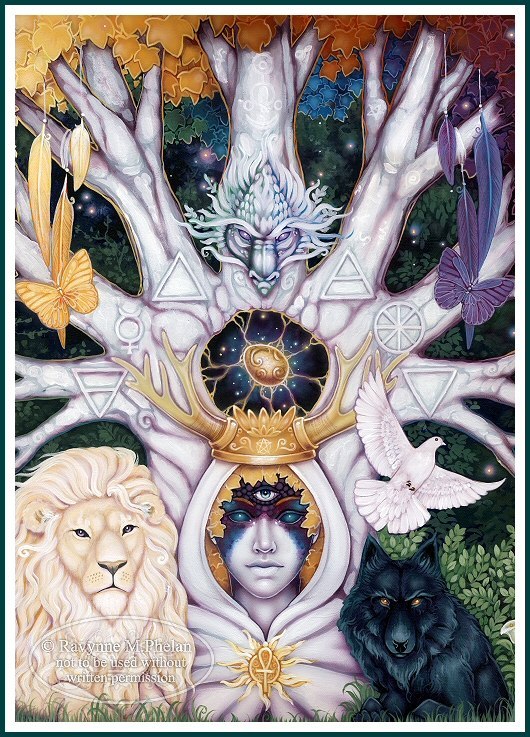
At the next stage the mind evaluates the influence of the perceived energies on itself. This influence can be perceived as “positive”, “negative” or “neutral”. In other words, the mind, having already affirmed itself in its separateness, begins to perceive the world as something autonomous and capable of affecting the mind itself. At the same time, this evaluative activity of the mind is mirrored in the energies’ ability to “dissolve” or “carry away” the mind, and such a tendency of energies to form a flow driven by the mind is described as the Element of Water. And at this stage the mind falls into the next delusion: it begins to consider itself “worthy” of “pleasant interactions”. Thus, separateness turns into pride.
Another activity of the mind is its ability to differentiate, to distinguish energies by their properties. This differentiation is expressed in the description of “color”, “taste”, “details of form”, “smell” and other properties. When interacting with energies, the mind describes their properties as separate categories corresponding to the possibilities provided by the mind’s vehicle. In the Environment this activity corresponds to the environment’s tendency to be differentiated, described and distinguished, which is called its “Element of Fire“.
At the same time, by focusing on separate details, properties and qualities of energies, and perceiving them as “pleasant” or “useful”, the mind becomes entangled in this multiplicity, clings to it, seeks to hold and possess it. Thus an attachment to manifested existence is formed.
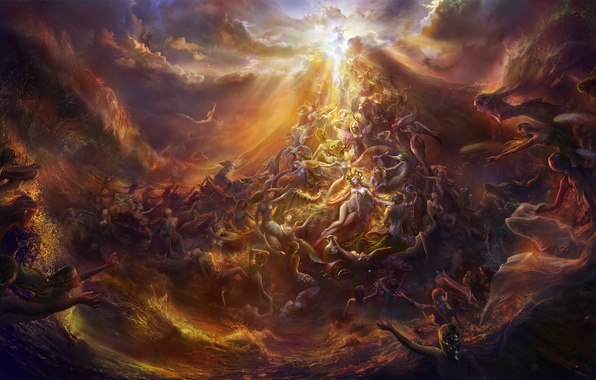
Finally, the mind is capable not only of perceiving new energies, it strives to integrate new perception into the picture already existing within it, and for this it creates a description that characterizes both the perceived “object” itself and its place in the “picture of the world” already present in that mind. Such activity underlies the further expansion of the mind, its move to subsequent cognitive acts, to further actualization of its potentials. At this stage the mind exists as a stream of images, clichés and models interacting with it and with each other. The environment’s striving toward such perception corresponds to its Element of Air. In doing so, the mind may fall into the urge to move only toward those blocks that seem “pleasant” or “desirable” to it, ignoring the inner logic of its development and its inclinations and desires. Thus action acquires an aim, and that aim begins to “justify the means”. Hence, greed, envy and jealousy appear.
Eastern schools, in addition to these four activities, ascribe to the mind an activity toward holistic cognition and to the environment a corresponding striving to be aware of itself in its totality, which corresponds to the Element “Space”.
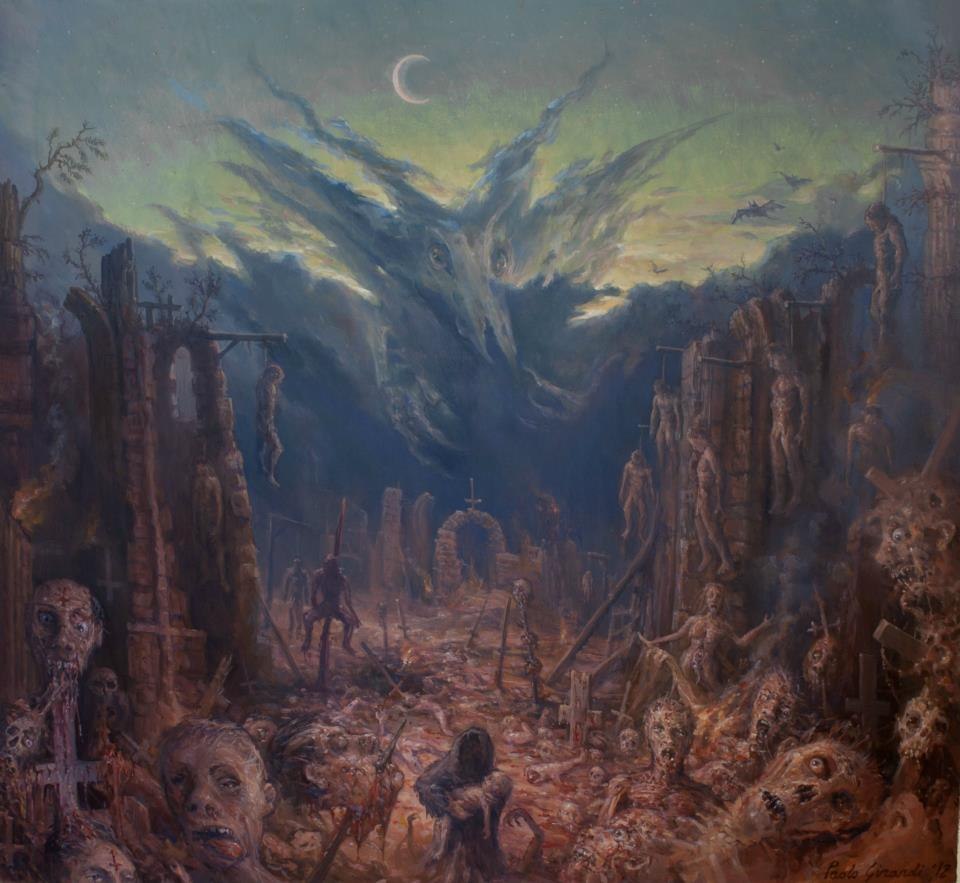
Thus, although the Myth asserts the regularity and purposiveness of subject-object relations and their various manifestations, it also emphasizes the importance of “unpolluted” perception, perception as such, in which the mind, reflecting a form, does not separate itself from it, evaluating an object, does not single it out as more or less important, differentiating an element, does not cling to it but, integrating that element into the overall picture, strives to do so as harmoniously as possible, acting for the sake of knowing rather than possessing.
Situated between these two possibilities — “pure” and “clouded” mind — the Magus can find impurities within himself, cleanse them, and thereby open possibilities for further actualization. By being aware of the world from the standpoint of his unique individuality, in his unique way, the Magus does precisely what constitutes his nature — the nature of potential infinity becoming actual.
Dear Enmerkar, if I have been baptized since childhood, it turns out that I am under the Christian egregore. Does this complicate my path and connection with Slavic and Scandinavian gods, is it worth performing a de-baptism ritual?
I will answer, despite the off-topic. Our freedom and our slavery are within our consciousness. To which egregore we belong and whether we belong at all depends only on how our consciousness is set up. If we consider ourselves slaves – we are slaves. And no one can do anything to us if we are convinced of our inner freedom. The connection with any gods, as well as with any angels or demons, is facilitated only by the internal attraction to this connection. The ritual only consolidates consciousness in some position, but consciousness enters and exits this position of its own will. And no oppositions, no demarches in this sense are important. If your consciousness is weak and cannot independently choose the Path, then no Ritual will make this choice for you. If, however, you have enough strength and desire, you will be able to establish any connections that seem necessary to you, without any de-baptisms, just as well as to break those connections that seem superfluous to you. The ritual can only confirm the step, but it is we who do it ourselves.
And how to understand (in the sense of knowing without a shadow of a doubt) that you are not a character who is aware of what is given, but consciousness + energy? To be a character is such a slavery as I see it, horror. I cannot understand why knowledge must necessarily be connected with being squeezed into form-time, it could probably be done without identification.
Understanding is very simple and, at the same time, complex. For this, you need to look deep within yourself, under all the masks and images.
A person who has not even reached the first stage of enlightenment has written numerous articles about enlightenment itself, how he perceives it, and the path to its attainment, which he believes is effective for himself. What is this, if not philosophy?
However, this is the wisest thing I have read among Russian-speaking authors.
The article contains such phrases that suggest the author is already close to the first stage and, perhaps, after some time, will provide wise clarifications on the matter here: “both the subject and the object of consciousness are contained within it, appearing only as conditional components.”
Earth and immediately Air: It is interesting at what stage of enlightenment one reaches a state of non-judgmental judgments, without personal attacks. And when something is unclear, you simply ask a question?
Let me try: Isn’t enlightenment total? How can this be the first stage? Like, the body shines, but the soul doesn’t yet? Or like this: the soul is bright, but the body is spotty. Or maybe like this: the muladhara (root chakra) shines, while the rest flickers. Or maybe, at night – enlightened, during the day – only if on the second stage.
So, there is a cognitive act where the comment by maarjaarahdeva is the object of knowledge, and I am the subject of knowledge. It’s clear that this comment by maarja is a part of me, as much as I know it. We are one. Touch wood.
Water: Why did I choose this particular comment for reflection?
It bothered me. I didn’t like it.
Fire: Especially the “even.” The tone is arrogant. A person evaluates themselves as at least at the second stage of enlightenment, has insulted Russian-speaking authors, dismissed Enmerkar’s experience as mere theorizing, while citing an assertion that is quite obvious as needing clarification. They didn’t say anything “smart”; it remained somewhere off-screen, for the particularly initiated.
So why did it bother me so much that I spent time on it? Is it really because such a maarjaarahdeva sits within me? If this part of me exists – why do I need it? What is useful in it? And how can I cleanse this murkiness?
Most of your comments are muddled. I don’t know how to clear this up. But there are fair questions here. I respond: enlightenment is not total. The first stage is a conditional gradation, used for the convenience of description. Specifically, it means the visibility of the illusory nature of logical mind. And don’t worry about unity. I am not ‘inside’ you. Because ‘you’ are just a temporary formation and after the death of the body you will dissolve like smoke.
I would like to point out that ‘I’ is a much more ephemeral formation than life. Any ordinary person changes numerous personalities and sub-personalities throughout their life, and the apparent unity of their mental flow is maintained only by the ability to remember. And it is precisely the tendency to consider this flow as something unified that leads to its disharmonious flow. It is very important to learn to understand that consciousness is not a substance, not an object, but a process, and this must be understood not to achieve any degree of enlightenment, but to reduce disharmony, to reduce suffering, ultimately – simply because it is honest. Understanding that we are a process, the view of a single reality on itself, we understand the value of this view, which means we open ourselves to the possibility that the opportunities that this way of self-knowledge of the One possesses could be maximally utilized. And it is precisely the experience of how these opportunities can be used, how one can realize oneself that I am trying to describe in this blog. Of course, everything written here is a private experience; there are as many paths to self-realization as there are perspectives cast by the Great Spirit. Any words are just words, and, in fact, what matters is not so much the words, but the state that we are trying to transmit through these words. Thousands of books speak about the same thing, thousands of people describe their experiences, merely the experience of a private process striving for self-awareness as a process. The task of the blog is not to teach, enlighten, or brighten. The task is to show what the experience can be like. And the best that can arise in response to this is the reader’s desire to try to build and walk their own Path, to find and realize their own perspective – their unique way of self-knowledge of that which is beyond being and non-being, that which is beyond darkness and enlightenment.
Well written. What people have within themselves as consciousness – is a process. So much has been written about enlightenment, but so little understanding of what it really is. Neither a separate process nor a thousand of them represent any value. And the process cannot stop its suffering until it ceases to be a process. Your blog is good for those ‘processes’ that have just begun their Path. But has it managed to bring even one of them to a life without suffering? And yourself? For those who enjoy scribbling from under the skirting board on elephants, I’ll add – Enmerkar has undoubtedly reached heights of understanding and is respected by me, but at this moment the subjects of some of his articles lag behind his ‘awareness’. Disharmony results.
The process can start and can end. It can last (or it may not). The process is simply presence in prolongation. And yes, presence can also be without prolongation. When there are separately the possibilities of suffering and the possibility of non-suffering – there is no integrity. When we move toward realization, when our consciousness ceases to be ‘our’ consciousness and becomes an all-encompassing pure presence, it can discover that this presence includes both suffering and its absence, being neither, but including all possibilities and exceeding them.
“Understanding that we are a process, the view of a unified reality on itself, we understand the value of this view” – your words, you also answer the questions: “the value of the process? what is it? for whom? who determines what has value?” “When we move toward realization” what exactly is the unified reality trying to realize through you? What does it lack for complete happiness? “Your text implies that you got rid of both the process and the sufferings”. They do not rid oneself of the process; they subordinate it. From sufferings – well, indeed, because all of them stem from illusions. You have an illusion that some activity will lead you to where “our consciousness ceases to be ‘our’ consciousness and turns out to be an all-encompassing pure presence.” But it cannot cease to be either yours or ours. It has become laden with aspirations and desires and drags them along to a place where there are no aspirations or desires. “What is the purpose of your comments?” I was interested in communicating with an intelligent person. Sometimes this happens.
The unified reality lacks nothing and seeks to realize nothing. It is simply free from all limitations, including the limitation of ‘not striving’, ‘not wanting’. The unified reality has no antitheses or oppositions; it contains everything, including the possibility of our imperfection 🙂
“Enlightenment is not total.” Yes-yes, like a little pregnancy or a touch of musical hearing. )) And who has been enlightened and at what stage?… )
I, too, am increasingly interested in where all these so-called ‘enlightened’ are. And where they shine and to whom. It’s hard to see them in this world – neither their deeds nor their very selves. In the world, for some reason, not ‘enlightened’ people act, but very ordinary people. In their mistakes and so on. ‘So why did he touch me so much that I dedicated time to him?’ Obviously, because the comment provokes. As can be seen, it touched me too. 🙂
In the Himalayan caves in samadh(i). And, by the way, without the internet!))))))))))))))
What are they doing in their Himalayas?! Enlightened meditation on higher dimensions? o.O Why? If they reincarnated in this hellishly corrupted world? Maybe they’re just very weak and are afraid to enter it?
An old joke about an eastern enlightened being: – I know how to save the world. – How? – I won’t say.
)))))))))))))) Yes, I won’t see the first stage, since the logic seems to be all right. It laughs: why can’t your temporary formation sit in my temporary formation, and why can’t this process in time be shared with the process of our ‘dissolution like smoke’? Generally, sit, sit. You still do sit. After your response, I became even more convinced of this. P.S. Regarding the recent conversation about fields, seeds, and weeds, I remembered the advice of an experienced farmer: if you see a pile of manure – bypass it. I suppose there’s still such a piglet in me! 🙂 Regarding my ‘fair’ question and your answer, I recalled a story by Osho, which allow me to retell. Once, Osho visited a sect, there the guys were trying to build something more grandiose than the Taj Mahal. They constructed a tomb for their guru, where they designated 15 stages of enlightenment. Moses and Muhammad were on the 4th, Jesus on the 5th, Indian fellows with Buddha on the 7th-8th-9th, and their guru – on the last, the 15th. Osho saw this and told them that they were mistaken. That the stages of enlightenment are 16, but their guru was not aware of this, so he did not tell them. But he, Osho – is on the 16th and he tells them this. When Osho came to them again, he saw that the map had been corrected, there were 16 stages and the guru was sitting on it. Osho said: yes, that’s right. But do you know why this became possible? Because I am now on the 17th and I made space for your guru. And laughed. And in general, you are fools. Because I don’t need your stages, I fly.
No, Theo, it touched me because it’s provocative – not an answer. When I first read this article, an association with an unfinished (the terminology is too foreign to me) book by Erich Neumann ‘The Origin and Development of Consciousness’ came up. And the book by this author that inspired me the most is ‘The New Ethics’. Roughly and simply put, the essence, as I understand it, is this: the old ethics sets ideals that every person should strive for. Any discrepancy with this ideal leads to external and internal conflicts, suffering, and desecration of human nature and life. Furthermore, these troubles are compounded by conflicts arising from the fact that in different societies and at various times ideals differ. Hence, the endless comparisons, assessments, disagreements, strife, and wars within a person and in the world. The new ethics proclaims the ideal of harmony within each and in the world. I think I was touched by the fact that maarjaarahdeva’s comment is in the spirit of this very old ethics. Of course, the stages have nothing to do with it. I intellectually understand that the enlightenment of maarjaarahdeva can be staged; why not? But these comparisons, evaluations, skirting boards, elephants, and moles – are these from enlightenment? Something more than knowledge clearly says: no. But still, why did it touch me? I guess, such maarjaarahdeva is sitting deeply in the unconscious, still faintly tracked within me, but I see it in another. Well, thank you for the hint.
Why do you think that if something touches you, it must be within you? A mosquito flew in and bit me on the butt. Does that mean there is a mosquito in me? o.O
I do not relate myself to the myth of enlightenment. I have already told you why; many of its benefits for me are excluded by the fact that women do not achieve enlightenment, according to the consciousness that manifested this myth. One can puff up as much as one likes, but I fully realize that my current consciousness is NOT CAPABLE OF CREATING A MYTH. Or outplaying the one in which I will be located. But we can choose from birth. However, I feel this myth well enough to suppose that the first stage is the absence of separation from my butt (and there is, since it is spoken of as something whose name cannot be pronounced). And the second, for example, is separation from the mosquito. Well, I’m just joking of course, but the logic is roughly like that.
This is a good question for me. If briefly, it is like a symbol of faith: the inner is similar to the outer. A mosquito bit, but one person didn’t notice, another mechanically – snap! and forgot, the third – a blister, and another – cussed out the whole world. And there are such butts, they say, that mosquitoes don’t even sit on them at all.
Any faith can certainly be tested in practice. Of course, you can say: ‘if a mosquito decided to bite me, then I provoked it with my negative behavior, or the chemical formula of my blood.’ But in fact, female mosquitoes bite simply because they need to reproduce. And they don’t care what you think of them. You are just material, a resource for them. And no resemblance or dissimilarity interests them.
I will try to explain my understanding of this issue in a chemical paradigm. Remember, when we drip phenolphthalein into an alkaline solution, and the clear solution turns pink. For two substances to interact, there must be a certain affinity. This ability to contact, to influence is conditioned by the internal composition and structure of the substances. So in my case, if there is something in the external environment that grabs me, then inside me, there are ‘hooks’ to cling to. There’s no need to take it so literally about the mosquito in the backside. And of course, a whole maarjaarahdeva isn’t sitting in me either. I generally can’t judge maarjaarahdeva as a person, as an individual. I have not seen him, heard him, smelled him, or touched him. I haven’t even read his Russian texts. I can only judge based on the comments, on the energy he carries, on his influence on me. After all, I could have just walked past. I know I’m not able to influence maarjaarahdeva in such a way as not to breed such a stench here. But I can express my Fi! and I have.
There is a rational grain in this. If we dig deeper, we all living here are organic at the basis of our biology, that is, carbon in the composition, as well as other chemical elements from the periodic table. However, in fact, all this common organic matter is nothing more than a platform for interaction. Which mosquitoes use for parasitizing.
I agree, however I meant not the material. I brought in the chemical interaction as an analogy. Maybe this short cartoon will better explain what I meant: https://www.youtube.com/watch?v=nw9T2lSQlPk The issue is not in someone else’s comments, the issue is in my reaction. That is to say, it’s within me. Roughly speaking, I do not immediately see the same value in a fly as in a cherry blossom. Only having been indignant, and even publicly, does it dawn on me that every fly has the right to buzz as it can.. according to its step on the path to full enlightenment 😉
Oops!! Seems I’ve caught it! This indignation – a useless waste of energy – is akin to the energy of the comment by maarjaarahdeva that “disturbed” me. That’s what I was talking about!
maarjaarahdeva – do you write somewhere? It would be interesting to step forward through your focus of consciousness. And what are the stages of enlightenment? In what space do structural changes occur? What is the axis of the stages of enlightenment?
“It doesn’t matter what the Man has achieved. What matters is that the Man has achieved something.”
Isn’t there a unified reality?
It depends on the point of view 🙂
Our Separateness is total. Even a Deva descended from Devakan and immediately separated from those “under the skirting board” How tempting it is to think about what stage of enlightenment we are on now. Our perception is one-sided. We only live on the pole of separate objects. In the world of eaters and victims, which we are as well. We are sinful from birth (if someone disagrees, I ask for forgiveness). Eaters and victims teach their offspring to perceive the world similarly to their own perception. We can write any beautiful paragraphs, but the picture of the world does not change with words. We have not seen, not heard, not touched, not smelled, and not tasted that same God who is Love. We cannot share “our” love because it is only “ours”.
“For the possibility of uniting. For love, I am divided, divided” – Where are the boundaries? Many? One?
This is like some kind of anthem. I really wasn’t going to say this, I can’t even imagine how the words resonate in the minds of those who think in the opposite direction. And I remember, I didn’t hear anything at all until I had the corresponding experience. Recently there was a conclusion that each fly can buzz. That’s true, and it can be said quite ordinarily that such a conclusion brings us closer to God, the Absolute, or however it is convenient for you, to yourself and to enlightenment. Because I haven’t seen the earth open up under anyone, even the most evil. And if the world is like this, then who am I to judge. Regarding the question of violence and whether to endure it now. Well, not really, one just gets up and changes the place. The ego and a strange mechanism, the desire to complete the experience and for a person to change make us endure violence. So, everyone can express themselves according to their level of enlightenment. And here about flies. I saw this and understand that loved ones might also turn out to be a fly. Because they can say and do things that will not be to one’s liking. And also about the fact that a person is not just cherry petals or a fly, but everything together. And the inability to embrace it all and love it is mainly what’s called the absence of love. I’m not a proponent of enlightenment as an idea, it seemed to me fanciful and pointless. But if without it, one’s ego hinders love, well then, okay.)