‘Past’ and ‘Future’ Lives
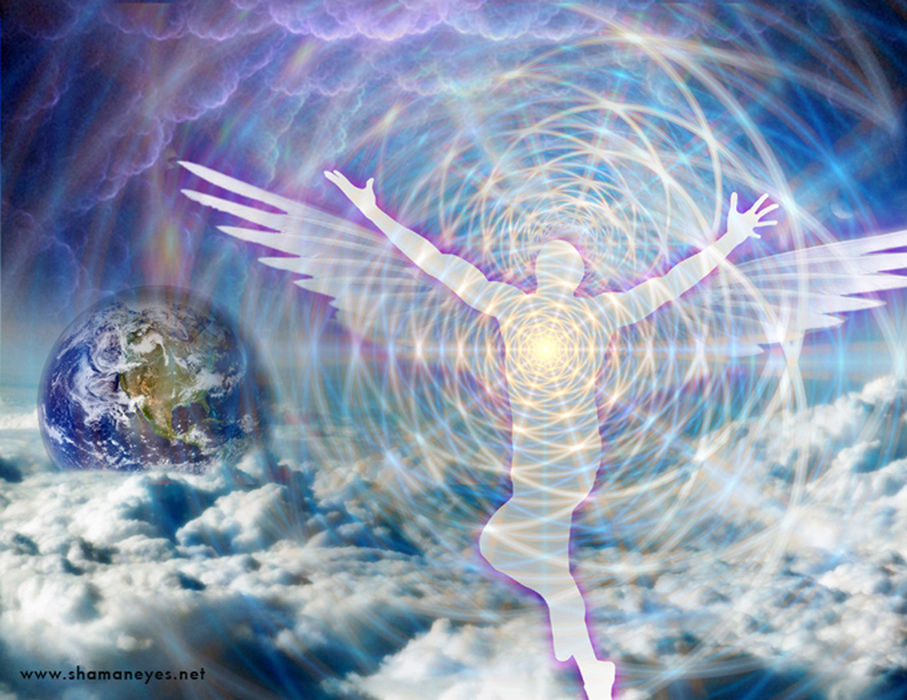
The popular theory of “rebirth,” the transmigration of souls, which implies the “reincarnation” of some stable unit of consciousness, is merely a therapeutic device intended to overcome the fear of death and is not supported by either empirical evidence or logical analysis.
People often say that day follows night, and life follows death. But all these ideas rest on a fundamentally false sense of the continuity of personality. The personality that lived in a “past” life vanished with the end of that life. The personality that speaks of the “present” will cease to exist entirely after death. Whatever remains is certainly not the same as the ‘I’. It is very important to understand that continuity of the flow of mind does not mean continuity of self-identity.
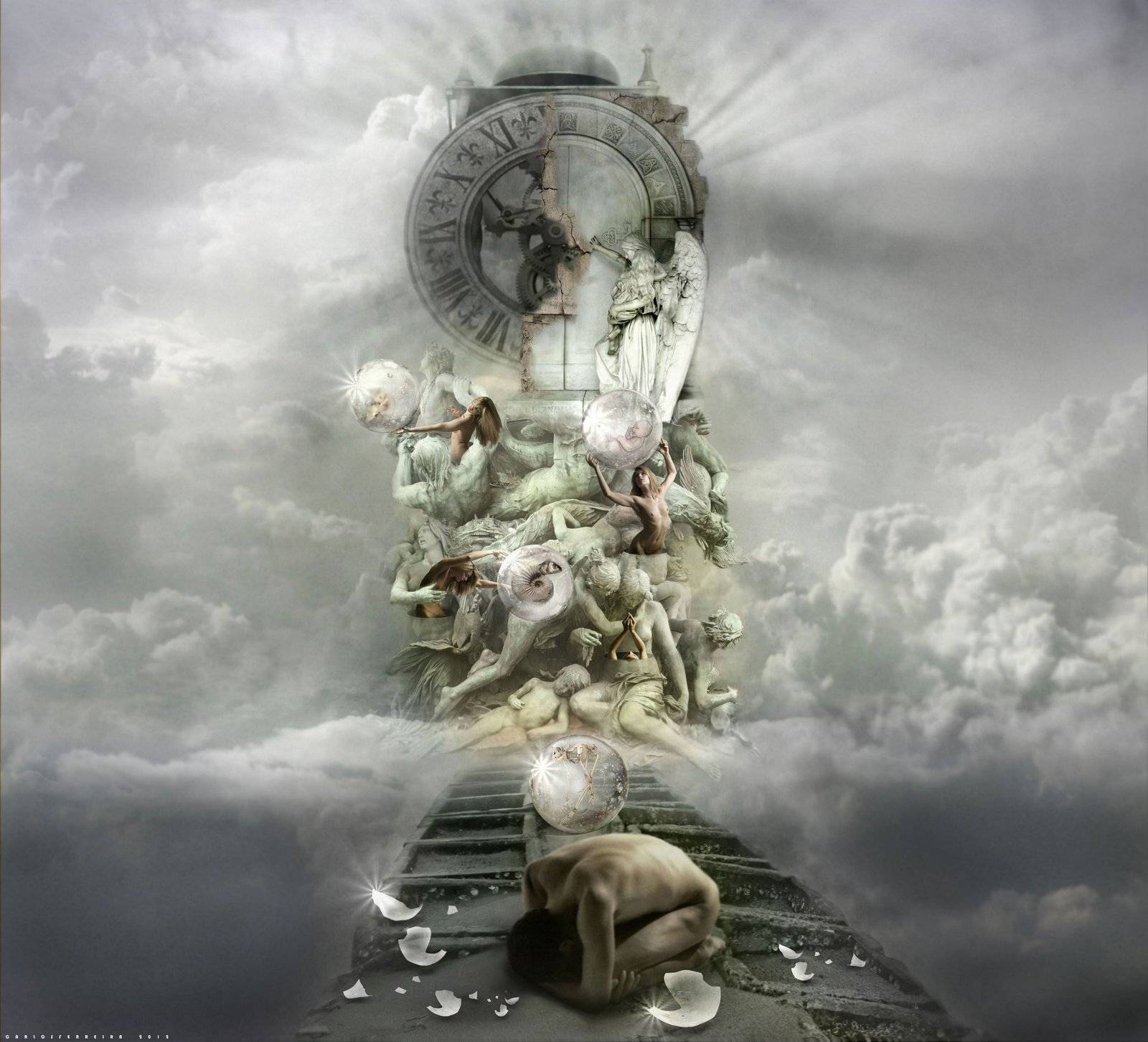
Indeed, to believe that “I will be born again” or to think that “after death I will enter heaven” or Valhalla or some other place where I will continue to exist as a person is attractive but highly doubtful even on superficial analysis, not to mention the experience of sensing energies. It is easy to notice that even within a single life the mind is heterogeneous, fragmented, and maintains the illusion of wholeness only thanks to its anchor in the body.
The apparent unity attributed to contradictory and conflicting manifestations of mind, subpersonalities and personas is provided only by the anchor in the “same” body as the central element of self-identification.
And although the true basis — the authentic integrating factor of the stream of awareness — can (and should) be its individuality, in practice it is usually identified and manifested too weakly to survive the psychophysical shock at death.
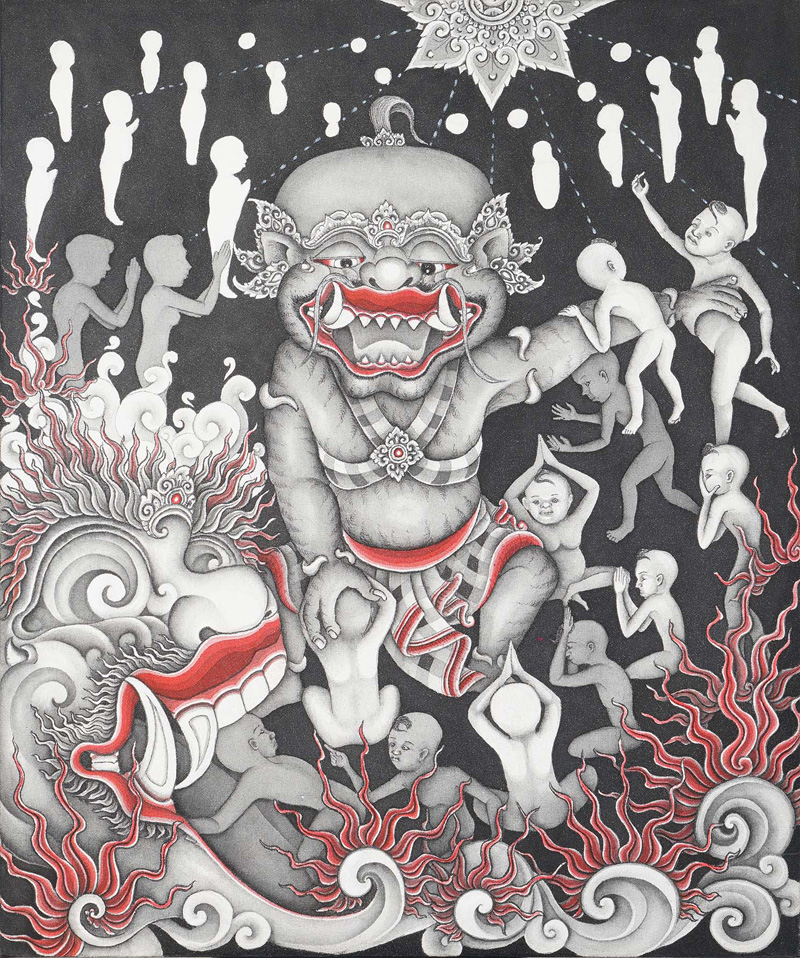
Therefore, when after the death of the body the cluster of consciousness loses this anchor, it typically dissociates into separate parts that are either drawn into new currents or gradually disintegrate or degrade.
Accordingly, no successful afterlife is possible in such a situation.
In order to successfully navigate the intermediate state, one must, during life, build a stable structure of consciousness that will survive without an integrating anchor in the body, pass through all stages of disembodiment, and be able to return appropriately to embodied existence in a new body.
The cycle of births and deaths by itself is not true immortality; it is not eternal existence but an endless repetition of the same mistakes, the same sufferings, the same falls. And if one thinks it through, this cycle in its ordinary form is far worse than final death or non-existence and destruction, since non-existence at least signifies the cessation of suffering.
And to turn this endless repetition, this senseless carousel, into something purposeful and ordered — to turn the circle into a spiral — we must constantly strive for self-awareness and improvement.
In fact, all religions and teachings that support the idea of “reincarnation” also understood and taught this idea of the “illusoriness” of the “immortal soul.”
Kabbalistic texts abound with mentions that one person “contained a fragment of another soul.” For example, many saints, tzadikim, held in their minds “fragments of the souls” of other significant teachers — Rabbi Akiva, the Baal Shem Tov, Moses, Solomon, and others, and often of several of them. For instance, one of the founders of Hasidism — Rabbi Boruch of Medzhybizh — was said to bear in his soul “fragments” of the souls of both King Solomon and Saul; the soul of one of the law teachers — the tanna Rabbi Meir — was present in the personality of Chaim Vital (a student of Isaac Luria) as well as in his grandfather and son; and the prophet Elijah was considered the “incarnation” of the soul of Pinchas, son of Aaron.
In the Buddhist tradition of seeking and recognizing “reborn” ones — tulku — there is an even greater variety of such observations. For example, the mind of the famous teacher Jamgon Kongtrul resided in five or twenty-five simultaneous incarnations (and is currently represented by two tulkus).
Thus, experience shows that it is not easy (and not always desirable) for a flow of mind to preserve the permanence of its composition from life to life.
When, during a single life, various attractions, clusters of interests and motivations accumulate within it, it will most likely split into several streams once freed from the body’s “integrating” basis.
Conversely, related currents that were previously located in different beings (and possibly even in different worlds) may converge into a single stream, into one “personality,” if their basic vectors coincide.
From a deeper perspective, the “merging” of separate sub-streams of impressions — “streams of mind” — into a new system nevertheless occurs on the basis of a single individuality, onto which related vectors of mind are overlaid. And if that individuality is recognized, identified and used as an anchor, it becomes the foundation of the “I,” which nonetheless remains only its epiphenomenon. Individuality is a characteristic of the flow, a set of its basic properties, not evidence of a permanent composition or some stable “substrate.” And if in one life a flow with these features may be formed from one set of psychic elements, in the next the same “package” may be entirely different.
So the “immortal soul” is exclusively the product of the mind’s work on itself during life, and the degree and “extent” of that “immortality” are determined precisely by its efforts.
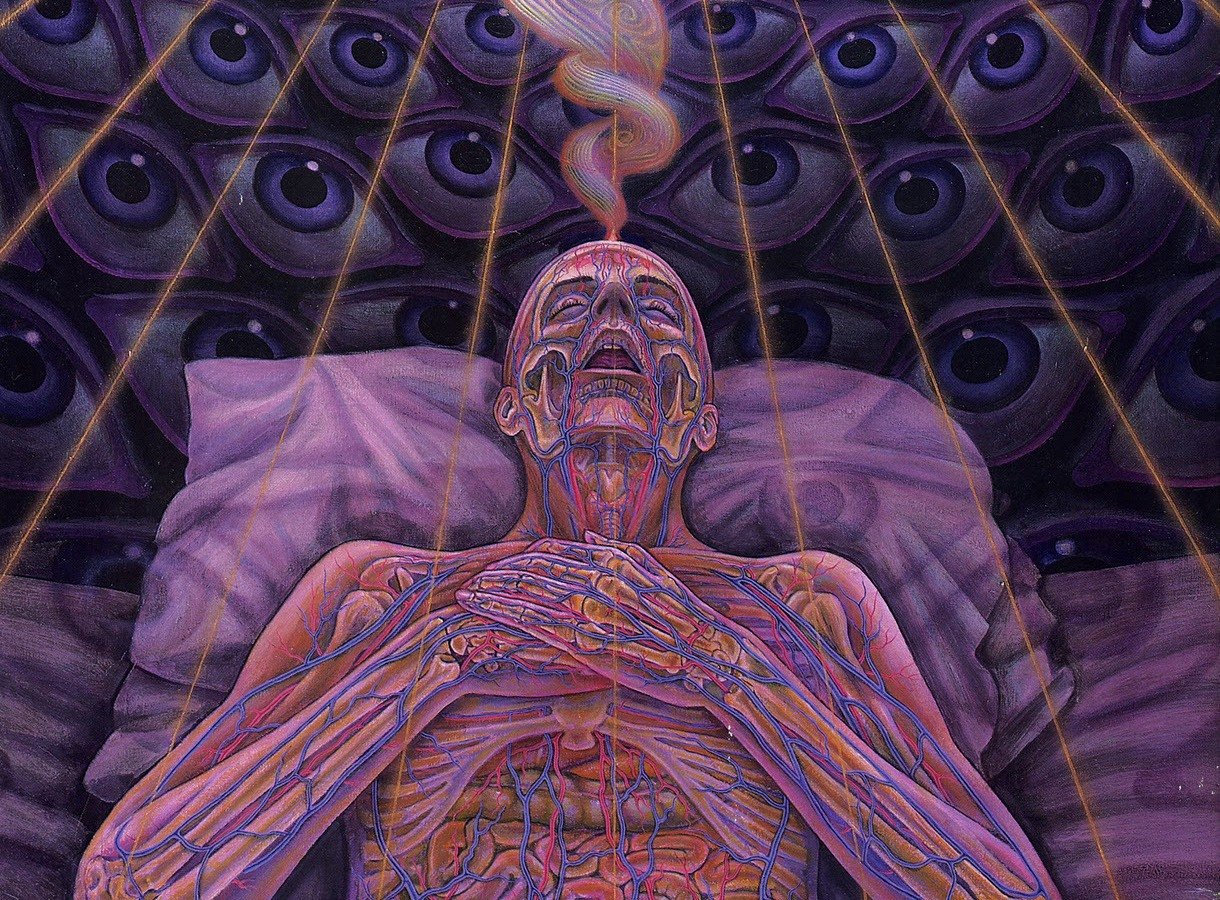
The cycle of births and deaths has no beginning, and it has no end. If we suppose that certain actions or efforts, or, on the contrary, inaction and relaxation, are capable of extricating “someone” from this cycle — we are mistaken: the cycle exists by and for itself. If we think one can escape it by rising upward, or conversely by descending into the depths — we are mistaken. The cycle has no exit, just as it has no entry. Only what has a beginning has an end, and a beginningless cycle is therefore endless. It is an error to suppose that there exists an “individual” who has “fallen” into the Gilgul and “resides” there. Gilgul is a dynamic flow of consciousness, eternally changeable and impermanent. And before the mind two paths are open — either to continue the endless rotation, the eternal regroupings and infinite repetitions, or to find that which never entered this cycle and identify with it.
Enmerkar, thank you for the article, excellently written, clear, concrete, and on point.
Thank you very much for the article. Is there a description on the site of various existing paths to work with consciousness to exit from rebirth?
Yes, there are: https://enmerkar.com/en/way/two-wings-of-liberation https://enmerkar.com/en/way/three-ways-of-liberation https://enmerkar.com/en/way/liberation-in-a-single-life https://enmerkar.com/en/way/pleroma-the-great-perfection https://enmerkar.com/en/way/citrinitas-enlightenment-for-oneself
Thank you very much.
It is the Ego that centers consciousness, it is the axis, the support upon which past and future experiences are strung, forming a continuous flow that in the physical world can manifest as ‘kin,’ but in the subtle world, they are lines of the Míra, as spoken by the wizards of Don Juan’s line.
It is experience that centers consciousness. The ego is a currency.
Individual ego experience, undoubtedly. The ego of any level – sub-, super-, or just consciousness.
“I am faithful to the dark covenant: ‘To be wholly engaged in the struggle!’ But the Serpent, Who sowed in us the will for light, commanded to love, saying: ‘Kill.’ I fear not earthly sorrow: If you demand to kill – I will kill in love. Whoever has fallen into your spirals – There is no way to non-being for them. I am all – an attentive ear, I am all – the frozen noon of the day. The seed of spirit is inexhaustible, And my flesh is a sprout of fire: Let a drop of life sink in the sea – I cannot dissolve in death. My flesh will not succumb, The mask of a corpse will not deceive, And being will not cease For neither me nor another: I was, I am, I will be again! My journey is eternal. Maximilian Voloshin. July 11, 1910
“The apparent unity of contradictory and conflicting manifestations of consciousness, subpersonalities and personas is only given by relying on ‘the same’ body…”
Dear En, what is meant by the term ‘subpersonality’? How can it or they manifest in a person’s current incarnation? Are there useful subpersonalities? Is personality splitting an extreme when a subpersonality from a past incarnation dominates the current one? Thank you.
Subpersonalities are any stable states of the psyche; very often these states do not harmonize or even contradict each other, and then people sincerely wonder, ‘How could I say/do that,’ looking from one subpersonality at the actions of another. And yes, multiple personality disorders are an extreme case where subpersonalities diverge so much that they gain independence from each other, but to a lesser extent, such fragmentation of the psyche occurs very often.
Thank you for the answer. What could be the reasons for the emergence of subpersonalities? Is it related to ‘past lives’ (besides cases where fragments of someone else’s soul incarnate with, so to speak, your soul)? Or can they only form in the current incarnation?
No, subpersonalities are simply the result of disharmony within consciousness itself, its inability to maintain integrity in various situations and under different influences.