Regions of the Duat
The concept of the septenary structure of the causal sphere appears across many mythologies and cultures. The seven levels of Irkalla in Sumerian myth, the Seven Arit and Gates of the Duat in Egyptian tradition, the seven lokas of Hinduism, the “Seven Circles of Hell” and the “Seven Heavens” of Judeo‑Christian lore — all portray this sphere as the plane in which the Seven Secondary Causalities manifest. The earliest such accounts are found in the Sumerian myth of Inanna’s descent into the underworld, attested at least from the Third Dynasty of Ur (c. 2111 BCE), and analogous Coffin Texts and the Book of the Two Ways of the Duat are known from the Middle Kingdom (2034–1785 BCE).
In other words, the visionary and spiritual‑mystical experiences of widely different cultures, eras, and Traditions converge on the conclusion that the Interspace’s potential space is organized according to a heptarchic principle.
Buddhist ideas about the Shitro Deities may seem distinct, since their underlying structure is an eight‑part mandala; in fact the difference is one of perspective. According to the Buddhist doctrine of anātman, mind is conceived as a shared space structured by mandalas of the Enlightened, and therefore does not seek a single center of perception but describes the field from the standpoint of the primary principle of manifestation — the quadripolar quaternary.
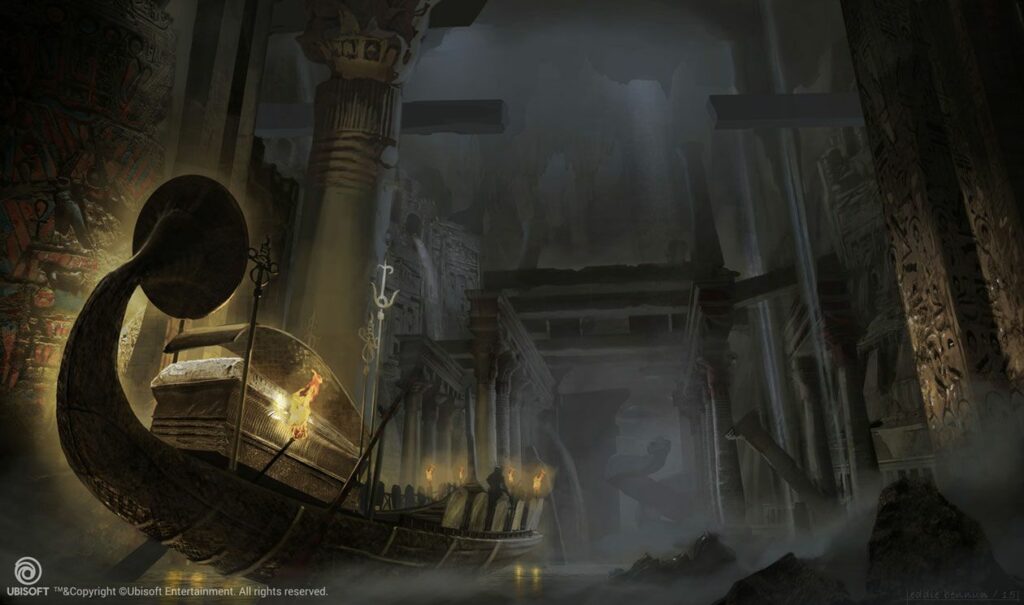
Meanwhile, the ancient Egyptian perspective singles out the “observer” as a distinct unit around which the description of causal space is constructed. Since this space is perceived as a field of potencies, it is separate from the observer; and if, together with the observer, it composes the same ogdoad — the quadripolar quaternary — then, when considered “in itself”, it becomes a septenary. This is well illustrated by the Egyptian myth of the murder and dismemberment of Osiris by Set: the body of the God of Life was cut into sixteen fragments, of which Isis recovered (and buried) fourteen, while two (the genitals) remained lost (and therefore required replacement). Since the Otherworldly reality — the Duat — is, in effect, the Body of Osiris, it is unsurprising that fourteen regions — Aats — were distinguished within it, and that the fertilizing principle is enacted by the Solar Barque bearing the God of Heaven, which periodically descends there.
Overall, the number seven recurs in this context: in the ancient Egyptian Book of the Dead (chapter 144) and the Coffin Texts (the Book of the Two Ways) there are mentions of seven abodes (Arit), each with gates, guards, gatekeepers, and messengers. Ra has seven Ba (one for each sphere) and fourteen Ka; before Osiris stand seven gods; the goddess Hathor bears seven names (bodies). The fourteen Ka of Ra (and, apparently, of Osiris) and the fourteen Aats arise as a “double seven” because the fertilizing activity of Heaven has two manifestations — “daytime” and “nighttime”; thus, seven regions of day and seven of night together yield fourteen realities.
These regions, however, are distinct causal layers — separate causal activities — divided by special Facets — Gates — the crossing of which requires particular knowledge and effort.
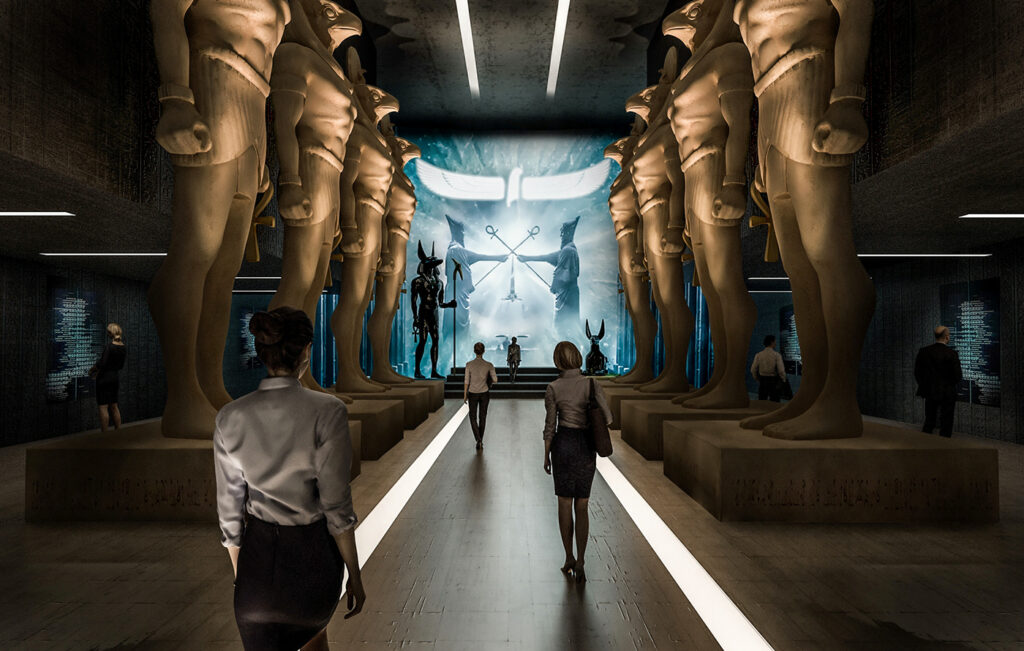
The Coffin Texts state that, to attain immortality, the souls of the dead (their ka) travel to the barque of Ra (where the bas reside), yet special trials, beings, and Gates arise as obstacles on their path. Each Gate of the Duat is represented by a Gatekeeper, a guard, and a messenger, and for the dead to pass safely the dead must know the Gates’ names (which remained unchanged from the Coffin Texts through the Ptolemaic period), as well as short invocations — spells.
Often in the texts each Gate appears as a Goddess — that is, a special force immanent in the Duat, which can manifest as helping or hindering depending on the knowledge of the Traveler.
For example, the guardian serpent (uraeus) of the Third Gate is named “Sting”, while the portal itself is the goddess “Mistress of Food”; the Fifth Gate is the goddess “Lady of Duration”, and their guardian uraeus is “Flame‑Eyed”; the Goddess of the Seventh Gate is “Shining”, and at the Twelfth Gate, marking the final stage of the wandering, stand the great goddesses Isis and Nephthys in the form of serpents.
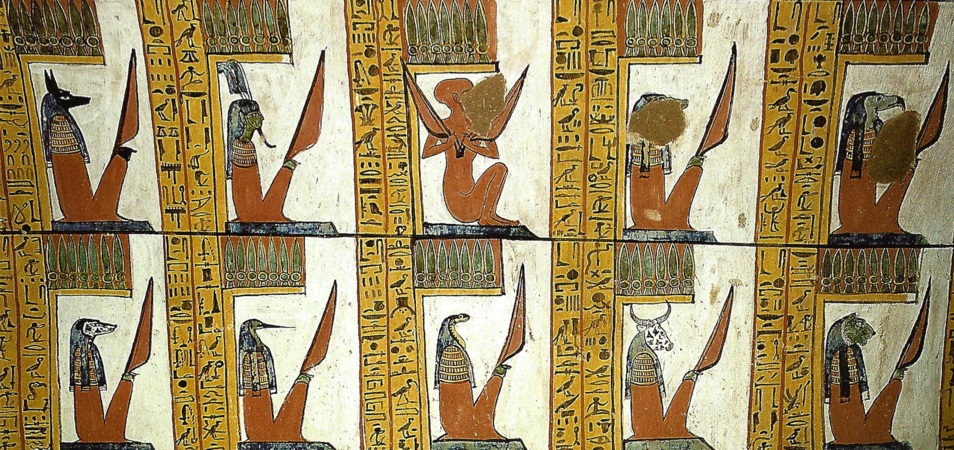
In illustrated New Kingdom papyri, doors to seven spaces are often depicted — special Halls, each labeled with its corresponding number. As the sources describe, “The Aats are sealed like seven chambers”, and the shrine of Osiris at the temple of Dendera had seven doors. One can distinguish the space “inside” such a “cave” and “beyond” its boundaries; accordingly, seven inner and seven outer spaces yield the same fourteen regions.
It is therefore unsurprising that the Coffin Texts speak of seven serpents — uraei — protecting Ra; the Turin Papyrus mentions “The Seven daughters of Ra, who stand and weep, and tie seven knots in their seven garments”, and “The Seven Falcons, who stand before the barque of Ra”, while the Book of Going Forth lists seven Protectors of the deceased (Ipset, Hapi, Duamutef, Qebehsenuef, Kherbakef, Maaithef and Hor‑Khentirti).
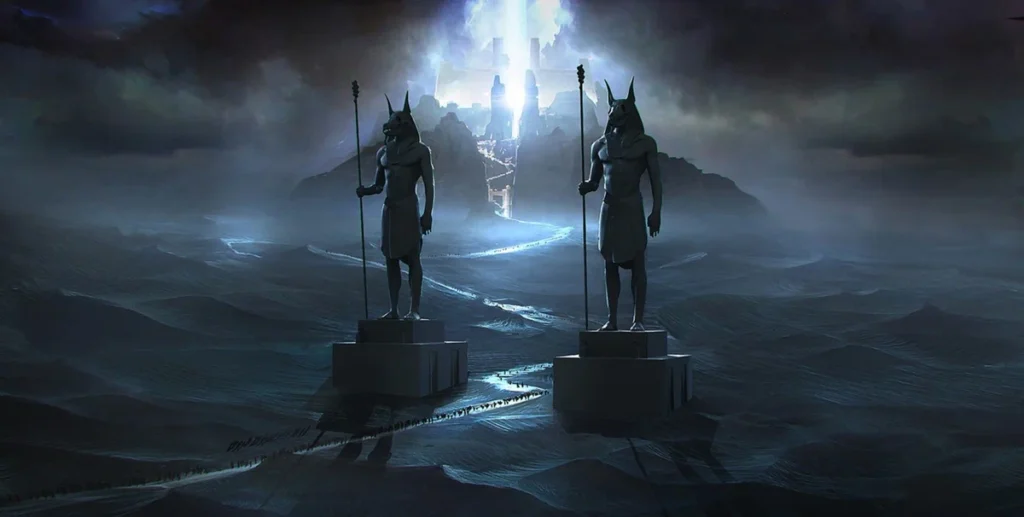
As noted above, contrary to common opinion, the Tradition indicates that the seven forces or spheres of the Interspace do not arise as expressions of seven “planetary” principles; rather, the Secondary Causalities manifest as the external reflections of the Seven potential spaces. In other words, the heptad of “aeonic” potencies of the interworld is expressed, in the manifested world, as seven planetary forces.
Note that the fourteen Aats of Otherbeing can be considered both a ‘physical’ and ‘semantic’ reality. On the one hand, from the point of view of Osiris, such a division describes the whole Interspace; on the other hand, from the point of view of a particular ka, it functions as a map. By passing through one region of the Duat — the so‑called “Field of Hills” — the mind, so to speak, traverses the Duat, and each “hill” (or “High mountain”) is a kind of representation of the corresponding aat, in the same way that the “Refuges” that appear on the “Road of Abodes” are glimpses of one form of the “Fields of Reeds”.
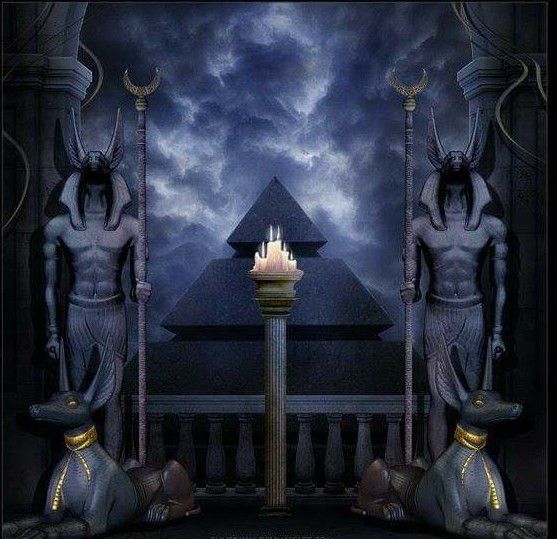
Because the potential hyperspace of the Interspace is nonlinear, it is built on the principle of ‘inserts’ (one might compare this to hyperlinks in a web document) or fractals; consequently, one must speak of distances and transitions within it with great caution. This characteristic is familiar from dreaming, where movement likewise does not obey linear logic or architecture.
At the same time, the fourteen Aats approximately correspond to another, duodecimal, division of the Duat found in the Amduat and related texts: to the twelve “regions”, “layers” or “levels” of the Kingdom of Osiris is added a “Summative” aat — the “Fields of the West” — expressing Osiris as a whole, and the region of the “Fields of Reeds”, corresponding to the Abode of Fires (“Akh”), which constitutes the “higher” section of Otherbeing. These two regions give rise to the “Solar” principle in its aspects of the “Heavenly” (“Fields of Iaru”) and “Underground” (“Fields of the West”) fertilizing causality.
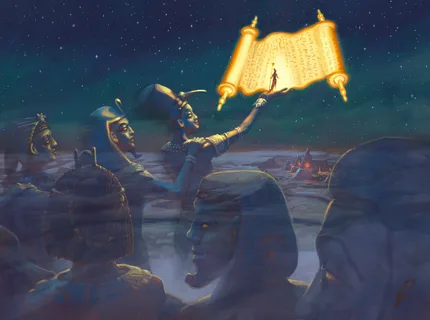
Here are the names of the Aats of the Duat known from the Books of Going Forth:
1. The first region where the deceased arrives is “Ball‑Amenti” (“Fire of Sunset”); the god dwelling there is Ra‑Heru (Ra Harmaqis — the Sun God as Lord, King). This is the region of the “division of the self” into components. The image of this region includes four serpents — four directions of departure (corresponding to the “dissolution of the elements” in the Bardo of Dying).
2. After the departure, mind enters a region called “Brow of Fire”; this is the place of the “lake of fire”, capable of burning the souls of sinners. This aat is the site of the “first” or “personal” judgment, where mind evaluates itself on the basis of its experience. The god dwelling there is Faakh (“He Who Carries Altars”).
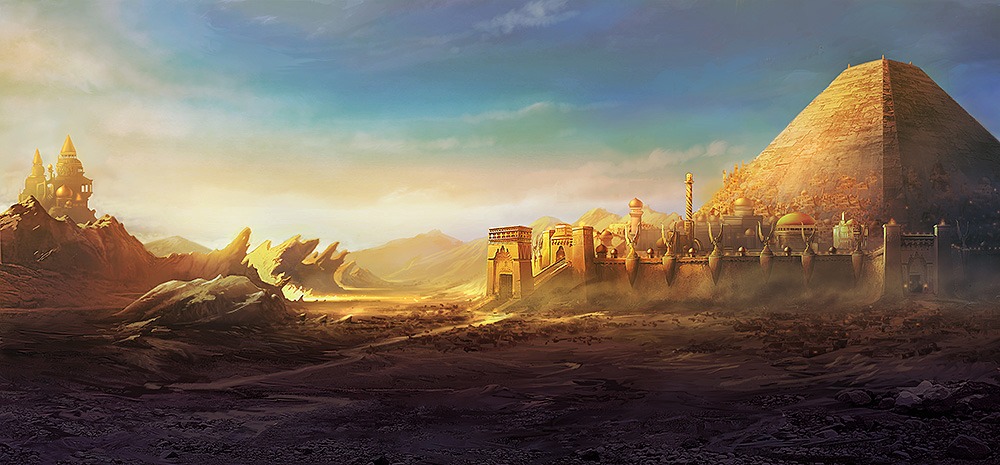
3. Bypassing the lake, the deceased comes to the “Mountain of Extraordinary Height”. There dwells “the serpent Sati‑Temui, who lives by killing Speech — Hu, and those who become a dead man in the kingdom of the dead”. This is the place where the possibility of lying disappears. It consists of fourteen peaks corresponding to the seven daytime and seven nighttime forms of manifestation of life energy — Ka.
4. Having passed the Mountains of Truth, the deceased approaches the “Aat of Hu”. “Hu” in the context of the Interspace is the Creative word, the expression of will, and therefore is symbolized by a stream of fire (just as Kabbalah symbolizes the creative principle as the heavenly sea of fire, “Shamaim”, or the “stream of Dinur”). “This is the place that ‘no one can sail through, and in which Hu dwells; the fire of that region burns. The fires that are here are seven cubits long, ‘feeding on the shadows of the weak and defenseless’.” The color of this Aat is green — the symbol of resurrection. The serpent Teshert (named after the Pharaohs’ crowns) dwells there, embodying the protective power of Ra. This region corresponds to the “Peaceful deities of the bardo” in the Tibetan tradition.
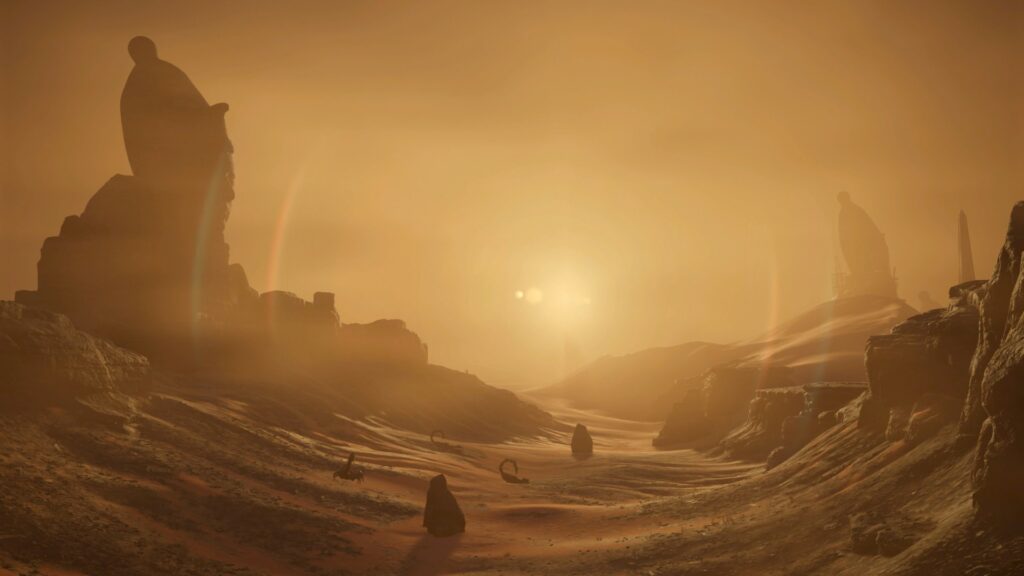
5. After these preparatory regions, mind enters those of its final unfolding. The first such region is “Ammekhet”; here the Judgment of Osiris takes place and the Hall of Two Truths (ShuMa) is located. It “is sacred to the gods, hidden from Hu (Fire), and deadly to the dead.” The god guarding this aat is Sekher‑remu (“Smiting Fish”), since ShuMa is an island that cannot be reached without permission, and the “fish” here are those who failed to reach their Judgment. This is also the region of Sokar, god of necropolises — the “Dead Ra”, a lower and secret domain.
6. The next region is the Aat of Isis, “Asset”, a place of rest and vindication, “whose fire, hidden from sight, is unextinguished”; in this city dwells a serpent named Rerek, the length of whose spine is seven cubits (corresponding to the seven cervical vertebrae — the attachment of the head to the body). The serpent lives, devouring the majestic power of Hu (Fire). This region includes the “middle” settlements of the Duat, what are today known as the “Elemental cities”.
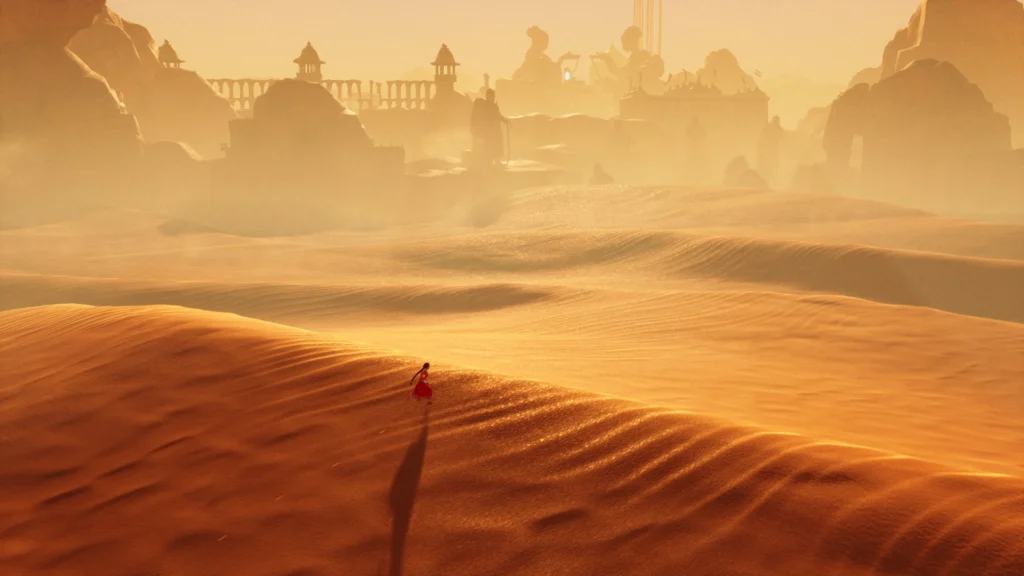
7. If mind goes further, it enters the aat of subjugation of its creative activity — “Kha‑sert”; without such mastery the soul remains merely a plaything of the Duat’s forces and cannot resist its chthonic nature. The god dwelling there is Fapet (or Kha‑Khotep, “He Who Carries the Heavens”). “No one can become master of the molten waters except Kha‑Khotep.” This is the region of the Wrathful Herukas of the Bardo Thodol.
8. Having gained power over its will, mind proceeds to apply the faculty of mind. This occurs in the region called “Brow of the god Kahu”. The image accompanying this aat shows a man holding two knives or swords; on his head is the image of a serpent. This refers to the dual nature of mind, which must be tamed and mastered. The color of the image is yellow, solar. Here dwells the united Ra‑Osiris in the form of a divine falcon. The text says: “The road is clear: ahead are the serpent Nau, the bull Nut, Nehebkau, who will make Osiris free, grant him power for eternal times.”
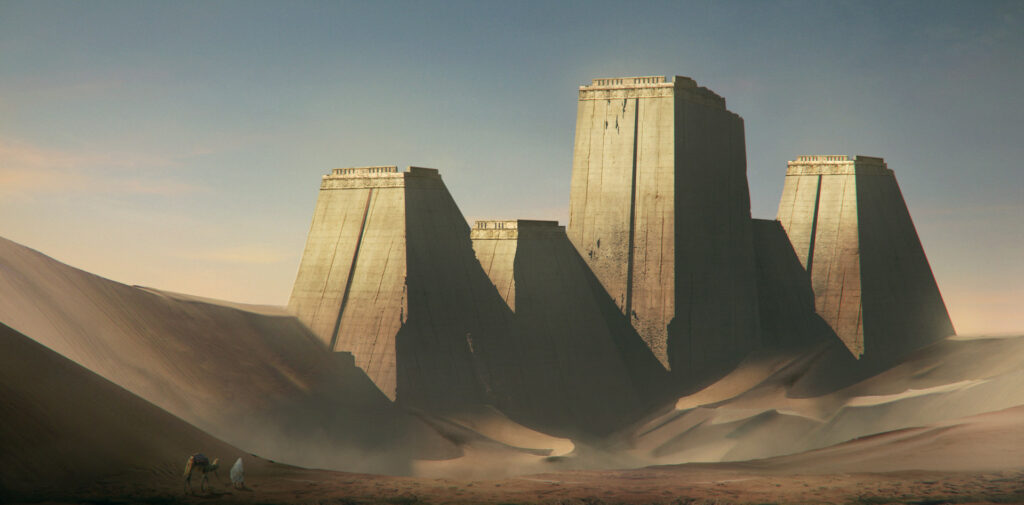
9. The next region is Creative. The mind applies its skills to fashion tools and supports. This aat is called “Atu”; the god dwelling there is Sopd‑Sothis. Sopdet is the goddess of the sky and the coming of the New Year, whose manifestation in the manifested world was the star Sirius. Sopdet accompanied the deceased and helped him ascend to heaven; she was also venerated as a goddess of fertility, rebirth, and one of the creators of the world. The Greeks knew her as Sothis (Σῶθις).
10. At the next stage, past bonds and the burdens still weighing upon the soul are cast off. This aat is called “Astche‑tetem‑Ament” (New Land of the West) or “Unt”; the god dwelling there is Khetemet‑baiu (“Destroyer of Souls”). The color of the aat is green.
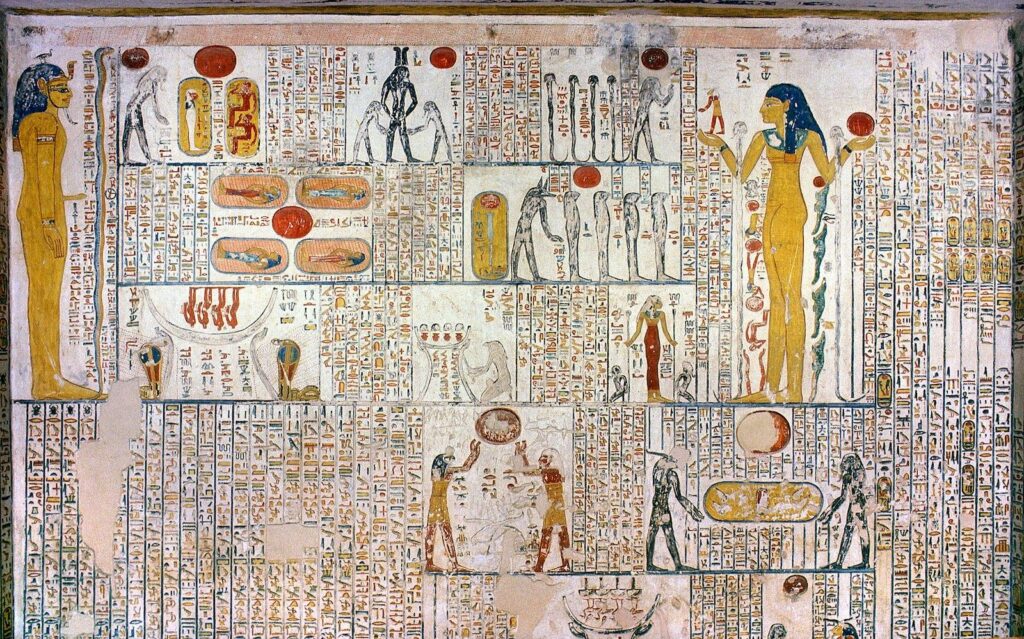
11. At this moment the further fate of the soul is chosen — its return to the worlds or its exit into the Fields of Iaru. The region of such choice is called “Uartentmu”; behind the image of the Aat stands the hippopotamus Nebet‑ref — its right paw rests on the scarab beetle. For the Egyptians, hippopotamuses are gods of life and death; just as Ammit devours the heart, Nebet‑ref devours the unrealized possibility, making the chosen course irreversible. The color of this Aat is green. “Brow of Waters; the god dwelling there is Aa‑Sekhemu.” “Its flame is a brightly burning fire; all who dwell there are seized with fear; the gods go away, not having drunk the fiery water and not having the possibility to enter the molten waters.”
12. If the mind returns to birth, it enters the region of the world’s creative energies. This aat is called “Kher‑akhi” (“Sky of the Horizon”, a transitional stage); the god dwelling there is Hapi (the Nile — a symbol of earthly fertility). There are images of the forces moving the universe — “a mountain chain called the ‘Field of Kher‑akhi’, a man with a libation vase, the god Anubis, a falcon with a disk, a god‑Lion, a man placing the Teshertet crown on the god, a hippopotamus, a crocodile, and a worm”. The color of this Aat is yellow.
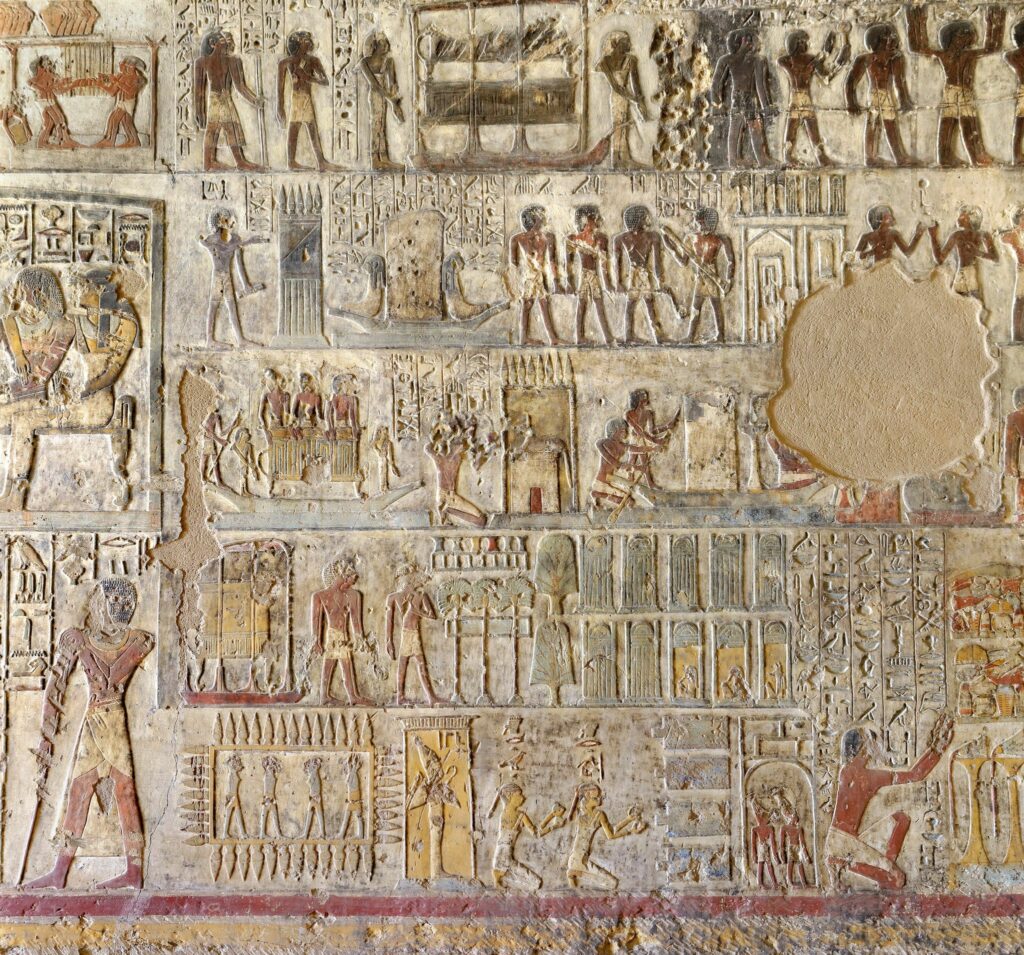
13. Then the unfree mind is carried along the stream of a new birth, through the aat “Stream of the Flaming Lake, Which Is Engulfed by Fire”. “A stream formed by effluences proceeding from Osiris.” This is the aat of transition into a new birth.
14. But if the mind attains its Akh, it enters the aat “Akesi” (Crocodile). The god dwelling there is Maa‑Thkhetf. This is a form of perception of the “Fields of Iaru” accessible from the Duat. It is said of it: “No one can either enter or leave it except the holy god dwelling in his egg, whom the gods fear and before whom Hu trembles. The entrance is enveloped by fire, and its flashes destroy both nostrils and mouths; the god made this for those who gladly follow him in his retinue; no one can breathe the fiery winds except the holy god dwelling in his egg.”
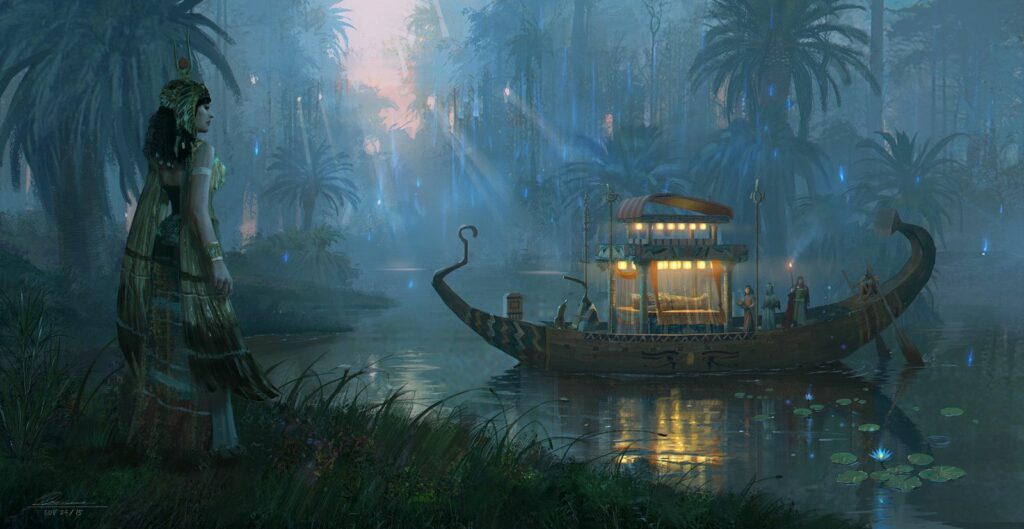
There were identifications of regions of the Duat with various parts of Osiris’s body, his energies — Ka — and his deeds. Nevertheless, with the exception of two regions — the “Field of Hills” and the glimmers of the “Fields of Reeds” that shine through in different parts of the Duat (the “Arit”) — these correlations were comparatively little studied and not clearly described. Unfortunately, the various groups of Egyptian priests working on mapping the Interspace did not manage to develop a canonical description that incorporated all the experience they had accumulated. They left this task to later generations, and perhaps someday it will be realized at the human level of perception and description as well.
Good day! Can you tell me if there is a connection between the seven deadly sins and the seven virtues with the realms of the Interworld? And how do these aeonic forces of the two triads of coagulating and solvating impulses and the adaptive-communicative (mercurial) impulse manifest in the Between? I want to understand.
Hello. Yes, this will be discussed a bit later (in the examination of the topic of Aritah).