
Mandalas and the Structuring of Space
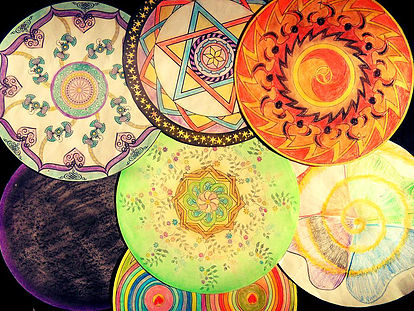
A distinct group of images possessing realizational power comprises the so-called mandals (from Skt. maṇḍala — circle, disk) — structures that order and build the psyche and/or macrocosm according to their organization.
Mandals and similar images are widely used in various spiritual traditions to focus practitioners’ and adepts’ attention, as instruments of spiritual guidance, to create and structure sacred space, and to aid meditation and induce trance.
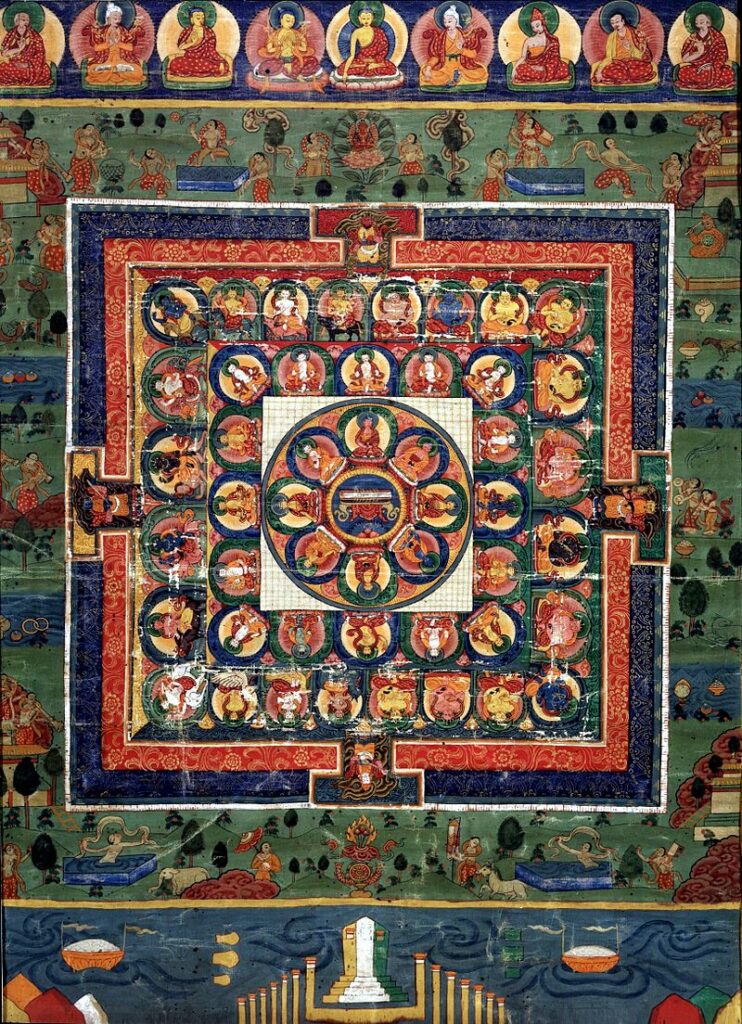
In Eastern religions — Hinduism, Buddhism, Jainism, and Shintoism — mandals are used as maps representing deities or, especially in the case of Shintoism, paradise, kami, or “true” shrines. In Christianity, similar images are very widespread in Gothic stained-glass windows and serve the same purpose of evoking sacred space. Many traditional Western amulets and talismans are built on the mandal principle, and the name of one of them — Almadel — is also formed from the word “al-mandal.”
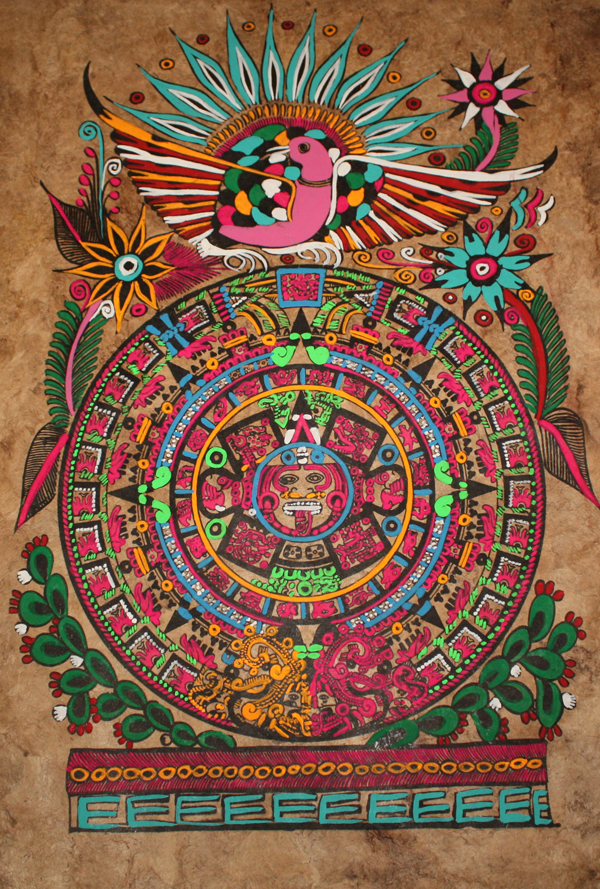
The Maya civilization had a tradition of presenting calendars in a form similar to a mandala. The famous Aztec Sun Stone is a symbolic map of the world, also built on the mandal principle.
Considered in its most general sense, a mandal is a graphic expression of a Higher Matrix, its “lower part of the Great Arcanum,” and in this sense it expresses the field of manifestations of a deity or enlightened principle, the deity’s form of existence in the totality of its manifestations. A mandal is not just a ‘palace of the deity’; it is the deity itself in a manifesting form.
Based on this understanding, traditionally mandals performed two main functions: structuring and channeling.

As a structuring system, a mandal is meant to “induce” the order reflected in it — the “outer manifestation” of a deity, principle, or other Higher matrix — in the surrounding space and the observer’s mind of the person interacting with it. As a channeling system, a mandal initiates a sacred “journey” of mind from the periphery to the center — from the “obscured” to the “enlightened” level.
From this point of view, a mandal combines vortex and vector activities, acting as a unique transformer of the mind. Not surprisingly, in the East, the mind’s interactions with a mandala (as, incidentally, with a number of other sacred structures) are described as “enlightenment through contemplation,” meaning its activity of “bringing” mind into “pure order.”
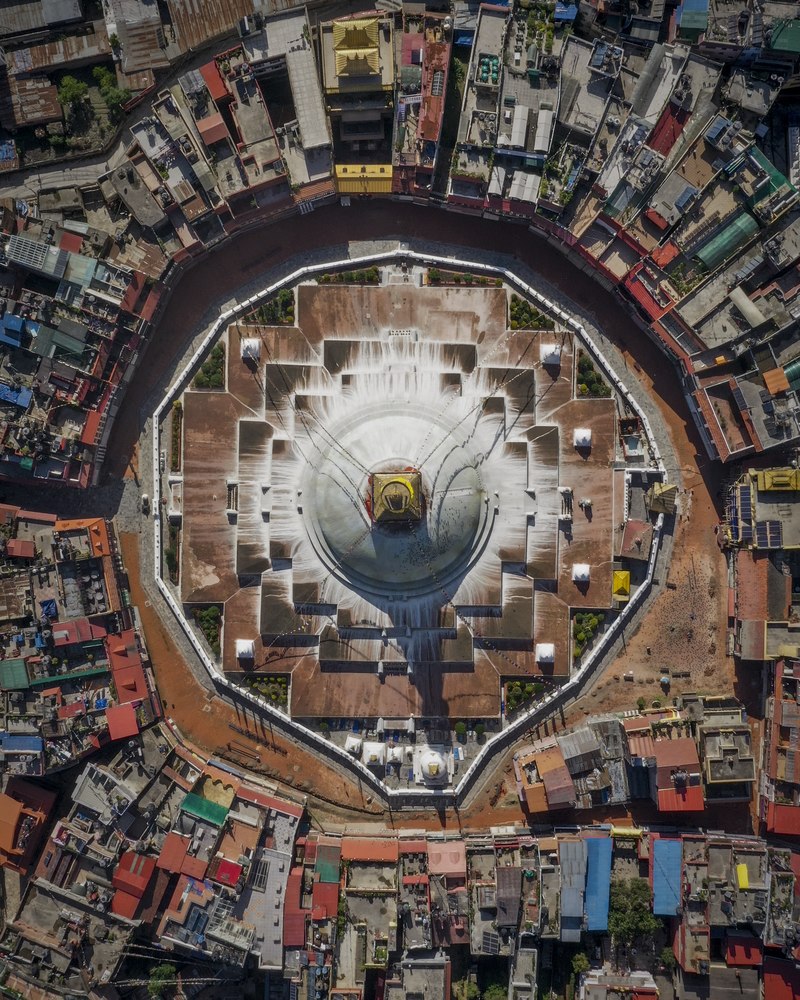
A properly constructed mandala consists of several concentric figures (circles, squares, and polygons) that “capture” the focus of attention, guide it into a contemplative state, and then lead it to the center, where the “enlightened” activity is concentrated. It includes symbolic gates and transitions that provide the necessary transcendences, and thus interacting with a mandala is a mystery of the corresponding deity or force, leading the mind to its source. At the same time, a mandal structures not only the space of the mind; it also has an ordering and harmonizing influence on the “manifest” cosmos, and such use of mandals, yantras, stained-glass windows, and amulets is also an important part of various traditions.
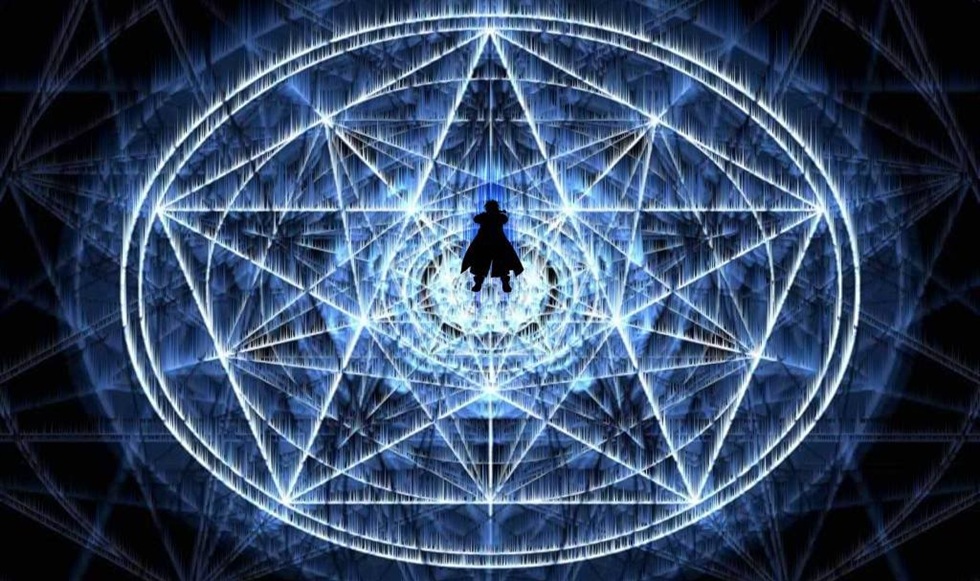
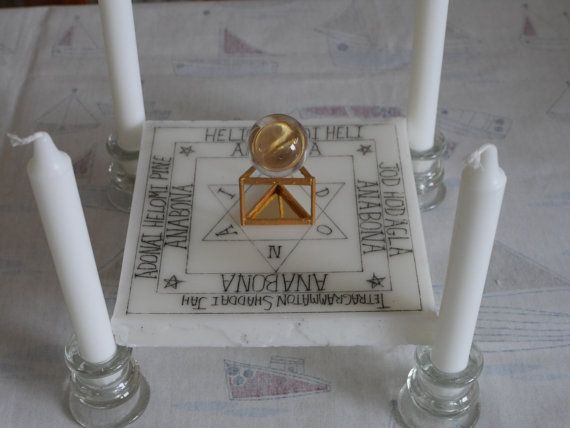
That is precisely why an important part of Buddhist initiations is an “introduction into the mandala” of the corresponding deity, and the magic circle used in ceremonial magic is also, in fact, a mandal, where the operator plays the role of the central deity.
Correctly creating a mandala is the “going out” of enlightened mind “into the world,” an expression of its striving to purify the “lower” worlds, and therefore drawing a mandal in “physical” space or visualizing it mentally is a manifestation of the deity, which then draws worlds and beings toward harmony and order. First, “pure” mind “emanates” from the center of the mandal to the periphery, and then the “obscured” current travels from the periphery to the center, mirroring the global process.
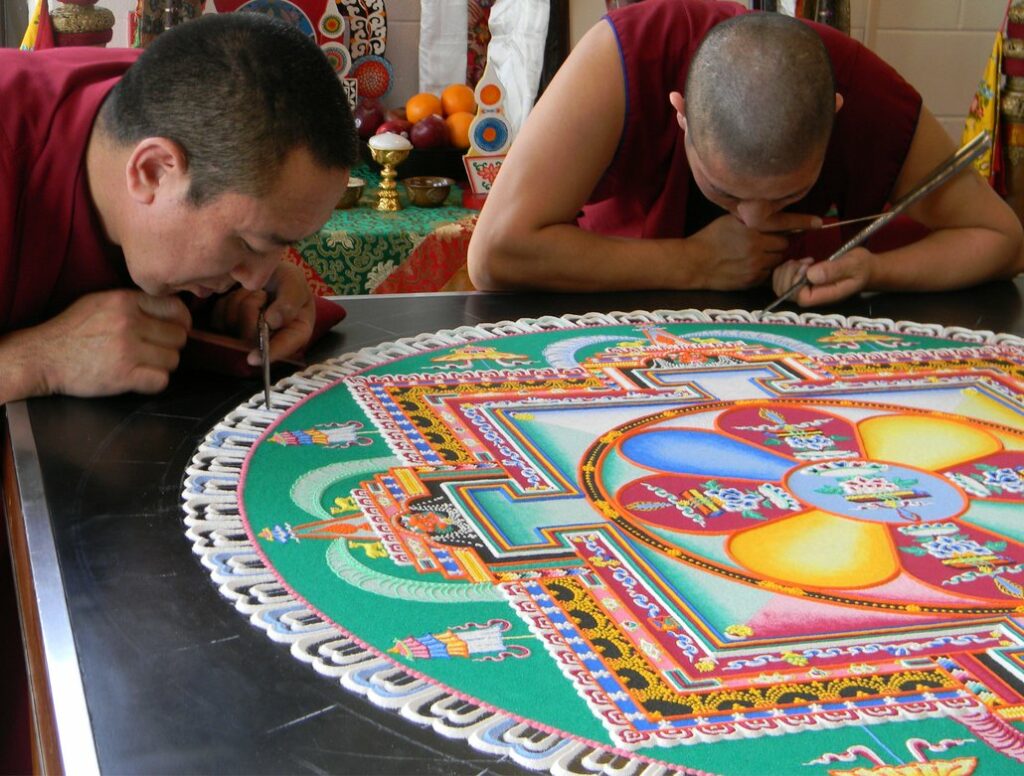
At the same time, the reverse is also true — the presence of a highly realized being turns the space around it into a mandala, structuring and harmonizing both the “world” and those who are near it.
In this sense, a mandala manifests the energy of baraka, and by inducing in the interacting mind a striving for development, it also manifests the energy of vod, being a firm support that leads the mind to progress.
Both the art of constructing mandalas and correct interaction with them can provide invaluable support to the developing mind, eliciting the main driving forces in it and aspirations.
Leave a Reply