
Symbols and Attributes
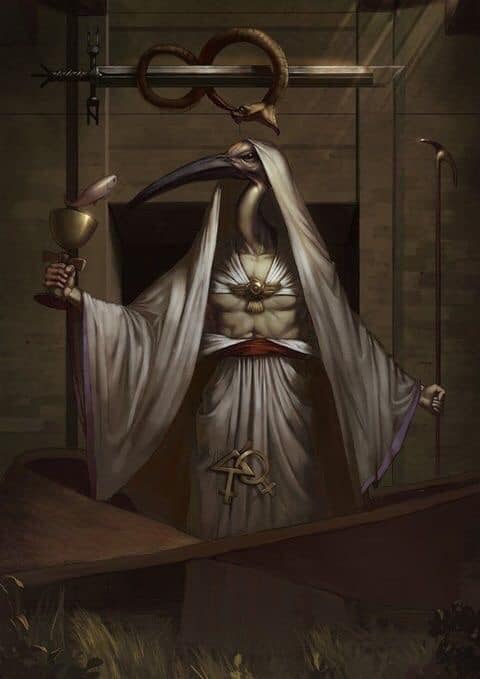
We have already discussed that the environment of any being or object is not merely scenery or a stage for its activity, but exerts a direct and immediate influence both on the object itself and on its interactions with others.
All the surrounding, “adjacent objects,” however, can be divided according to their significance into three groups:
· energetically neutral (these are usually the minority; they are mere decorations, the setting in which a being’s activity unfolds, and they can be changed or removed from scripts without much difficulty);
· points of support, which form the energetic basis for manifesting activity, serving as the foundation for vortices or sources of energy;
· external manifestations, the being’s otherness, its external vessel, the kli hitzon.
The latter two groups of objects are the “active participants” in any process; they create its vibrational circuit, and their replacement, damage, or removal inevitably affects both the process itself and the “central” being.
Since, as we have already discussed, the boundaries of each being (or object) are only a conventional designation of the focus of its consciousness, a significant portion of the objects perceived as “external” are in fact closely linked to it, participating in transformations, emission, and absorption of energy.
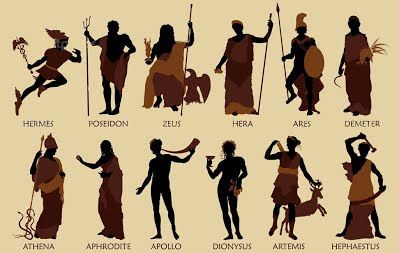
This understanding has always mattered to the Magi, who approach the formation of their surroundings, their milieu, and especially their ritual space with great selectivity and meticulous care.
But the same concept is important for many magical operations, both goetic and theurgic, because the images the summoned forces assume, as well as their characteristic signs and attributes, play key roles in the process of summoning (or activation of matrices) and in the verification of the ritual’s outcome.
Indeed, it is often an atypical attribute — a stray detail — that exposes the predator in disguise who responds to the Magus’s call in radiant guise of an angel or a god; conversely, the appearance of a particular sign or symbol may precede (and sometimes replace) the deity’s manifestation. Hence the study of such characteristic attributes before the ritual and close attention to them during the ritual are especially important.
We have repeatedly discussed that such an “external vessel” is a direct manifestation of the “reflected light,” and the clearer the being’s individuality, the more unique the matrix or vortex, the more distinct and energetically significant its kli hitzon. Neglecting characteristic attributes not only impoverishes the ritual and deprives the Magus of sources of inspiration; it deprives the Magus of energy vessels and of the instruments and means of manifestation.
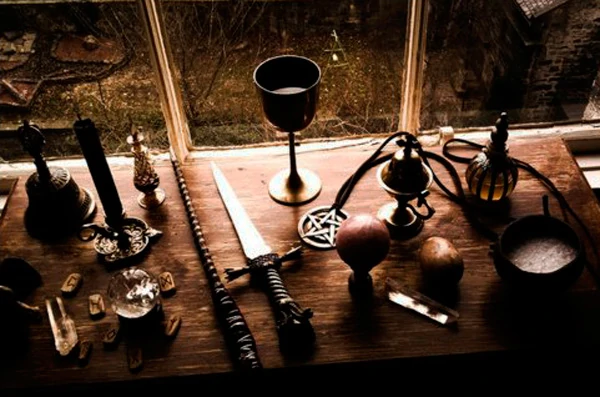
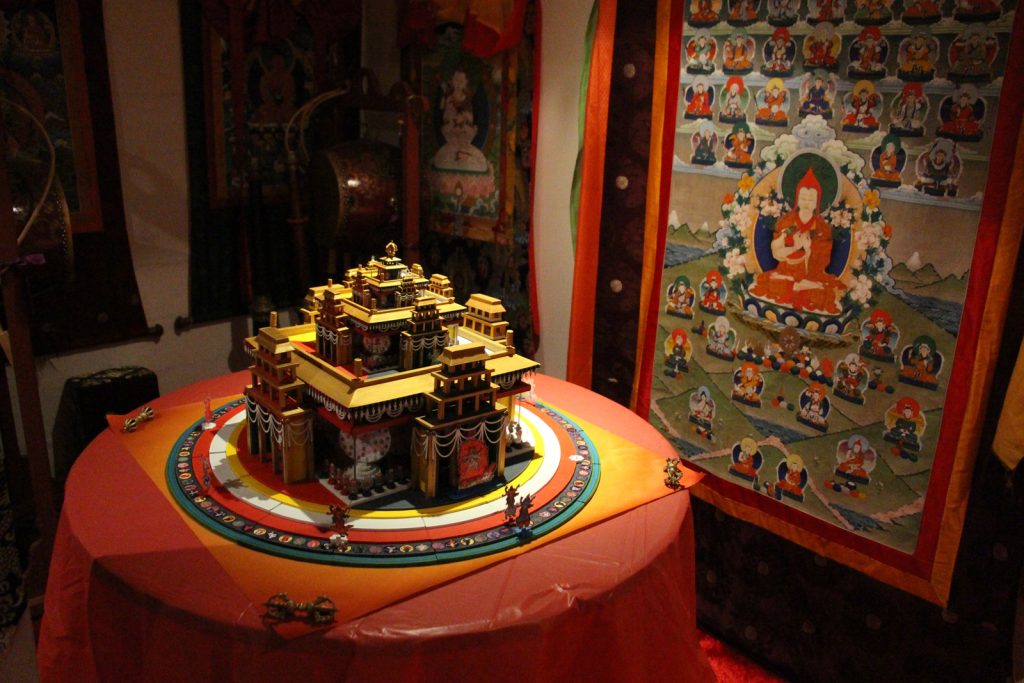
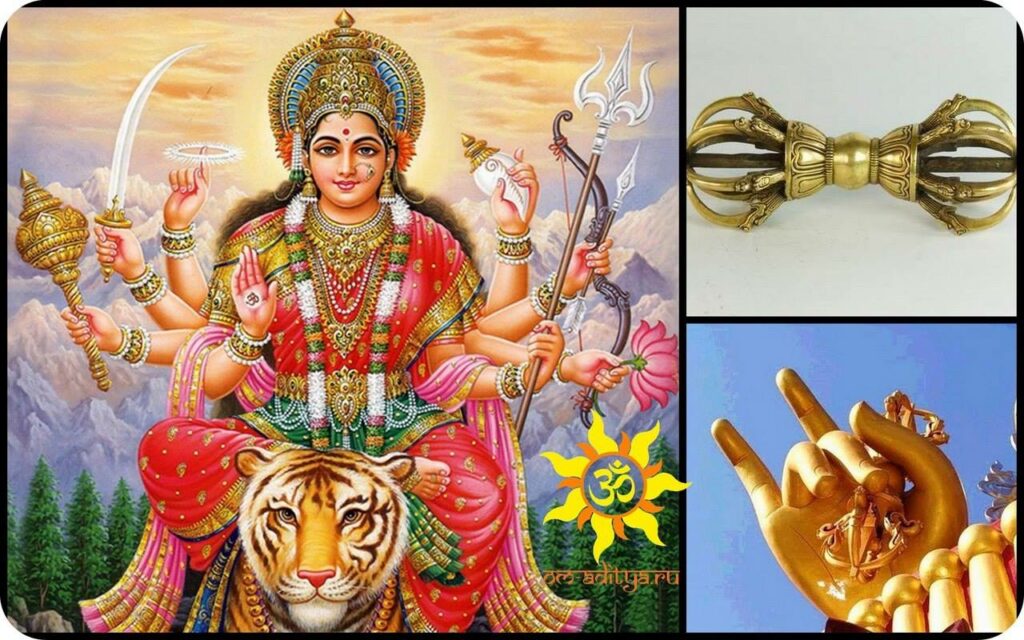
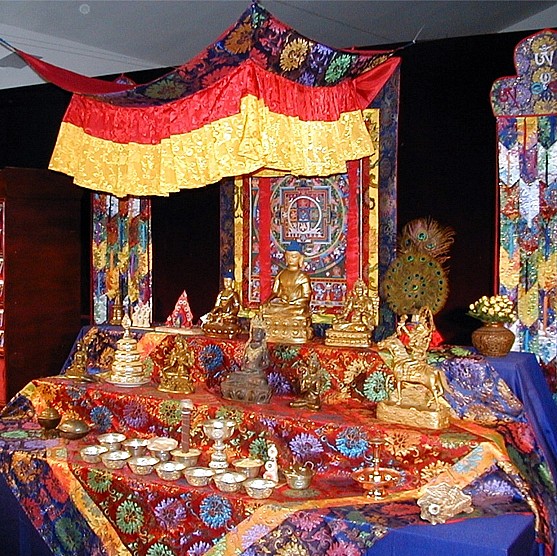
Let us note again that just as the “ornateness” of a Ritual is a method of attracting particular energies into it, so too are the characteristic attributes of gods, angels, or demons not merely decorative symbols; they are energetically charged “external vessels” of vortices or matrices. It is no accident that Buddhists say a mantra is the form in which a deity exists on the level of “speech” (that is, interactions), while a mandala is its form at the level of space. These mantras are not merely words, nor simply incantations or prayers; they are the deity itself, the matrix manifesting in sonic or written form. In precisely the same way, the characteristic attributes of deities — their mounts (vahanas) — are forms of the deity’s own manifestation, manifestations of its energy.
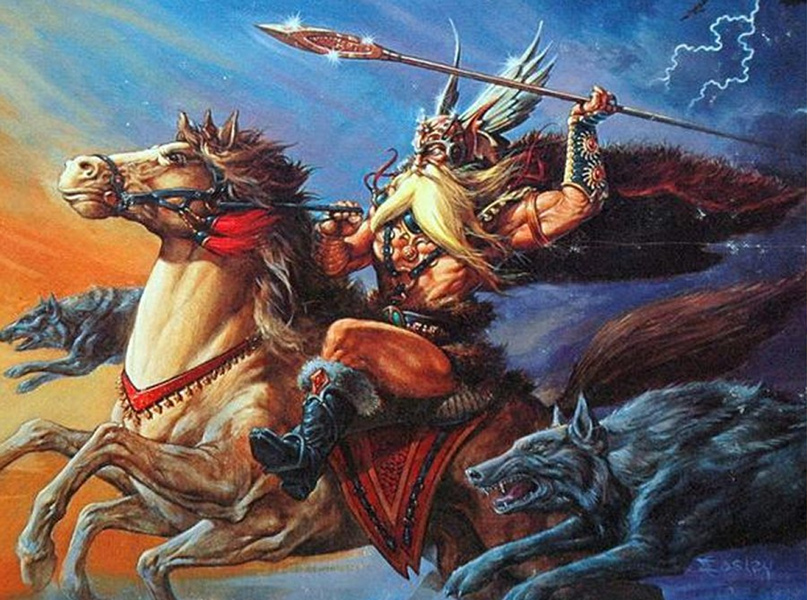
For example, Odin’s Spear or Thor’s Hammer are, in a sense, inseparable from the gods themselves: Odin is not whole without Gungnir, just as he is not whole without Sleipnir, Huginn, Muninn, Geri, and Freki.
It is equally important to understand that Manjushri’s Sword or the Lotus and Rosary of Avalokiteshvara are manifestations of their energies — not merely symbols or a “signature” of a matrix, but an integral part, as necessary for full manifestation as the deity’s own “body.”
Thus, attention to attributes — both of one’s own activity and of the objects one interacts with — is not simply a psychological technique, not merely a tool of inspiration or an exercise in reading archetypes: it is a way to expand possibilities of invocation, an instrument for summoning and verification, of support and manifestation. By considering any being or object together with its energetically significant surroundings, we not only broaden our view of reality, we also increase our capacity to engage with it. And by finding our own modes of “external expression,” we do not merely expend accumulated creative energy or shape our environment — we form, develop, and transform ourselves.
This all seems a bit unclear to me, in the sense that there are certain forces in the Universe – like Life, Death, other various manifestations and qualities. Let’s call them pure ‘archetypes of consciousness’. Then these forces and archetypes are personified in different cultures and religions; in fact, people create their gods in their own image and likeness. This certainly does not mean that they do not exist. So why ‘multiply entities without necessity’ and reach out to these personified images instead of working directly with the pure archetype of consciousness as it exists, without all the multicultural distortions and overlays? I’ve been wanting to ask this.
To ‘work directly with an archetype’, one must not have signs and attributes themselves, including – must not have a personality. As long as we are embodied, as long as we are localized – we have no other choice but to interact with other localized forms of consciousness. Any localization, any limitation – is already the emergence of properties and characteristics.
But in any case, shouldn’t one strive to minimize conditioning and possible intermediaries that inevitably introduce distortions? Of course, I understand that this is a personal matter for each and possibly these complications and conditioning add interest to others. I just see this as a desire to create unnecessary conventions, conceptualizations, and obstacles, because many find this more interesting, so to speak; I don’t know how else to formulate it, but that’s the feeling.
Tell me, Master, how does the contemplation of mandalas differ from the contemplation of runes?
A mandala is the “external” space, while Runes are the vector of consciousness itself. Attention directed at Runes is active and dynamic, while that “entering” into the Mandala is receptive and open.
Thank you, I saw the analogy with the world wheel. A question arises. Is it possible to move from activity to receptiveness, in the opposite direction? Do runes applied to the mandala have meaning?