
Breadth of Perception. Reflected Light
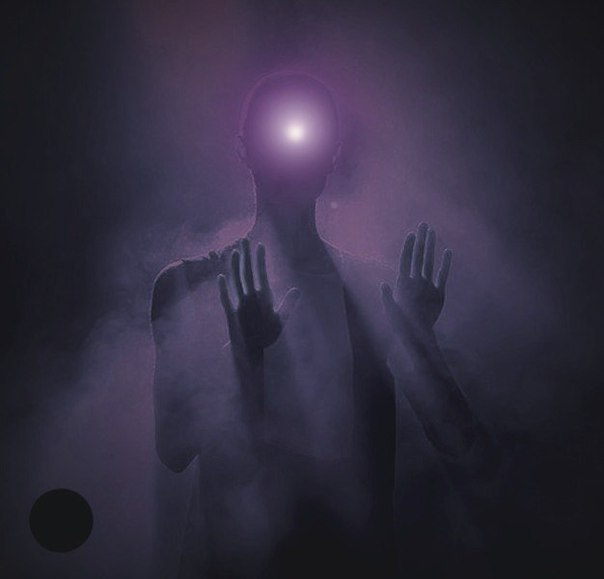
Although the functioning of awareness is described as “acceptance of the Light into the Vessel,” the limiting factor for development, expansion, and deepening of the mind is usually not the “size of the Vessel,” but an entirely different characteristic — the “reflecting capacity.”
Let us try to unpack this notion.
The Myth we are considering describes the world-process as an interpenetration of two “cosmoi” — the “psychocosmos” — the knowing aspect — and the “macrocosmos” — the aspect to be known. Each of these “cosmoi” is not a “separate” reality, but only one of the faces of the One, which has differentiated these two aspects within itself for self-actualization.
At the same time, contact of the mind with being — that is, the establishment of correspondence between “subjective” and “objective” energies — is described as the “influx of the Light into the Vessel,” since the mind — “pure subjectivity” — penetrates into the “milieu” — “pure objectivity.” In other words, the world-process (as in an individual’s private life) is the search for and objectification of new elements in the mind by the mind “gazing” into its “reflection” in the milieu. When contact with the macrocosmic “energy” leads to the discovery in the “psychocosmos” of new elements and the actualization of new possibilities — there is the “filling of the Vessel with Light,” or, equivalently, the “transformation of the Life Force into the Force of awareness.”
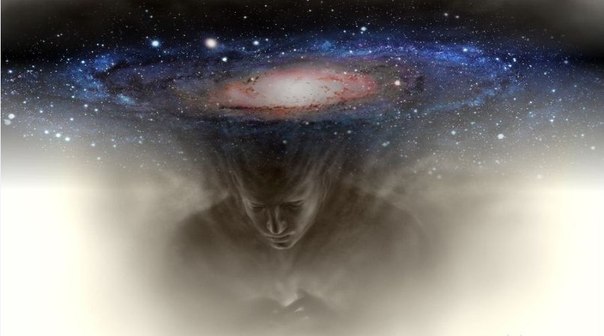
From this standpoint the dichotomy of the “cosmoi” is important: the primary duality — the psychocosmos as the actively perceiving aspect and the macrocosmos as the passively perceived — reflecting in one another, unfolds into four elements, the quaternary:
in the psychocosmos an indivisible unity of the mind (as a single, yet empty space of pure expansiveness) and awareness (as the process) arises, in which the whole activity of the universe is carried out, and
the macrocosmos is considered as the unity of a potential milieu (as an empty yet omnipotent field of possibilities) and energies (as differential aspects of objects drawn from that milieu).
It is clear that in each pair the first constituents are “primary,” while the second arise as the result of their interaction.
Thus, we regard the world-process as awareness of energies.
Within this process one can, in turn, distinguish
- The emergence of the necessity of actualization (which is the consequence of the prior development of the mind);
- Contact with “new” energies;
- the “Opening” of the mind;
- The establishment of correspondence — “induction” of the Power, or, to say, the “influx” of the Light.
For our present discussion the transition from the second stage to the third proves most important.
In fact, when speaking of the “contact” of the mind with being, as mentioned, “contact” is described as the “reflection” of the mind in the “mirror” of being. In order to perceive only a limited ensemble from the infinity of possible energies, the mind must “reflect,” that is — repel — all other possibilities and potentials, producing a differentiation from the unified milieu of a series of differential aspects.
If the circle of perceived energies is wider than the capacity to reflect — the mind can be shattered, since its very existence as a distinct aspect is possible only by repelling all that is “other.” Even a slight “overload” of perception is traumatic and is described as a “blow of the Light.”
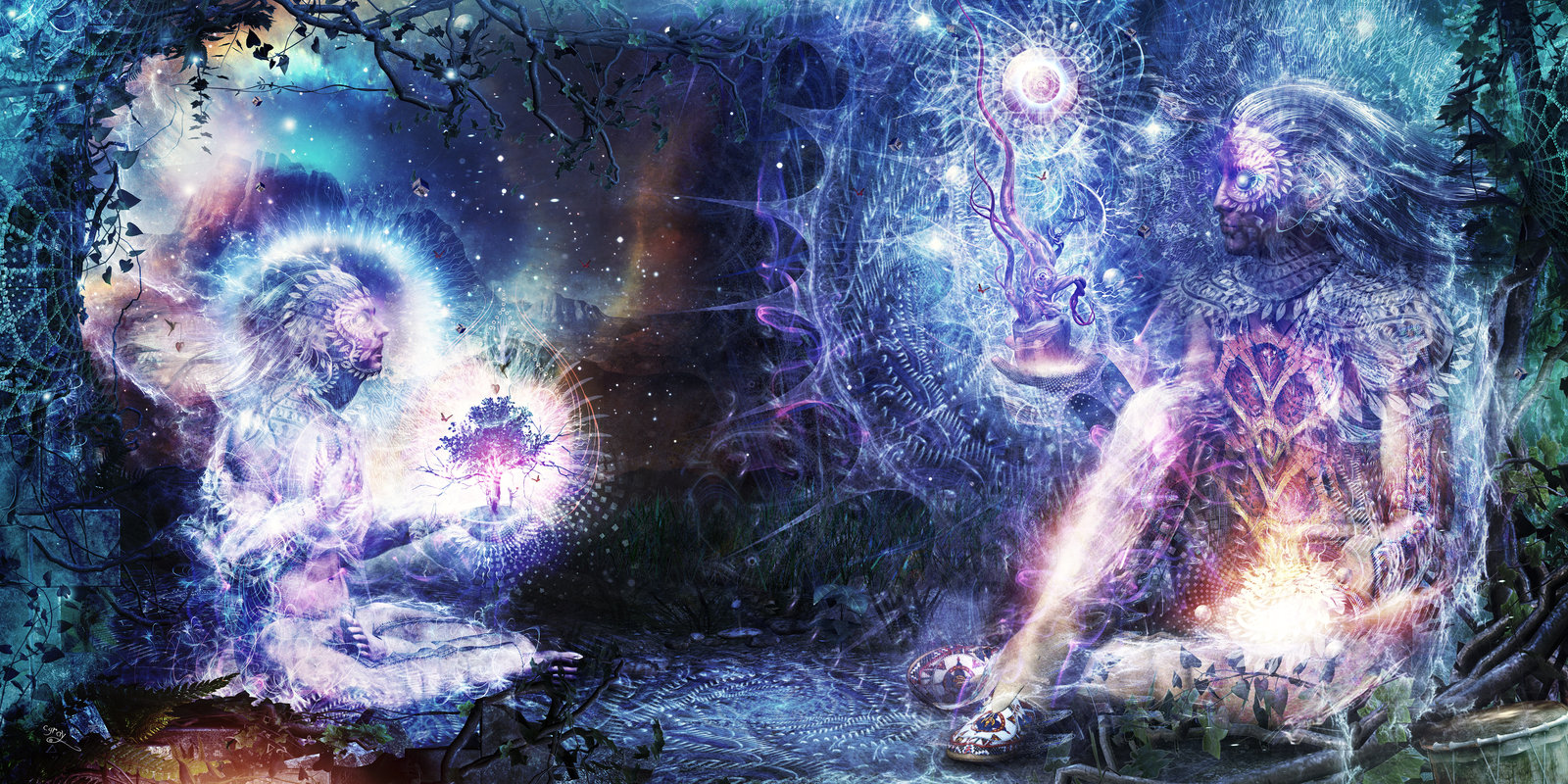
So we arrive at a thesis very important for Magic: we can receive only insofar as we give that we can reflect — give. Despite the considerable obviousness of this thesis, it is precisely the misunderstanding of its deep foundations that leads travelers very often to learn to receive, to take, but not to pay due attention to developing their reflecting, giving capacity.
No wonder the “reflected” light — Or Hozer — the Kabbalah also calls “Or Hasadim” — the “Light of Piety,” and the Buddhists have given it an even broader name — bodhicitta — “the enlightening attitude,” and the very receptive capacity of the mind is traditionally called the “screen.”
The point is that, in order to develop the mind effectively — that is, to fill one’s “Vessel” with “Light” — we must perform three reflecting actions:
- Isolate your individuality as much as possible — to “repel” from oneself all that is not ours;
- Clearly distinguish energies in our field of perception, that is, separate them from interactions;
- “Share” one’s awareness, contributing to the growth and development of mind in the surrounding world, i.e., overcome repulsion itself.
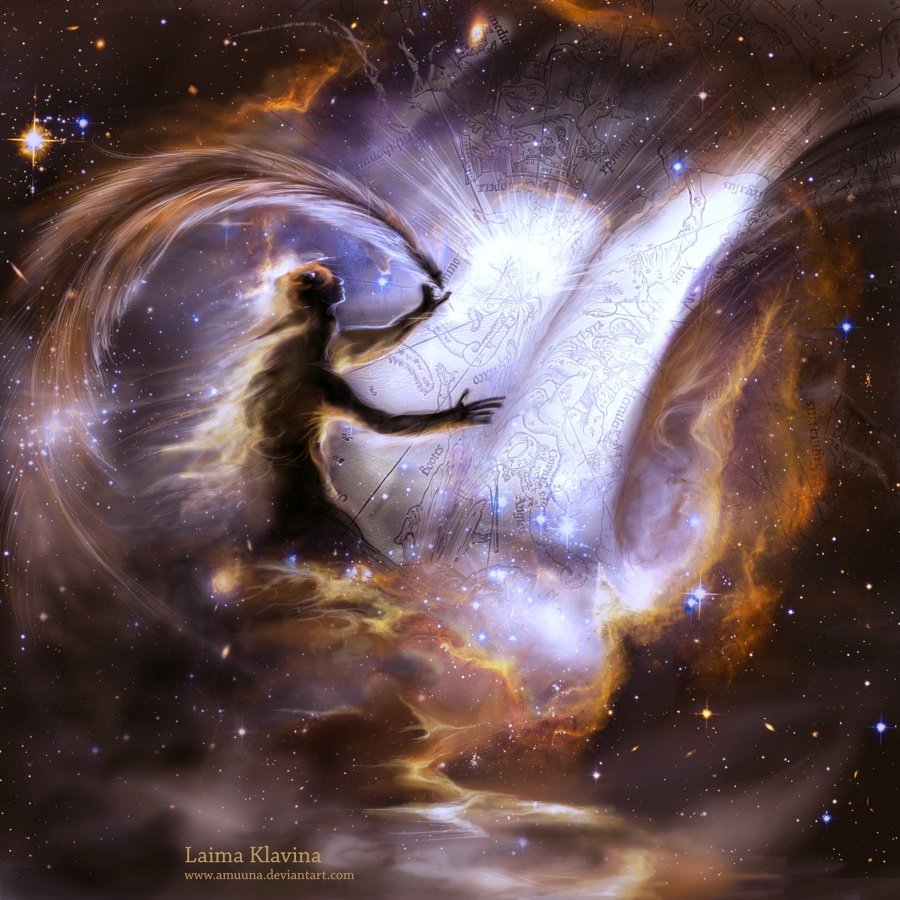
I would especially like to draw attention to the third action: without it, repulsion will become the dominant force, and we will not be able to “receive” without turning repulsion against itself. If one fails to attend to this necessity, the mind becomes enslaved to the force of repulsion which, stripped of balance, turns into anger, and then into destructive manifestations — hostility and aggression.
It is precisely the insufficient development of this “reflecting” capacity of the mind that leads to limits in its development — discovering in itself a need for new perception, for a new reception of the Power, but lacking sufficient reflecting strength, the mind either receives a “blow of the Light,” or runs up against an insurmountable wall that separates it from that reception. Moreover, the wall is its protective barrier; breaking through it, the mind will not gain new awareness, but will instead destroy itself. Only by understanding the balance of forces, the importance of “giving as a condition of receiving,” can a magus succeed in their development.
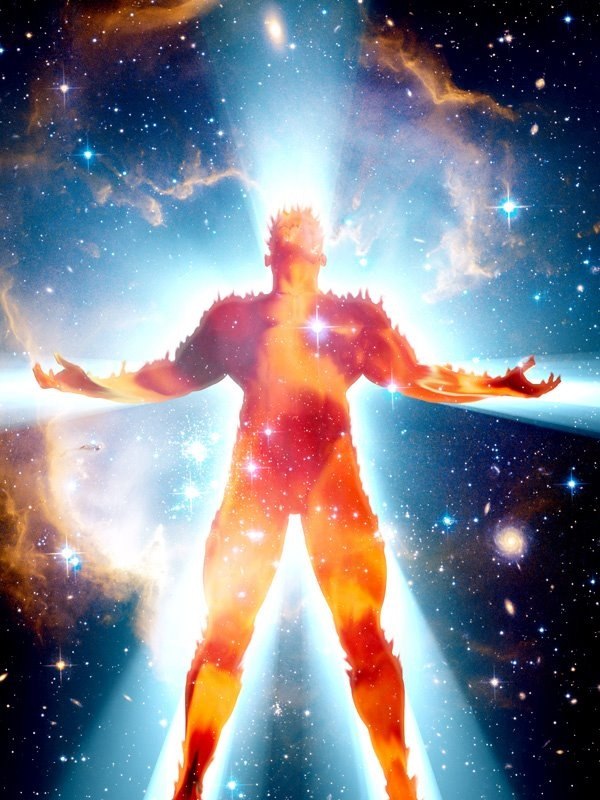
The energies expressed by symbiosis remain in a state of rest until acted upon. When an influence is applied, a reaction occurs that is expressed as generation, which can be referred to as a vector of reactions.
In other words, by expending energy on attention (repulsion), we thus create a reaction vector + a return (reflection), which leads to the maintenance of the worldview.
Therefore, I don’t understand how consciousness will receive a traumatic return if that return is equal to the energy expended in expanding perception.
Travelers who give nothing will gain nothing.