Function and Argument
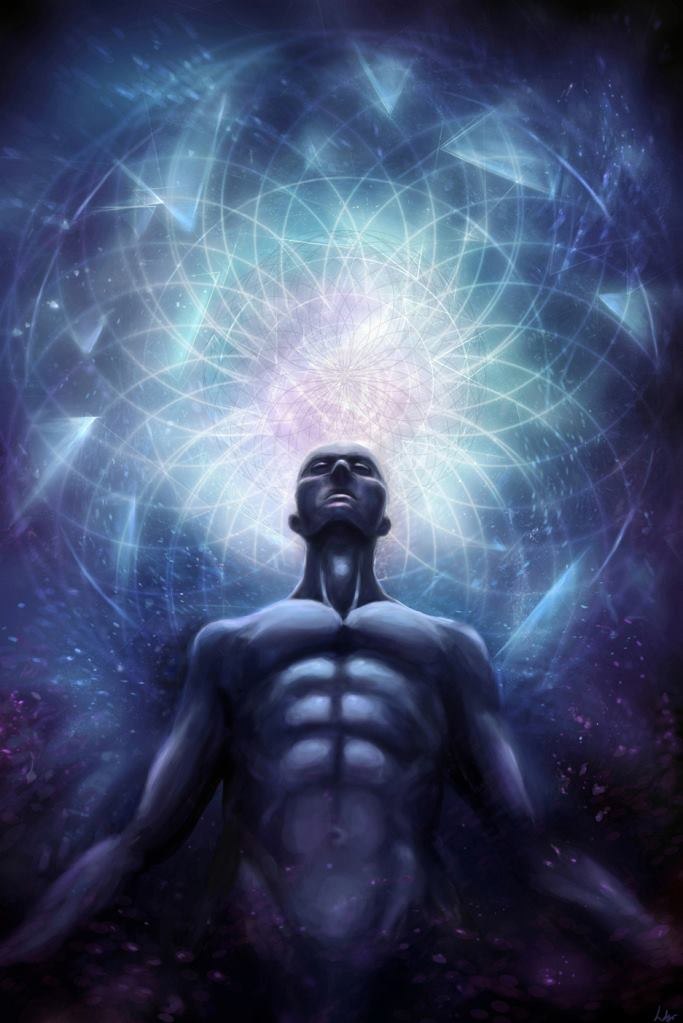
The primary binary of existence — the duality of Light and Vessel — is balanced because, in the course of its realization, its poles interpenetrate each other, each augmenting its properties with those of the opposite pole.
In other words, when consciousness uses being’s resources to expand itself, it begins to generate resources that affect the development of other forms of consciousness.
Therefore, every manifested being is simultaneously an agent and an object in the world’s process, and, on the one hand, it uses all accessible macrocosm’s manifestations as an environment for its development, while on the other hand, it is part of the environment in relation to other beings.
Therefore, within each being, one should distinguish two aspects — its noumenal and phenomenal parts. That is: what the being is “in itself,” its individual features, its Psychocosmos as a closed whole, and what the being is in relation to other beings.
Usually, people tend to notice only the phenomenal aspects of other beings. In ordinary perception, a person is seen as the sum of their actions, deeds, manifestations.
The noumenal part, at best, is merely called the “inner world” and is kept separate from actual activity.
It follows that the mind perceives only the vessel’s giving side — that is, the aspect it acquires through interaction with Light, the “secondary” aspect of the binary — while its original poles — the Vessel itself and, indeed, the Light — remain outside active perception.
This approach is relatively effective when dealing with beings at a different evolutionary level. Indeed, when we, for example, speak of the gods, we usually mean functions — the external manifestations of those beings, and we know nothing of their life “in themselves.”
In general, any superficial perception of other beings proceeds precisely from their active component — the Light they radiate (this Light is traditionally called “Or Hasadim”) — and from the effect of that Light on the perceiving mind.
However, when the interaction is closer, it is necessary to take into account the other components of the being. Both the Vessel’s qualities and the Light it has received (called “Or Pnimi”) play an important role in establishing close, effective interaction.
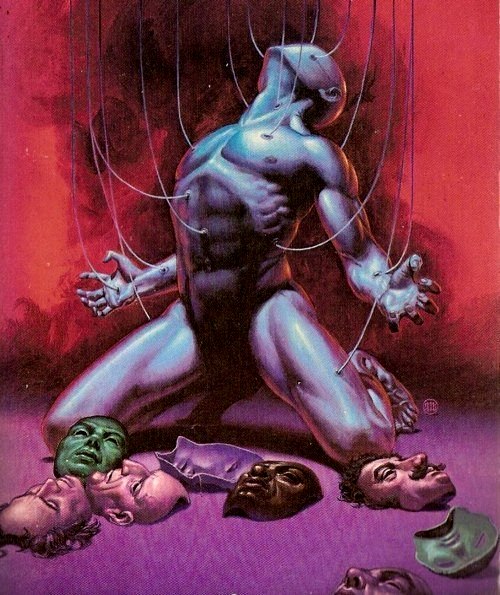
An even more important role is played by understanding this binary for self-knowledge. Indeed, it is often difficult even within oneself to distinguish where the function-bearer actually is and where what he bears — their burden, the form of their manifestation — begins.
The habit of treating other beings merely as a “background” for one’s own existence is deeply flawed simply because it takes into account only a quarter, at best a half of all possible interactions.

Consider these interactions:
1) The perceiving aspect of one being interacts with the radiating aspect of another — we are influenced by other beings; this is relatively simple and clear. Usually, this type of interaction is considered primary.
2) We ourselves influence other beings — our active component is filtered through the other being’s capacity to perceive. Here is an often-ignored nuance: when Light falls on a Vessel, part of that Light is accepted by the Vessel, and part is reflected. The reflected Light (Or Hozer) is an active factor affecting surrounding Vessels, including the original source. The ratio of accepted to reflected Light is an important factor determining the effectiveness of any interaction.
3) The Light we have received affects nearby Vessels — this is the phenomenon of the “induction of Power” we have discussed many times.
4) Our capacity to perceive affects the reception of Light by other Vessels — we help those around us to receive Power.
It is clear that the last two types of interaction are primary and fundamental — and it is precisely these that are usually not taken into account.
A person always feels how another person’s presence (not their actions) affects them; it can be either beneficial or destructive depending on the alignment of energies, yet this feeling is usually dismissed.
Nevertheless, the ability to distinguish the manifestations of a given being, its functions, its “professional activity,” from its own nature, essence, and individuality is important not only from the standpoint of depth of perception but also from a purely practical standpoint of personal development.
A person’s actions may be useful to another, while they themselves can be destructive. The opposite is also possible — a person’s actions irritate or hinder another, while their very nature helps expand awareness.
When choosing who to interact with — with people and with spirits — a Magus should be guided primarily by noumenal interactions and only secondarily by external manifestations of secondary functions.
Distinguishing the person (or other being) from their actions is the most important skill that significantly improves a Magus’s effectiveness and properly prioritizes their interactions.
Wonderful! Practical Kabbalah for everyday use. Everything is laid out neatly for the traveler. Thank you, Enmerkar, for the Light that I receive.
As noted by my spouse, it’s not society that changes people – they are born this way. What is the reason for such differences? What prevents people from initially being (starting) to manifest their individuality? If it involves parasitic forces, then why are their powers so uneven, and why are some more free, while others are more suppressed? Or is the reason rooted in pre-birth?
Society is built like a pyramid based on the Torah. Rules and the hierarchy of the pyramid prevent the manifestation of individuality. If a person is born a “slave,” then their consciousness usually remains a “slave” until death, and they perish on the step of the pyramid where they were born – the animal level of perception. The myth monopolists of the Torah, the Bible are not interested in the evolution of consciousness. Parasitic forces need quantity, not quality, of unfree people. To be a human in the consciousness of an animal world is the same as being a god in the world of people.
The reason lies in genes, in DNA… In some, there are more human, spiritual genes, and they are directed by humanity, conscience, while in others, there are more animalistic, predatory genes, and they are led by animal instincts. Your spouse has accurately pointed out – they are born this way, and this is almost irreparable, as it sits much deeper in the astral-mental planes. Listen to Sidorov’s lectures – Chronological-Ezoteric analysis of the development of modern civilization, and everything will immediately fall into place…
Having had the opportunity to observe children from ages 2 to 14 for many years, I can draw some conclusions that have helped me achieve desired results. Genes, DNA play a very significant role. You cannot develop what is not there. But the point can also be argued. The question is how deeply a particular capability lies and in what state the genes are in a person. More precisely, not the genes themselves, but the possibility of implementing the programs laid down in these genes. I will not speak about why programs don’t work, but how they do not work at the biological level. Information either doesn’t come at all or is incomplete. DNA, in order to transmit information to the cell, transforms into RNA and enters the cell in the form of active compounds. But very often the process of transition from DNA to RNA occurs incorrectly. This involves genetic diseases and others, possibly stresses, and the organism simply does not have enough energy for this whole procedure. Runes are parts of DNA. If you view them in a tetrahedron, a very interesting picture emerges. They intertwine with the DNA spiral, and precisely they, when transformed into RNA, provide the energy necessary for the proper transition to the cellular level of information. This is why runes hold such great power. And because the lives of people who turn to runes change significantly. Everyone is originally endowed with many almost identical programs. Simply put, some have one program more actively while others have others. This depends on the presence of the same Life Force in the being. But it takes a very great Life Force for the program to work by itself. Otherwise, there would be significantly more talented individuals among people. Thus, everything depends on society. We lack an institution of family, nor an institution of motherhood. Schools and universities teach anything and everything, except how to raise a child, how to be in family relationships. Therefore, when a child is born and starts to realize their self, their “I” in society. In the past, it happened at 3 years old, now children begin to differentiate themselves from society at the age of two as a separate unit. During this time, the child learns about the world. Through whom do they learn? Correct, through family the most. Adults have already forgotten how to be children. Ask a little one about anything and they will answer that absolutely everything is possible. They are confident in this. They make millions of discoveries every day in their lives. These are so vast and meaningful to them, while sometimes they just make parents laugh. What do parents want? An obedient child, one who doesn’t go there, doesn’t take that, doesn’t look at that. Just restrictions, just limitations. Correct, it is easier to forbid than to explain. And they don’t know how to explain. As far as I work, I teach parents to better understand their children more than I teach children anything. In 5-7 years, a child obtains 90 percent of knowledge about the surrounding world. In Japan, for example, until children are 5, they destroy absolutely everything, it seems in Georgia they do too. But for us? As soon as a child begins to understand something, there are a ton of restrictions. And this action of society happens already at the parental level. From the moment a child becomes aware, they start to be framed in specific boundaries. Convenient for those around. They turn children into obedient “robots” that are convenient for themselves; this is less trouble. And this is very beneficial for society. It’s good, if the correct attitude towards the child is embedded in the family or within the mother at the level of genes, and those maternal programs work. But there are very few families like that and very few mothers too. Even if they want, they do not always know how. Because, as it seems to me, different factors need to be considered here.
Thank you for the interesting material, Enemercar. But this knowledge is dangerous for social life; if you can see the inner essence of the people around you, it will be very difficult to play the game called life.
The association: – It’s like looking a dog in the eyes is dangerous; but if you are stronger, the dog will fear you and become submissive.
There is a wonderful work called “They Sometimes Die,” which presents the idea that not everyone has a soul, and those who do are either outcasts or saints. Those who have a soul cannot live normally in society; it leads to aggression or unmotivated love mixed with charm and manipulation. You will have to tread very delicately on “razor blades,” being able to confidently see the inner essence…
Life is not life without a soul. To emulate and build one’s own microcosm akin to the macrocosm is the task of every soul. One must experience being an outcast, resembling a vessel that does not receive light. One must also experience a state of holiness when one resembles the light. Having received light and a vessel in the microcosm, a person can then develop and balance their microcosm and, by analogy, shape their macrocosm.
Each thought is like a slap in the face
This game isn’t worth the candle
Your eternal fate is solitude
And the weight of the world never leaves your shoulders.
Here is the translation to English:
“But how else can one understand their essence? The vision of the essence of one’s possibilities and limitations is accompanied by an understanding of the essence of others, as well as the interconnections within society. Moreover, seeing these limitations is quite useful. It allows you to build a strategy for your game, as well as to identify your shortcomings and direct targeted, willful actions towards correcting them. It’s like in the movie ‘The Matrix’… you’re offered two pills, and which one you choose is up to you.”
As an illustration, there is an old parable about three people who were carrying stones. When asked, “What are you doing?” each replied differently.
– “I am carrying stones.”
– “I am earning my bread.”
– “I am building a temple.”
What kind of equations are these, where such different arguments exist? Genetics defines certain characteristics—whether the vessel is made of red or blue clay, or if it is forged from silver, gold, or perhaps crystal. But no less important is what this vessel is filled with, or what it is being filled with.
There are reports that it is this very argument – the question “Why?” (not “What?” or “How?”) – that has the strongest influence on other people. Why is it that relying not on external facts and actions, but on internal components inspires and motivates, and how is this related to the structure of the brain?
I think it’s not worth reducing everything to genetics. Otherwise, one might fall into genetic fatalism, the belief that hereditary information is a final and unappealable verdict. Genetic fatalism can lead to a total feeling of malice, hatred, and frustration. It can result in an acute feeling of extreme hatred towards one’s parents for passing on certain genes. It is preferable to believe that genes, like stars, influence but do not compel. When observing what happens to others, one can calmly think that a certain fate has befallen them, “a wrong sperm met a wrong egg, and so what…” But when someone experiences something that doesn’t align with their desires, they begin to question why this is happening to them. For instance, they might ask, “Why am I the one who is a failure in every regard?” Perhaps one can see a certain pattern – a complete loser readily accepts various fatalistic deterministic theories, as they become an excuse for inaction. A person with problems will refute them and, to some degree, believe in free will, hoping that they are like the frog that didn’t sink in the pot of cream but instead churned the cream into butter. Meanwhile, someone who succeeds in getting what they want simply thinks of nothing at all and doesn’t care about theories. I apologize for the crude comparison, but Lieutenant Rzhevsky doesn’t ask himself how it is that he manages to get laid right after asking, “Madam, may I have my way with you?” However, the person who gets hit in response to such a question will ponder for a long time, “Why am I the one getting hit?” In other words, those who know “how” do not ask “why.”
🙂 Anger towards genes, “hatred towards parents” – these are signs of an immature perception of oneself. The question is not about what is predetermined by genes and how rigid that predetermination is, but rather what the karmic meaning of this predetermination is. A person is born with certain predispositions in order to fulfill specific tasks in this incarnation. Accepting oneself, one’s nature, and the peculiarities of one’s embodiment is a very important step for this realization.
I don’t agree with the last statement. If a person knows why they are doing “this,” they will always find (or be looking for) what and how to do it. For example, in a kindergarten, there is no toilet. The director of the kindergarten says there is no money and doesn’t know where to get the funds. If the resolution of this issue depended on whether they would keep their position or not—what and how to do it would become clear immediately. Whether to dig or not, and how to dig, strongly depends on why you need it.
And your hero is not a good example; he is like a model soldier—yes, he doesn’t think, whether it’s the commander or his temperament and genetics that make decisions for him.
In fact, if we talk about certain things that define fate to some extent—be it genes or horoscope—I tend to answer the question of why this particular person has such and such qualities from birth in an Eastern manner. Everything that a person has is something they earn for themselves in one way or another.
“But in order to achieve something, the material we work with matters. Genetics and stars are certainly not fatal. However, they provide a foundation that makes some things easier and others more difficult.”
In the end, what you have can also be used in different ways. Alexei Maresyev lost his legs. Nevertheless, he learned to fly without them. Yet someone else in the same situation might simply turn to alcohol. A person born with a hereditary heart defect will not be able to become an astronaut. They will not be able to become a pilot. They won’t even be able to become a locomotive engineer (there are also very high health requirements there, at least for the cardiovascular system). But a heart defect won’t prevent them from becoming, for example, a computer scientist. Or a theoretical physicist.
Of course. That’s exactly what I’m talking about.
Stars.. horoscopes.. genes.. people.. programs in the subconscious..
The main question here is not how cunningly they intertwine and how they influence one another. The question is, what is your own place in these connections.
Do they spin you around, or do you spin them? Do they use you, or do you use them?
“Anyway, it doesn’t matter. Tolerance is possible where there is no competition. The myth of magical tolerance is currently a completely safe harbor, as no one is interested in it. But if it were to become mainstream, the same thing would happen as with the Christian myth—it’s all about words, the idea of tolerance, turning the other cheek, and so on.”