
The Bark of Millions of Years
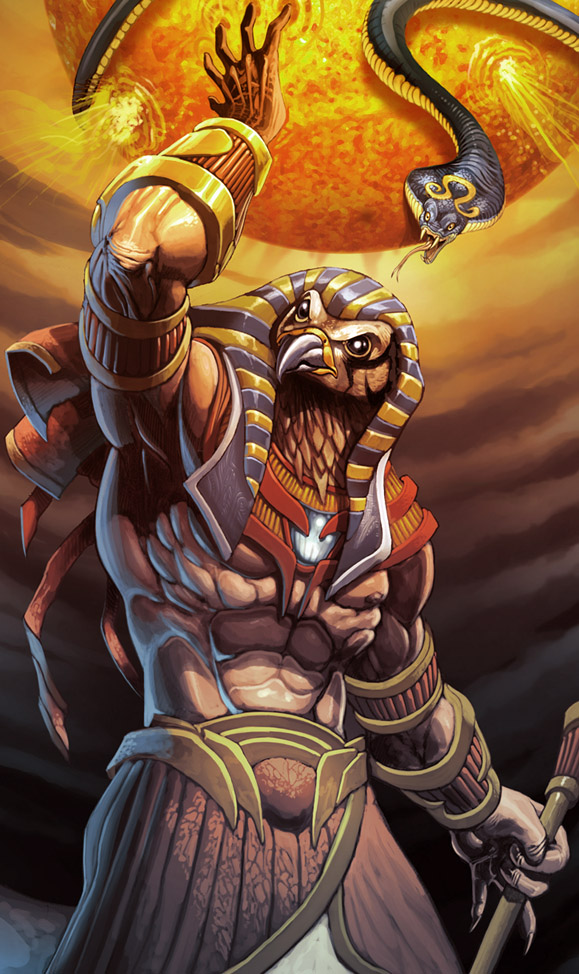
The shift over the last thousand years in the collective consciousness from an anthropocentric to a technocentric orientation has been accompanied by a reappraisal of the foundational myths that guided the development of the human spirit in preceding millennia. As a result, many of the sacred stories venerated and contemplated by the Magi of antiquity have been devalued and, at best, reduced to entertaining reading.
One of those great foundational metaphors was the notion of “eternal creation,” first articulated in Ancient Egypt as the tale of the Midnight Sun.
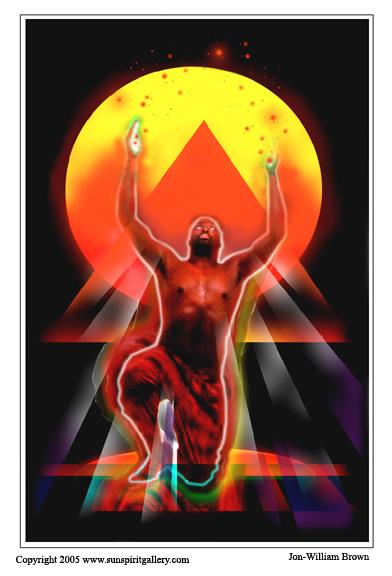
At the heart of ancient Egyptian spiritual-cosmic doctrine stood the “Solar Barque of Millions of Years,” with the travelling “Great Ennead” of gods aboard it, headed by Ra. The Bark of Eternity had a daytime aspect — Mandjet — and a nighttime one — Mesktet.
In modern times it is commonly held that this description is the product of an immature, geocentric understanding of the world’s system and corresponds to the “Sun’s rotation around the Earth.” Even if the Barque’s meaning were exhausted by a purely physical description, it would still warrant special attention, because — even though it seems obvious today that motion is defined only by a point of reference, the geocentric system corresponding to an observer on Earth and the heliocentric to observations made from outside — the idea of the Sun merging with the Earth at night (the union of Ra and Osiris in the Duat) permits a broader conception of the Radiant principles: by day the Earth absorbs the Sun’s radiation, and by night it radiates it back into space.
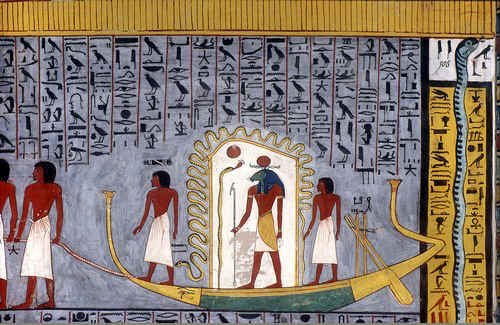
However, the Barque’s significance was not confined to “physics”; like all Great Myths, it describes in many ways the journey of Power through the macrocosm and psychocosm.
It is well known that the ancient Egyptians possessed a complex notion of Eternity: for them Eternal Prolongation (jet) was the result of Eternal Repetition (neheh). Namely, for them every sunrise was the first sunrise, every new moon the first moon to appear, every inundation of the Nile the first inundation — that is, each day was regarded as the first day of creation, as it had been yesterday and would be tomorrow.
That is, the Egyptians were deeply rooted in the present, and for them the Eternal Repetition of Creation guaranteed the eternal continuation of being, so that each new world was born from the remnants of the old, and every birth was the consequence of death.
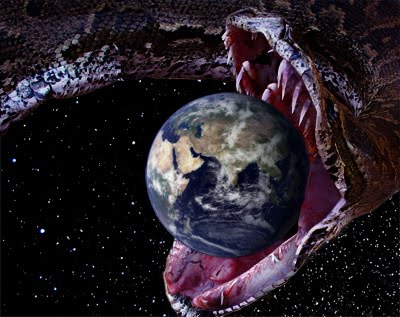
Opposing the Barque of Eternity are the forces of chaos, personified by Set and Apophis. They represented the principle of “isfet,” the opposite of the world’s order — “Maat.” Although in the First Time God defeated them, they continued to dwell at the edge of the universe, and the war between Ra and Apophis, Horus and Set began again in the eternal repetition of the primordial event.
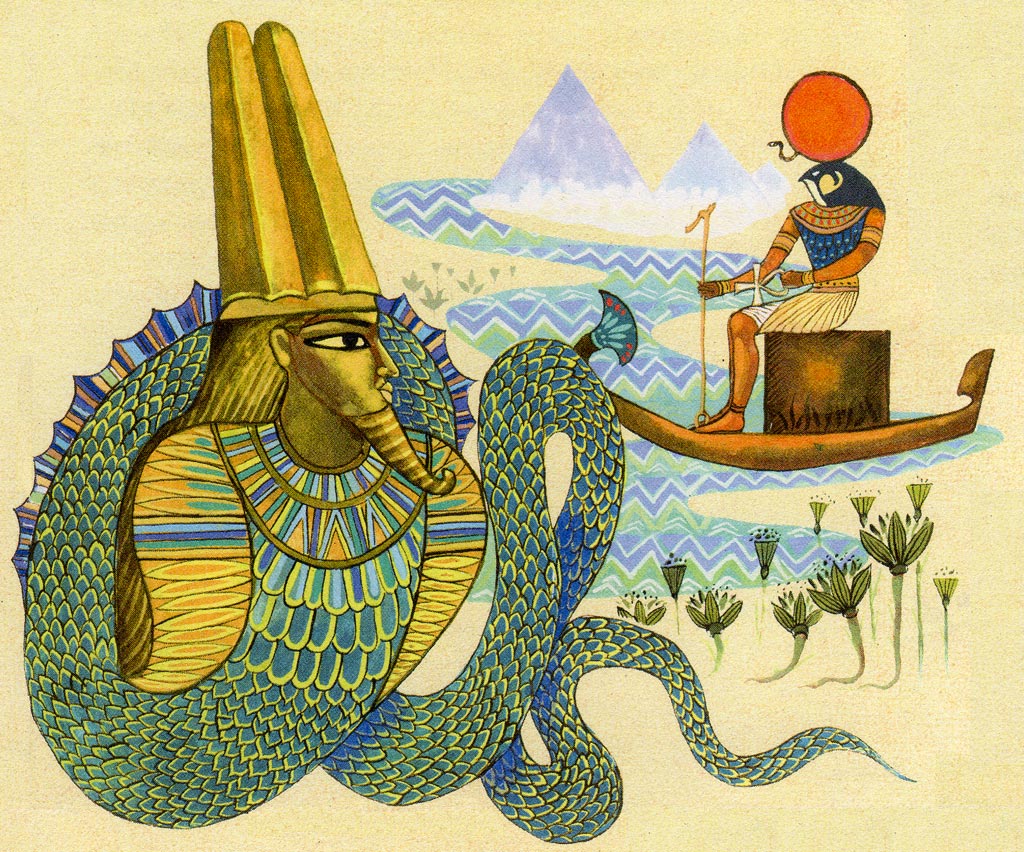
Thus every sunrise, every human awakening, every accession of a pharaoh is described as a repetition of the moment of creation.
It follows that the Egyptians believed the cosmic cycle of time was renewed each day not by the “automatic” operation of the cosmos’ component parts, but depended on the free actions of humans and gods. If all beings behave “correctly” (according to ‘Maat’), the cosmos sustains itself. Moreover, they believed that the gods of the sky, earth, and air could not sustain the cosmos by their own powers; they depended on people, on the pharaoh, who performed daily magical rites repeating the original act of creation in order to make order triumph over chaos.
Each god had three levels of existence: in the sky, on earth, and in the Duat. The supreme such triad was the unity of Ra, Horus (in the person of the pharaoh), and Osiris, but the same was true for all other manifestations of Maat. In other words, each person can be seen as the point of intersection of the “Triumphant” and the “Dead” gods — the god of the sky and the god of the Duat — and thus they determine the fate of the cosmos, which is in eternal circulation. It is hard to overstate the importance of such a worldview for Magic: every person is a living god, and it was precisely this awareness that later gave rise to the vital concept of the microcosm, repeating the life of the macrocosm at every moment and thereby ensuring, ultimately, the eternal continuation of being.
Just like the motto – ‘Act now, or never!’ But personally, it seems to me that their world was somewhat static, devoid of development, like a perpetually spinning record. After all, there must be some meaning to life for the Great Spirit, God, whoever He may be – His development (‘growth’ so to speak), and here I see no prospects, although perhaps I looked poorly 🙂
There is a prospect, it’s just that the time intervals are colossal. The Egyptians were in no hurry and could well reason in terms of infinite time. Besides, it was actually the Egyptians who first realized the very scheme of the development of the Great Spirit: first God gives birth to gods (for example, Atum, Ptah, or Amon) – that is, He ‘splits’, ‘dissects’, and then – the gods recreate God (that is – reintegrate Him). For example, in the famous hymn to Amon: ‘The Ennead entered your body: your likeness in every god connected with you’ and in the ‘Book of the Dead’: ‘…Ra …gave names to his members, which means the birth of those gods who then became his companions’. In other words, the dismembered God is reborn when the gods, personifying His parts, come together and form His whole body.
Does this mean that the Gods as principles of the universe (except the dividing God, for example, the threshold) are the forces that prevent the world from sinking into infinite division? In the sense that their ultimate goal is the complete merging of everything into one. Then closer to the person as a creative principle will be the ‘evil’ gods who violate the fundamental principles of the universe?
Yes, the gods support the orderliness of individual streams. But creativity, in the broadest sense, is also the creation of new streams and their inclusion in coexistence with others. So creativity is the manifestation of the cosmizing, ordering power, not of mixing and chaos.
The Egyptians are fragments of the Great Atlantis, rather the part of priests who ruled in Egypt; they contained much of the Magic Knowledge of the Atlanteans, but the paradigm had already changed, so much of their knowledge did not work in practice, just like now.
As I understand it, God dismembers and is reborn, but this is no longer the God who was; something changes? If yes, what? And if no, then what is the point of it?
Yes, God changes in the cycles of His birth, absorbing what each new cycle of existence brings. This is development.
So it turns out that the sky is the cosmos, the earth is the world of people, and the Duat is your psychocosmos? But how to explain that Ra swims across the sky by day and at night through the Duat?
The psychocosmos and the macrocosmos are not separate realities; they are different ways of describing the same reality – from the point of view of being or from the point of view of consciousness. Therefore, the image of the Boat of Eternity can be used to describe macrocosmic processes – cycles of day/night, yearly cycles, and generally the tides/ebb of Life Force. Similarly, at the level of the Psychocosmos, the Boat describes the cycles of sleep/wakefulness, life/bardo, and so on. Just as in the Macrocosmos, the reception and emission of energy replace each other, so in the Psychocosmos, the light of consciousness opposes the unconscious chaotic forces.
It turns out that the gods are split in us. We are pieces of them. Parts of the whole. The more the world fragments, the weaker its pieces become. The closer the awareness is to the awareness of god, the stronger and more powerful it becomes.