
“The Two Truths” and the Judgment of Osiris
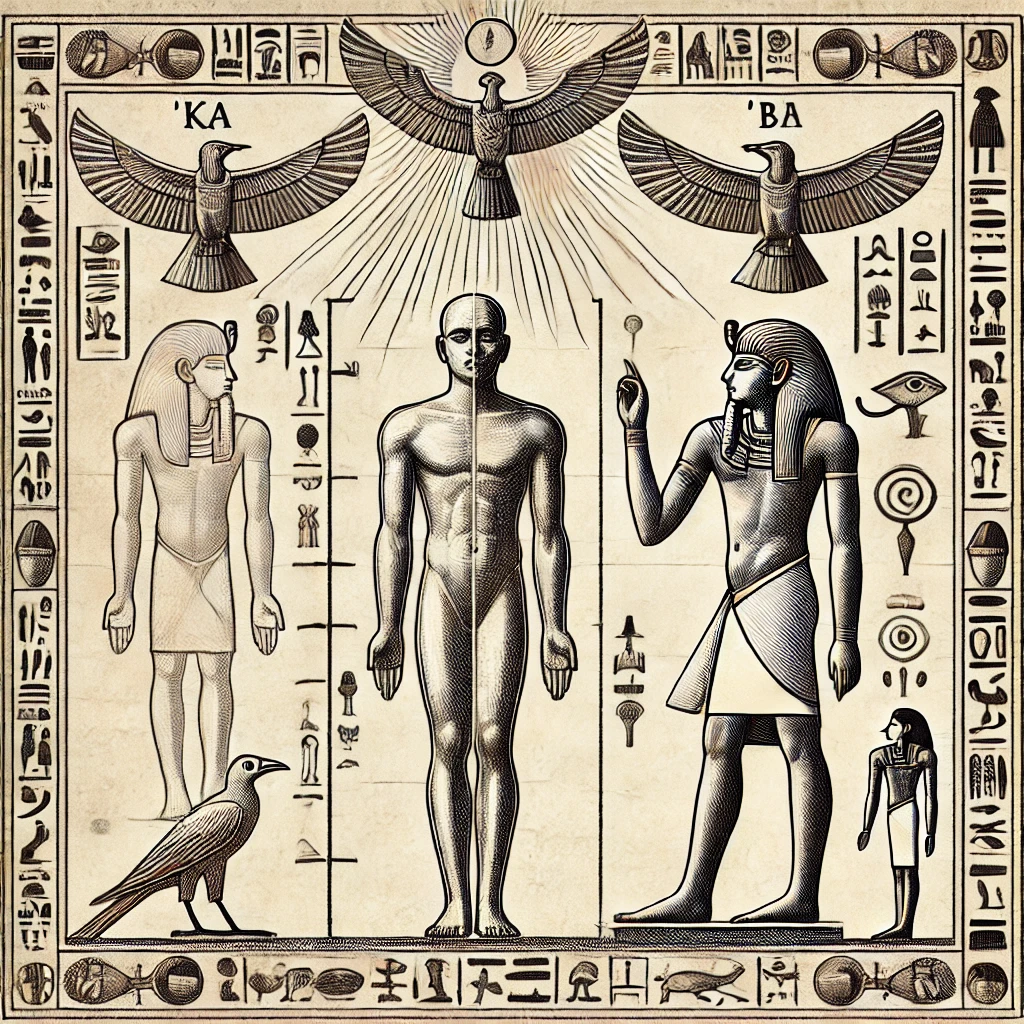
As we already discussed, according to the “Books of the Dead”, the first stage of the posthumous journey is the “dissociation” of the mind into its components, among which the most important are the perceptive and the reflexive — “ka” and “ba”.
The perceptual aspect of the mind (ka) is connected with the sense of being alive, energy, and the perception of objects. It does not analyze but experiences, then gathers empirical traces (bodily sensations, impressions, emotional experiences), and is connected with bodily memory.
The reflective aspect (ba) is connected with thinking, processing experience, and interpretation. It differentiates, integrates, builds meanings, forms eidetic structures, recognizes the laws of being, and is connected with the mental, symbolic, semantic level of existence.
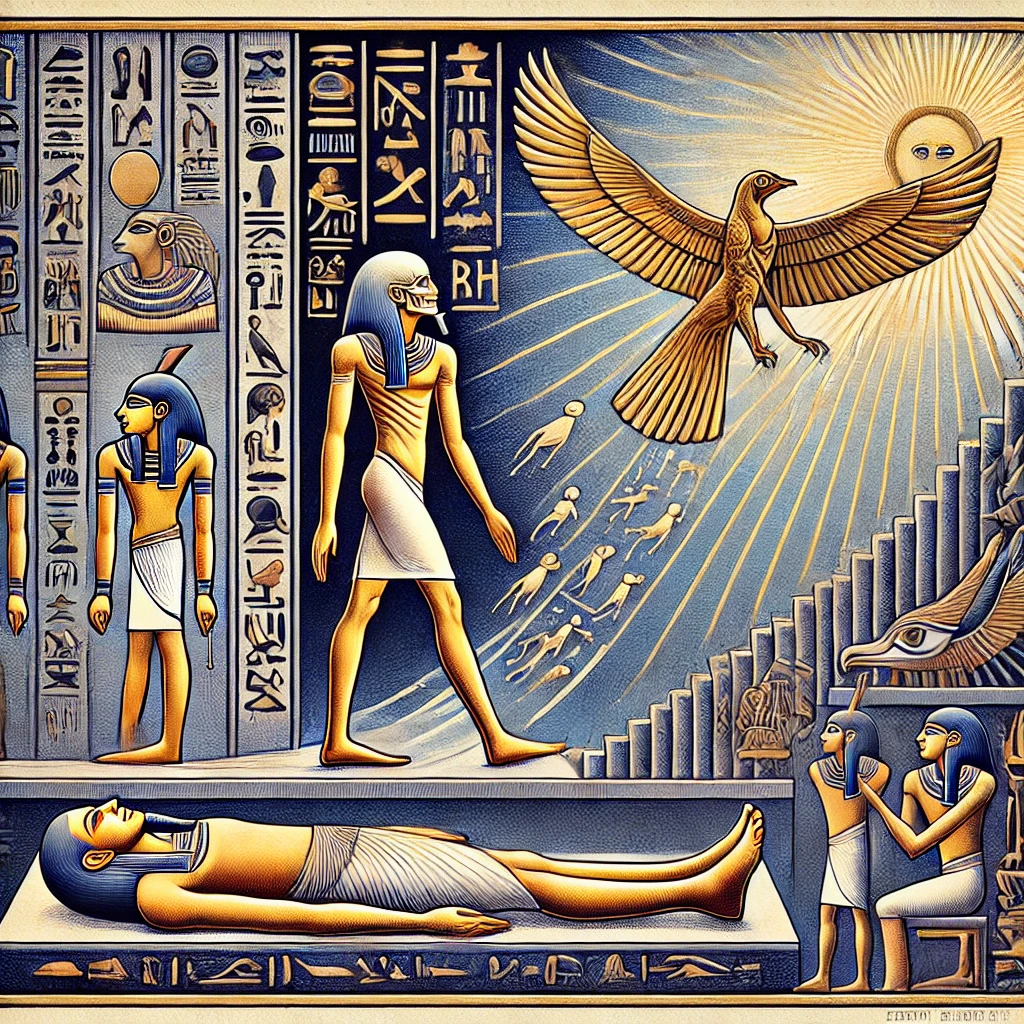
Their separation is essential for navigating the Afterlife, since it makes it possible to “untie”, to cast off as “knots” the “bindings”, formed between the being as an energy stream and other streams of energy and information, as well as those “knots”, “dead ends”, and “empty cycles” that have accumulated inside the psychocosmos.
External bindings (between the being and the external world) are its debts and obligations, emotional attachments, traces of deeds, energetic connections with people, places, objects. They “fix” the ka stream, holding it within the “old form”.
Internal knots (within the psychocosmos itself) are unresolved conflicts, inner contradictions, illusions, unfinished mental constructs, blocked ideas, recurring mental and energetic patterns that do not lead to development.
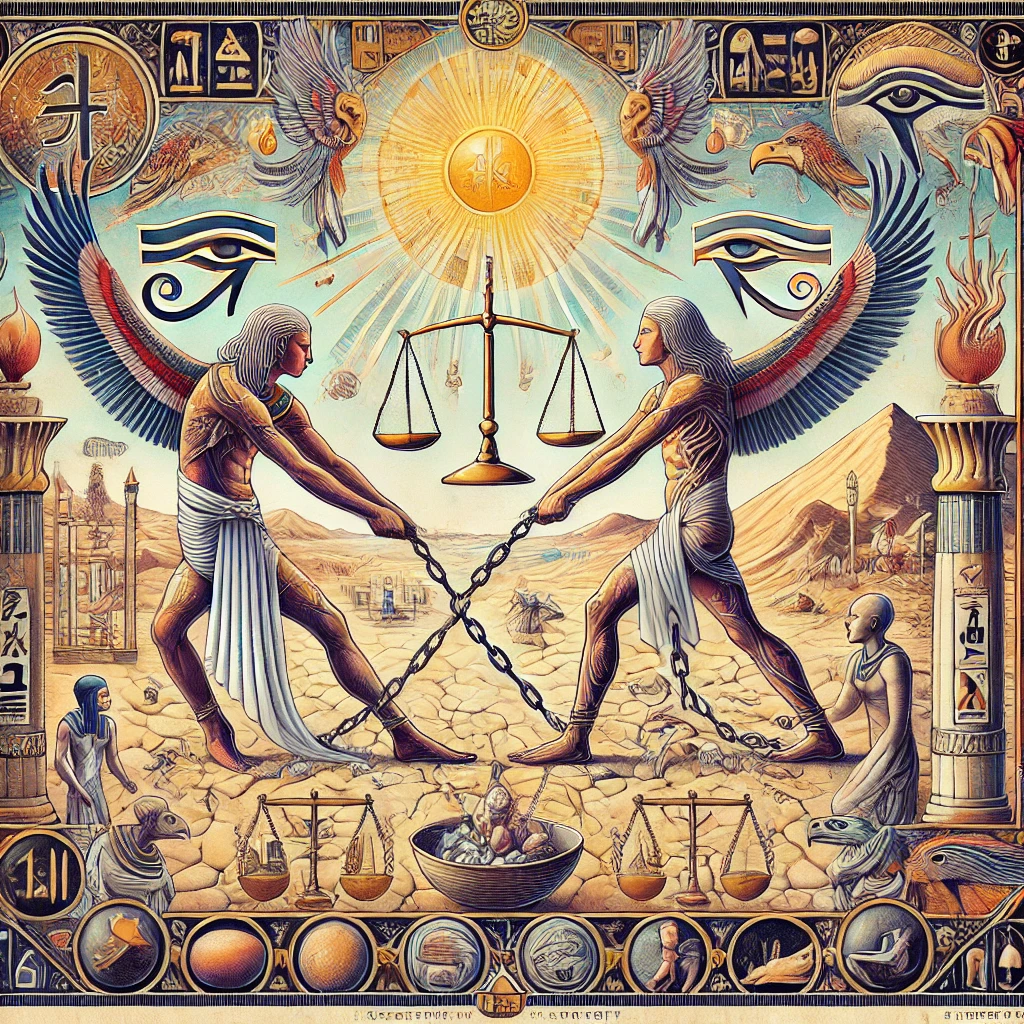
These knots and bindings are what prevent the mind from assimilating the experience it has gone through, to process it and imprint it, and if the mind does not untie them, it will either get stuck in the Duat or be drawn into a new cycle of incarnations, repeating old mistakes. While ka and ba are bound, the mind cannot distinguish “experienced” and the “comprehended”, perceiving the processes of the psyche as a single stream. However, if both aspects of the mind follow their own path of purification, they can reunite and become Akh — an integral mind, choosing its future path.
Thus, the first stage of the posthumous journey is the process of inner “untying” and liberation of the mind, which occurs under the influence of special agents — “cutters” or namtarru.
And only then does ka pass through the spaces of the Interval, where it sheds the traces of its former life, while ba ascends to the Solar Barque, on which it moves through a trial of meanings, where it overcomes illusions and mental limitations.
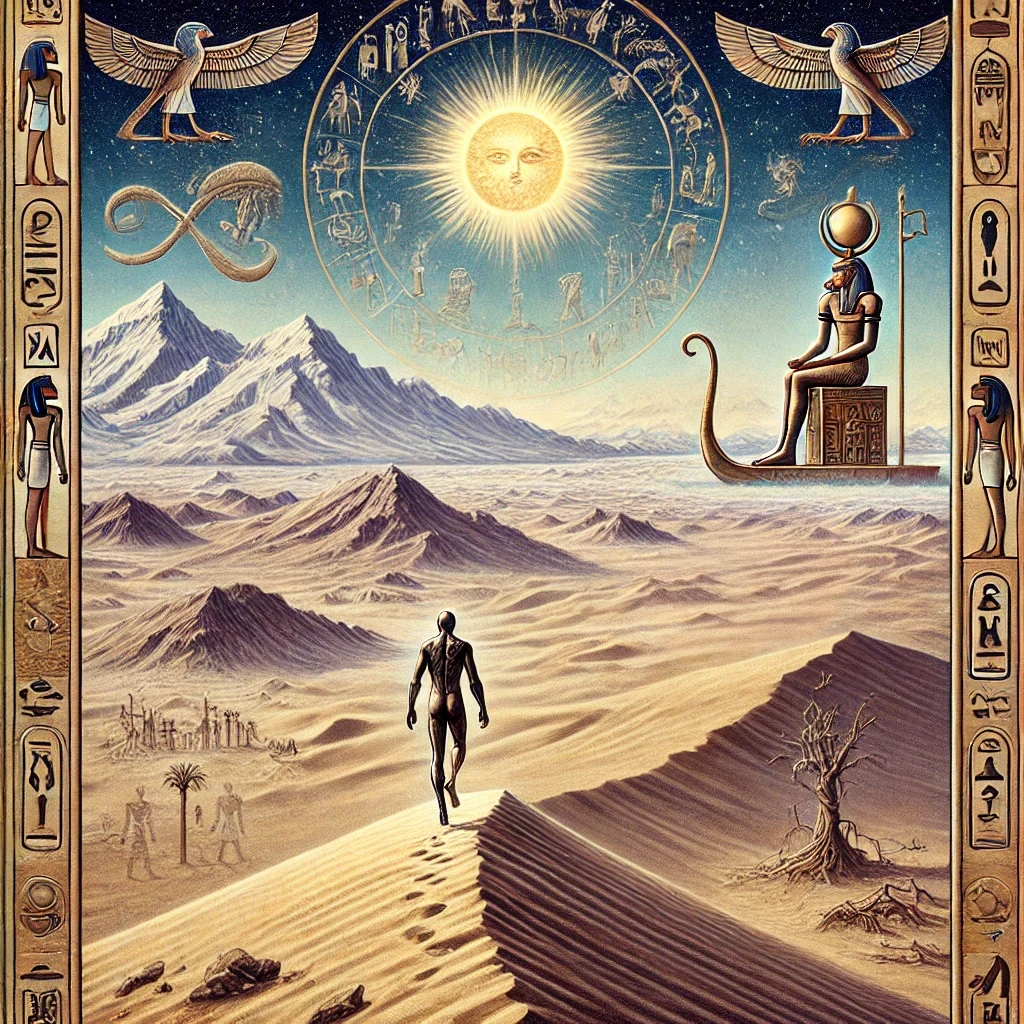
In other words, death unfolds the structure of the mind, allowing each of its aspects to independently go through the path of purification, awareness, and transformation. And the “two journeys of the soul” are two parallel processes that must end in the reunification of the mind. This process resembles the alchemical union of “philosophical sulfur” (ka) and “philosophical mercury” (ba), creating gold (Akh).
In accordance with this, as we have already noted, the Interval, the Duat, was perceived as a totality of an “aeon of active forces” (Celestial Duat) and an “aeon of possibilities” (Underground Duat). The “celestial” Duat is the totality of forces governing the universe, while the “underground” is the sphere of their formation, and they can be regarded as a continuous process of birth and maturation of energies in the potential medium of the Interval, where the Logos (Ra-falcon) gives form to the world, and the Chthonic Creator (Ra-ram) fills it with potential.
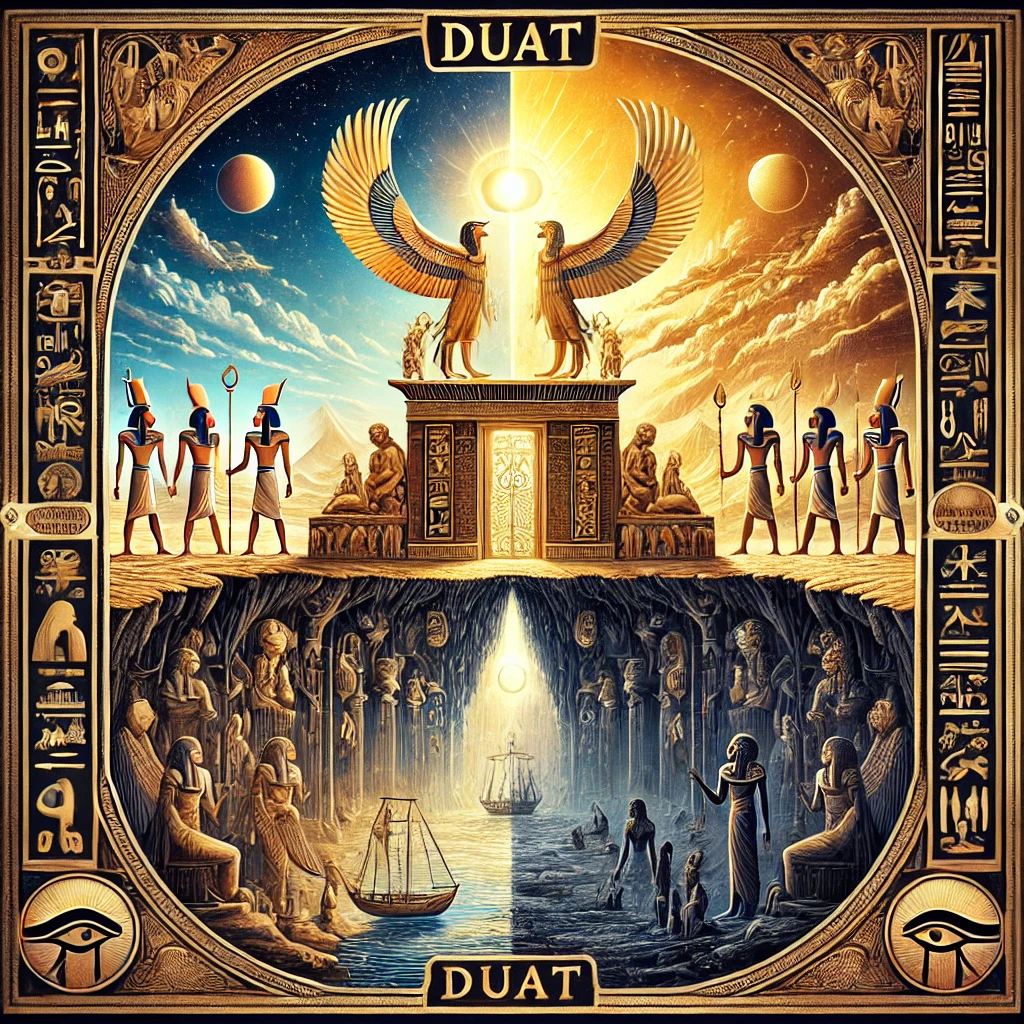
At the same time, the Duat is both a field of possibilities and a space of liberation, a totality of potencies and a cauldron of dissolution, and therefore both a source of the birth of universes and a place of their posthumous transformations.
And within this dual Duat, two levels of order stand out, organizing the formless and undifferentiated space of the Interval into the higher cosmos of the Afterlife.
In the Egyptian Tradition these two structuring forces are known under the name of the “Two Maats” or the “Two Truths”. We already discussed that for Egyptian cosmology Maat is the central concept, the idea of order and structure, which is opposed to the forces of chaos and destruction — Isfet. Accordingly, the “Two Maats” are opposed by two aspects of chaos — the destructive, infernal one, personified by Apophis, and the transforming one, embodied in the image of Seth.
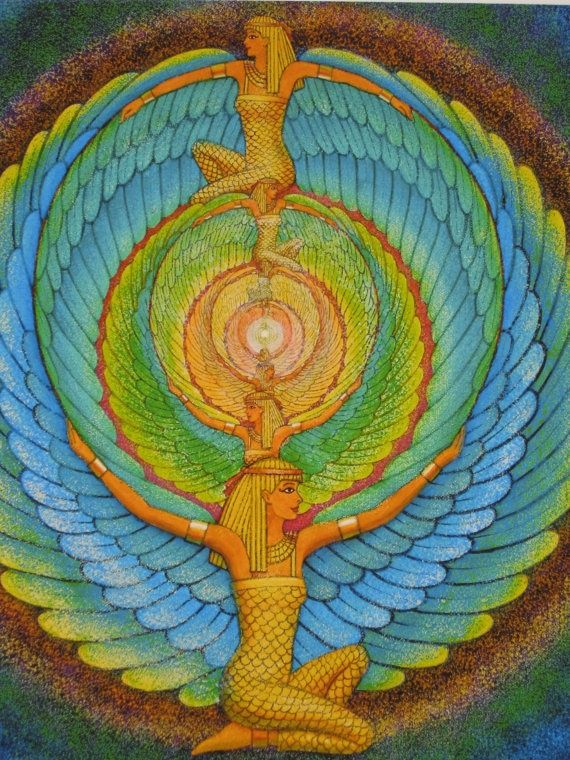
One could say that Maat is a dual cosmic function, governing the process of manifestation, ordering, and transformation.
At the same time, Maat of the Celestial Duat represents the laws of Pravy, the principles of the universe that govern manifested reality, the order that guides manifestation, the structure of actualized reality. It operates in the sphere of Ra, among the gods who govern the universe.
Maat of the Underground Duat is the order governing possibilities, hidden potencies, unmanifest forces. It is connected with Osiris, the Interval, chthonic energies, and its principle is the maintenance of hidden, latent order. It organizes energies that have not yet entered the active play, acts as a womb where future forces are formed, still unmanifest.
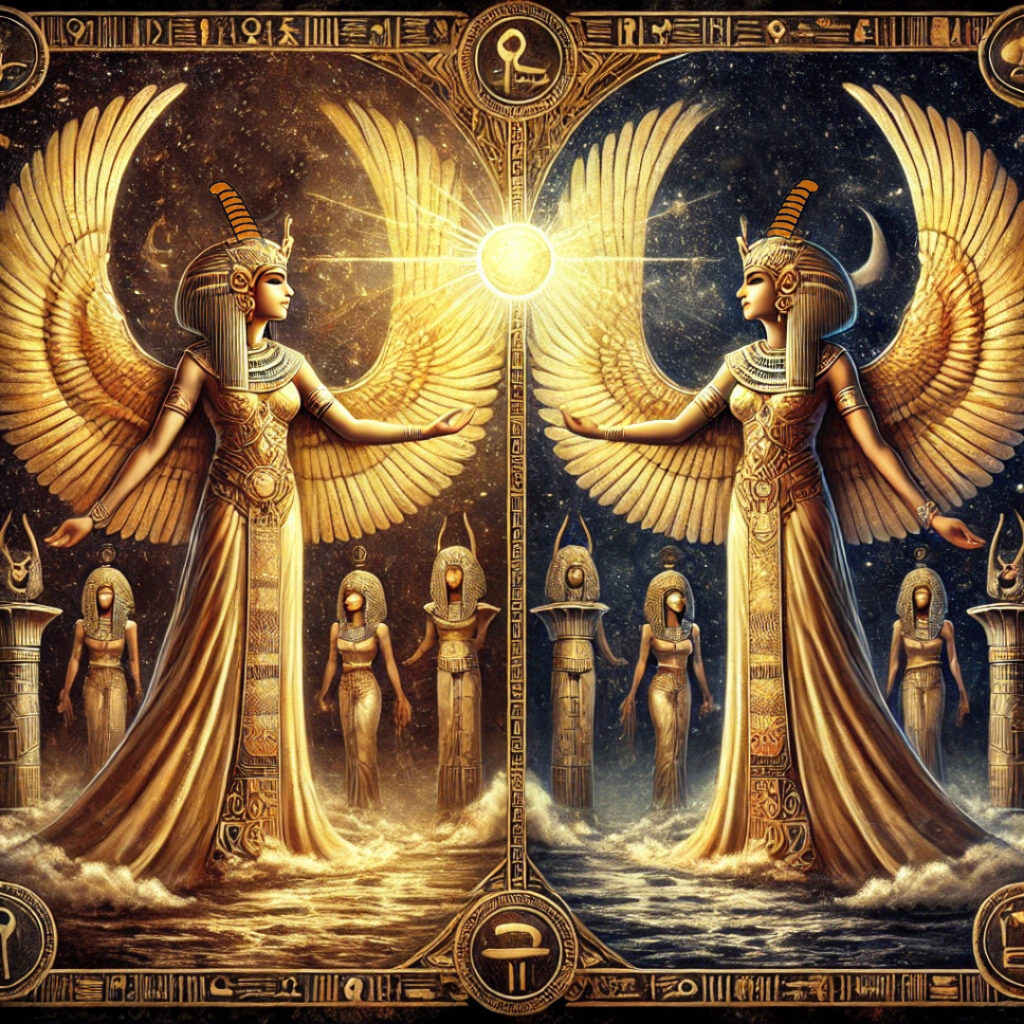
Accordingly, Maat of the Celestial Duat (Ra) is a structure realized through manifested order. It guides the logical comprehension of the universe, orders actions in society and religious rituals, and establishes correspondence to the laws of the gods in “lower” life.
Maat of the Underground Duat (Osiris) is a potential structure, acquired through inner experience. It manifests in an understanding of the hidden processes of being, ensures passage through the dark aspects of transformation, and also initiation into the mysteries of death and rebirth.
In the Afterlife these Two Truths meet the mind as “orienting forces”, and therefore one of the most important stages of the journey through the Duat is the so-called “Judgment of Osiris”, which can be regarded as the encounter of the mind with both Maats, infallible and incapable of being deceived.
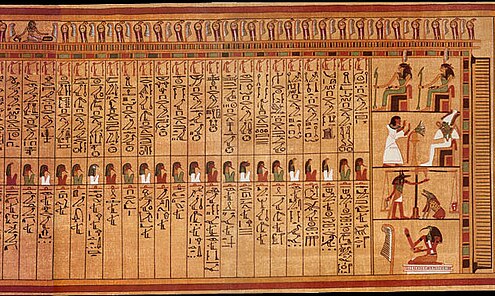
The posthumous judgment is both the mind’s evaluation of its manifested actions and the aspirations of the soul, and an assessment of its potential, the hidden levels of the mind, the unconscious layers, the capacity for transformation and integration into a higher order.
Since ordinarily the manifested mind is far from efficiency and ideal, in most cases the “Judgment” is a very traumatic event, because the mind of the dead has nowhere to hide and nothing to conceal its true condition. Since most often a being has exaggerated self-image, the encounter with one’s real condition can be perceived as torment, which is reflected in stories about “posthumous monsters” — alastors or ammit.
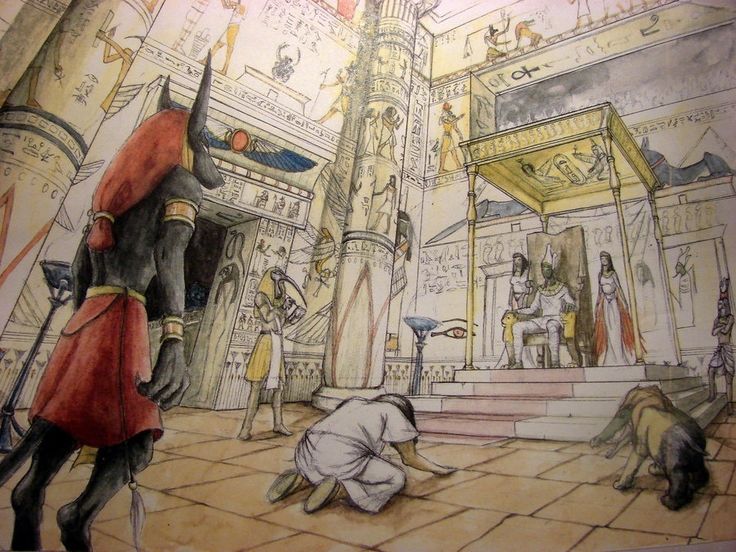
However, with a favorable outcome, the “Judgment” is also a mystery of the mind’s wholeness — a process in which the mind is not so much judged as it undergoes integration and preparation for a new stage of existence.
In this sense Osiris is the ideal level of the mind, its Logos, Life itself in its deep, timeless meaning. He can be perceived as an archetype of eternal life through death, as an inner center that remains unchanged through all changes of the mind, the point of highest integration in the structure of the mind, its inner core, which must be “awakened” through the experience of death and rebirth. In the aspect of the Duat, Osiris and Maat in its hidden, potential aspect are inseparable: even when He does not speak — He knows; even when He does not create — He makes creation possible.
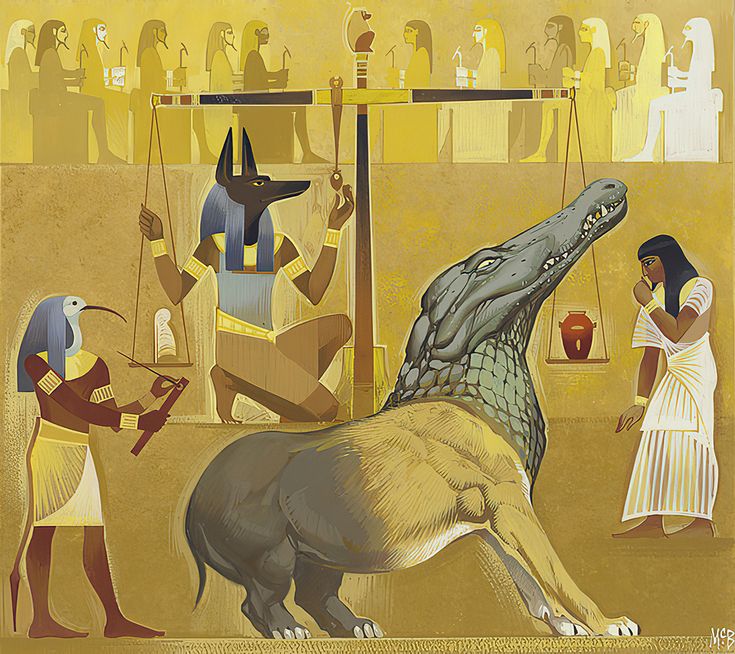
Accordingly, the Judgment of Osiris is an assessment of the state of the mind from the standpoint of its inner center. The Logos, Osiris, is precisely the point with which the mind must correlate itself, and correspondence to Osiris means that the being lived correctly (expressed the manifested order, Celestial Maat) and existed correctly (inner order, Underground Maat), and also gained deep knowledge of its being, managed to integrate all its aspects, and attain wholeness.
One could say that the “Higher Self” of a human being is Osiris, who remains unrecognized until one passes through one’s own initiation. Therefore, every dead person can become Osiris if they pass the Judgment and understand their true nature.
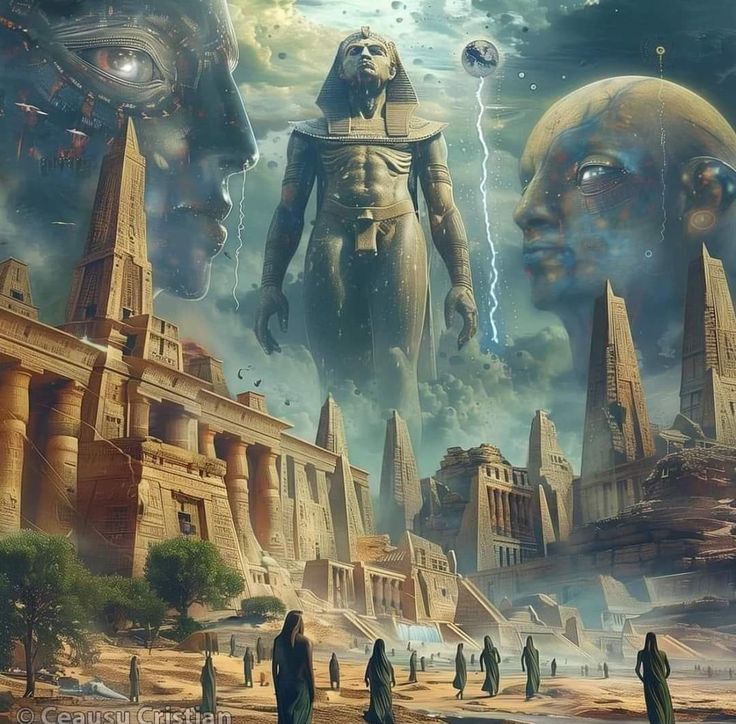
The final goal of the Egyptian mystery of the Interval is the possibility of deification (sa-akhu), rebirth in eternity through overcoming duality. It expresses the final result of the soul’s path, its complete transfiguration and restoration of its true nature, when ba unites with ka. This state is Traditionally described as “Ra rests in Osiris, and Osiris rests in Ra”, where “Ra rests in Osiris” means that the light of manifested life (Ra) finds its root and foundation in the eternal Logos (Osiris), and “Osiris rests in Ra” — that the hidden essence of Osiris finds itself in the active Light (Ra), transfiguring into the Eternal Being — the luminous Akh. When ka, Osiris, returns to life, he does not simply “come alive”, but gains the light of Ra within himself; and when ba, Ra, descends into Osiris, he finds himself in his depth.
When this happens, the mind ceases to be torn between different parts of itself; it becomes a single, immortal, radiant stream (akh, saakhu). This process does not “happen after death”; it begins in each manifested life, when a being begins to see the world as indivisible, itself as eternal, and being as sacred.
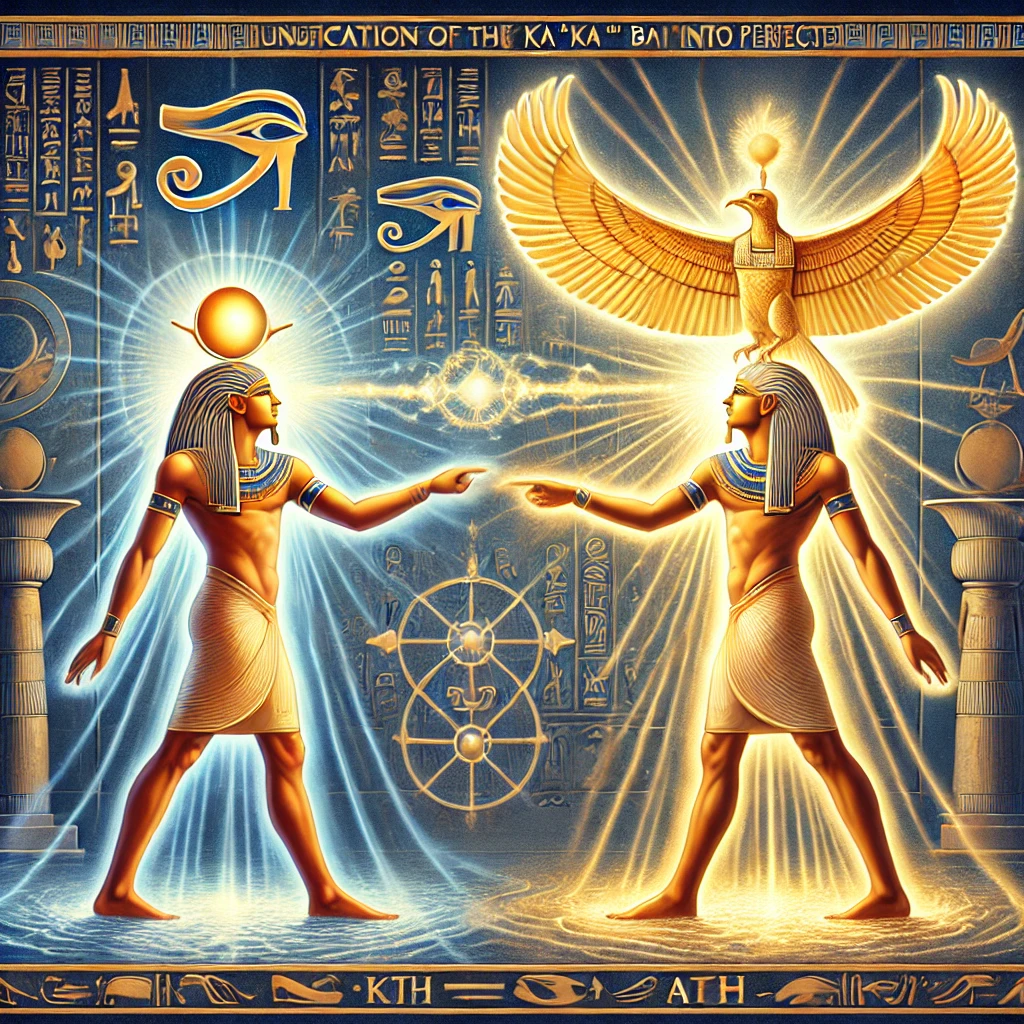
Thus, Ra is Maat as manifested order (active awareness), and Osiris is Maat as hidden order (perceptive being, the guarded law).
Accordingly, the Hall of the Two Truths is the place where two realities meet, where it is determined how balanced the mind is between its manifested (Ra) and causal (Osiris) aspects. In doing so, the mind encounters its own hidden gravitations and strivings and, by virtue of its “closeness to the center”, proves able to see its real state.
At the first stage of the “Judgment” — the “weighing of ib, the heart” — the correspondence of the mind to Maat of Ra (manifested order, aware life) is determined. The heart is perceived as a repository of experience, lived impressions and imprinted views. Accordingly, its “weight” is the measure of the harmony and “righteousness” of this experience.
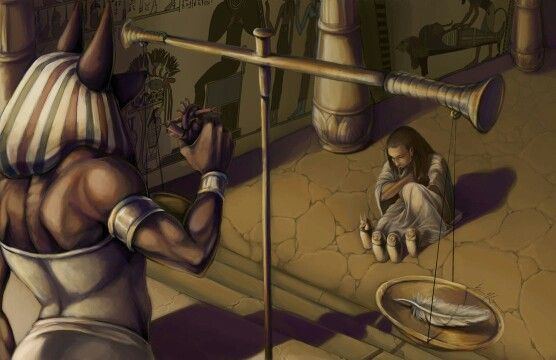
After the weighing, the mind is subjected to a second trial — a test of its perceptive (unaware) level, its correspondence to the Maat of Osiris. In this, the mind looks into the eyes of Osiris — its highest reference point, the incorruptible Judge who sees the hidden. In other words, the mind sees, without embellishment, its real motives, its driving forces, and can assess their correspondence to its deep nature.
When the mind passes the Judgment of Osiris, it finds itself in a space where it is impossible to be deceived. The light of Maat shows what really exists in the mind; it sees itself not as it wants to be, but as it is. All justifications and self-deceptions disappear; only pure truth remains. This is the moment of absolute self-knowledge.
On the whole, the “Judgment” is a test of the mind for wholeness, determining its coherence between the active mind and its deep impulses. It is self-assessment, identification of how much the manifested mind has realized its potencies, how much it has become aware of its deep nature and been able to actualize it. This means that judgment is not “punishment” and “retribution”, but a moment of awareness.
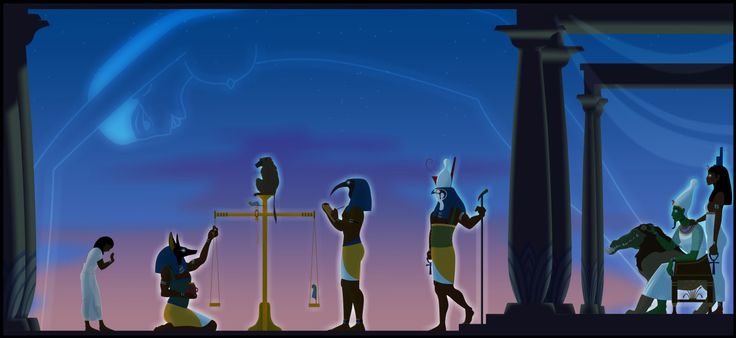
And in this judgment the mind itself is both Judge and defendant, and it is also the executor of the sentence. As a result of such self-analysis, tendencies in the mind are ordered, creating the conditions for a new incarnation, or, in Eastern terms, “a certain karma ripens”. What is discovered and ready for harmonization draws corresponding conditions, and thus a path begins to form — through the worlds of the Interval or toward a new incarnation.
This is a structural process aimed at evolution, not at retribution. If the mind has attained wholeness, it becomes Akh, an immortal self-determining being; if it is partially balanced, it passes through the worlds of the Interval, continuing to untangle knots; if it has not completed its path, it is sent into a new incarnation to go through another cycle.
One who knows how to free the mind, who understands the meaning and purpose of separating ka and ba, is ready for the Afterlife and knows how to govern one’s fate even beyond the boundary of life. But one who is mindful in life is already undergoing this judgment, without waiting for death.
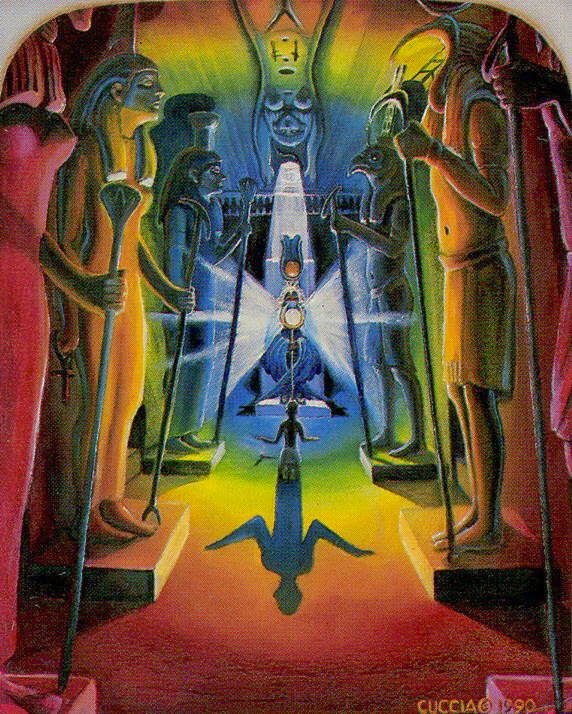
The gods have no knots and no false truths; the judgment proceeds from the perspective of Osiris. The post-mortem simply takes the whole life lived and forms a crystal of karma from it, and this karma crystal then shapes the consciousness of the afterlife and its possibilities. If the soul is satisfied with its place according to its consciousness, it stays in the afterlife; if it is not satisfied, it chooses paths, one of which is a new incarnation. In incarnation, again, new possibilities layer upon one another, leading either to a good harvest or a bad one. In the afterlife, the harvest is visible; in physical life, the harvest is invisible, but the choice is always with the soul.
How do the statements about post-mortem judgment in Egyptian tradition, integration of consciousness, self-awareness, and final merging in Akh (or reincarnation) relate to the practice of mummification and existence in the interval, Refaim, and so on (which has been written about extensively earlier)?
We discussed this question: https://enmerkar.com/en/observations/of-what-are-the-pharaohs-guilty Unfortunately, over time, the goals and objectives of the Egyptians’ Post-Mortem Journey shifted in the mass consciousness, and they began to strive for more obvious and ‘guaranteed’ results than deification.
During the recollection, there is a stage of passage through the birth canal back into the womb; can this stage be correlated with the Judgment of Osiris? Is it true that it occurs before this moment and, in essence, the entire Great Work is this judgment, preparation for this transition?
Now it is clearer. Thank you for this very interesting and important synthesis of different traditions and world descriptions.
Thank you very much.