
The Cycle of Osiris
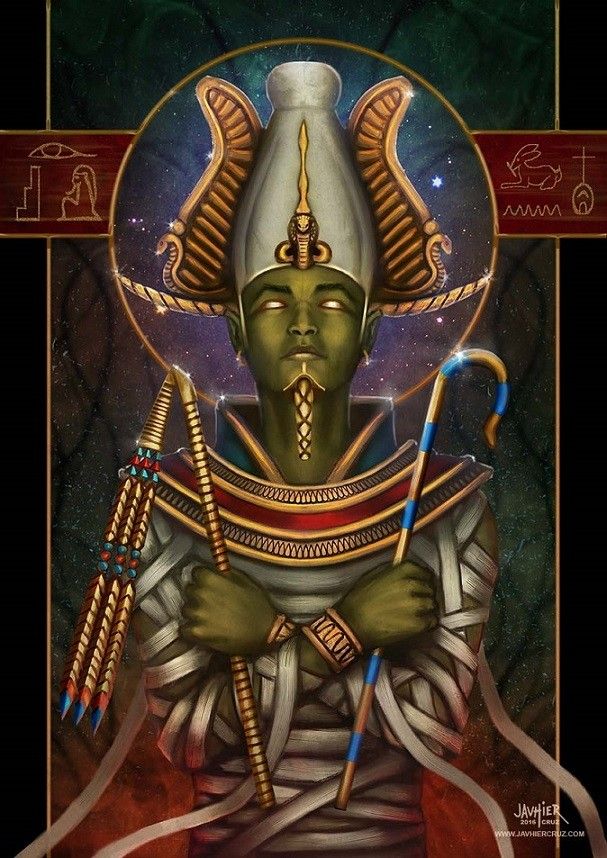
Transformation, renewal and the rebirth of life in ancient Egyptian mythology are described from two perspectives — as the voyage of the Solar Bark and as the birth, death and resurrection of Osiris. From a certain standpoint, the whole of Egyptian religion is a repeatedly enacted and multifariously symbolized Osiris Myth, an “Osirian mystery”: the story of the union of the soul with ‘soul of souls’ and the victory over the forces of destruction. This myth, with its many-sided symbolism, is integral to Egyptian concepts of kingship and succession, the conflict between order and chaos, especially death and afterlife.
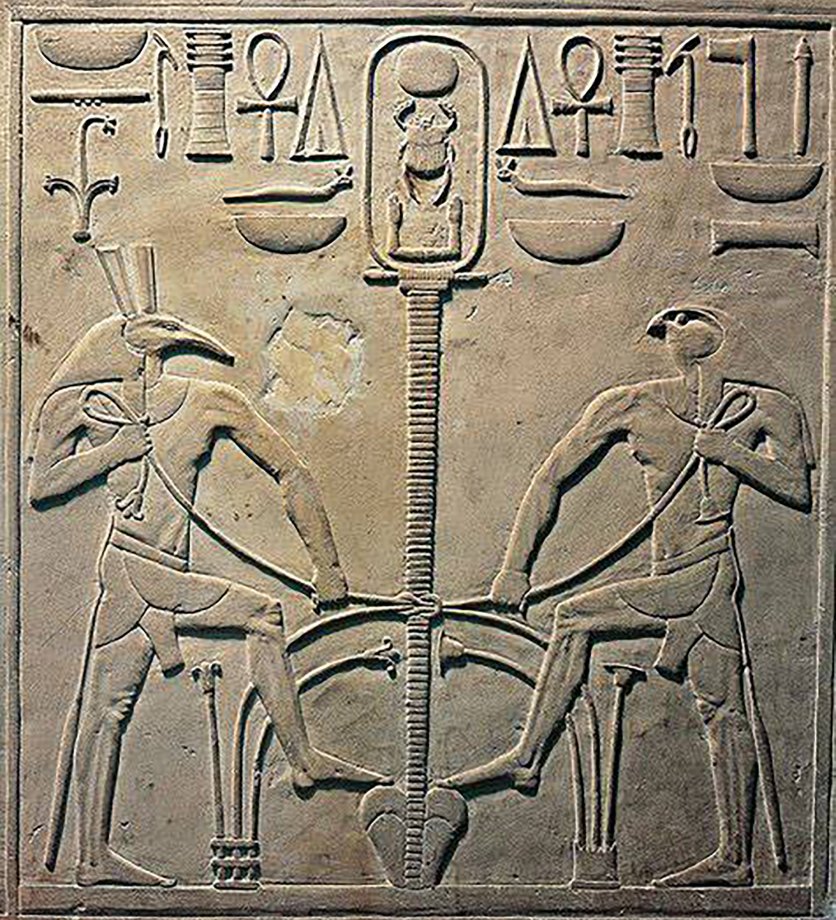
As a principle of vitality, Osiris was closely associated with the image of the World Tree — the axis uniting the earthly, celestial and subterranean realms. One might even say that he himself was, in a sense, such an axis. Thus his symbol — the pillar Djed — is both spine and phallus of the cosmos, much as Shiva’s Lingam is the all-pervading creative energy of spirit.
Hieroglyphically, djed represents the spine itself, as well as a sheaf of grain, a tree and other embodiments of life.
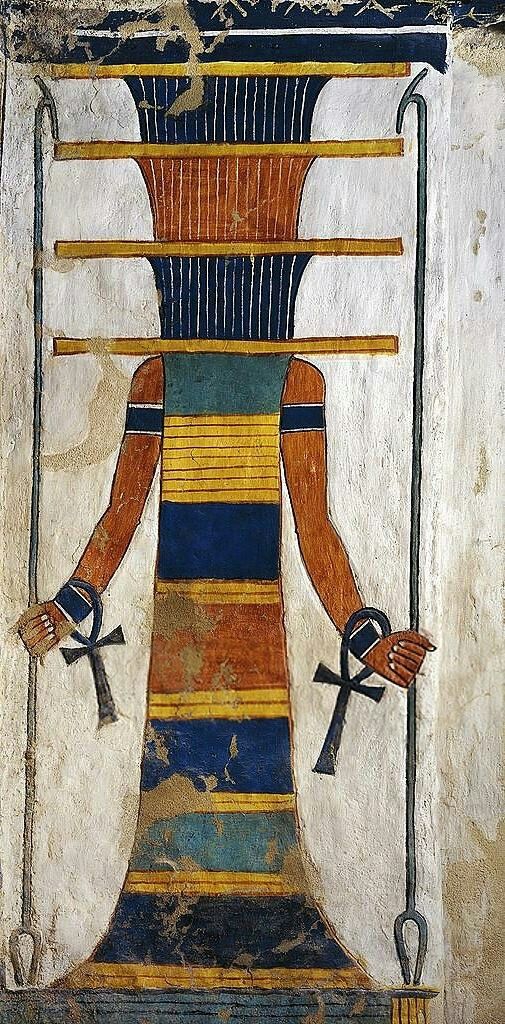
Important symbols of Osiris were also grain (neper), the ear of grain, the field and, of course, the Nile (Hapi) — because the Sacred River was regarded as the source and bearer of life. All of these vital symbols of life are united in the image of Osiris, who is himself the potency of life and of being.
Thus Osiris is the inner divine foundation of life, the divine ka of the ideal being, and in Egyptian belief every person after death becomes an Osiris without losing their personal identity.
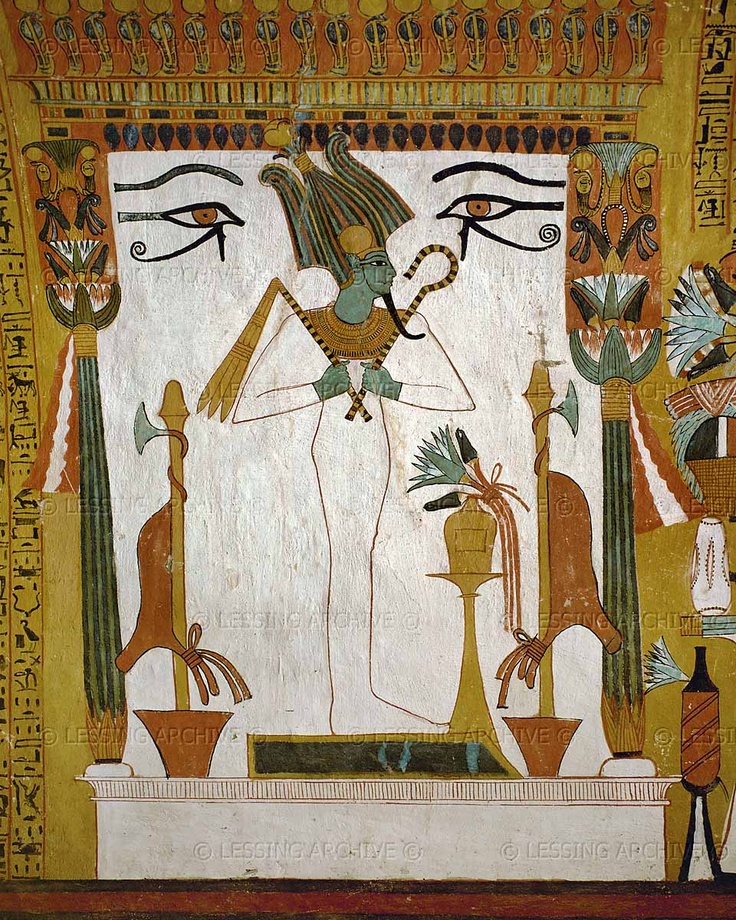
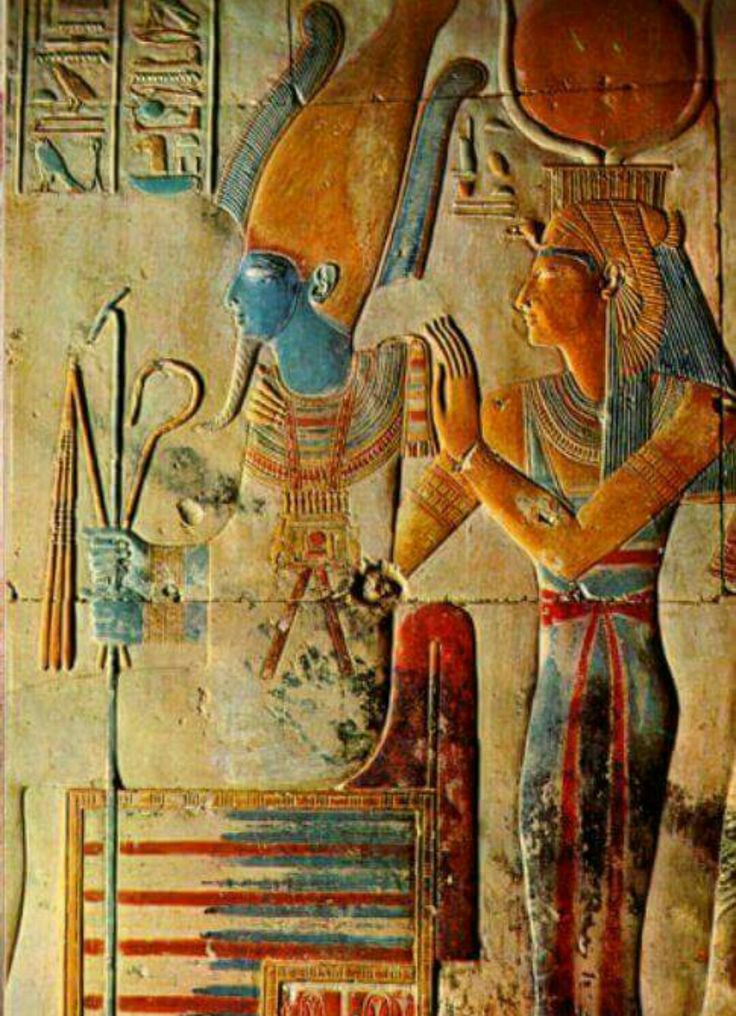
Because Osiris is birth and life, he is depicted with a green (the color of plants) or black (the color of fertile soil) body. We will not linger on the formal features of Osiris as a god here; instead, we will note only what is essential for understanding the Mystery of Rebirth and Union.
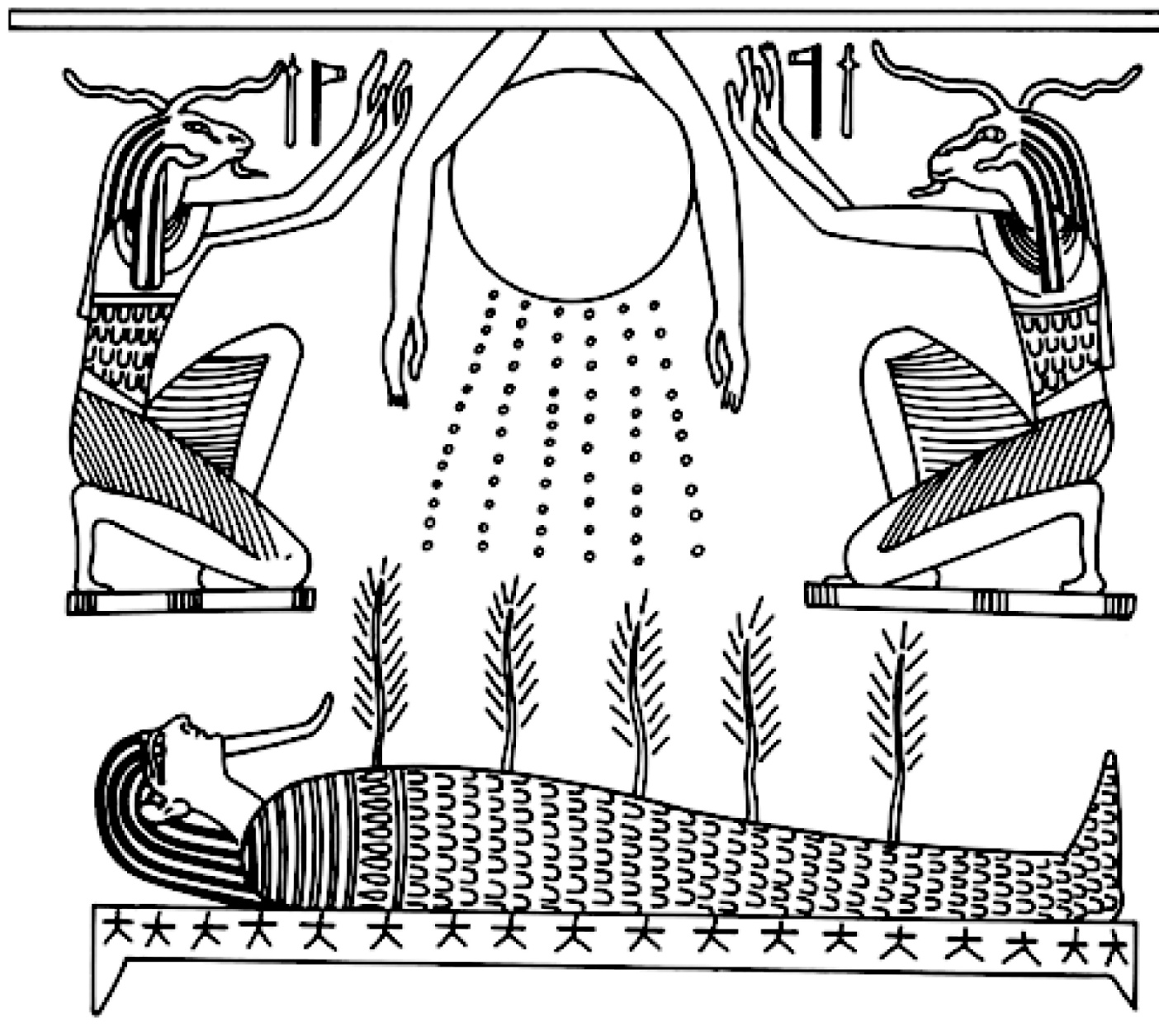
As a mythic figure, Osiris arose precisely as the embodiment of the divine ruler of the dead, and his well-known association with vegetation and natural yearly cycles was, evidently, a secondary development of the idea of “death for the sake of resurrection.” Osiris was regarded as the potency of life, the possibility of life.
The meaning of the god’s name is debated among Egyptologists, but the various proposed translations converge on the ideas of “potency” and “presence.” Thus the name is traced to wsr, “Mighty”; to js – jrj, the engendering (male) principle; to st-jrt, rendered both as “Place of the Gaze,” “Gaze from the Throne,” and as “product, something produced” (that is, a mummy). In any sense — Osiris is an ever-present force, the immobile foundation of being, life viewed as principle and possibility.
Another of Osiris’s names is Khentyamentiu, from khenty (firstborn) and amenti (west), which can be translated as “Leader of the Westerners” (that is, King of the Dead), and “Firstborn of the Westerners” (that is, First among the Dead). Other names include Un-Nefer (“Well-being”), Necher-Nefer (the Benevolent God) and Nep-Maat (Lord of Truth). Osiris is also called Asha-Nu, “He who has many names,” that is — many different forms and manifestations.
Osiris is the firstborn son of Earth and Sky, Geb and Nut, the first of their four children. Geb and Nut — Earth and Sky, Immanence and Transcendence — in their union begot Osiris; they gave birth to life itself.
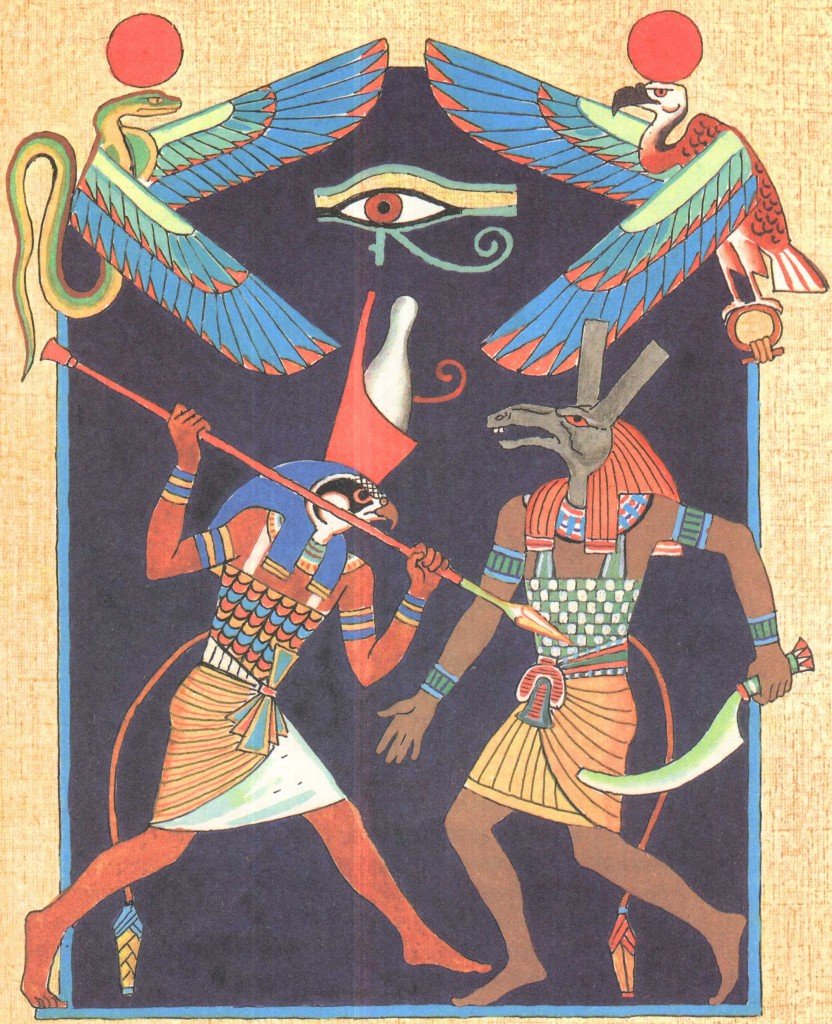
Tightly associated with Osiris is the image of his divine sister and consort — his anima — Isis, who embodies the very energy of life; his “son,” in fact the actual, dynamic manifestation, the “Heavenly variant” — Horus; and the “evil double,” the dark alter-ego, the spirit of death and destruction — Set. They form three pairs of interaction: the Isis–Osiris pair expresses the duality of life as principle and life as energy; the Osiris–Horus pair personifies the dichotomy of potency and actuality, the subterranean foundations of life and its Heavenly source; and the Horus–Set pair expresses the confrontation of creative and destructive forces in the manifest world.
As Plutarch says, “Isis is the feminine principle of nature (physis), and she contains within herself every birth“; “Iset” means foundation — throne — upon which life abides; she is called “Mother” or “All-Benevolent.” Sometimes a king is depicted sitting on Isis’s lap, emphasizing that she is his support and throne.
Set is the force of destruction that is meant to destroy in the service of creation. Yet when this destructive force slips from control, it begins to “destroy for destruction’s sake”; another name of Set is Teshi, “the Divider” (tesh — division): “he is the great divider, he who delights in division and hates fellowship.”
Horus is the form of the Sun as bestower of life, a “particular hypostasis” of Ra, the energy of vitality emanating from the Sun (yet still deeply rooted in the potency — Osiris). Just as two Duats were distinguished, so too were two Horuses distinguished, where the Horus of Nonbeing, the Horus of the Duat, is Anubis. If Horus himself is the son of Osiris and Isis, then Anubis, the Horus of the Otherworld, is the son of Osiris and Nephthys (the life-energy hidden in the seed or the corpse).
As is well known, the Osiris Myth revolves around his treacherous murder by Set — that is, the destruction by the uncontrolled destructive forces of the very source of life. Not destruction for creation’s sake, but total annihilation — destruction without creation. The idea of this image is that if a force intended to make way for a new manifestation slips from control, it sweeps away the manifestation itself. This idea later developed into the concept of the Qliphoth — the destructive, ruinous side of the cosmos, which in itself cannot be turned into “good,” although it is the result of the natural course of things. Set cannot be “reformed”; yet he can be overcome, subordinated, and this function belongs precisely to the “diurnal mind” — Horus.
The slain Osiris is life itself destroyed, goodness annihilated, and in that annihilation there are no grounds for rebirth. In Egyptian thought there were two abysses: the Abyss of potential being — Nun, and the Abyss of annihilation, nonbeing — Duat — and such “destruction without creation” is secondary; it appeared only after Set’s crime. Only when in the duality of Good and Evil evil becomes an autonomous category, an independent engine and substance, does the possibility of complete annihilation arise. The drowning of Osiris signifies precisely this total obliteration — the slain god falls not into the waters of life and renewal but into the waters of death, in which he perishes utterly.
Yet in this lies the source of transformation. While we speak only of “renewal,” while Nun merely “dissolves” creation into itself in another world-cycle, there is only repetition; true change requires the breaking of causal chains, total destruction. Thus Osiris’s body is dismembered and the connections between his parts are shattered, which creates the precondition for divine transmutation. The death of Osiris is necessary for the “perfect manifestation” of Set, without which he is merely a “shadow,” an auxiliary power; and without the clear manifestation, the fullest expression of each pole, their perfect integration is impossible. Until Set kills Osiris he has not revealed the full potential of his destructive power and therefore cannot be truly integrated.
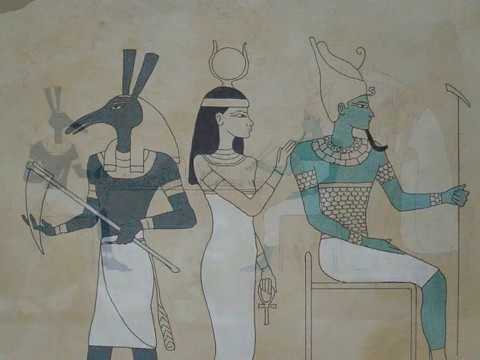
But such a “full” expression of the poles of the binary also entails their rupture, and so an “external force” is required to prevent the final split and division. This auxiliary binary is the Isis–Horus duo, in which Isis, as the energy of life and union, finds and gathers the scattered parts of Osiris’s body, and Horus overcomes the destruction by prevailing over Set.
Such subordination of the destructive force is one of the “means of securing immortality.” Were Set to be slain, balance would likewise be upset, and the triumph of Creation over Destruction is marked by assigning Set the task of bearing Osiris’s body, conveying it along the Nile to the place of rulership. The destroying force must take its rightful place. Therefore the wholeness of the god of creation is impossible unless the principle of destruction — Set — is also reintegrated; the world must be restored to harmony not by eliminating disharmonious elements, but by establishing the correct relation between creation and destruction. This is precisely what the later Goetic Tradition teaches: demons cannot be defeated, but they must be withstood.
Furthermore, it is precisely this life-force prevailing over destruction that resurrects Osiris — Horus returns life to his father, the ‘chthonic counterpart’ by means of the Eye of Life, the principle of the actual presence of creative energy.
Thus the “moral” idea of the Egyptian understanding of the Osiris Myth is that a person, moment by moment, either kills the Higher Life, Osiris, within themselves by their actions, or restores it. A free being is either Horus, who gives Osiris his enlivening Eye of Life, or Set, who casts him to the ground and kills him. The mind is either Apop, ungovernable, opposing creation, or it is the divine energies, God’s manifestations. Victory over death, victory over Set, the resurrection of Osiris, is continually accomplished. The Eye of Horus guarantees resurrection, and resurrection is the victory of life over death.
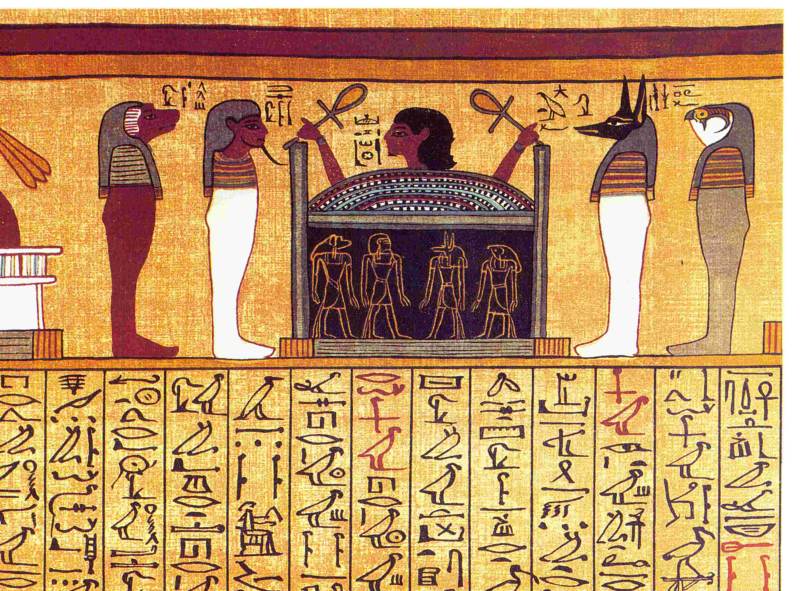
At the same time, the Osiris mystery also expresses a concrete transformation effected by the mind in life and after death: the death of the body, the release of the divine energy ka, its union with the ba, integration into the akh and the “enthronement” of the latter in other existence.
When Ra and Osiris, ba and ka, are united, they will sit upon one throne, and this occurs after the “resurrection of Osiris” — after Horus defeats Set — when all souls are joined to the Sun, to Heaven, to Ra and to Eternity. Hence, as it is said, “the formula of resurrection and deification is: ‘Ra rests in Osiris, and Osiris rests in Ra‘.
Leave a Reply