Currents of mind
When studying the Hermetic myth, it is easy to notice that in the worldview it has adopted, the word “stream” (Lat. fluctus, Heb. זרם) is often used, including in relation to those phenomena which do not “flow” anywhere: streams of Power, streams of energy, streams of mind, etc. We have already noted that this term in the context of the Myth does not mean some kind of movement, but refers to the processual nature of the object under consideration, i.e., the sequential and causal change of its states.
Nevertheless, the use of such a term may be misleading, creating the impression that there is some kind of “substance” that “flows,” for example, some “tangible” Power, or some “mind in itself.”
At the same time, the Myth constantly emphasizes that both Power and mind are neither substances nor independent entities, but rather properties of reality.
For example, by “Power” the Myth understands a property, a capacity of a being or object to preserve its self-identity (or, as they say, “to realize its own will”), its unique mode of manifestation, its mode of existence; and by a “stream of Power” it means the sequential manifestation of this capacity in various interactions. In other words, the greater the number and the intensity of interactions this system can enter into while preserving its self-identity, the more Power it contains.
In a similar way, the Myth calls mind the capacity or property of reality to give itself definiteness, stability, to transition from a state of multivariance, superposition, to a describable, measurable state. It is clear that such a transition requires observable interactions, and therefore one can say that mind is the ability of reality to observe itself. Accordingly, by a “stream of mind” is meant an interconnected totality of such cognitive acts, i.e., the process of knowing the world, or — the process of its continual creation.
Since reality means interactions, it is clear that the process of its manifestation also means an increase in the number of such possible interactions, each of which, in order to occur, needs a “stabilizer,” an “observer.”
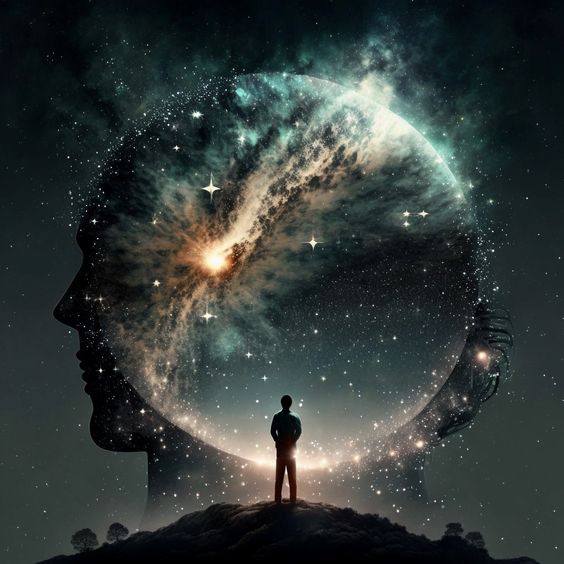
Thus, alongside the hierarchical organization of the “object” field of reality, the “composite” structure of materiality: elementary particles–atoms–molecules — simple bodies — complex systems of bodies, etc., there also arises a “subject” hierarchy interdependent with it: knowing processes of different degrees of syntheticity, of different “size” and “breadth.” At the same time, each such two-sided process is, in fact, a “stream,” that is, a set of interconnected stages, states, and therefore one can speak of a hierarchy of streams of interactions and streams of descriptions, i.e., streams of being and streams of mind.
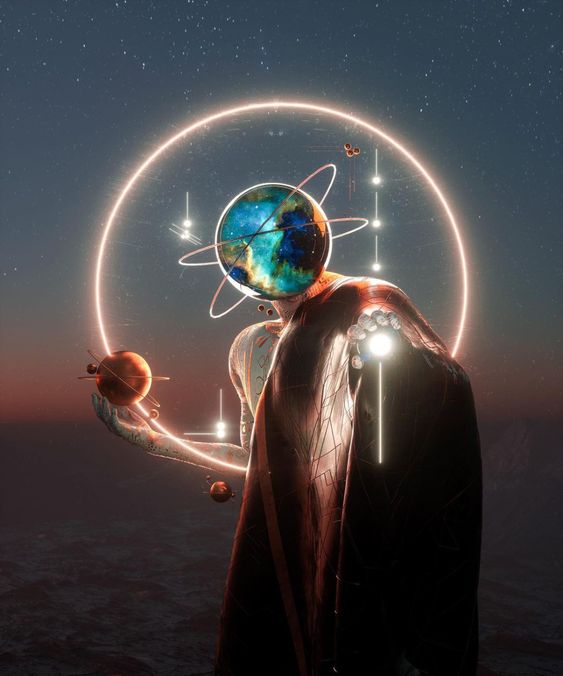
The Myth speaks of the structuring principle of each such stream as its “logos,” its “principle of form,” while noting that logos is the “ideal” state of any stream, i.e., a state in which all interactions possible for it are realized, or all possible elements of description are created. It also introduces the concept of an “elementary unit” of objecthood — energy — the minimal interaction, and “elementary mind” — a monad, i.e., a single descriptive act. At the same time, since the streams of reality and mind are sets of interconnected, causal acts of cognition/interaction, one can speak of “streams of energy” (that is, interconnected processes of interaction) and “streams of mind” (that is, sequential cognition), and therefore the term “energy” refers to the capacity to interact in general, while the term “Monad” refers to the essential basis of any single, integral stream of mind. Obviously, both concepts are abstractions, representations that have no self-subsisting nature: there is no such thing as “energy as such,” and in exactly the same way, a monad is an idealization, a representation of a stream of mind that has “fully realized itself in accordance with its logos.”
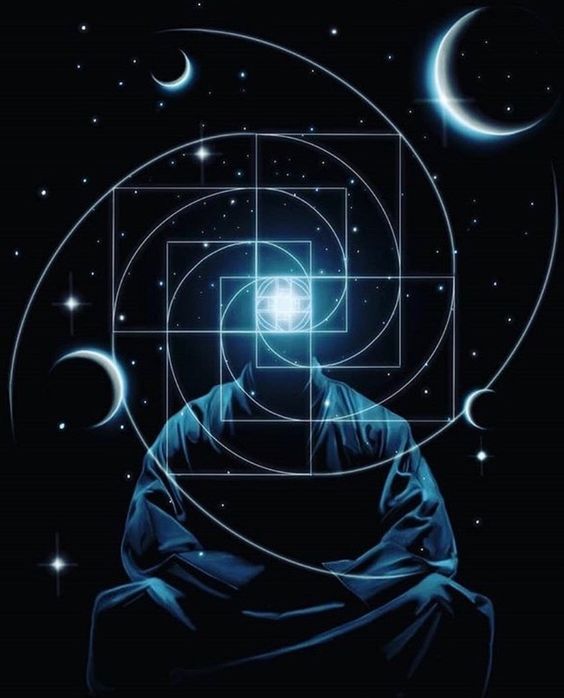
It is precisely from these positions that it becomes clear why the Magical myth is much more “mechanistic,” “physical” than, for example, religious or psychological approaches to describing the world. For the magus, the world is, first and foremost, a great Stream, a cause-and-effect process in which individual agents play the role of engines, initiating and sustaining elements, and their will is an instrument of reality’s self-knowledge.
For the magus, the universe is not a mistake, not a whim, not a game of forces nor arbitrary, but a lawful transition (more precisely, a totality of transitions) from an infinite number of potencies to their various forms and ways of actualization.
Accordingly, ideas about Power, energies, the Medium, mind are not merely mystical categories, but rather attempts to describe, shape, and systematize the data of experience obtained in that maximum of interactions provided by magical practice.

The forces are fields of consciousness of beings of certain directions. The ‘stream of consciousness’ can be seen both as a separate vector of a certain force (for example, the forces of Fate, Death, Life, Nature, etc.), as well as a general formative property of Consciousness, as manifestations of the Universe as a whole. Each of the Forces has its own logic and method of influence. The mixing and erasure of the boundaries of self-identity of Forces that has taken place in recent times leads to the loss of the individuality of the Forces and depersonalization. For this reason, the wisest Magical Schools of this world, in educating Forces and mages, emphasize the individualization of the character of each separate force for its maximum manifestation of properties. Regarding ancient magical schools, I will provide a translation from Old Elvish of one of them: ‘Magical energy of Creation within Life.’