
The Flow of Power

In our previous conversations about the Western Magical Myth we have often mentioned that Power “flows.” However, if one uses the classical definition of Power as “the ability to enact will“, it is not entirely clear where or how that ability could “flow.”
To get to grips with this mode of Power’s existence, let us clarify what exactly the Myth means by “flow.”
Usually the word denotes some directed movement of mass. In our case it refers to the movement of the center of consciousness, which occurs as a result of its expansion. In other words, an increase in the elements entering conscious awareness leads to a redistribution of focus — that is, of “masses” within the mind — which manifests analogously to a “flow”: the mind “flows” from one state to another.
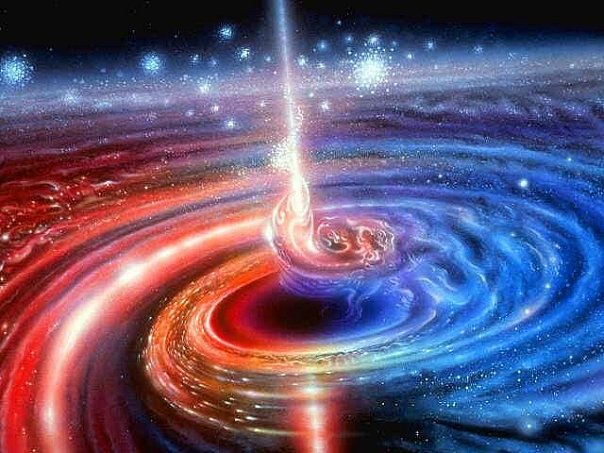
Since Power is a manifestation of a level of awareness, such rearrangements of the Psychocosmos are called the “flow of Power.”
However, two important questions arise. First, if Power is a measure of consciousness, it might seem that a human should, by definition, possess more Power than a tree; yet the Myth speaks of “trees of Power“, emphasizing the possibility of increasing a person’s level of Power through interaction with such a tree. The very notion of the “flow” of Power implies that it cannot pass from a lower state to a higher one — that is, in this case, from tree to person.
To resolve this apparent contradiction the Myth introduces the notion of the “induction” of Power. According to this idea, the interaction of two currents of Power, provided there is harmony between them, leads to the transfer of qualities from one current to the other; as a result the “accepting” current is supplemented by elements of the “inducing” current. Put differently: if the human current of consciousness lacks stability, then by interacting with a more stable, though lower, tree’s Power current, it increases that stability. Thus, although there is no direct transfer of Power, there is a “tuning” or attunement of one current of Power to another. The very idea of the mind’s plasticity, its “fluidity,” helps to understand this attunement of currents. Of course, a person can steal the life-force from a tree, but that is already vampirism and exploitation — a qliphothic act that ultimately leads not to an increase but to a decrease in their own level of Power.

The second important point concerns the practical significance of the idea of the “flow of Power.” After all, Magic is a primarily rational system that adopts only those concepts which increase the effectiveness of practice.
Describing Power as a stream allows one to understand the character of its movement, and therefore to interact with it more effectively. First, this description gives rise to the idea of the need for a “vessel” for Power, understood as an initial state of the mind, a rearrangement of which leads to improved functioning, and therefore to increased Power. In other words, it becomes clear that acquiring Power requires certain preparation; without it, Power either cannot be accepted (“the vessel is too small”), or acquiring Power carries disastrous consequences (“the vessel breaks”).
Another important practical point arising from the concept of the “flow of Power” is the recognition of the necessity for direct contact with Power in order to acquire it (the phenomenon of “wetting”): Power does not simply flow to where there is already room for it; interaction with it is required. The establishment of such interactions is precisely at the heart of many magical practices — visits to Places of Power, the summoning of spirits, and so on.
As we can see, this concept is not merely a convenient metaphor; by the principle of analogy it opens a wide field for understanding regularities and, like other similar concepts of the Magical Myth, is aimed at increasing the Magus’s success on the path of development and mental liberation.
Leave a Reply