
‘Glass Towers’ of the Fomorians
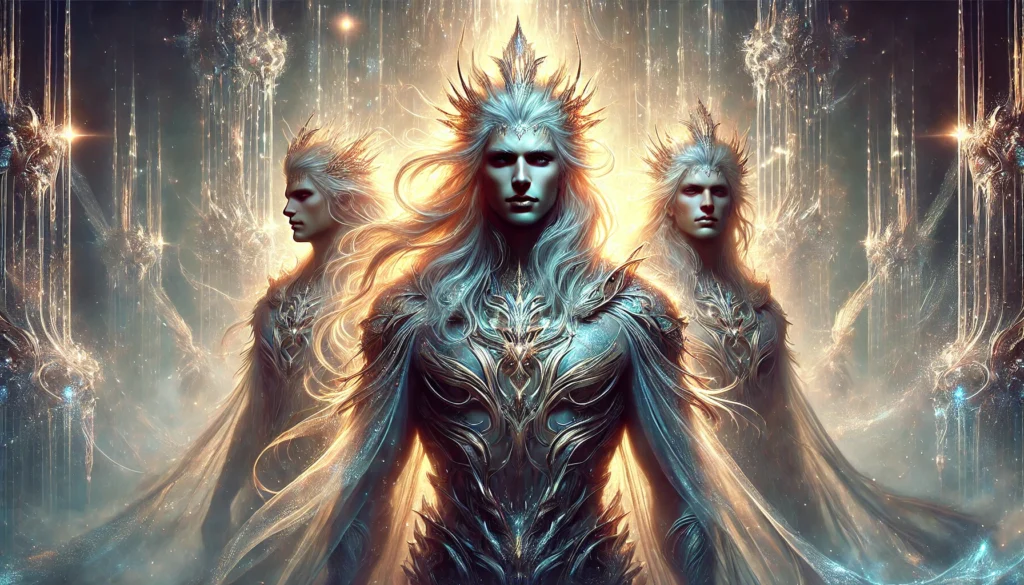
We have said more than once said that, from the standpoint of the Myth we are considering, among the inhabitants of the Interworld, the top of the food chain is occupied by the so-called Fomorians (also known in Near Eastern traditions as Nephilim) — “giants” that wreak multifaceted destruction — from “simple” predation and absorption of energy from worlds to direct confrontation with cosmizing forces.
Let us examine in more detail the nature and origin of these forces, as well as the history of their arrival in the Interworld.
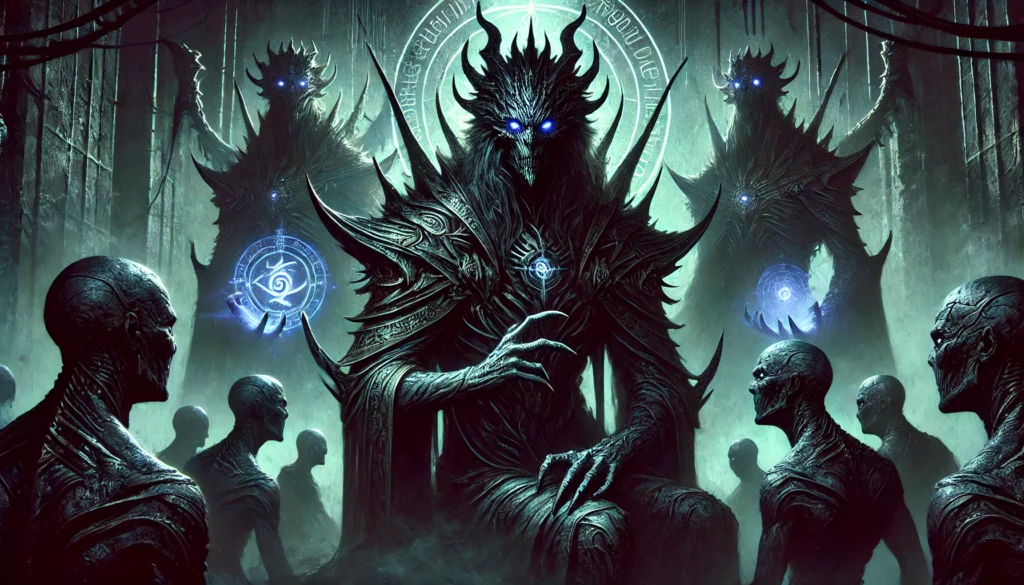
Scandinavian myths say that potential reality (Utgard) includes three main spaces, or “heimr”: active (Muspellsheim, the World of Fire), passive (Niflheim, the World of Ice), and the generative forces (Jotunheim, the World of Progenitors) that balance them, which arise from the “yawning Abyss” — Ginnungagap. These three spaces are populated by corresponding primordial forces expressing their “mindful” (more precisely, pre-conscious) aspect: respectively, fire giants (eldjotnar), rime giants (hrimthursar), and stone giants (bergrisar or thurses). All three groups are “descendants” or forms of manifestation of a common “progenitor principle” — the jotuns, which, in turn, represent flowing consciousness of the world’s ‘river’ — Elivagar. At the same time, the forces of Fire generate creative potential, although in themselves they are destructive: their fiery nature manifests as uncontrolled expansion that can destroy the universe. Surt, the leader of the fire giants, is a figure who awaits his time; his role is to destroy old worlds and structures so that new ones may arise. Note that Ragnarök is initiated by both groups of forces: the forces of fire are led by Surt, and the forces of ice by Hrym, and it is precisely the disruption of balance that leads to the destruction of the old cosmos. Before Ragnarök, the fiery forces are restrained, acting only as an internal driving force; they are balanced by the rime giants, who thus create a basis for order. In other words, one can say that the world of possibilities is a product of the “taming” of fire by ice, and in this sense, although all creative activity originates from the fohat of Muspellsheim, it can be constructive only when it “runs into” the wall of the dream-Niflheim. That is why hrimthursar serve both as the ancestors of the gods and as the masters of all Utgard..
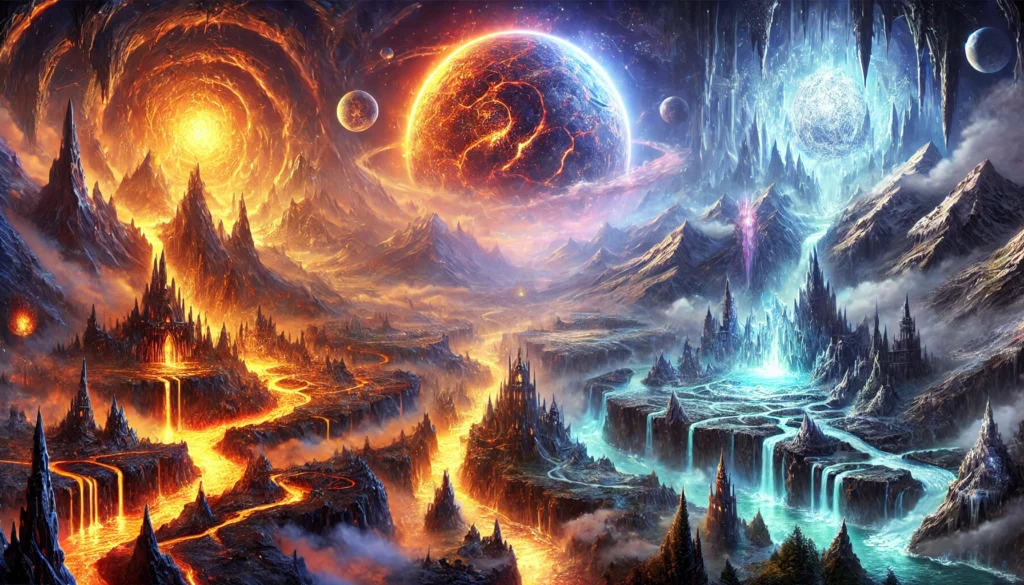
It is precisely this function of the hrimthursar that makes it possible to identify them with the Lords of Potentiality, the Guardians of the Interworld from other mythologies — in particular, with the Archons of the Gnostic worldview.
Thus, Utgard, the Interworld, as a totality of potential spaces, at the “initial” level is inhabited by jötnic forces, among which the greatest contribution to the shaping of this “reverse side of worlds” is made by the rime giants — the Archons. At the same time, like any forces, they have several levels of manifestation, among which the “senior” ones (in the Gnostic system — “Primary Archons”) have greater power and wisdom, whereas simpler forces — Thurses (or “Secondary archons”) — are less powerful and less wise.
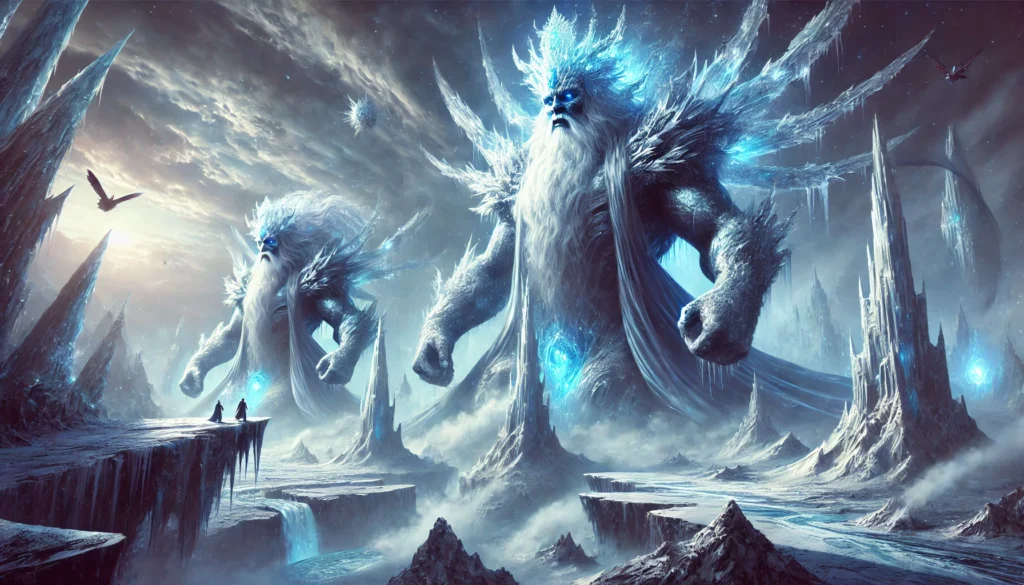
Accordingly, at this initial stage, the main body of Interworld inhabitants consists of the giant Thurses, expressing “tamed chaos” as the substrate of Manifestation.
The following events unfold when manifest worlds and their inhabitants emerge from this potential fabric of the Interworld.
Generally speaking, the first inhabitants of the worlds are the shaping forces — the gods, and the worlds themselves are sustained by hierarchies of “service” forces. Both groups of forces are born from a common source known as Elivagar, Dinur, or the Pleroma — that is, potential or “aeonic” reality.
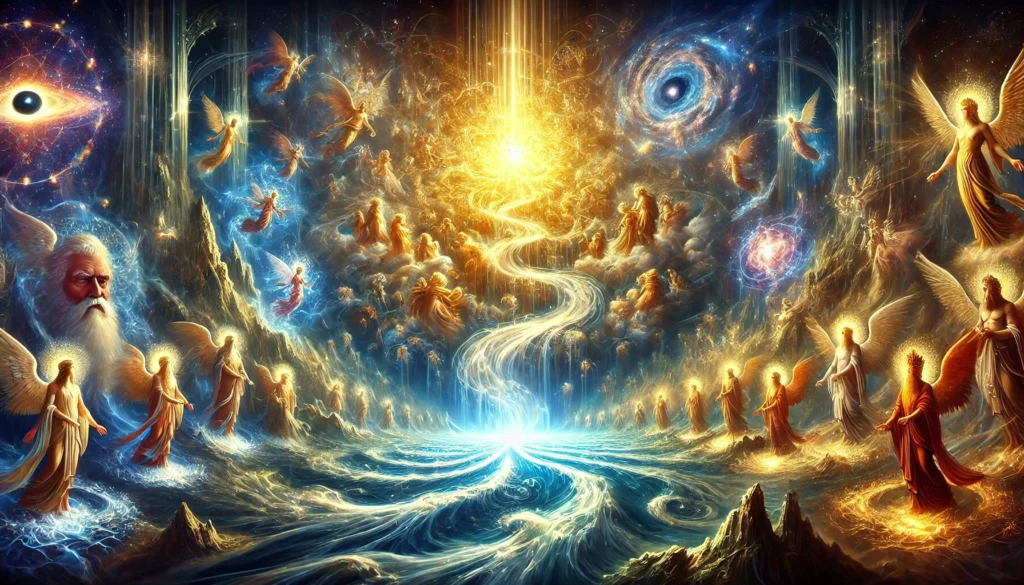
However, alongside these creative forces, as part of the world’s overall equilibrium, their “paired” forces of destruction are also born (in Scandinavian mythology they are known under the collective name “trolls”; the word “troll” (Old Norse troll) originally meant something like a “harm-doer,” a “magical being,” or an “enemy of the gods”; in Old Norse texts it is used to denote various supernatural beings hostile to humans and gods), as well as “forces of balance,” one important group of which is the so-called “Watchers,” or Grigori (also described in European mythology as the “Good People,” Aos Sí, one of whose groups, mixing with another “neutral” group of beings — the Alves — gave rise to the “Immortal People,” the faery).
At the same time, the first, wisest and strongest, angels-seraphim managed to “condense” their vortices into physical structures and thus acquired bodies; the weaker ones that followed them first suffered defeat, having been unable to create suitable conductors for themselves, and gave rise to eliud — trolls, ogres, rakshasas, and so on.
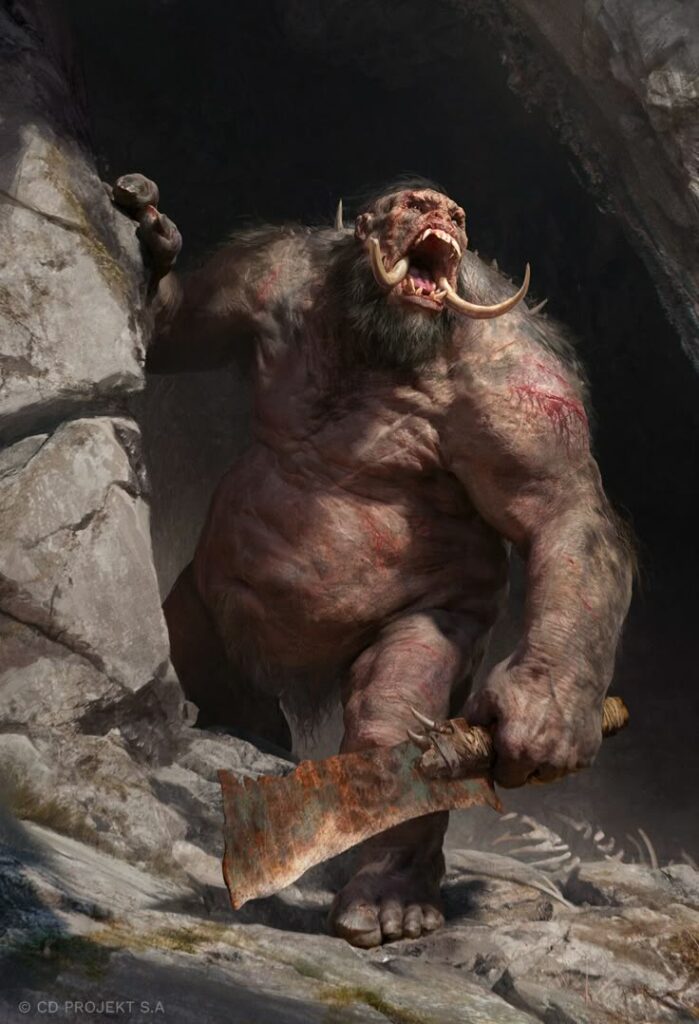
Thus, in modern discourse, trolls (together with the related ogres) are one of the first groups of the “Southern” branch of the faery — the first (and in many respects unsuccessful) attempt at adapting the eliud, descendants of the Grigori, to the “dense” conditions of the worlds. Having entered material bodies, these “descendants of fallen angels” failed to correctly ground their minds in matter, they “didn’t fit” into it, and as a result they turned out “torn apart,” having lost the vortex component of the psyche — which led to the emergence of very strong, but very stupid beings.
Therefore, the “third wave” of descending seraphim chose a different strategy: they inhabited, by way of possession, beings that already lived in the manifest world — chiefly lower gods (elemental spirits), as well as alves accessible to them — achieved integration with them by enslaving their will and seizing their minds, and thus “violating” and “spoiling” these beings. That is how the Fomorians-Nephilim appeared — the result of a violent seizure of beings of the manifest world by “angelic” spirits.
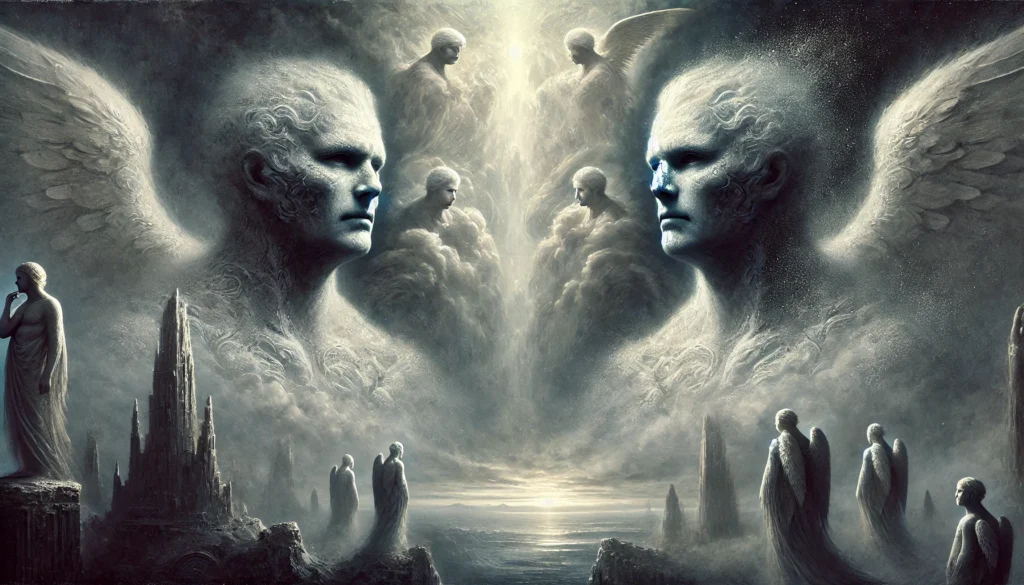
Thus, Fomorians first appear not in the Interworld; they are born in the primary worlds as a result of balancing there the “heavenly” and “infernal” components, and they act as bearers of a kind of balance. It is in this key that one can understand mythological descriptions of the Fomorians: they look “one-armed, one-legged, and one-eyed” when they manifest in the world, which indicates that their “second” halves belong to the “other world,” and thus they connect these worlds. At the same time, in their own reality, as well as from the point of view of the gods and the Sídhe, the Fomorians appear as beautiful divine entities, which fully corresponds to their “angelic” origin.
However, despite their “connecting” and “balancing” nature, the Fomorians quickly become, in essence, obstructive forces for the worlds: they do not simply “maintain balance,” but impede development, since evolution requires an imbalance. Thus the Fomorians also get their name “outdwellers,” “outsiders,” in fact performing in the worlds the same “freezing” function that the Forces of Ice perform in potential spaces.
Accordingly, myths also say that these beings become hostile and therefore are “defeated” and “driven out” of the worlds. In Biblical world-description this is known as the “Great Flood,” which was unleashed to destroy the “giants”; however, the Flood destroyed them as a people or large group, yet the text clearly hints that some of them or their descendants survived the catastrophe: in Genesis 6:4 it is said that the Nephilim existed on Earth “in those days, and also afterward.” In Celtic myths there is also mention of two battles — at Mag Itha and Mag Tuired — where the Fomorians were first crushed by the “Partholonians,” the first settlers of the Earth (probably alves), and then by the Tuatha Dé Danann, the ancestors of the Magical People.
As a result, the Fomorians were pushed out into the Interworld, where they met and mixed with the thurses that lived there, forming the “elite” of the Interworld. Since they, as we have already understood, had a “mind-stifling” nature, this brought them closer to the Archons-Hrimthursar, and often the Fomorians even began to be considered descendants or brothers of the rime giants. Nevertheless, from the thurses and, all the more so, from the Archons, the Fomorians are distinguished by an important trait: they were born in the worlds, and therefore are not rooted in potentiality, which means they cannot exist in the Interworld without losses of energy. Accordingly, the Fomorians became the first (and main) predators of the Interworld, needing an inflow of energy from the worlds. In part, their nourishment was provided by the Archons, who form manifest worlds as a feeding base for the Interworld; but of course, the Fomorians themselves also pursue an expansionist way of life, provoking the inhabitants of worlds and the Interworld into releasing energy.
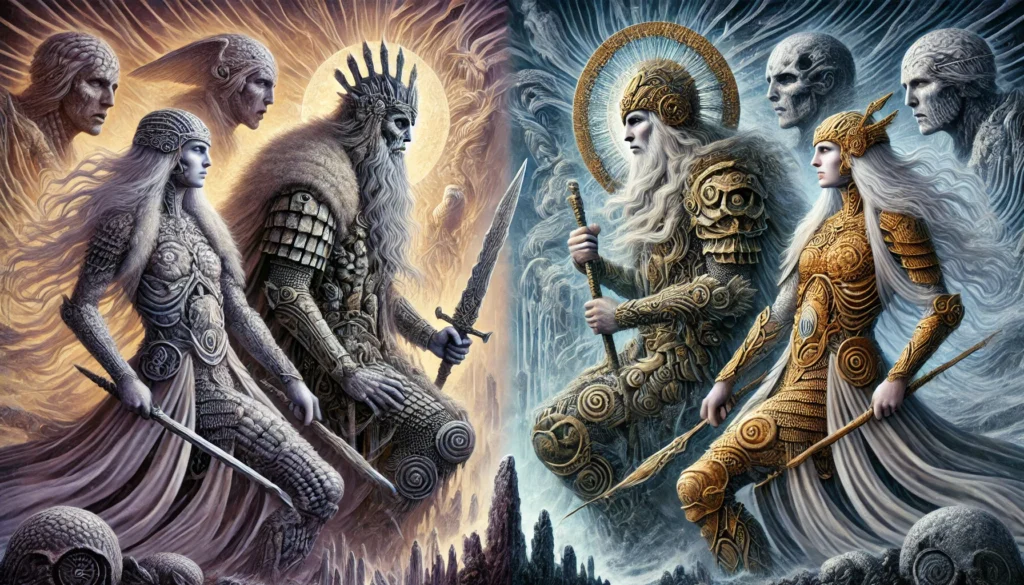
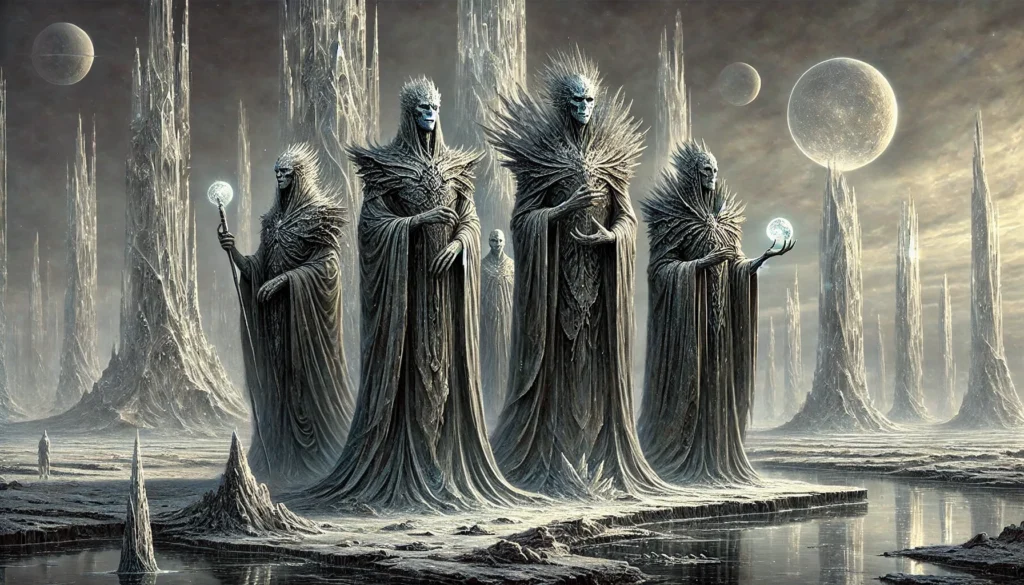
As the Interworld was “populated” by other beings, the Fomorians distanced themselves from them, building for themselves special structures or subspaces known as the “Glass Towers” (later the Tuatha Dé Danann who migrated into the Interworld did the same; however, their settlements, to avoid confusion, are traditionally called “Crystal Palaces,” by analogy with the castles of the alves that served as supports for the Light Ones in the manifest worlds).
At the same time, the term “Glass Towers” as applied to Fomorian settlements points not to the material they are built from, nor to their fragility or hardness, but to their invisibility or inaccessibility to other beings. In addition, Glass Towers also distort reality, created by Fomorian magic. Even when they can be visible, they distort the perception of those who try to approach them. Note that in Scandinavian traditions Utgard is also often described as a space where the laws of reality and perception differ from ordinary worlds, and inhabitants can hide their dwellings with magic or distort reality around them.
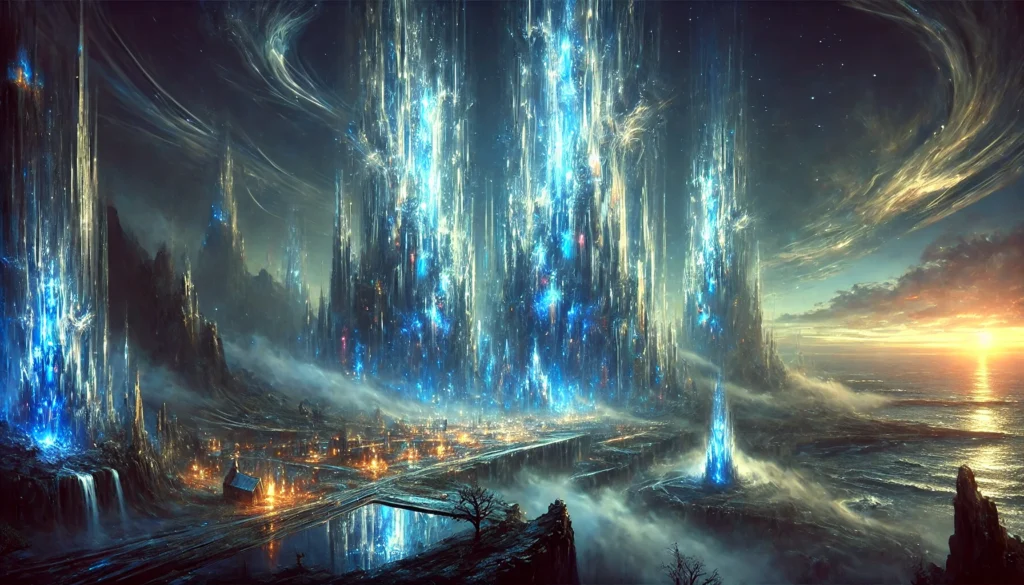
Thus, the “Glass Towers” represent protected, invisible, and magically concealed spaces that not only hide the Fomorians, but also make them inaccessible to the inhabitants of the worlds and the Interworld. They use this concealment to suddenly attack the settlements of other peoples of the Interworld, abducting resources, energy, or beings, and also to lure energy from the inhabitants of the worlds. And it is precisely the “Glass Towers,” as shelters for the Fomorians, that help them return again and again despite defeats, creating constant tension between life and stagnation, movement and stillness.
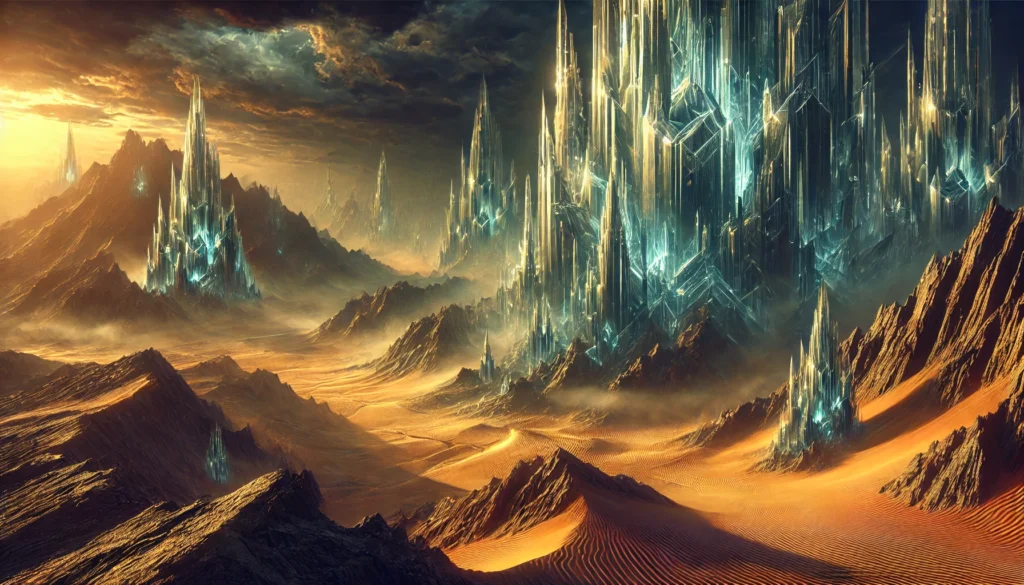
Any experience of encountering the Interworld — in trance, dream, or post-mortem — must take into account the presence there of such “hidden subspaces,” which pose a great threat, and therefore train attentiveness and alertness. These anomalies make the Interworld even more dangerous for those who end up there, complicating navigation and perception. One can recognize the proximity of a “Glass Tower” precisely by the distortions it creates; therefore, whenever the already unstable “fabric” of the Interworld begins to “ripple” more strongly than usual, one may suspect the presence of such a stronghold of superpredators. Glass Towers can create local anomalies such as ripples in space, disruptions of time, or visual illusions.
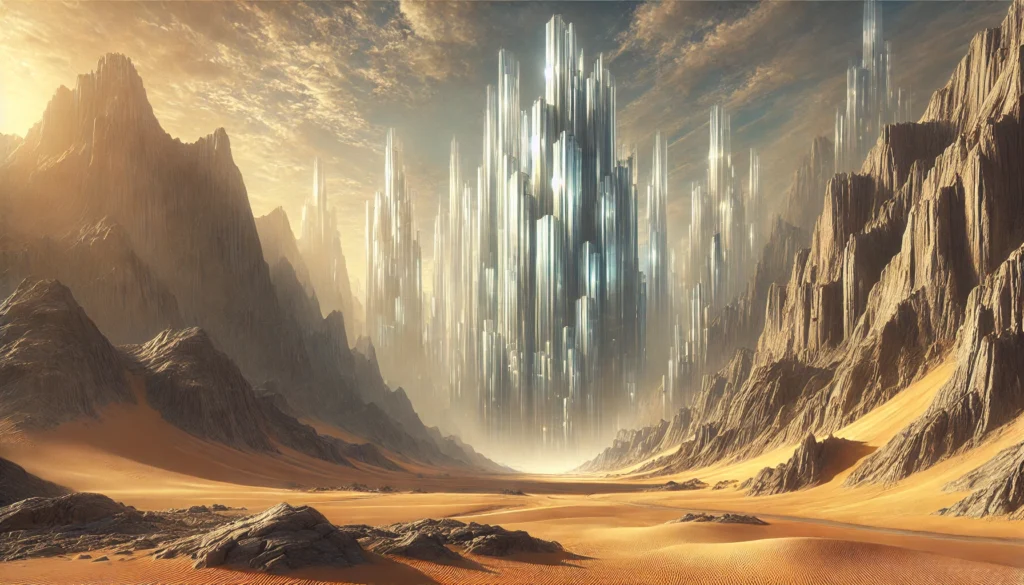
Glass Towers can be recognized by an intensification of instability in the surrounding space — in particular, by a sudden change in visibility or perspective, the appearance of “heaviness” or “compression” of time, as well as by the direct sensation of being pursued or the appearance of “extra” movement in peripheral vision.
Developing the skill of recognizing such anomalies is critically important for survival and successful navigation in interworld spaces. Training in visualization and sustaining attention will help resist the illusions and disorientation created by hidden subspaces, and a strong, focused intention and goal-directedness are key, or at least reducing the damage from encounters with the Outsiders.
A powerful post. Have you had any experience interacting with such structures? Because I have never encountered them. I think these glass towers level the evolutionary (sensory) vortices of the intermediary realm and the medium of corporeality returns to its original neutral state. Here, the principle of stagnation and entropy works, in contrast to the work of consciousness (logos) of statics and dynamics. Is there any connection between the Nephilim and Enochian magic? Enochian seems to be the language of fairies, but which court? Of course, it’s not our mind’s business, but why are the archons interested in feeding the fomorians? What’s the profit?
Regarding the Towers themselves – they are mentioned in Irish chronicles, in particular, the so-called ‘Glass Tower of Connacht’. And yes, I have personal experience in this regard. Regarding the Archons and the fomorians, they are united by a similarity of nature. Archons do not see themselves as evil; they consider themselves all-powerful gods of the intermediary realm, and they care for their ‘subjects’.
I was thinking.
From your point of view, is modern warfare not an obvious manifestation of the Fomorians?
The scenario of a drone with a thermal imaging camera hunting for people by the heat they emit resonates quite well with what is described here.