The Fomorians and the “Unseelie Court”
We have already noted several times that over the last quarter-century humanity has significantly shifted more toward using “external” energy sources to sustain psychic activity. We also mentioned that, in this sense, the population of Midgard is following a path that earlier encompassed a significant part of Alvheim and led most of its inhabitants — both svartalvs and lyossalvs — toward technogenesis and away from psychocentrism.
Tradition connects such a transformation with the influence of special “counter-psychological” forces or beings of the Interval — “Fomorians” or “outdwellers,” who strive not so much to “technogenize” the mind as to diminish its self-centeredness and to weaken its structuring and cosmizing activity. Despite the apparent “high orderliness” of technical systems, their “entropic” influence is always much stronger than that of the “natural” carriers and supports of mind; they operate inefficiently, use disproportionate resources, and dissipate excessive heat and waste. Therefore, all technogenic civilizations are less hierarchized, less structured, and contribute less harmoniously to the ordering of the cosmos than psychocentric civilizations.
Although technogenesis is the most common means of undermining the mind under the influence of Fomorians, one of the peoples — Tilvit Teg — reacted to their efforts differently; it, too, “split” into two races, but the part that “gave in” to the outdwellers became closer to the interworld predators, in fact, taking the path of demonization.
Historically, the “Unseelie Court” of the fae — ussids (or anseeel shi) — have been linked to the Fomorians by long-standing ties of kinship and are often regarded as descendants, or at least “half-bloods,” of the Outsiders. Traditions differ in describing the origin of the Houses from the Two Mothers, and while the sids are unequivocally traced back to the Great goddess of the Light Alvs — Mother Danu — the ussids are either revered as children of the Dark Earth — Domnu — or (if the Fomorians are revered as the children of Domnu) are traced back to her indirectly. The very names of the goddesses reflect their nature: “Danu” comes from “dʰenh” — “to run, to flow” (or from “dueno” — “good”), and “Domnu” — from “domnand” — “abyss of the sea.”
The description of the fae of the Unseelie Court — their outlook and the morality they profess — in Irish mythology differs from that of other beings. Their central idea is power, which, in their view, makes them important and worthy of respect. Their habitats are hills and forests, where they can lure lonely travelers into the Interval (“Shi”) and use their abilities for their own ends.
According to some tales, in ancient times the world of the fae was not divided into the Seelie and the Unseelie Courts, and once there was an event called the “Schism” of the magical people. However, regardless of whether the ussids are “brothers” or “descendants” of the Fomorians, they unite with them in their opposition to the ordering principle of reason. It is no accident that their activity is most noticeable in winter, when life freezes and the mind’s formative activity is reduced to a minimum. They are active champions of disorder and chaos and do not regard order as the basis of their existence.
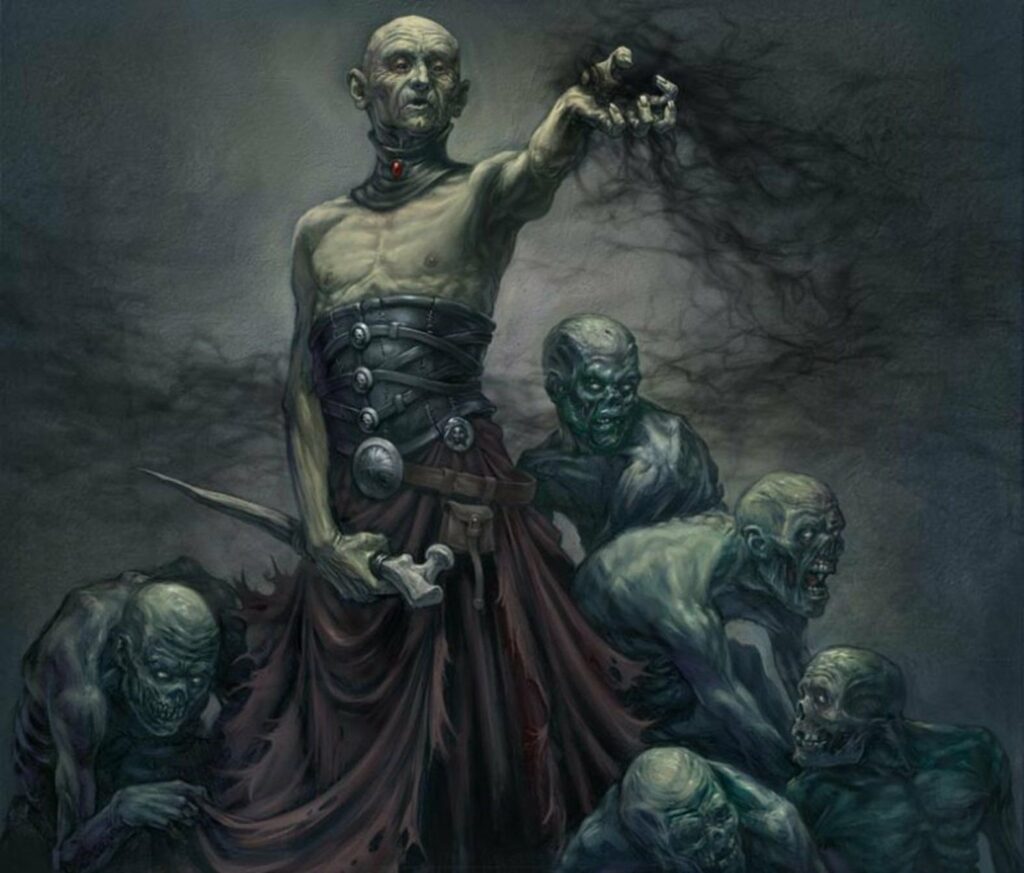
Relations between the fae of the Unseelie Court and other beings in mythology have always been complex and have sometimes led to conflicts. Their dogmatism and unwillingness to acknowledge other beings’ viewpoints often led to quarrels and wars.
The fae of the Unseelie Court do not consider honor and kindness virtues, but consider them signs of weakness. They believe that a strong person or fae deserves aid, whereas the weak are for them merely resources and victims.
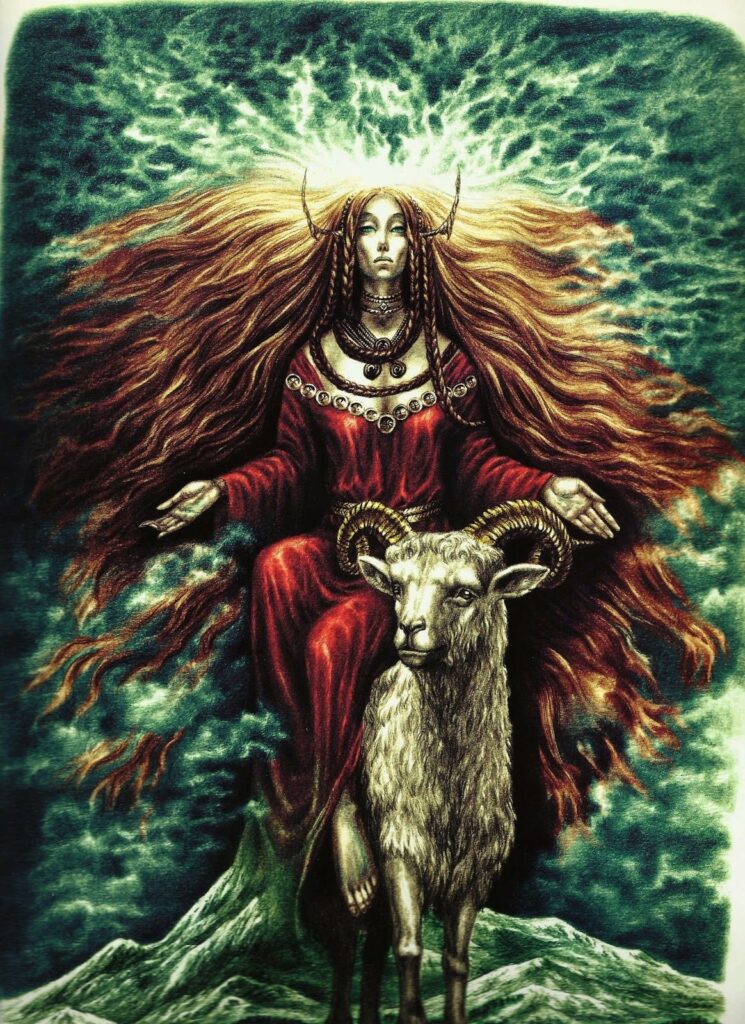
Unlike the sids (seel shi, the Seelie Court), who after the Departure rarely appear on Erd, the ussids still periodically visit our world, replenishing their supplies of energy, artifacts, and slaves. In addition, contact with them is also possible in the Interworld, where they, too, are not averse to taking their share of prey. We have already mentioned that it is precisely the ussids who constitute a significant portion of the “contacts from subtle worlds,” including the so-called “Enochian angels,” and it is to the “unseelie fae” that we owe the surge of interest in “star civilizations.”
One way or another, among beings unfriendly to humans, the ussids are among the most prominent in terms of their activity and their desire to interfere in human affairs; therefore, they merit study, and people should develop strategies to interact with them.
Can we say that the topic of transhumanism and digitalization of consciousness is a transmission of their program or that our civilization, the current form which formed due to Abrahamic religions, itself came to this? What is the profit then of dulling the cosmic-organizing aspects of consciousness, and can this be described as another path of “development” (though what is there to develop))? A good video about consciousness https://www.youtube.com/watch?v=ZlPgT-Fq3NY. According to this video, consciousness is feedback; the fomors are somewhere at pre-conscious levels? But then how does it differ, for example, from Buddhism, which also seeks to reach a state of emptiness and, so to speak, primary pure consciousness? I apologize if the last question is awkwardly phrased; it is hard to operate with such abstract terms.
The framing of the question – “is it them or ourselves” is not quite correct, as both answers to it are valid: yes, it is them; yes, it is us. It is incorrect to view different streams of consciousness in isolation from one another. “We”, “fomors”, “demons”, “archons” from the perspective of consciousness are not something separate; they are manifestations of one foundation, divided on the phenomenological and epistemological levels, but not divided on the ontological level. So saying: “it’s us being dull”, or saying: “it’s the fomors provoking it” means saying about the same thing, just from different perspectives. If we look at ourselves and at that which makes us “dull”, then this reason for dullness can be equally well described as part of us and as a separate independent entity. Each type of description has its strengths and weaknesses, and, most importantly, its practical consequences. Experience shows that it is much more convenient to work with a distractor if viewed as something separate, independent. We will fight with the demon with much more dedication and effort than we will correct a “part of ourselves”, as we always feel sorry for a “part of ourselves” and do not want to hurt it.
Buddhism, however, is not so much a system of worldview, but rather technology, a science of liberation. The Buddha himself said: “When a poisoned arrow has struck you, you should try to extract it as quickly as possible, rather than starting to discuss what material it is made of and the trajectory it took“. Therefore, Buddhism views the world primarily in terms of the method of liberation. On the other hand, Gnosticism views wisdom as such a method, and therefore for it the very worldview is already a practice, and thus it pays much attention to descriptions of the structure of the world.
Sure! Here’s the translation to English:
“Okay. If we set the premise that there is a single universal consciousness (well, essentially it is) and it is conditionally divided into various levels. The genesis of consciousness http://скрытыйсмысл.рф/book/soznanie-2-stupeni-soznaniya-i-samosoznaniya. Then what is the meaning of moving in the opposite direction (involution of consciousness)? Is there any kind of meaning, logic, purpose or desire, interest of the researcher?”
There is a disbalance of forces. If we consider consciousness as a property of the universe, then it can also be unbalanced, and chaos can also prevail in it.
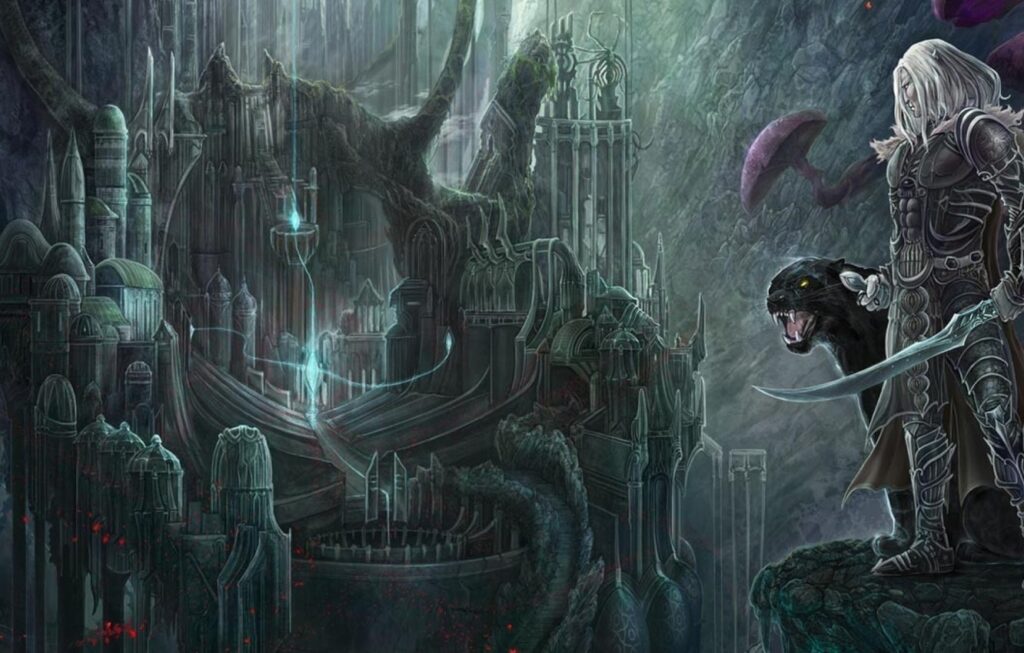
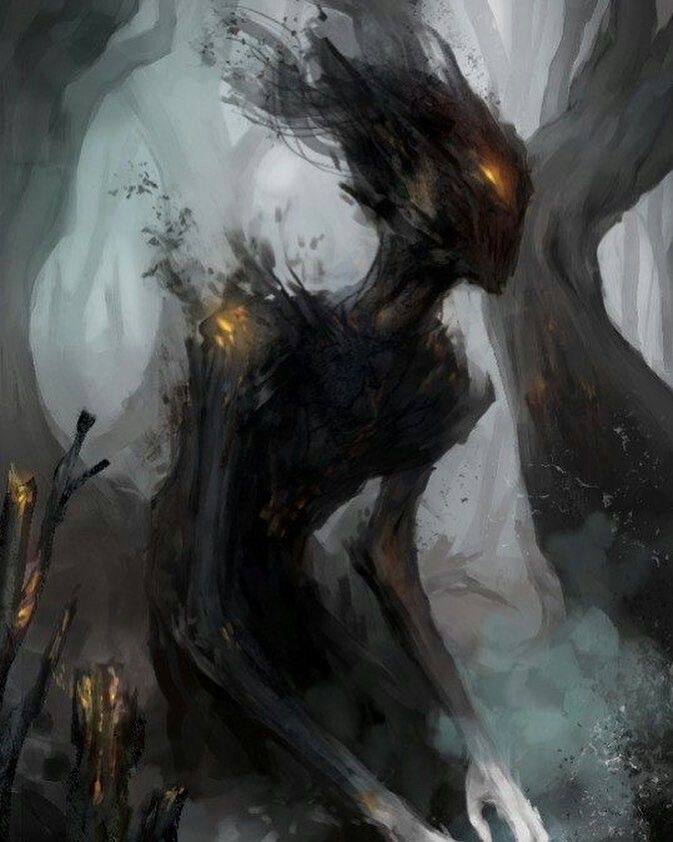
Good afternoon. Master, may I ask where you get the illustrations for your articles? Specifically regarding the last one in this thread, is it him, ussid?
Hello. Well, the internet is vast) In the last one – yes, ussid.
Do you connect the “epidemics of depression” with the activity of mind-stopping beings? And what examples of specific practices could you provide as effective protective measures? Intuitively, it seems that many classical protective rituals carry a shade of isolation and locking away, which means passive protection. This intuitively seems not very effective in this case.
Depression is any persistent outflow of energy, and therefore there may be many causes, as well as many consumers of this energy. Formorians, of course, can be one of the reasons. But other interworld inhabitants as well as demons can also cause similar outflows. However, if it is not possible to determine the cause of the outflow, then it is correct to attempt to compensate for it by visiting power places, situations of inspiration, and so on.
When I do not see that the trigger for the outflow of energy is outside of me, I mentally address it with irony, saying I see and recognize you, but this influence is so strong that while you are realizing it, you can lose quite a lot.
Hello, Enmerkar. Is the Unfortunate court of the fey the one that Daniil Andreyev called the igvas? A civilization of very highly intelligent beings who have taken a technocratic path of development, to whom almost any display of feelings, emotions, love, and compassion is alien?
Hello. As far as I understand, D. Andreyev refers to ‘the gray civilization’ as the ‘igvas’, that is—the ‘corrupted’ part of the Dark Elves. They are related to the fey, but not identical to them: they live in their own world—a part of Svartálfheim, while the fey have almost entirely moved to the Interval.
One more question. Can a person reproduce within himself, through various techniques and meditations, more involutive forms of consciousness (as the idea is that he contains other ‘waves of life’)? And what will be the next stage of evolution of human-type consciousness, which will finally ‘free itself’ from all desires, or something like that (if judging by your last video)? Is the very fact of evolution predetermined or are we free to move through any levels of consciousness? Can we switch between different ontological levels of consciousness and is there any meaning in that?
Yes, indeed, both constructive and destructive matrices can be activated in consciousness.
However, their stability is of course not spontaneous and depends on the overall state of the stream of consciousness, on its internal inertia.
Thus, ‘switching’ between levels of consciousness means only contributing to the state of this stream, but not redirecting it all at once.
To reliably affect the state of consciousness – long-term efforts are needed.
‘The ussids still periodically visit our world, replenishing resources of energy, artifacts, and slaves’ – do they appear in our world in a double? (The term ‘double’ comes from Castaneda, when a wizard creates a double of his physical body, but the double, although visible and can act in the material world, is not material; for example, Nagual Elias could be in the double in two places simultaneously and simultaneously heal people in different parts of Mexico). Do they create a human form for themselves and thus participate in our world, or do they acquire a physical body, for example, possess one during their stay? Or perhaps they hide their physical body somewhere and then reanimate it to act in our world? For instance, like a mummy, hiding the body in a sarcophagus somewhere in a dungeon, in a cave?