
Alvs — The Glimmering Lights of the Cosmos
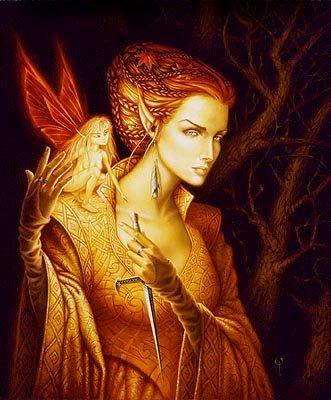
The fourth Tribe that sustains existence and the flow of life across the worlds is the Alvs.
This Tribe, unlike the previous ones, is highly diverse and is divided into two peoples: the Light Alvs (more precisely, “light ones”) and the Dark Alvs (“dark ones”), although the name “Alvs” itself derives from alb — “white” (and is also related to ɑlβi-z — “skillful, inventive, clever”), which is why the word “alv” is sometimes translated as “artist”, fitting their role as designers of primary spaces.
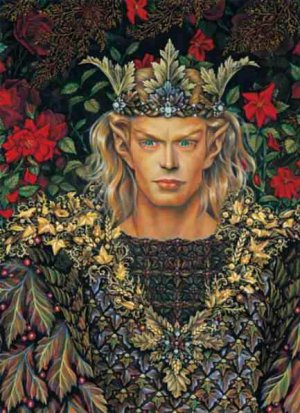
All Alvs bring about the passage from Non‑Being to Being at the level of abstract, “inanimate” phenomena: the Light ones on the plane of day and the sky, the Dark Alvs at night and beneath the earth.
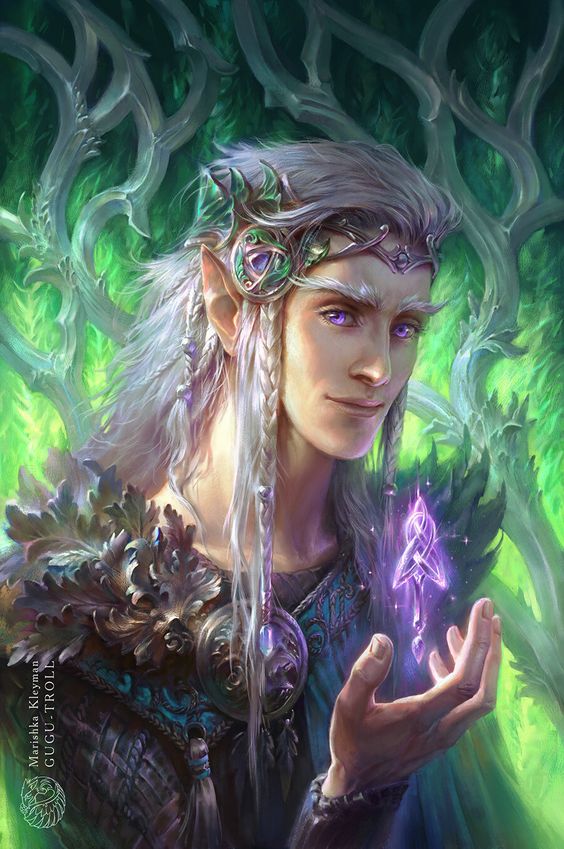
The Light Alvs preserve the Light, the Spirit in its most abstract form. They are Lords of Time, Keepers of Wisdom in its absolute form, indifferent to bias, love, and hate.
One might say that Alvs are the “gods of immanence,” beings who ensure the formation and manifestation of nature’s potencies, of space itself, translating the possibilities hidden in the Interworld’s latent potential into the realm of manifestation; thus the Light Alvs form the “environment,” while the Dark Alvs constitute the “depths” of worlds.
If the Wisdom of the Jotuns is elemental, of the Aesir warlike, and of the Vanir full of love, then the Wisdom of the Light Alvs is cold and dispassionate, like a clear winter day. They always know the point of balance and accurately assess the value of an event or a being.
This ability ensures the cycle of events, the self‑restoration of temporal cycles, since at the base of these cycles there is always precise equilibrium. If the balance shifts, the cycle is disrupted. In relation to humans and other beings, the Light Alvs can be either indifferent yet benevolent or indifferent yet hostile. Accordingly, the Celts, for instance the Britons, distinguished between Good and Unfavourable Courts of the Fairies.
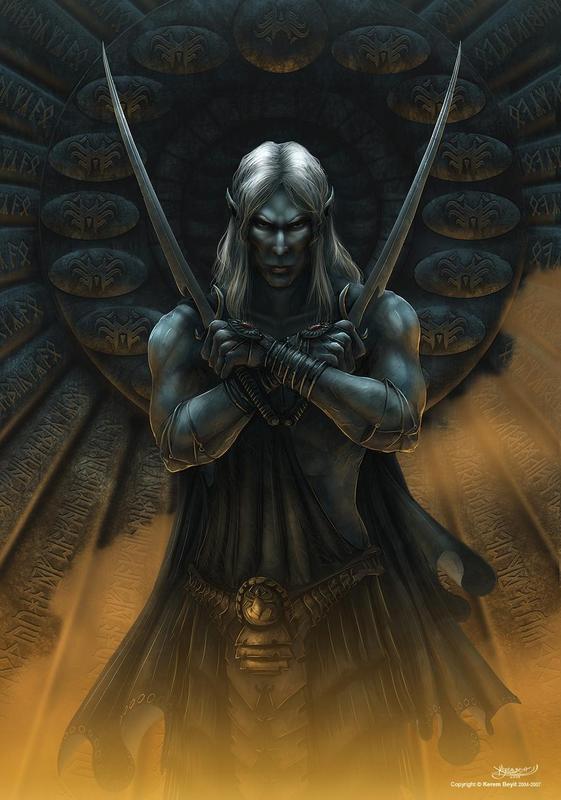
The Dark Alvs, or the Dvergar (Dvergi), also maintain cycles, but these are the cycles of the subterranean depths. They transform raw subterranean matter into gems, gold, ores, and are generally highly skilled craftsmen. It is to them that the Aesir owe their treasures — they forged Thor’s hammer, Sif’s golden hair, Freyr’s ship and golden boar, and so on.
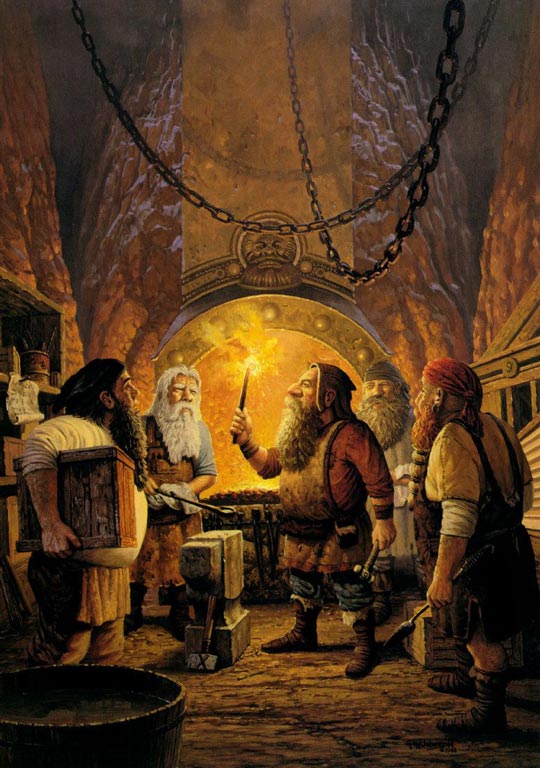
The purpose behind the creation of these treasures is the same — the transformation of matter into an ordered state. The Dark Alvs are likewise wise and inventive.
Both Light and Dark Alvs are well versed in rune wisdom:
“Runes you will find
and the signs you will fathom,
the mightiest signs,
the strongest signs,
Hroft colored them,
and the gods made them
and Odin carved them,
Odin among the Aesir,
and Dain among the Alvs,
Dvalin among the dwarfs,
among the Jotuns Asvid,
and I myself carved them.”
(“The Sayings of the High One”).
Moreover, the Dvergr Alvis knows as much about the cosmos as the Jotun Vafthrudnir, as is shown by Alvis’s answers to Thor:
“For men it is the Sky,
and the Firmament is with the gods,
The Weaver of Wind is with the Vanir,
The Top of the World is with the Thurses
and the Roof is with the Alvs,
The Damp Home is with the dwarfs.”
Nothing is known of the origin of the Light Alvs, while the Dark Alvs appeared in the body of the primordial being Ymir as soon as assimilation of that body became necessary. Hence the Eddas compare them to worms breeding in a decomposing corpse.
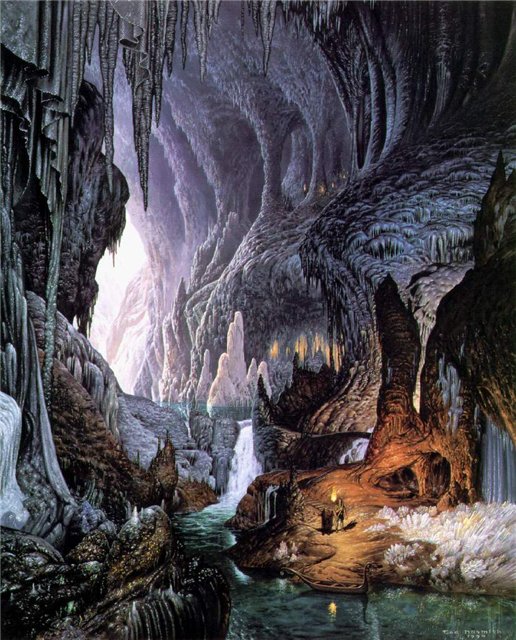
Alvs dwell in Alvheim, which, according to their division, is divided into Light and Dark (Lessalvheim) and the Dark (Svartalvheim).
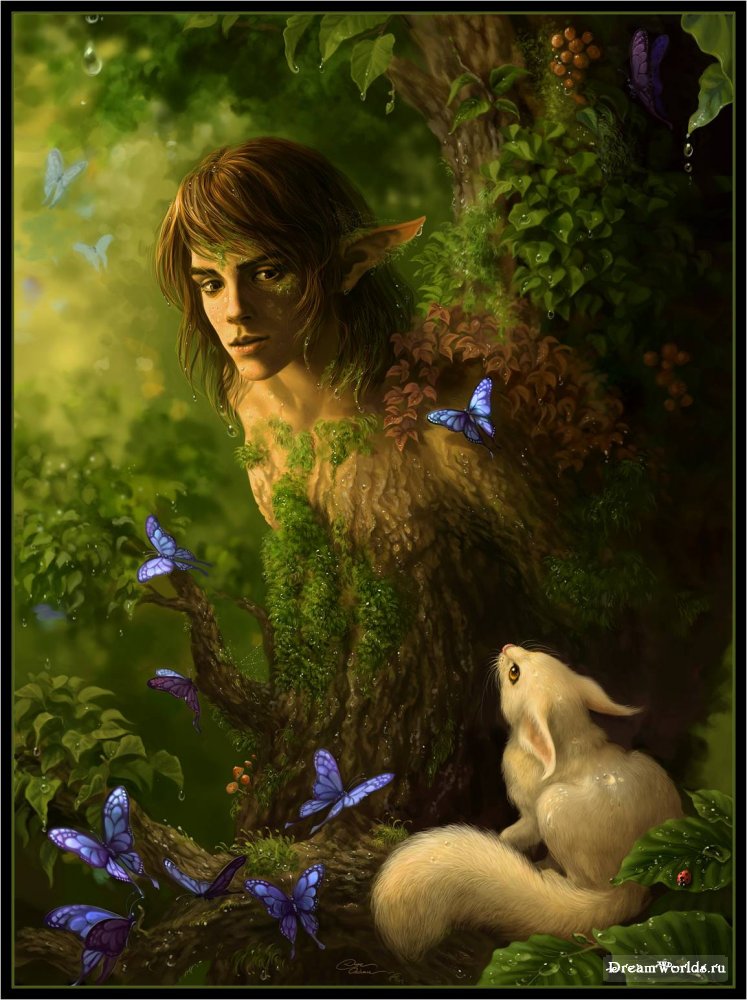
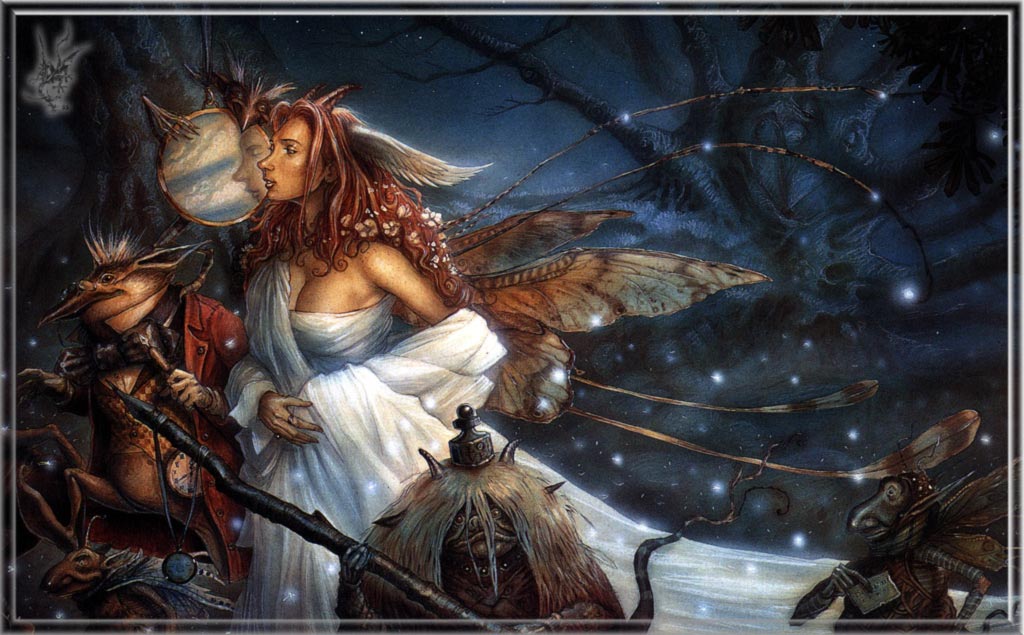
The lower tier of the Alvs (a certain decline affects all tribes: we have already seen the gradual decline from Jotun to Trolls) is made up of the Enchanted Peoples — the Fairies, who once inhabited the Middle World but over time moved into the Magic Land (Sidhe). It is the Fairies who most often interact with humans, for, to the Higher Alvs, people (and even gods) seem too petty.
Enmerkar, thank you for your research on the topic of elves! It’s very enlightening! 1. In your opinion, are Alfheim and the other worlds of the Tree of Yggdrasil, for example, Jotunheim, Niflheim, material or not? Or are they in the subtle plane, like, for instance, Helheim? If these worlds are not material, then what is the difference between the subtle worlds of the Inter-realm and Alfheim? 2. Do you think that classical music can be inspired by the bright alves of Alfheim? The English occultist and composer Cyril Scott believes that higher devas inspired genius musicians to convey certain ideas in Midgard that influence humanity’s progress. In his opinion, the sound vibrations, harmonies, and ideas conveyed by deva-inspired genius composers actively influence human civilization’s course. Could it be that the higher alves are ‘whispering’ harmonies and melodies to people? In his book, Cyril analyzes the genius composers and the ideas conveyed to them by the higher devas https://www.koob.ru/scott_cyril/music_secret_influence
1. Any world is, by definition, material; however, the forms and levels of this materiality can be completely different. Alvs are beings of light, and the materiality of Alfheim is built from such delicate matter. The interworld, on the other hand, is a potential hyperspace; for it, the term “materiality” cannot be applied since, although it contains the possibilities of any matter, any particles (and fields), none of them is manifested in it – as the choice of probability and its manifestation means the birth of a world. 2. Music is one of the main arts of both alvs and faeries, their way of interacting with worlds, and there are many legends about how the echoes of “elven music” inspired erile and bards in ancient times, and there is no doubt that similar influences can happen to this day.
Enmerkar, how do you think Tolkien’s Rivendell (in Peter Jackson’s interpretation) and Howard Shore’s music correspond to the higher alves of Alfheim? Western researchers of Tolkien’s works think that the images of the worlds of higher beings (Valinor, Rivendell, Lothlórien) were drawn from images of the Christian paradise, Tolkien himself being a devout Catholic. What do you think, did Tolkien draw inspiration for the images of these worlds from the Christian paradise or from Alfheim and the higher elves?
I unequivocally consider Tolkien’s works to be great books that have seriously influenced, and will continue to influence, human consciousness as a whole. And yes, I have read about different sources of inspiration for Tolkien, but I don’t possess enough competence to trace which image he drew from where. Regarding the elvish cities – in my opinion, they resemble elvish dwelling places, namely the Dini Shi (Daoine Sidhe) – the highest fairies. Liosalvheim is more transparent and colder.