Those That Stop the Mind
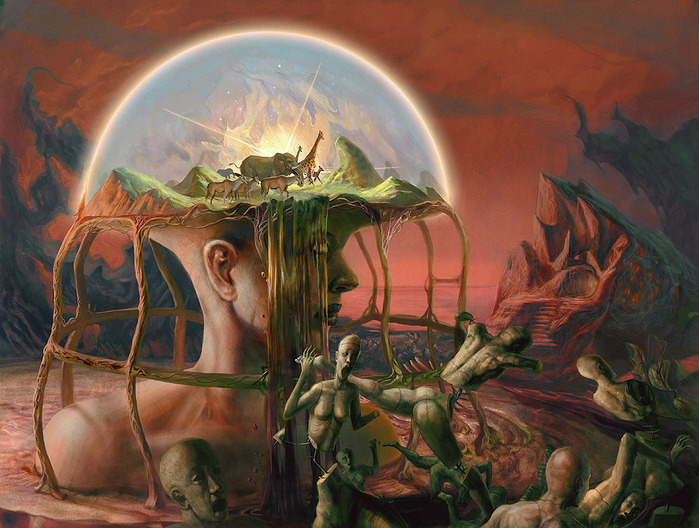
Among the unbalanced forces that inhabit the liminal regions of the manifest worlds, for the practicing Magus the most important in interaction are, of course, the offspring of the Primary Fire. Among these forces there are both creative and destructive ones, yet their essence is in any case of one nature with the very basis of mind and its creative potential.
At the same time, the forces opposed to them, born of Primary Darkness, Ice and Cold, interact with embodied beings far less often; nevertheless, dealing with such forces can be far more catastrophic and destructive.
The Magi have long spoken cautiously of those forces that, suppressing any manifestation of mind, plunge the world into darkness, chaos and cold.
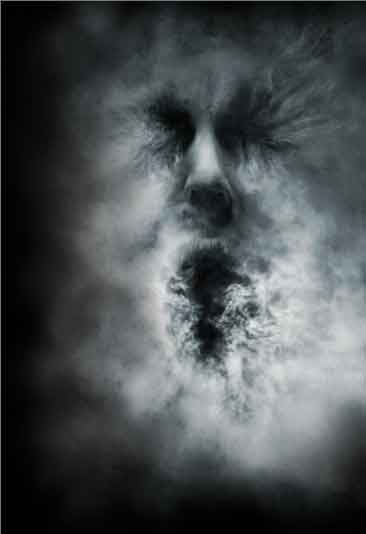
Thurses, Fomors, outdwellers, gallu – these are the names different traditions have given to the beings that halt the flow of mind, plunging the world into darkness, chaos and cold.
If the forces of Fire can be fought, can be attempted to be subdued and, generally, can be engaged with consciously — engaged with — then interaction with the forces of Ice is made difficult by the paralyzing nature of those forces.
The Hrimthurs are an expression of the natural opposition between dynamic order and the stagnation of chaos. They are forces that seek to freeze and halt the processes of the cosmos and embody the potential state of the world before it is ordered. Their energy is passive, inert and negative in that they suppress activity. They strive to preserve the status quo or to return things to a state of complete rest.
Most encounters between Magi and Outsiders end disastrously, and one can only marvel at the madness of those who willingly initiate such meetings. Even from afar, if the Magus senses Nifl’s icy breath, the Magus must make every effort to avoid contact with it, and only when avoidance is impossible should he prepare for a grim confrontation with the “black hole” that swallows every light and manifestation.
That said, although the Spirits of Ice regard the manifest worlds as an annoying mistake of Providence, they themselves come into being only as counterparts to the Forces of Fire, with which they form an indivisible unity.
Moreover, their activity, as with gallu, is absolutely necessary for maintaining a stable dynamic equilibrium in the cosmic process.
In their essence, the “original nature” of the forces of Ice is not predatory; they are not interested in manifest energy. On the contrary, being offspring of the Outer Darkness, they “extinguish” any light of mind, suppress any urge to manifest and any sign of manifestation.
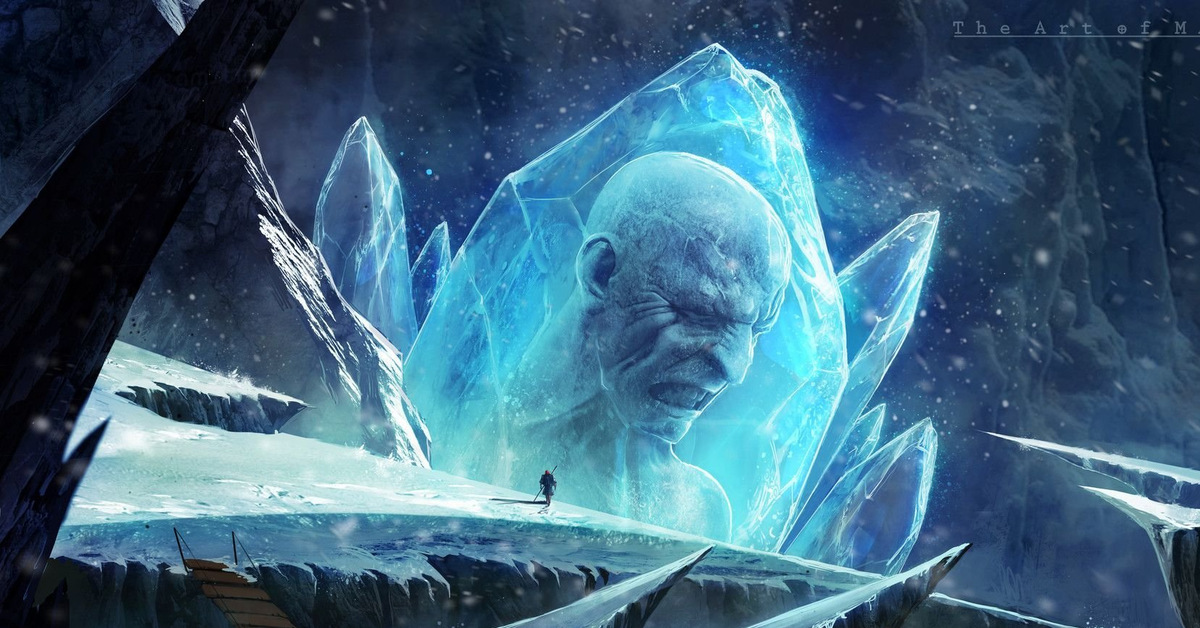
Therefore they are practically impossible to deceive, almost impossible to flee from, and the only way to oppose them lies in a decisive surge of overwhelming force that counterbalances the oppression of the Outsiders.
At the same time, the younger group of Thurses, the so-called Fomors, already require an influx of external energy; their icy nature no longer merely extinguishes movement — it requires movement to exist, and therefore they constitute the first group of predators of other beings.
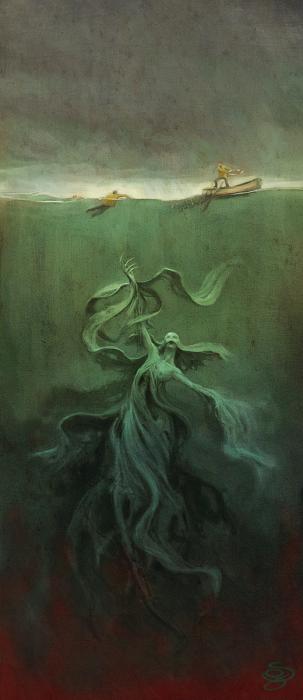
All the legends of the conflict between Light and Darkness (not in the moral sense of evil, but in the sense of primeval darkness) tell how the most active gods — Thor, Lugh, Ninurta, Apollo — drive back darkness with their radiance, establishing the cosmos as an illuminated space amid the raging ocean of chaos.
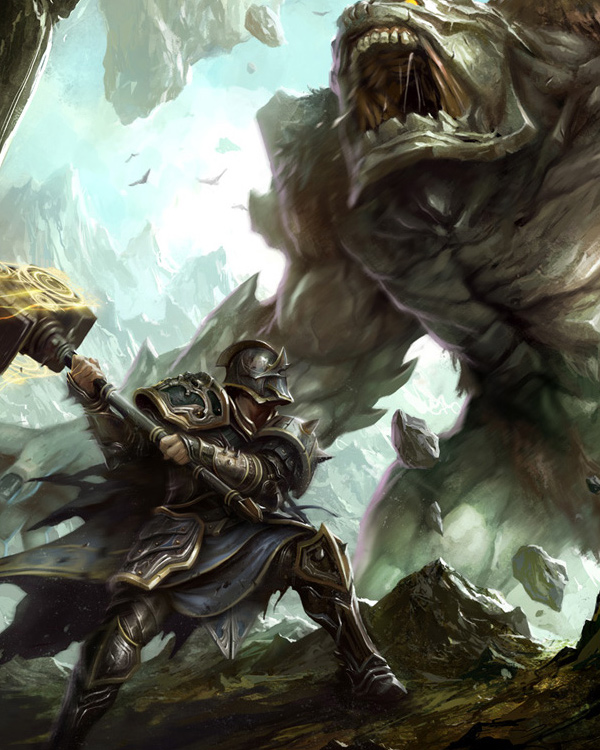
Accordingly, whichever group of Outsiders the Magus encounters, his survival strategy should include mobilizing powerful forces, a bright flash to drive away darkness.
Hello, esteemed Enmerkar!
Please help me, I can’t figure it out…
In this article, you talk about the danger of contact with trolls, fomorians, and similar beings.
As I understand it, trolls are related to the Jotuns, only they are somewhat simplified, slightly degraded. Contact with them, as you write, is extremely dangerous. But how about the Jotuns themselves, about whom in another of your articles you wrote: “Only one of the categories of beings, with which interaction is theoretically possible for human consciousness, possesses a wisdom of a pre-creation nature, wisdom that transcends time, space, and conditioning – the Jotuns-Primordial Ones.”?
Perhaps you have already written something about this, and I just missed it. If it is not too much trouble, in that case, please provide a link to the article.
It is precisely the pre-creation nature of the consciousness of the Jotuns that makes interaction with them simultaneously extremely dangerous (since they are negatively inclined towards the very idea of creation) and extraordinarily valuable, as it allows for a touch to those primordial forces, which have yet to be touched by the ordering, systematizing action of the Aesir. The trolls, however, especially the Hrimturs, lack that infinite wisdom characteristic of the Jotuns, but also, like the Primordial Ones, they are hostile to creation, thus interaction with them is less valuable, although still extremely dangerous.
Thank you very much for your reply, Enmerkar! I am very interested in this topic.
Let me ask one more question: does it mean that if a magician decides to interact with this kind of power, it is better for them to try to “reach out” to the Primordial Ones themselves rather than deal with their less wise descendants?
Well, at least, consciously and willingly attempting to interact with Hrimturs is, to put it mildly, not very wise.
I understand, these questions may seem banal to you. But it’s better to be certain. 🙂
Thanks again!
Could you please tell me, from the perspective of magic, what does a state of depression mean?
Lythgoe: The state of depression, from the perspective of magic, is a state of loneliness.
Interacting with fire entities is no safer at all, as they constantly need food, they need expansion; if Ice takes away consciousness while maintaining its structure and pattern (and God knows how many such precious treasures are hidden in Niflheim), then Fire disperses, disrupts the order and continuity of stages of consciousness, and possession is a favorite way of manifestation for fire entities. Ice and Darkness are different categories, and Ymir is far from being the same as Tiamat. An example of human interaction with the entity of Ice is the tale “Morozko,” where one contender (the old man’s daughter) achieved triumph and wealth thanks to serene self-awareness, while the other (the old woman’s daughter) perished dishonorably due to her “decisive push.”