
Possession and Obsession

In our discussions of the nature of possession we examined how the implantation of a predator into a person begins with persuasion – an initial, “direct” contact of the demon’s and human minds intended to create a favourable attitude toward further manipulation and invasion. Yet such contact cannot arise out of nowhere: the mind is naturally shielded by a barrier of perception, and the gates through which evil might enter must remain closed.
To understand the events that precede a predator’s invasion, and therefore to prevent that invasion (prevention, as we know, is always better than cure), let us once more consider the nature of the predators.
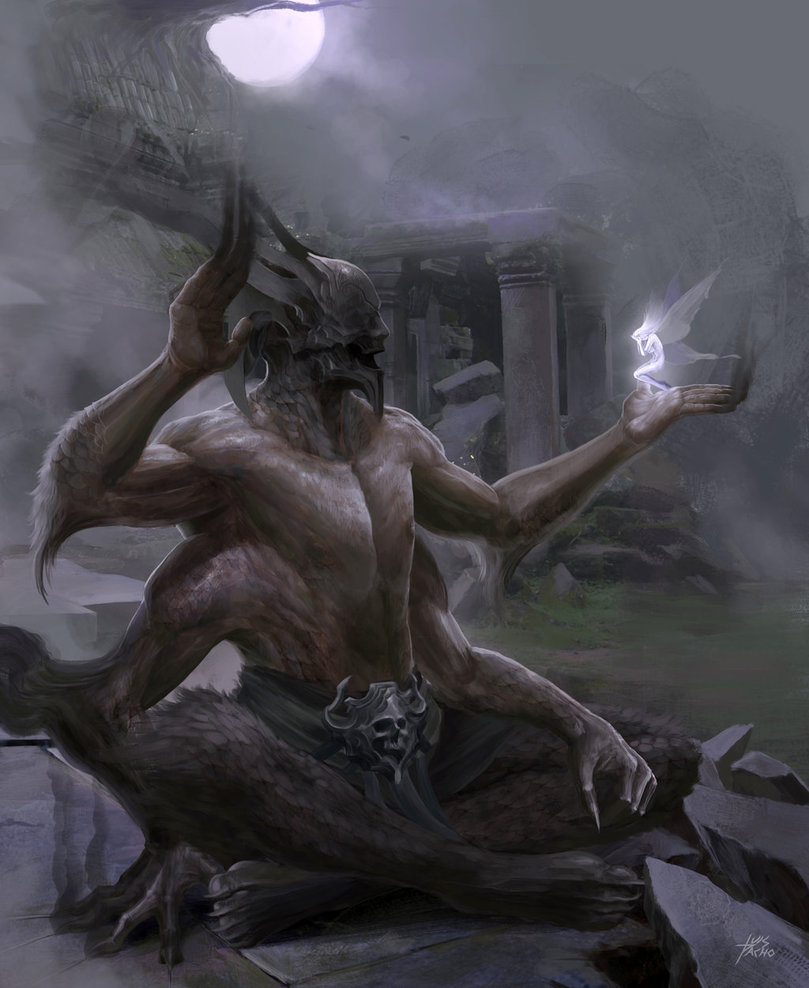
As mentioned, these predators can be viewed in two ways – as destructive manifestations of the mind itself and as forces external to it. If we regard the mind as an absolute category, as a perspective on reality from one of two possible standpoints, then it is certainly reasonable to treat destructive manifestations as expressions of its inner nature. This perspective also strengthens a sense of responsibility for the mind’s destruction, since appealing to “external” demonic forces can become a separate excuse that attributes the mind’s weaknesses and mistakes to outside enemies.
Nevertheless, when we examine the process by which a pathology of the mind develops, when we seek ways to correct it, the view of predators as foreign to the mind’s nature proves more productive.

From this purely practical standpoint, all destructive influences that “darken” the mind, as we have discussed, can be divided into three categories:
1) Self-destructive drives of the mind, or the so-called “Parasite of mind“, “Lamassu” – the shadow element of the mind that arises as a result of the action of Yetzer hara, the mind’s selfish nature, its striving for separateness, isolation and opposition to the world’s unity. The Lamassu is the initial, basic manifestation of Yetzer hara, driving the mind into conflict with both the surrounding macrocosm and with expressions of unity and harmony within the psychocosm itself, for the Parasite’s task is to assert separateness at any price, preventing consonance and synarchy.
2) “Energetic” parasites – larvae, elementaries, low qliphothic entities that feed on “diffuse” energies, yet possess only little influence in the process of inefficient resource use. Such creatures and entities are usually fairly distinguishable, and their attempts to provoke a person (or an animal, since these freeloaders parasitize any being) into loss of energy are relatively easy to diagnose.
It is precisely these two categories of destructive entities that form the basis for the most dangerous kind of predators,
3) Integrating parasites. We have said that these are most often of two types – Elementers (more precisely, utukku) and demons (obligate parasites of qliphothic nature), although in some cases elementaries are also capable of integration (as happens, for example, with so-called “shamanic” spirits).
As we said above, for indwelling — and, in the worst case, the predator’s integration — to occur, a primary contact must take place: the mind must be willing to listen.
Typically, the prerequisites for such contact are the mind’s own destructive actions. As we know, any mind is a complex mix of many quasi-independent parts of various natures and varying degrees of constructiveness. In this diverse cosmos, there are almost always more or less shadowed areas, most often arising when it functions poorly. It is this shadow that is the home of both internal and external destructive forces of the mind. If the shadow grows, it gradually begins to dictate the mind’s activity; it is from the shadow that the voices of various predators and parasites are heard.
Often it happens that the shadow slightly opens gates into the dark, and from there the voices of truly dangerous predators begin to sound. If Lamassu, of course, has no interest in the critical loss of its host’s energy (for with the host’s death the Lamassu also perishes), and larvae and other “attached” parasites usually cannot inflict critical harm on the host, predators entering through the gates are not only able to “devour” a person’s energetic resources; they are, far worse, capable of enslaving their soul.
Thus, the expansion of the shadow is the first prerequisite for predator invasion. If a being drives or packs too many of its impulses into the shadow, it creates a foothold for invasion.
Another prerequisite for such implantation may be a fragmentation of the mind – the activity within it of two or more subpersonalities comparable in strength and scope. A mind deprived of a stable dominant personality, accustomed to a rotation of “caliphs for an hour,” can easily allow a predator to slip in amid the stream of shifting dominants. If the mind permits such fragmentation, it likewise increases its vulnerability.
Finally, a third precondition that facilitates a predator’s invasion may be a basic dissatisfaction of the mind. If, for some reason, the mind does not fulfil its important needs or desires, even without the shadow growing, it creates within itself a powerful attractive impulse capable of “opening the gates from within,” disrupting the mind’s integrity as it attempts to draw in what it lacks.
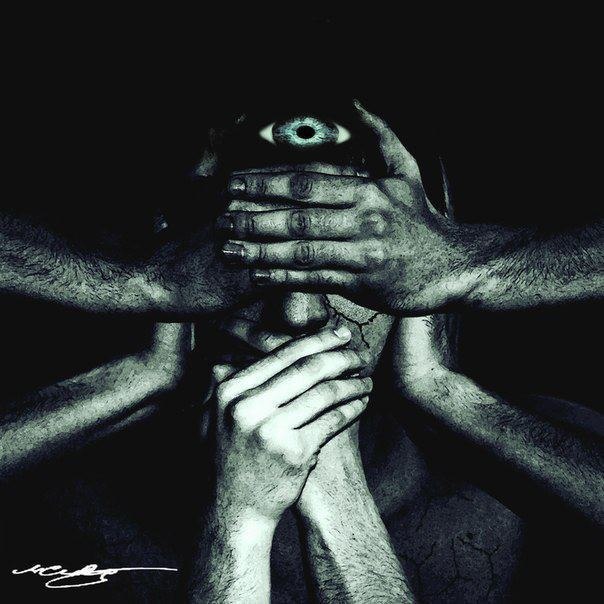
So, if through the expansion of the shadow, fragmentation of the mind, or its dissatisfaction the Gates of Achet are slightly opened, the “voices of the sirens” begin to sound from there — the seductive entreaties of predators calling for consent to the invasion. This is the so-called stage of bewitchment (Lat. tentatio) — the “desire to listen” to the predator, a kind of magical “Stockholm syndrome.”
Once the host’s attention is captured, once the predator has found persuasive arguments and formulations, it begins to manipulate the mind, forcing it step by step to relinquish its authority within itself, to give up its will, replacing the host’s will with the predator’s will. At this stage, called enthralment (Lat. devotio), the being from outside seems to be developing; it appears to grow stronger because it is gradually mastered by a stronger, more purposeful, directed will of the predator. It is unsurprising that this new state often pleases the victim: she feels significant, strong, wiser and endowed with power. It is precisely at this moment that the mind often makes the fatal mistake of losing control and allowing the predator to enter, believing that doing so will increase strength and uniqueness. Instead of becoming stronger and more significant, the victim suddenly becomes pitiful and self-destructive – the hungry Demon that has broken in literally eats them from within, replacing her own resources with the influence of a new master.

In this way a being becomes either a feeding resource for the predator (remaining held), or it becomes the carrier of the predator’s matrix for further expansion of the predator’s influence and for the overcoming of the gates of the “material world.” In the latter case one speaks of the classical “possession” (Lat. obsessio). At this stage the victim can no longer rid itself of the predator unaided, and often does not even perceive the possibility or necessity of such deliverance, falling into the Demon’s full power.
Further, in the absence of exorcism, two scenarios are possible – destruction or integration. If the being possessed a weak personal will, or its energetic resources were insignificant, it most often perishes, being absorbed by the Demon, and externally this appears as death from a severe and incurable illness. If, however, for some reason the being is of interest to the Demon, the predator, having broken the victim’s remaining resistance, forces it to merge — to integrate — which results in the emergence in the world of a focus of demonic invasion: a person who radiates destructive influences, facilitating the further weakening of the Threshold and new invasions.
A being is able to defend itself from demonic implantation on its own only until the predator has actually crossed the Gates. Therefore it is very important not to allow the development of the three prerequisites for invasion that we have described above. Otherwise, a being risks far more than its life — it risks the integrity of its soul and the world’s integrity.

Enmerkar, do you think we can attribute our constant need for food (dissatisfaction) to the obsession of a demon of constant energy absorption? Or is it something else?
The need for food is a need of physical nature, stemming from its limitation, not from any interference in it)
Dear Enmerkar, why, in fact, might demons be interested in certain people? Is it a job for the ‘prospects’? Or do predators (especially grey spirits) have other motives besides hunger and weakening the boundary?
In addition to the conditions you described, there are other details, such as the interaction of entities (of various kinds) with a doppelgänger, for example, in a dream state (sleep, OS…), as well as influences through additional magical tricks. There are also cases where a person’s consciousness in reality is stable, while the doppelgänger is partially controlled, meaning there has been some level of integration. Is there a way out of this situation?
Enmerkar, what do you think about the possession of Anneliese Michel – a German woman who died after 67 exorcism rituals? Was she possessed by demons, or did she simply have epilepsy and religious hysteria (as asserted by the investigation)?
I think both options could be possible, but what is certain is that the exorcist priests were not competent enough to understand whether there was truly anything to expel or if healing was needed, or if their powers and purity were insufficient and that at some stage, they should have ceased their attempts; 67 rituals are definitely overdoing it.