
Shadow of the Soul

When it disembodies, handing its awareness (“ruach“) to the Supreme Predator, and its soul (“neshama“) — to the Monad, it leaves behind what is traditionally called the Shadow.
We have already said that in the course of embodied existence, a being accumulates a considerable number of unfulfilled promises, unfinished tasks, disharmonious attachments, suppressed desires and other empty experience, of no interest to Baphomet and serving only as ballast that keeps the mind from development the Predator opposes.
It is precisely the aggregate of reshimoth imprints from such unfinished, disharmonious but energy-rich manifestations that form the Shadow. In other words, instead of passing the Light through itself, merely tinting it with the tone of its individuality — transforming it from “Blue” to “White” — a disharmonious mind loses part of the Light to disharmonious and unfinished affairs, and thus “casts a shadow.”
Formed over the course of a life, the Shadow grows larger and darker the more Light the mind scatters in vain. Understandably, the energy lost in this way is actively consumed by various predators and parasites interested in the mind’s inefficiency and, to a great extent, instigating it. However, beyond the obvious problem — the loss of energy and the general hindrance to development — the Shadow also causes significant disturbances both in the manifestation of Orlög during an incarnation and in the state of the Gilgul itself. In other words, the constraints and problems that will arise in the “next” life are largely determined by the Shadow created in the “previous” life. As an imprint, a reshimo of the stream of mind generated by the Monad, the Shadow is attracted to other streams from the Monad generated by that same Monad. That is, the “sins” of one life affect subsequent incarnations until these reshimoth are neutralized.
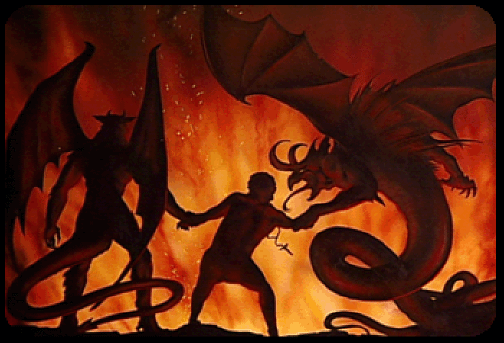
At the same time, this is not a form of “retribution” to which the being is subjected: this “retribution” follows different mechanisms we have already discussed; here we mean the mechanical need to “settle accounts” that trails the being. Note that the Shadow is formed not only by sins and transgressions; it is any disharmonious attachment, including those that may appear perfectly respectable — attachment to work that brings no growth to the mind, attachment to relationships that do not lead to improvement, and so on.
It is also necessary to distinguish the Shadow from the postmortem state of a disembodied being — for example, its state as an Elementer, or, in the worst case, an Utukku. The Shadow is not a partially embodied entity; it is merely a reshimo, an imprint of vortices that retain a foothold in the material world but have not completed their neutralization. The Shadow has no mind; rather, it carries only reshimoth of those states of mind in which uncompensated vortices were generated. It does not hinder disembodiment and reincarnation, existing, in a sense, apart from the mind that produced it, yet nevertheless firmly connected to it.
Shadows exist in a distinct state of the cosmos — Hele — and require sustaining energy, which they draw from breaches in Adir that arose as a result of the very disharmonious actions that produced the Shadow. Thus, the Shadow turns out to be a kind of parasite, siphoning energy from the being to which it is bound.
It is obvious that such a state of affairs cannot satisfy a Magus striving for an effective life. The Magus must not ignore energy loss and related future problems; he must also avoid present influences, including those associated with parasitic Shadows from past lives.
And Magic has developed two approaches to resolve this situation. First, the Magus must avoid generating Shadows in his life — his affairs should be completed as completely as possible, and his relationships effective. Such an existence is called impeccable.
Second, the Magus should, where possible, deprive the Shadows created in previous incarnations of his Monad of support and neutralize them. This can be done either by settling debts (even by symbolic action) accumulated over “past” incarnations, or by remelting or unweaving his soul. However, regardless of the method chosen, the influence of the Shadows on the Magus’s stream of mind must be ended, or at least minimized. Without this, it is extremely difficult for a Magus to attain a highly effective life.
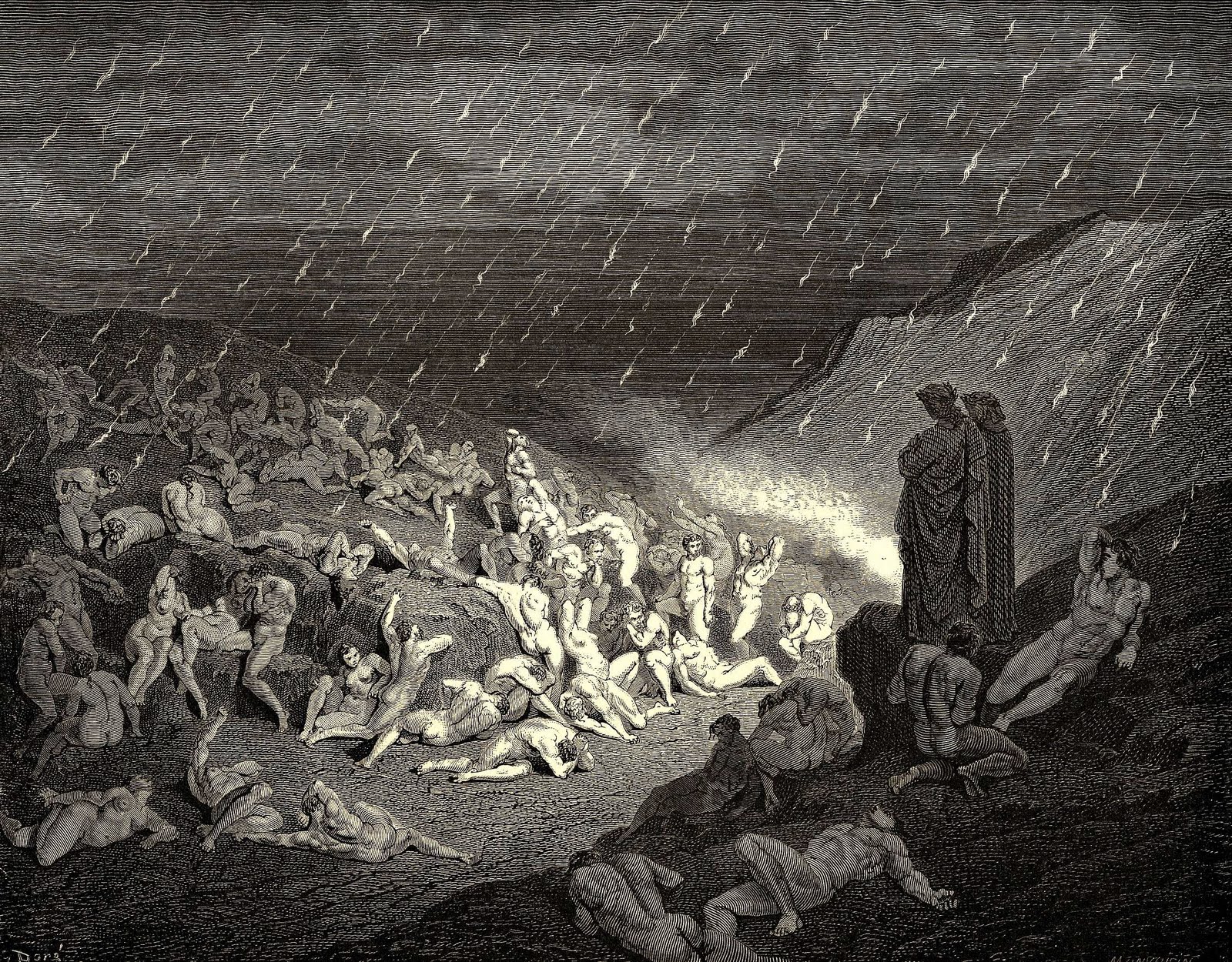
Hello! Welcome back! Can you please specify – how is the symbolic action of forgiving debts done? For example, can throwing a coin ‘for good luck’ or feeding a hungry kitten in the street be considered such symbolic repayment, or is it something else?
Feeding a kitten as a way to repay a debt only counts if the debt arose because at one time you did not feed someone in time. In general, the more accurately the situation that created the debt is reproduced, the easier the repayment process is. If it is not possible to recall such an original situation, then one must at least try to sense the essence of the debt or problem itself and create conditions in which this problem can be most fully resolved. For example, if you feel that the Shadow contains a memory of having once killed someone, a correct solution might be to donate blood to save someone’s life, or to deliberately save animals, or to create an energy release sufficient to again save someone’s life.
Thank you, I will listen to myself; there is definitely some residue.
I will get a job as a magician’s apprentice. I live in Russia, Orenburg.
Numen, are you sure you didn’t confuse which topic to write such a comment in?:) Think about it, maybe in this life you are meant to walk alone? Maybe in your past life your apprenticeship was completely ineffective? Look, even now you formulated your statement in such a way that the Mage should pay you a salary 🙂 Enmerkar, on what objective criteria can one judge the successful process of neutralizing (dissolving) the Shadow? To assess the volumes of future work on “neutralization,” the best informant would be memories of past incarnations, but, as we know, this is not accessible to many… After all, it happens that to compensate for the number of those killed in the past – in this life one simply does not have enough of their own blood (for donation)… and one must work on a more global scale… Accordingly, it would be good to provide recommendations for some ways to assess at least – after (in fact) completed “repayments.”
The only objective criterion can be a deep sense of freedom, but in order to recognize it, one must, of course, achieve considerable success in self-knowledge.
Amenhotep, murder is varied. A murder could be committed in self-defense or for the purpose of eliminating a miscreant. In this case, the dissolution of the Shadow should simply appear as the removal of excessive sentimentality regarding what was done. Can one condemn the hero of the movie “The Voroshilov Shooter” for shooting the abuser of his granddaughter’s eggs (I apologize for the excessive naturalism)? I would spit in the face of anyone who condemns him! Another matter is if the Shadow remembers a murder committed, say, for profit. Then I think a quite acceptable option for atonement is to dedicate one’s life to fighting crime. But to take such a step in life, this problem must be realized early enough, at an age when the question of choosing a profession is relevant. But at that age, as a rule, people do not think about such things. If health does not allow working directly in law enforcement, there is an alternative – to become, for example, a teacher working with difficult students, to prevent many from going down the path of crime.
Frater_J., I have a way with murders and motives:) I asked not for myself, but exclusively to complement/expand the material already described in Enmerkar’s article. You are right, negative consequences can arise from both Action and Inaction. And the options/routes for “working it off” can be not so straightforward as – “killed = saved”, “created = prevented”. What matters is what happens in the Inner world… external manifestations will be secondary and therefore not always clear to an outside observer:)
But it seems to me there is one interesting paradox. It seems that one can contribute to the Shadow not only through committing murder but also through not committing it. If, for example, someone harbored a desire for revenge and did not exact it, then this unfulfilled action (vengeance) also becomes part of the Shadow.
Enmerkar, can all shadows be detected? I understand that only firmly grounded magicians can deal with removing shadows, not ordinary people? According to your words, it seems that the Shadow is something like a parasite, but not of the personality but of the Monad itself. After all, ordinary predators of consciousness do not parasitize on the Monad, if one can put it that way? I understand that the events creating this process can be different for everyone. For example, a person who has killed many for faith or other noble purposes has nothing to repent for in his logic. So, is there no Shadow?
Theoretically, all Shadows can be detected, although in practice, magicians who reach a certain level of power usually destroy the totality of Shadows ‘in one fell swoop.’ Meanwhile, the Shadow does not parasitize on the Monad; the Monad cannot be parasitized at all, since it does not have actual existence. Shadows draw energy from manifested, incarnated beings connected to them by common origin. The formation of a Shadow occurs every time when an action remains uncompensated, that is, not brought to its logical conclusion, and the energy expended on it has inertia, directed towards that very completion of the matter. Thus, a person who kills for faith does not create a Shadow when their own faith is unwavering, which, generally speaking, is quite rare – usually murders ‘for faith’ actually root in weakness and a desire for self-affirmation. And in this case, Shadows will arise more than enough.
Now it is much clearer. And thanks to you, I recalled a few things that, had I not postponed them, I would now be more whole and independent from certain factors. It’s time to tackle them. Thank you, Enmerkar, for the light you bring.
Hello. Interesting topic. Very much. I will share my thoughts, as I have already dealt with this question earlier. For simplicity and clarity, I will divide the person into four elements (principles, parts – call it what you want). Earth – his body, mind, memory. Air – the consciousness of the person, spiritual power. Water – the soul of the person, magical power. Fire – the divine spark, the presence of the One God within the person. So. The afterlife plot depends on the degree of integration and synthesis of all these components into an indivisible Unit. If the level of development of the individual is low – that means the integration of its parts is weak. In this case, a disintegration of wholeness occurs. Earth to Earth, air to Air, water to Water, fire to Fire. And this disintegration of elements can happen either very quickly or infinitely slowly. For example, followers of Advaita and other spiritual teachings strive to merge with the One Consciousness. To go into pure light, as it is also called. And this is nothing more than a rejection of individuality, as well as a quick and painless dissolution of the human element of air into unified Air. But what happens to the rest of its parts is a different question. For instance, it is not uncommon for a person’s soul to continue hunting for energy after their death. This means that it exists until its water is expended. Such souls are vampires, ‘shadows,’ and so on. They can no longer generate energy on their own and develop. All that remains for them is to hunt it with the skills acquired during life. Thus, they are just robots, programs, slaves of the world of the dead. But the Monad does not receive the soul (water), but the divine seed (fire) collected by the person.
Enmerkar, please tell me, is the influence of shadows on a magician always destructive? Or is it possible for them to assist in development?
They can always assist in development by pushing towards solving certain tasks. However, they also limit the possibilities for maneuvering.
Is there an area of overlap between the concept of the Shadow of the Soul outlined here and Jungian concepts of Shadow?
It resembles Jung’s Shadow in terms of unconsciousness; there are indeed shadows of the soul and debts of it that a person is unaware of. If a person understands that they owe, then it is rather no longer the Shadow but something else. There is a parable. Once, Buddha was walking with his disciples across a wasteland. And the wind rose and a thorn pricked painfully into his leg. All the disciples were surprised, could such things happen to a teacher as enlightened as Buddha? To which Buddha replied, enlightenment does not free one from karmic obligations but can accept symbolic consequences. Once he slept in the desert, and when he was attacked by robbers, he killed one of them in self-defense. Now the same situation has arisen, a wasteland, wind, and a sharp thorn reminding of the sharp instrument of murder from the past. This is the symbolic act of repaying debts at a certain stage of development, understanding, and enlightenment.
In the comments above, the topic of murder was raised. I have a question regarding abortions. Is this considered murder from the standpoint of Magic? (we all know the religious viewpoint well). And why does it happen that some souls (unborn children) are extracted from the Soul Repository for such a negligible amount of time that they do not even have time to incarnate? Why did conception even happen? Why was the process abruptly interrupted once it began? For what reasons? And what remains ‘in memory’ of this event in the Shadow of the Soul?
Breaking cycles is a common practice in modern consumer society.
Religion stretches these cycles; the longer, the better.
Souls are pulled from the Soul Repository for a short time to maintain a more or less suspended state of statistics on the entry and exit of Souls from the Soul Repository.
Conception occurred because it is fundamentally beneficial for everyone; it has been, is, and will be.
The process, once started, assumed benefits, but at some point, the mother realized that this new little one would be her shadow, which would stretch and dissipate her own embodiment. It is unlikely to improve qualitatively.
What remains in memory is the awareness of the ‘mother’ that part of her embodiment was fed to someone, or rather, that part of her embodiment was consumed by someone, given away for a pittance. Roughly speaking, such a woman becomes a debtor to Baphomet.
Good time!!!
I wrote that I see the dead. For a time, they came to me.
And I see Shadows. I first saw them in a dream. I was in the hospital with appendicitis. A woman was admitted. I saw her and realized that she would die. This happens to me. The woman was operated on. She was my roommate. At night I had a dream. Our ward. And the walls were covered with a crowd of Shadows. They were whispering. I couldn’t hear what they were saying. But I knew that they were deciding whether this woman would live or die. One Shadow woke me up. I opened my eyes. The woman felt bad. I called the doctor. Then I passed out. In the morning the woman was dead.
Then there was a lull. But one day I saw a crowd of Shadows in my hallway. Not in a dream, but in reality. They stood and stared at me.
Who are they?
So, it turns out that incomplete beings came to me? Why?
“…There are ghosts that do not wander in the cemetery. They do not scare you, screeching doors in the night. These ghosts flow like a black river in your subconscious. They thirst for resurrection. And the louder the horn sounds, the more turbulent the river flows. The procession of the past, born from darkness, wanting to sprout into the present. The round dances of shadows align for your soul. You do not escape this, leaving the cemetery’s fence, do not call the priest to bless the apartment. In this round dance, you are alone. They are you….”
I have one memory… In childhood, I loved to imagine myself as an old man, or rather… I felt like an old man) It was a very joyful feeling. I felt how he (I) walked along the path and was filled with feelings of unity with the world. He had no wooden house – he walked from village to village, but hunger and lodging did not bother him – wherever he was, he was already home. In the village, he would enter the first house, and seeing him, the people would smile. The hostess would treat him to bread, and in the evening everyone would gather around him to listen…. And recently, I received a continuation, when the old man approached a white wall, a person all in black came to meet him, but without any attributes and said that it was not worth going to the city. He said that there was a village nearby and pointed where to go. And then I saw a woman showing me a skinny old man, with his arms tied to posts, and his legs seemed to have dried up from the knees down. But the most frightening thing was his eyes. They seemed sick, completely covered in white film, but he looked at me and I felt how that look penetrated inside me, strong and angry, that I started shaking and almost felt nauseous… I had to shake off this vision for a long time. It somewhat clarifies my astrological “moon in Scorpio”, but what to do with such a shadow? When darkness became dearer than light…