Vessels of Souls
The world’s passive medium, receiving and retaining every volitional manifestation, is not capable of simply erasing the imprint of that manifestation.
In other words, each action, each being, having differentiated itself from the world’s continuity, becomes an integral part of the system of actual existence.
This means that the world at any given moment is the actual aggregate of energies manifested by all volitional impulses of all aware, conscious beings.
In turn, this means that no object can simply be removed from the world system, because the disappearance of any element of this system would mean a restructuring of the entire system. The world is the sum of all things, objects, and phenomena, and a change in any of those elements implies a change in the whole world.
Therefore any thing or phenomenon, when removed from actual existence, leaves an “imprint” — a «reshimo» — that is, the world’s “memory” of that object, standing in for that object in the world system until that system shifts to a new state that already accounts for the element’s “absence.”
It follows that the disappearance of any element of the world encounters resistance, a kind of “inertia” of existence, and the manifestation of that inertia is the reshimo of the object.
The reshimo, in turn, goes through two stages: as soon as it is formed in response to the “exit” of the element that produced it from actual existence, it has manifest qualities and can ‘act’, echoing the existence of the departed element. However, as the world restructures, the reshimo gradually loses actual existence, passing into potential existence as the “memory” of the World’s Medium.
What has been said, of course, applies to any element of creation, but especially to embodied beings. The world is extremely dependent on each aware being, since it is shaped by their collective awareness. Consequently, it resists the dissolution of beings that have completed their cycle of embodiment, and the imprints, the reshimot, of beings are particularly tenacious and active.
Tradition calls these imprints «Guf (Khuš ha-Guf)», the breath of the bones.
The Magi noticed from the earliest times that a dead person leaves a lasting memory not only in the minds of relatives and acquaintances but also in the cosmos as a whole.
Guf forms from the decaying Body of Life, attracting memories of the deceased’s deeds, thoughts, feelings and shaping a quasi-personality — a ghost of the departed.
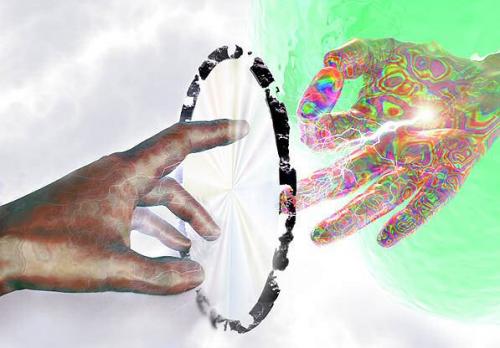
Because like attracts like in Telesma, it is clear that all reshimot created around a person during life, after death find support in the Ka, and as the Body of Life decays, they seek new supports.
Such anchor points can be any images of the deceased, especially three-dimensional ones.
Of course, the best anchor would be the physical body, and if the Guf enters the corpse, it means the appearance of a draugr, an upyr or other undead, ravenous for life energy. Moreover, a partially embodied being — an elementer, an utukku — likewise tends to use both the corpse and its images.
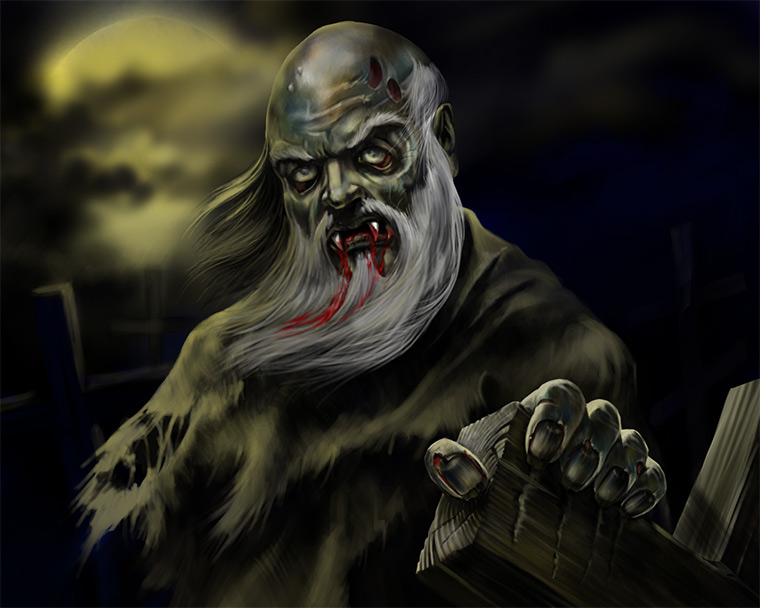
Where the danger of such an object arising was especially high, cultural preferences for interment methods that destroyed the body arose — cremation, dismemberment, and similar rites.
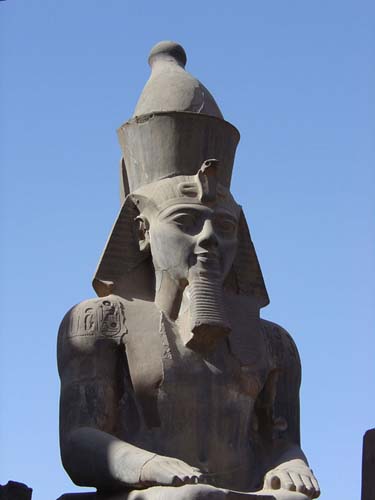
To protect themselves both from the undead and from wandering spirits in general, people long made sculptural depictions of the dead.
The Egyptians erected statues of pharaohs to contain their Ka and compel the pharaoh’s spirit to preserve the well-being of the cosmos’ eternal (“nehekh”) existence.
Nomadic peoples — for example, the Scythians, Sarmatians, Polovtsians — similarly dotted the steppes with statues of their dead ancestors so that their “souls” would guard the land and the tribes.
Memorials on battlefields and at sites of mass death likewise attract wandering Ka and protect the living from loss of energy.
However, in the modern world, there are many more of these “receptacles.”
The world is filled with monuments, memorial plaques, busts, and other depictions of the dead.
In effect, this means modern people live in close proximity to the dead; they constantly interact with the dead’s ideas and memories.
The consequences of such proximity can be diverse — from the continuation of an ancestor’s “work” to Ibburs and other kinds of possession.
A Magus must certainly take this fact of proximity into account and navigate its positive, limiting, and enslaving effects.
Tell me, could it be that the vessel for the soul becomes not just one object, but several? For example, several photos, not just one? Or just a favorite object of the deceased: a watch, an icon, a decoration? I have heard that this can happen, but do not know effective methods to combat such things, other than destroying the object.
Thank you. Did the Scandinavians cremate to avoid danger or for the quickest passage through the interval? Or for other reasons?
Any cultural tradition always has many levels of reasons and support, and it is incorrect to say that it is only for the quick passage through the interval. At another level—also because it is difficult to dig graves in rocky or frozen ground. Only a multifaceted perspective allows one to get closer to holistic understanding.