
Loss of the Soul
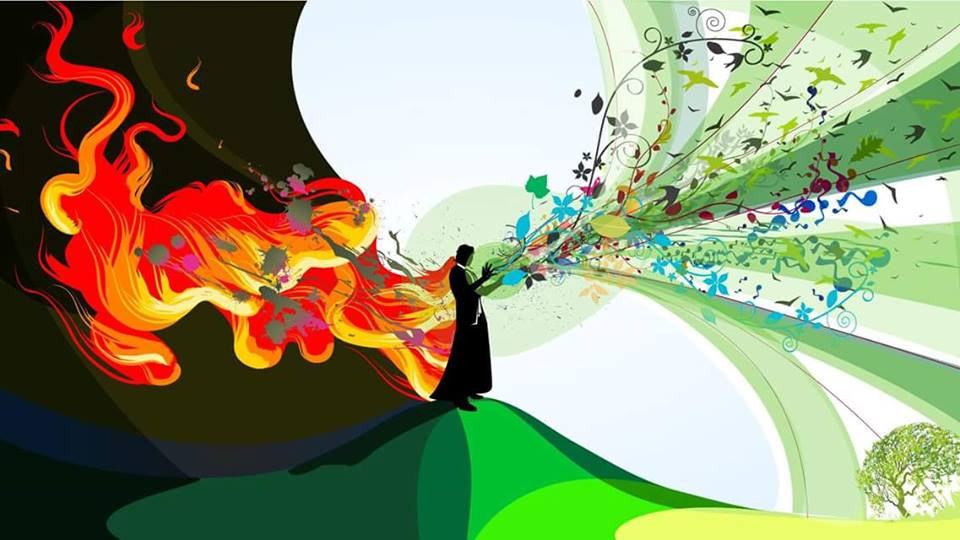
Although from an absolute standpoint each individual incarnation is merely a focused perspective, a viewpoint of the immutable trans‑real reality observing itself, from that incarnation’s perspective it appears as a process directed toward gradual awareness, actualization and the accumulation of experience.
It is in precisely this sense that the world-process can be regarded — as the successive entry of consciousness into being, their integration, and the creation of an actual self-aware fullness — the pleroma. In other words, one could say that this process aims at the transformation of absolute potentiality into absolute actuality, at the “spiritualization” of matter and the “purification” of the telesmi.
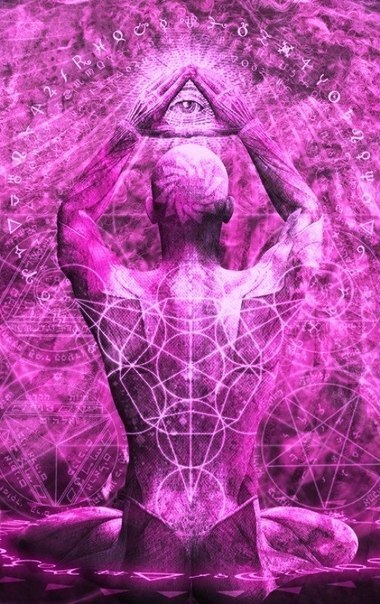
To that end each individual incarnation strives for the maximum number of interactions between mind and the energies of being, whose result, resimo, contributes to the common “spiritualization” in the form of souls, neshamot. At the same time the soul performs two functions: on the one hand it preserves the experience of mutual reflection of being and mind, of spirit and matter; on the other (and no less important) it is an “instrument of unity,” since the soul, as the result of neutralizing the original biner, is capable of manifesting love — the force that creates and sustains the pleroma. In fact, the task of every relative being is creating a soul of maximal “size” and minimal “weight“.
Moreover, the more efficiently this process proceeds — the deeper and wider consciousness penetrates being — the less free energy a being generates, the more it is integrated into the common flow, and the more harmonious its existence. At the same time the primal reality is such that the maintenance of individuality, maintained through the action of the world‑repulsive force — Naxash — becomes unbalanced and creates a pernicious infinity — the gilgul. In that case the efficiency of power transformation falls, the “red” light dissipates, and a world of predators is born — the Qliphoth.
Such a “double system” — of beings that generate energy and predators that consume it — is the biner that “replaces” the original duality of “being–mind” as the “engine” of the world-process. Instead of being a stream running straight from the ocean of potentiality to the world of actual self-awareness, the cosmos perceives itself as a ring, a cycle, sustained by consumption and mutual devouring.
Thus we obtain a “second layer” of illusion — the perception of a “fragmented” reality is overlaid by the antagonism of its parts.
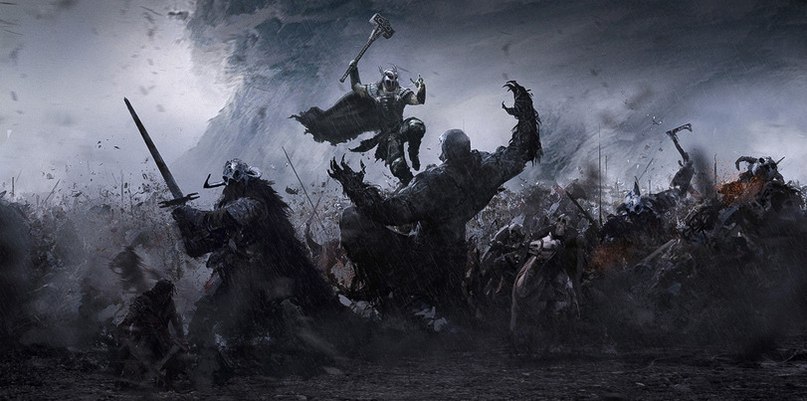
From this perspective the world is no longer merely an assemblage of isolated objects and processes; it appears as a trophic chain in which the flow of consciousness becomes entangled with the energy flow (and, on a coarser level, matter), and the carriers of that consciousness line up into a hierarchy of consumption, a food pyramid.
It is obvious that for predators and parasites occupying higher positions in the trophic chains, it is crucial to secure the maximum “harvest” — the amount of energy dissipated by producers — and therefore they are vitally interested in producing minds that function inefficiently.
At the same time the “growth” of the soul, the accumulation of experience, and the expansion of awareness proceed exponentially — the larger and lighter the “soul,” the more, on the one hand, its development becomes stable and inexorable, and on the other, the more energy can be extracted in its “fall”.

Accordingly, the further a Magus advances along the Way, the, on the one hand, clearer his mind becomes, and on the other the fiercer and more merciless the attacks against him become. Yet at early stages of the Way the efforts of energy consumers to destabilize, shatter or steal the “soul” may go unnoticed by the mind itself, and therefore the world is awash with “lost” magi bearing “dead” souls. At the same time, if such a problem is noticed in time, the vessel can still be restored and its efficacy restored.
However the “strikes” of predators, coming one after another, steadily and ceaselessly, pose a constant threat even to experienced wayfarers, because in this struggle there is always the danger of “burning” one part of one’s soul after another, and — even with highly effective awareness — not having an adequate vessel for that experience and thus lacking sufficient energy for the leap to freedom. In fact this danger is often underestimated, especially when battles become “habitual” and scars no longer provoke surprise. «Cold” Magi may be attractive in some aesthetic sense, but in reality they are ineffective at achieving the highest aims of their existence.
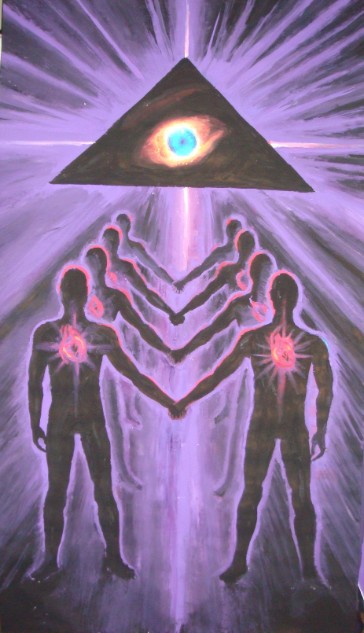
For the Magus it is vital to do everything possible to keep his soul alive, to preserve a warm heart, not to harden, not to become callous, because the life of the soul is not merely an indicator of the intensity of present life; it is also the crucial condition of success, the “springboard” without which a “leap” into the pleroma, if possible at all, is far less attainable. Love, as a form of mutual reflection and interconnection of individuals, is the integrating force supporting the fullness of the pleroma; therefore not to lose the capacity for love and to preserve one’s soul — not only as a repository of experience but as a bearer of unity — is essential. All predators and parasites, all demons, always resist love, because love always means the death of selfishness, the end of fragmentation and the beginning of the pleroma.
For the Magus, to love means to keep his soul, to feel unity with the whole cosmos, and at the same time to remain fully individual, for love always means “union without confusion.” In this way the Magus reconciles unity and multiplicity, homogeneity and individuality, spirit and matter, being and mind.

This is really a wonderful article.
Enmerkar, what are the dangers of merging through mixing, escaping from “I am”? How is this practiced on the path of Mahayana?
Well, first of all, as far as I understand, Mahayana does not practice “mixing”, it practices equanimity and indistinguishability. As far as I understand, it’s not about mixing, but about the absence of signs of separation, its manifestations as something that exists independently. It seems to me that for Buddhism, both departing from individuality and from universality are equally important. From the perspective of the Myth described in this blog, individuality is also not absolute; it is a way, a modus of self-knowledge of what is above reality and non-reality. However, it is clear that if the Great Spirit realized itself as Unity, it would not manifest in multiplicity, but in knowing itself as Unity in multiplicity, it looks at itself through an infinite number of individual perspectives – Monads. From this perspective, it is clear that mixing means losing one of such possibilities, losing one of the moduses of self-knowledge and thus – departing from fullness, from freedom.
Thank you for your reply.
What do you think, does an Arhat, having gone into the immobility of nirvana, stop engaging in knowledge / is no longer the subject of knowledge – is this also a loss of one of the “views” of Spirit?
I think if he fully realized all his potentials – then this is not a loss but rather the completion of a view.
If I do not understand a certain energy, I ask those who constitute our reality to explain it to me through consciousness.
This seems to have already happened, if I’m not mistaken. There was such an article. Repetition is the mother of learning? However, how relevant themes continue to gather comments.
“I am We”… The theme is quite old but remains relevant, probably because this community is hard to notice while looking only at one’s feet. It would be great if we paid more attention to clarifying the essence of such terms as “love”, as they are often not pondered upon simply because they are considered self-evident, which is not quite the case, and love often implies attachment and passion.